Tires
How much does tire pressure drop in cold weather?
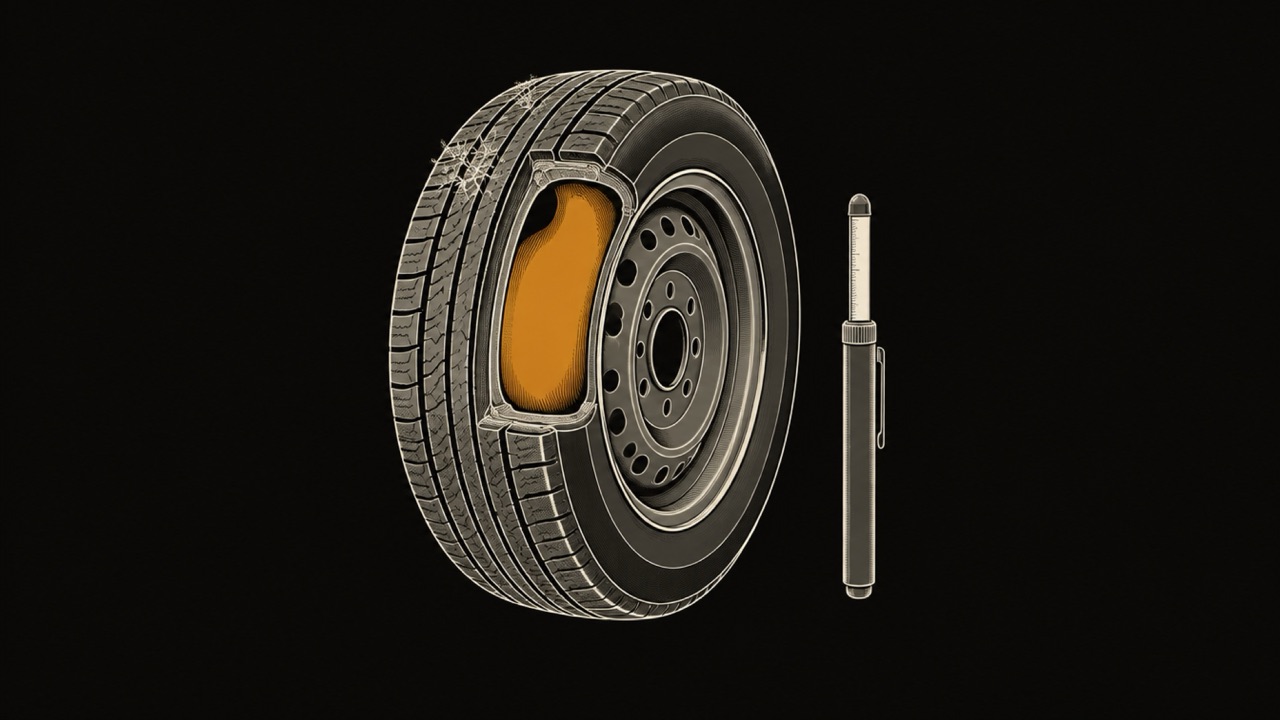
Cold air shrinks the air in a tire by about 1 psi per 10°F, which is why the pressure light comes on in the first cold mornings and goes off after a few miles.
Winter
Car maintenance in winter comes down to six checks before the first freeze: test the battery, fit winter tires once temperatures stay below 45°F (7°C), confirm the antifreeze mix, replace worn wiper blades and fill the washer with winter fluid, use the oil grade your manual specifies for cold weather, and wash road salt off the underbody all season. The battery matters most: AAA reports that a car battery loses about 35% of its strength at 32°F and about 60% at 0°F.
A winter car maintenance checklist covers the parts that cold, snow and salt attack: the battery, the tires, the coolant, the wipers and washer fluid, the oil, the lights, the fuel tank and the underbody. Most of the work is a single visit in October or early November, before overnight temperatures settle at 45°F (7°C). The salt wash and the tank level carry on all winter.
The table below lists each check, when to do it and why it matters in the cold. Every row has its own section further down with the figures and sources behind it, so a reader looking for one item can jump straight to it.
| Check | What to do | When | Why it matters |
|---|---|---|---|
| Battery | Have it load tested, clean the terminals | Before the first freeze | It loses about 60% of its strength at 0°F (AAA) |
| Tires | Fit winter tires, check tread and pressure | Nights at 45°F (7°C) or below | All-season rubber stiffens in the cold and grips less |
| Antifreeze | Test the mix, top up to the manual's ratio | Before the first freeze | A weak mix can freeze and crack the engine or radiator |
| Wipers and washer fluid | Replace worn blades, fill with winter fluid | Before the first snow | Blades can lose effectiveness in as little as six months (Consumer Reports) |
| Oil | Use the cold-weather grade in the manual | At the autumn service | Cold oil raises friction and slows warm-up |
| Lights | Check every bulb and clean the lenses | Before the first snow | Short days and dirty snow cut visibility |
| Fuel tank | Keep it full or close to it | All winter | A full tank keeps the fuel line from freezing (ready.gov) |
| Underbody | Wash off road salt, touch up paint chips | Every week or two of salt | Salt rust repairs averaged almost $500 each (AAA) |
Sources: AAA (battery), AAA (road salt), Consumer Reports, ready.gov, fueleconomy.gov.
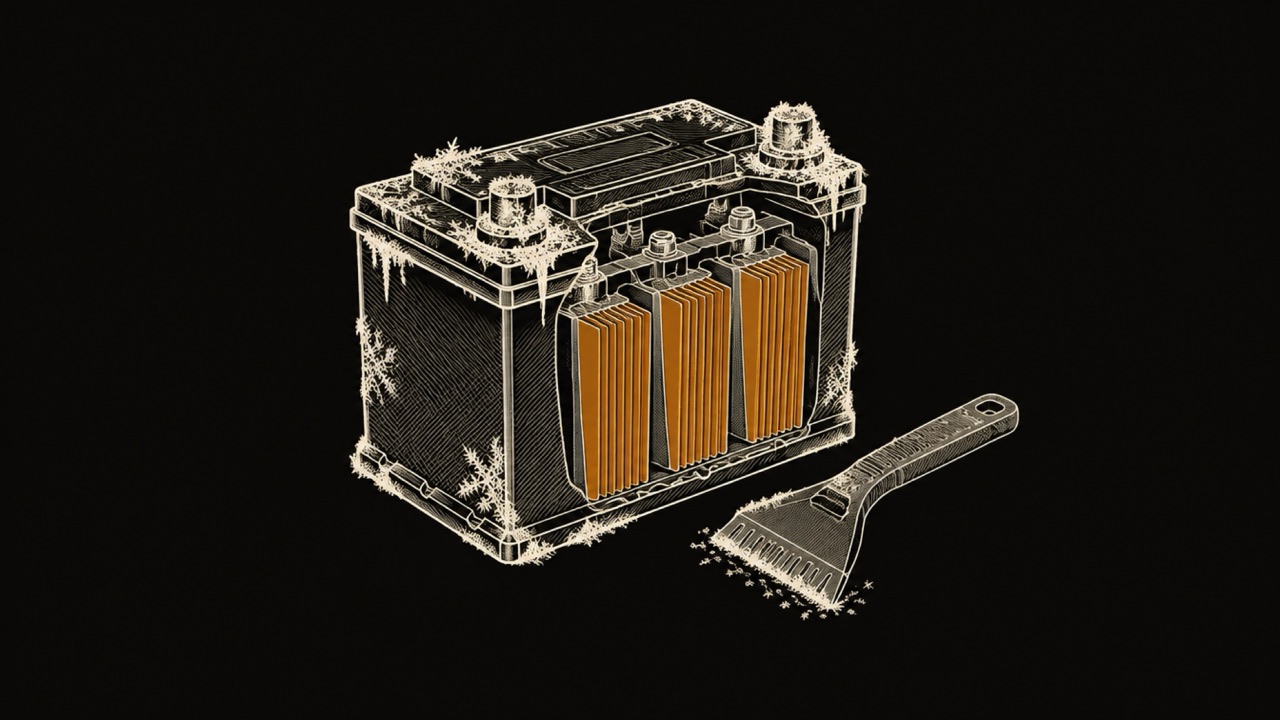
A car battery fails in cold weather because the chemical reaction that produces its current slows down as the temperature drops, while the engine asks for more. The AAA Automotive Research Center reports that a battery loses about 35% of its strength at 32°F and about 60% at 0°F, and that a cold engine can need up to twice the normal current to start.
Cranking power is the current a battery can deliver to turn the starter. Consumer Reports puts it the same way: at about 0°F a battery has roughly half the cranking power it has at 80°F. A battery that started the car without trouble in September can leave it silent on the first frozen morning.
AAA gives the average car battery life as three to five years and treats a battery older than three years as a warning sign. Have it load tested before winter, which most parts stores and workshops do in a few minutes, and clean any white or green crust off the terminals so the current reaches the starter.
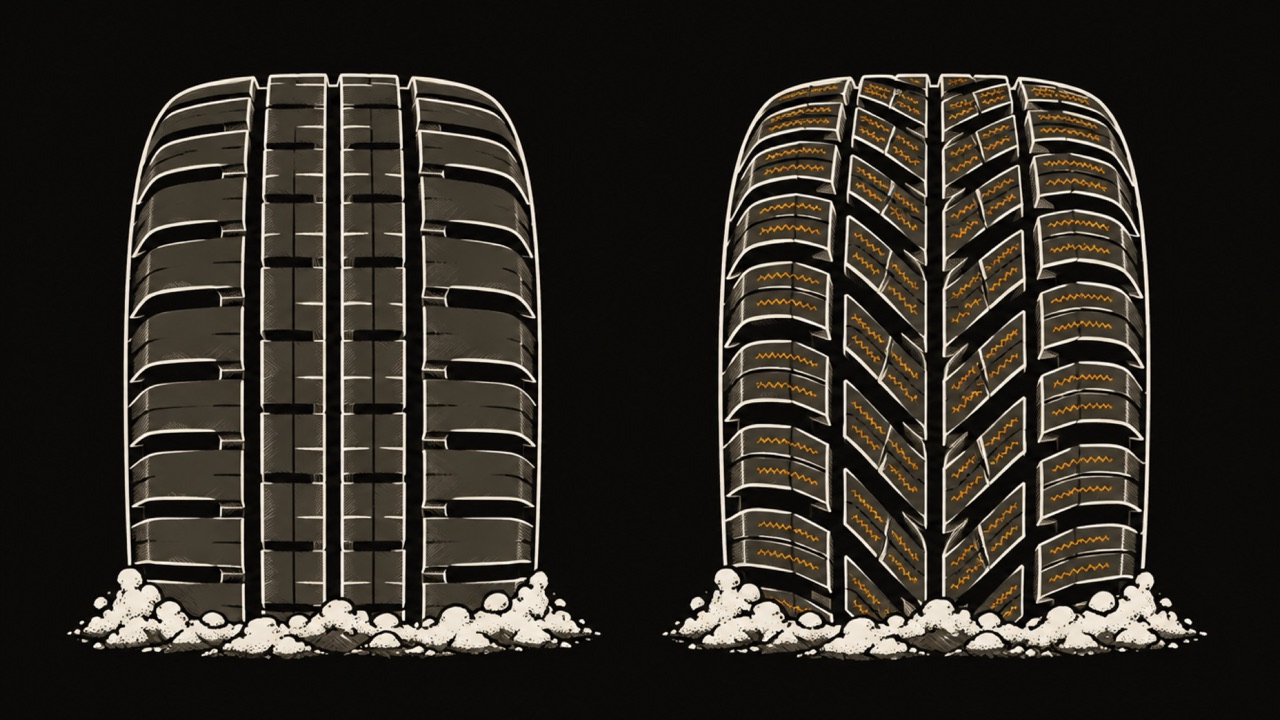
Switch to winter tires once nighttime and early-morning temperatures are at 45°F or below most days. American Tire Distributors calls this the 45-degree switch: a winter tire's rubber compound stays flexible in freezing temperatures and grips better than all-season rubber below 45°F. A winter compound is the soft rubber blend used in winter tread.
The 7-7 rule says the same thing in Celsius. CAA North & East Ontario advises fitting winter tires once the temperature has stayed at or below 7°C (45°F) for seven days in a row, and taking them off when it stays at or above 7°C for seven days. Above that point a soft winter tread wears quickly on warm, dry roads.
Consumer Reports recommends dedicated winter tires on steel wheels where snow and ice are constant, and says it is safest to replace all four tires at once. Cold also lowers the pressure in every tire, so check it after each cold snap; the details are in how much tire pressure drops in cold weather.
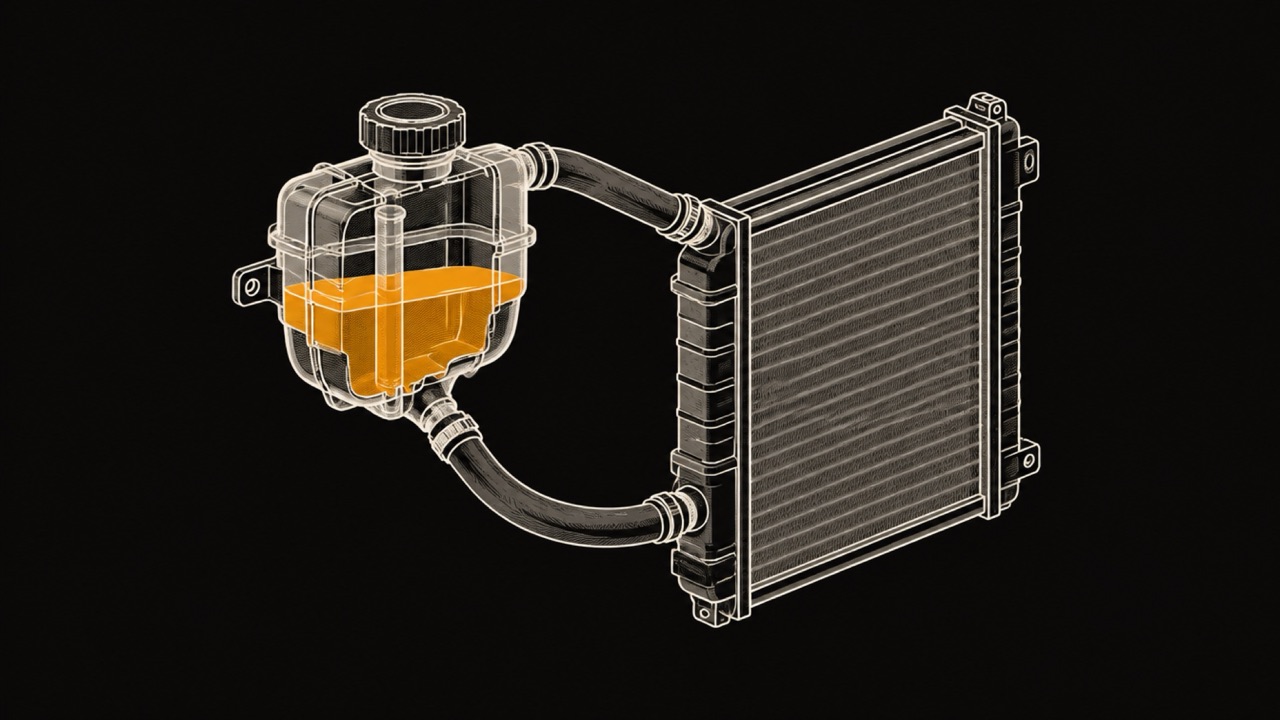
Antifreeze is ready for winter when the coolant is the type your manual specifies and mixed at the right ratio. Consumer Reports recommends a 50/50 mix of antifreeze and water; very cold climates can call for 60% antifreeze and 40% water, or 70% and 30%, and never a richer mix than that.
Freeze protection printed on a bottle assumes the mix is exactly right, so test the coolant in the reservoir with an inexpensive hydrometer or test strips rather than trusting the label. Check the level with the engine cold, and look at the hoses for cracks or soft spots. How often the coolant itself needs replacing depends on its type: see how often to change coolant.
Replace wiper blades that streak or chatter before the first snow. Consumer Reports found that blades can lose effectiveness in as little as six months and suggests replacing them as often as twice a year. A blade that has spent a summer in the sun is usually the one that smears salt across the glass in December.
Fill the washer reservoir with a winter-blend fluid that contains an antifreeze agent, as Consumer Reports advises. Summer fluid can freeze in the reservoir or on the windshield, and road salt means the washers run far more often in winter than in any other season.
Check every bulb, headlights, brake lights, turn signals and fog lights, and clean the lenses. Ready.gov lists the wiper equipment and the washer fluid level among the checks to have done before an emergency, alongside the antifreeze, the battery and the ignition system.
Use the oil grade your owner's manual lists for cold weather, which for most modern engines is a multi-viscosity oil. A multi-viscosity oil is rated for two temperatures, and the number before the W is its winter rating: the lower it is, the more easily the oil flows at a cold start. Consumer Reports recommends a W-rated oil and checking the manual first.
Fueleconomy.gov gives the reason it matters beyond starting: cold engine oil and cold drive-line fluids raise friction, and the engine takes longer to reach its efficient temperature. If the oil change interval runs out within a few hundred miles of winter, doing it in autumn puts fresh oil of the right grade in the engine for the coldest months.
Keep the fuel tank full or close to it through the winter. Ready.gov advises a full tank in case of evacuation or a power outage, and notes that a full tank also keeps the fuel line from freezing. This works because less empty space in the tank leaves less room for moist air to condense into water.
A full tank also matters if the car is stuck in snow or a long closure, because the engine may be the only source of heat. Run it only in short spells and keep the exhaust pipe clear of snow, so exhaust gas does not collect inside the cabin.
Road salt and liquid de-icers speed up rust on the underbody, the brake lines, the fuel tank, the exhaust, electrical connections and any chip in the paint. A 2017 AAA survey estimated that US drivers paid $15.4 billion in rust repairs over five years, about $3 billion a year, averaging almost $500 per repair, and that 22 million drivers had rust damage in that period.
AAA's prevention advice is practical. Wash and wax the car before winter, touch up chips and scratches that expose bare metal, wash it often during the salt season with special attention to the undercarriage, use a car wash soap rather than dish detergent, and avoid driving right before, during and after storms, when the chemicals on the road are most concentrated. In spring, clean the underbody thoroughly once more.
Cars are less efficient in winter, and short trips suffer most. Fueleconomy.gov reports that a gasoline car's city fuel economy is roughly 15% lower at 20°F than at 77°F and can drop as much as 24% on trips of 3 to 4 miles. The causes are thicker cold oil, a longer warm-up, lower tire pressure, denser air, winter gasoline blends with slightly less energy, and the heater and defrosters.
As an example calculation, a car rated at 25 MPG in city driving would return about 21 MPG at 20°F (25 × 0.85) and about 19 MPG on 3 to 4 mile trips (25 × 0.76). Idling to warm up makes it worse, since idling gets 0 MPG: fueleconomy.gov says most manufacturers recommend driving off gently after about 30 seconds. To see the winter dip in your own numbers, read tank-to-tank fuel economy across the seasons.
| Powertrain | Loss in the cold | Conditions |
|---|---|---|
| Gasoline car | About 15% lower fuel economy | City driving, 20°F vs 77°F |
| Gasoline car | Up to 24% lower fuel economy | Trips of 3 to 4 miles |
| Hybrid | About 30% to 34% lower fuel economy | Same conditions |
| Electric car, heater on | Range up to 41% lower | Mixed driving, 20°F |
| Electric car, heater off | Range about 12% lower | 20°F vs 75°F |
Prepare an electric car for winter by heating it while it is still plugged in. Fueleconomy.gov reports that at 20°F an EV's range can drop by 41% with the cabin heater on, that about two thirds of the extra energy goes into heating the cabin, and that without the heater the range loss is about 12%. Preheating on the charger takes that heat from the grid instead of the battery. How much range EVs lose at each temperature, in lab tests and in real driving, is compared in electric cars in cold weather.
Seat heaters warm the driver for less energy than heating the whole cabin, which fueleconomy.gov also recommends. A hybrid loses about 30% to 34% of its fuel economy in the cold, so the same habits help it: combine short trips and park in a garage when you can. Cold-weather range loss is temporary and different from long-term wear, covered in how long EV batteries last.
An electric car still has a 12-volt battery that powers its computers and locks, and it can fail in the cold like any other car battery. Test it at the same visit as the tires and wipers.
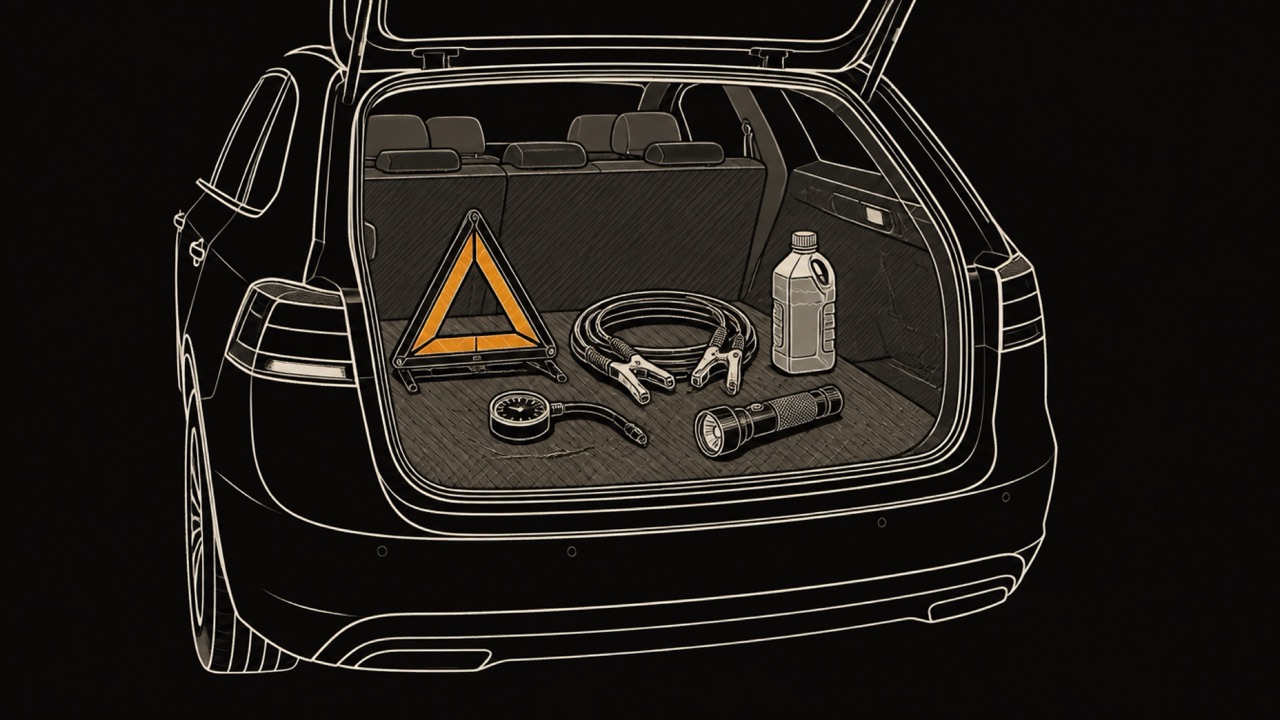
A winter car emergency kit should let you clear the car, get traction and stay warm while you wait. Ready.gov lists an ice scraper and cat litter or sand for traction, and a fuller winter kit includes a snow brush, a small shovel, warm blankets, gloves, a flashlight, jumper cables, water, snacks and a phone charger.
Keep the kit in the car from the first snow until spring rather than packing it before a trip. For a longer drive in winter, the road trip car checklist covers the full kit and the checks to make before leaving.
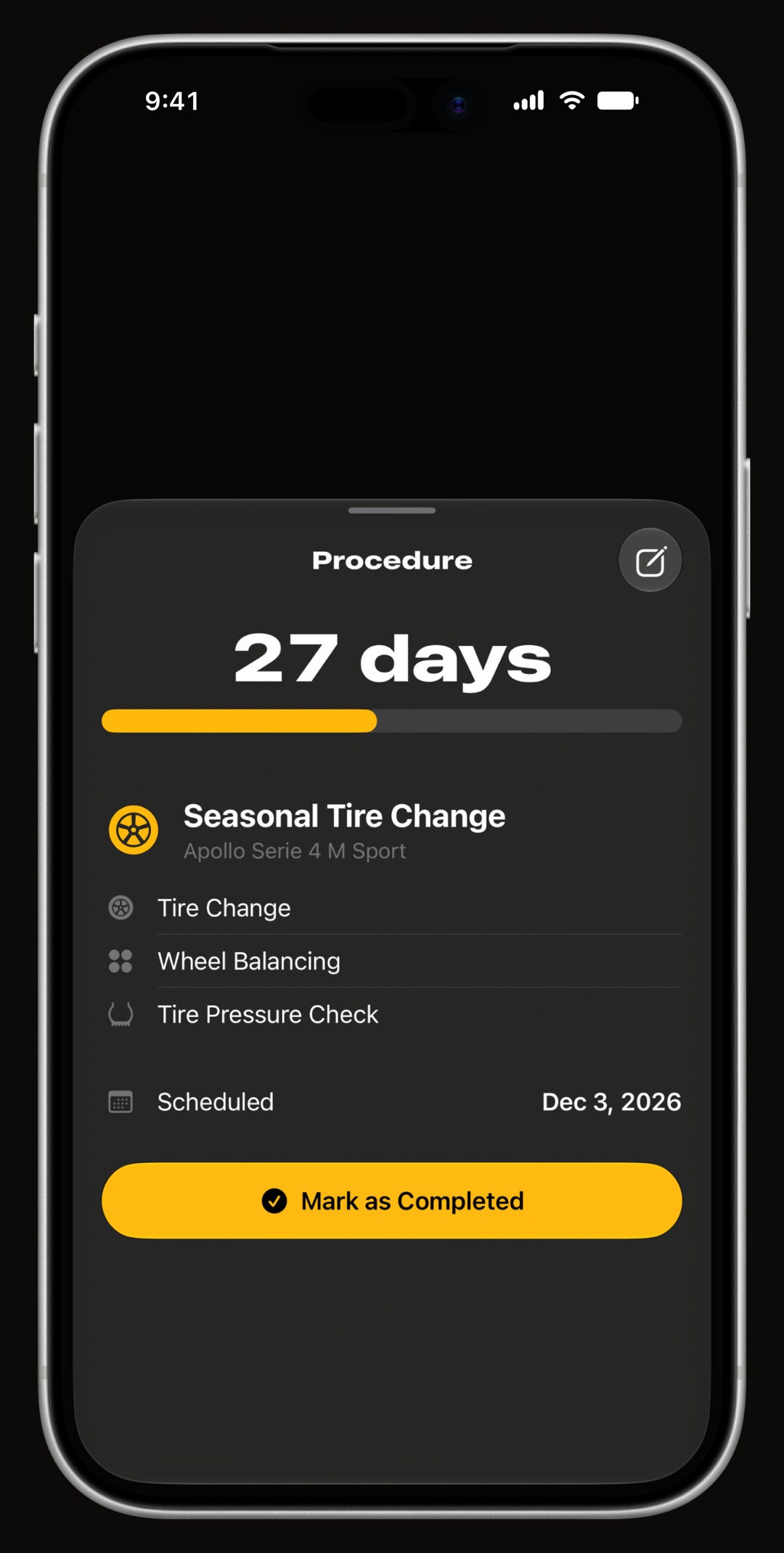
This sample plan is for a gasoline car in a snow-belt state, driven daily and parked outside. Shift the dates to your own climate: the trigger is the temperature, not the calendar. WrenchTime, a car and motorcycle maintenance app for iPhone, has a Winter Prep kit that logs the tire change, tire pressure check, battery check, coolant flush and wiper blades as one entry, and it can repeat every year with a reminder before the date.
Set Winter Prep, or a Seasonal Tire Change, as a yearly recurring job in WrenchTime and the reminder arrives before the cold does; the completed entry keeps the date, the odometer, the cost and the invoice, and the next one is already scheduled. It is one of 12 maintenance kits, and the steps are in how to schedule maintenance and reminders. The free version covers 1 vehicle with 2 maintenance entries per month, and WrenchTime Pro removes the limits.
Wash and wax it first, which AAA advises before every winter against road salt, fill the tank so the fuel line does not freeze (ready.gov), and keep the battery on a maintainer, since a battery loses about 60% of its strength at 0°F. Park it indoors when you can.
The 7-7 rule says to fit winter tires once the temperature has stayed at or below 7°C (45°F) for seven days in a row, and to remove them when it stays at or above 7°C for seven days. CAA North & East Ontario publishes it; below that point all-season rubber stiffens and grips less.
No. Fueleconomy.gov says a gasoline car's city fuel economy is roughly 15% lower at 20°F than at 77°F, and up to 24% lower on trips of 3 to 4 miles. Hybrids lose about 30% to 34%, and an electric car's range can drop 41% with the heater on.
Winterize the car in October or early November, before nights settle at 45°F (7°C) or below, which is when American Tire Distributors says to switch to winter tires. Test the battery, check the antifreeze, replace the wipers and fill the washer with winter fluid at the same visit.
Cold weather cuts what a battery can deliver more than it drains it: AAA reports a loss of about 35% of its strength at 32°F and about 60% at 0°F, while a cold engine needs up to twice the normal current to start. A battery over three years old should be tested.
More from the blog
Tires
Cold air shrinks the air in a tire by about 1 psi per 10°F, which is why the pressure light comes on in the first cold mornings and goes off after a few miles.
Road trips
Check tires, battery, brakes, fluids, lights and wipers and the emergency kit one to two weeks before you leave, so a shop has time to fix what you find.
Cooling system
Every 2 years or 30,000 miles for older green coolant, five to ten years or 100,000 miles and more for long-life types, whichever comes first, with the manufacturer numbers side by side.
Free to download. One vehicle, real features, no ads. Your garage will thank you.
Download WrenchTime on the App Store