EV battery
How long do EV batteries last?
Fleet data shows EV batteries lose about 2.3% of their capacity a year and rarely need replacing, so most outlast the 8-year, 100,000-mile warranty.
Winter
An electric car in cold weather typically keeps about 78% of its range at 32°F (0°C) and about 70% at 20°F (-7°C), according to Recurrent's 2025 study of more than 30,000 US vehicles. Lab tests that hold the cabin at 72°F show bigger losses: AAA measured 39% less range at 20°F in 2026. Most of the extra energy goes to heating the cabin, and the loss is temporary: range comes back when the weather warms.
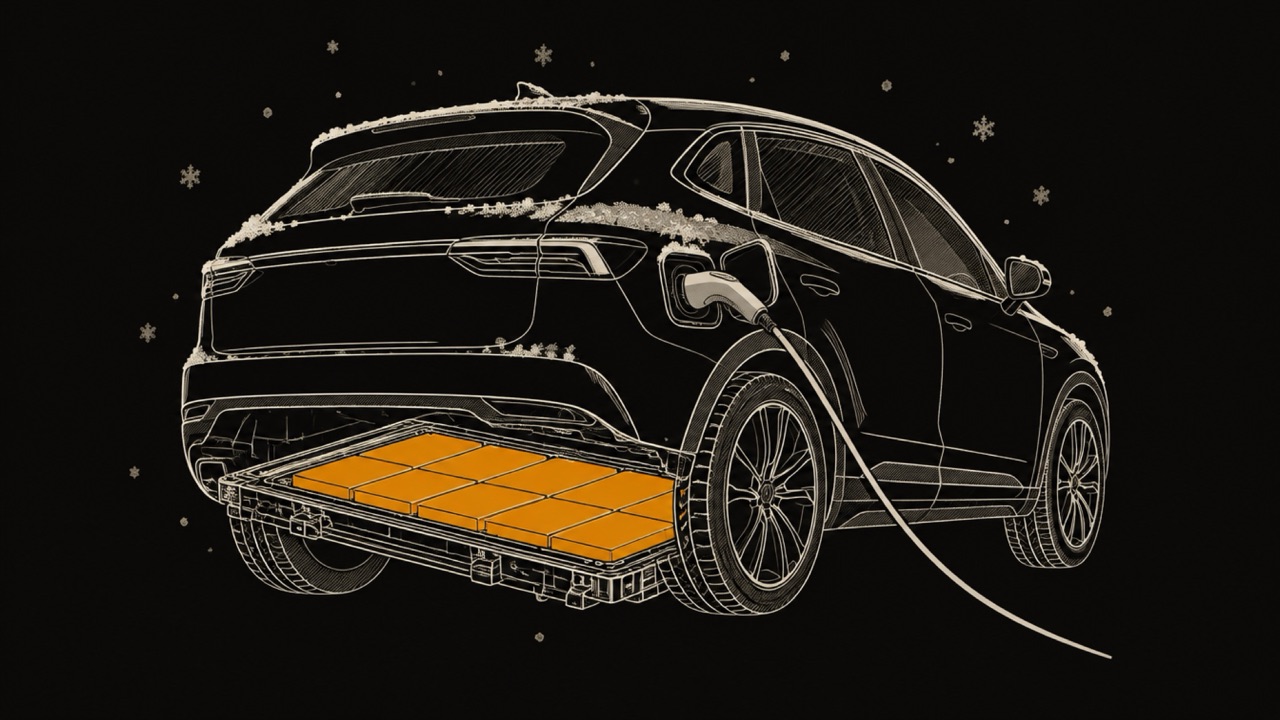
Electric cars in cold weather lose roughly 20% to 40% of their range, and the figure depends on how it was measured. Recurrent's 2025 winter study, built from the telematics of more than 30,000 US vehicles, found an average of 78% of range kept at 32°F and 70% at 20°F. The best model kept 88% at 32°F and the worst 69%.
Lab tests report larger losses because they run a fixed cycle with the cabin held at a warm setting. AAA's 2026 dynamometer test of three EVs, with the climate control set to 72°F, measured 39.0% less range and 35.6% lower MPGe at 20°F than at 75°F. MPGe is the EPA's miles-per-gallon equivalent, a measure of energy efficiency. AAA's 2019 test found 41%.
Highway driving sits in between. Consumer Reports measured about 25% less range at a steady 70 mph and about 16°F, and up to 50% on short trips where the cabin is reheated at every start. Without the cabin heater, fueleconomy.gov puts the range loss at 20°F at about 12%, which shows how much of the winter penalty is heat.
The European El Prix test is colder and uses a different baseline. The January 2026 El Prix test by the Norwegian Automobile Federation, reported by the FIA, drove 24 models at temperatures down to -32°C (-26°F) and found an average of 38% less range than the WLTP rating. WLTP is the European rating cycle, not the EPA rating, so that figure is not directly comparable with US numbers.
| Source | Test | Temperature | Range change |
|---|---|---|---|
| Recurrent, 2025 | Real-world fleet, 30,000+ US vehicles | 32°F (0°C) | -22% |
| Recurrent, 2025 | Real-world fleet, 30,000+ US vehicles | 20°F (-7°C) | -30% |
| Consumer Reports | Highway, steady 70 mph | About 16°F (-9°C) | About -25% |
| AAA, 2026 | Lab, cabin set to 72°F | 20°F (-7°C) | -39.0% |
| AAA, 2019 | Lab, heater on | 20°F (-7°C) | -41% |
| fueleconomy.gov | Heater off | 20°F (-7°C) | About -12% |
Sources: Recurrent, Consumer Reports, AAA 2026, AAA 2019, fueleconomy.gov. Each loss is against mild weather, from the mid-60s to about 75°F depending on the source.
Multiply your EV's rated range by the share it keeps at the temperature you drive in. With Recurrent's fleet averages, that is 78% at 32°F and 70% at 20°F. As an example calculation, a car rated at 260 miles would show about 203 miles at freezing and about 182 miles at 20°F. Using AAA's lab figure of 39.0% less range at 20°F instead gives about 159 miles, closer to a heated lab test than to the fleet average.
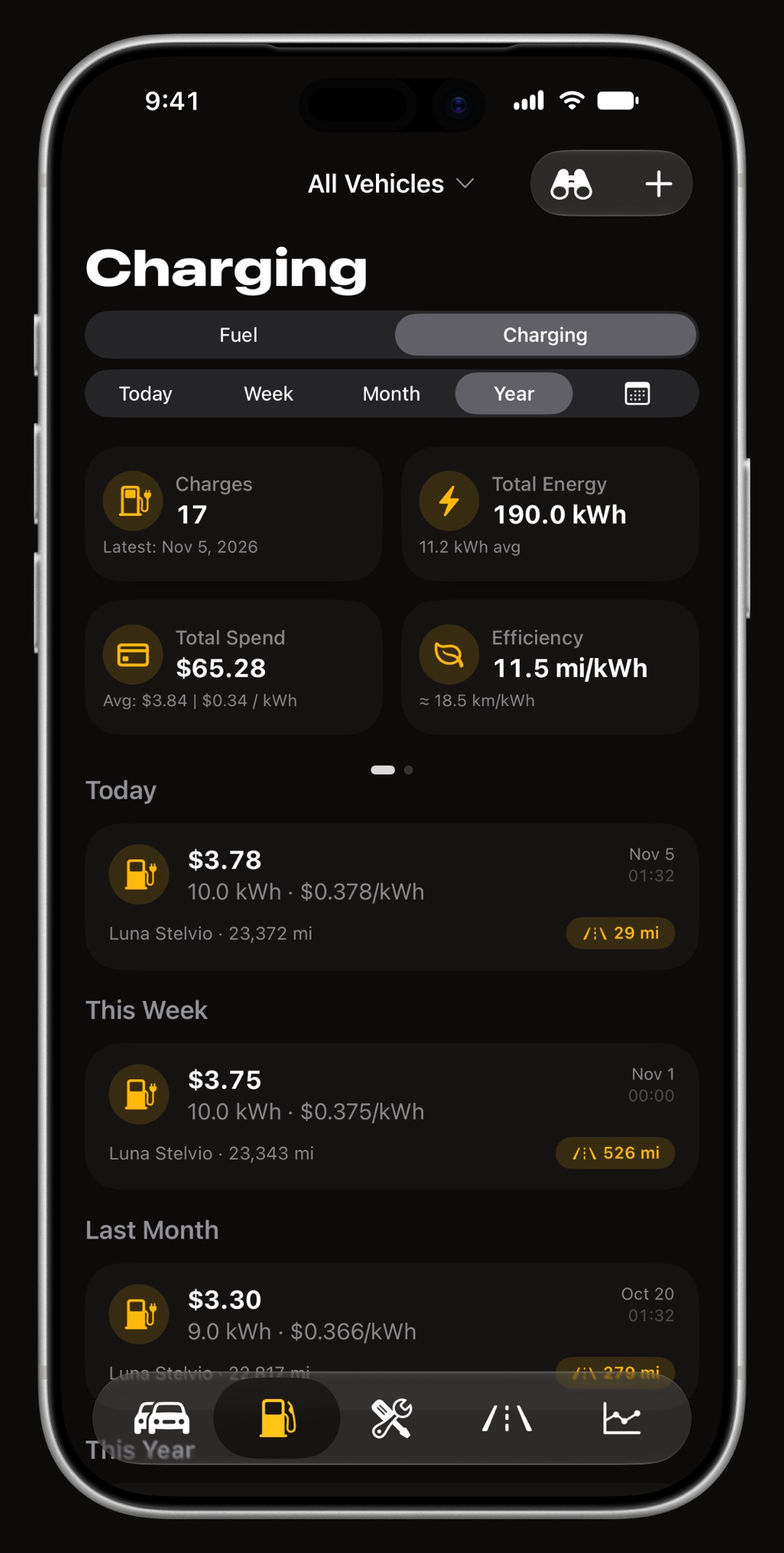
The most accurate figure is your own car's. WrenchTime, an iPhone app for car and motorcycle records, logs each charging session with its energy in kWh, the battery percentage before and after, and the odometer, then works out your efficiency in mi/kWh or kWh/100 mi. A winter month then sits next to a summer one, in the units you read fastest, through its EV charging log.
| Temperature | Share of range kept | Example range |
|---|---|---|
| Around 75°F (24°C) | 100% | 260 miles |
| 32°F (0°C), fleet average | 78% | About 203 miles |
| 20°F (-7°C), fleet average | 70% | About 182 miles |
| 20°F (-7°C), AAA lab test | 61% | About 159 miles |
Example calculation from Recurrent's 2025 averages and AAA's 2026 test. The 260-mile rating is an example, not a specific car.
Electric cars lose range in the cold for three reasons, and heating is the largest; charging also slows down. According to fueleconomy.gov, about two-thirds of the extra energy an EV uses at 20°F goes to heating the cabin. A gasoline car heats its cabin with waste heat from the engine; an EV has to take that heat from the same battery that drives the wheels.
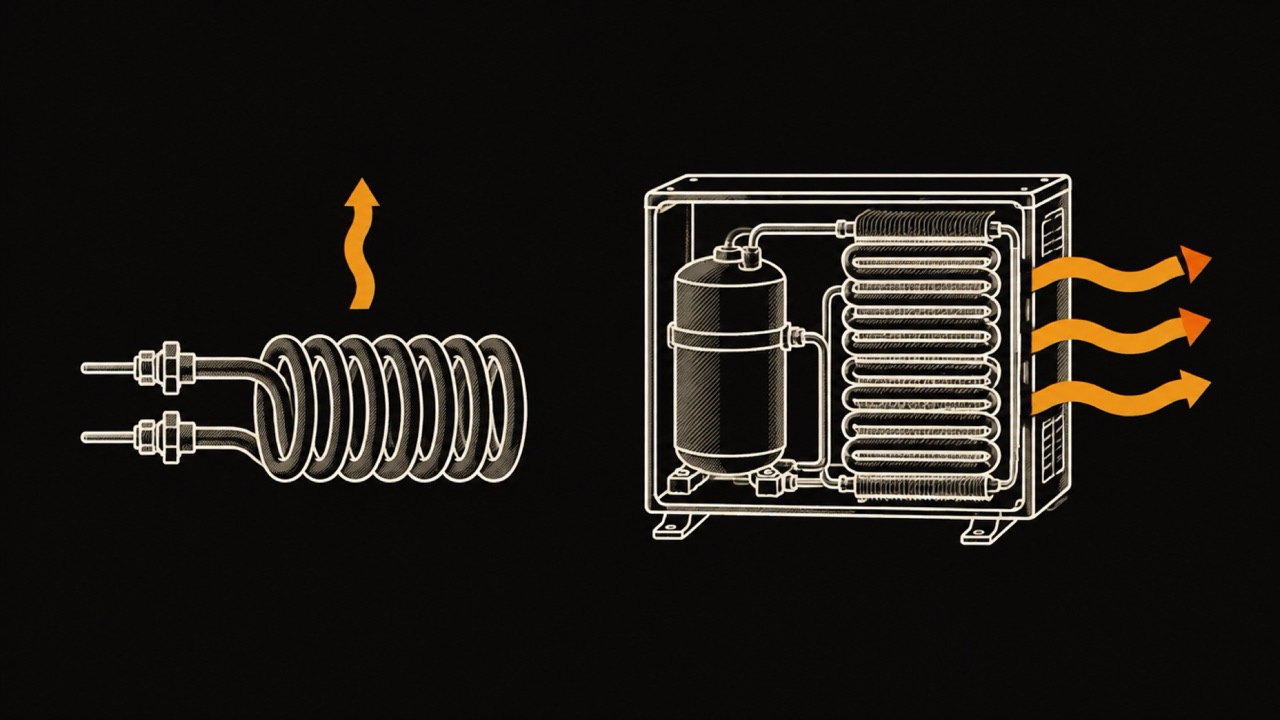
A heat pump helps an EV in winter by moving heat from the outside air into the cabin instead of making it from electricity. Recurrent's 2025 study says a heat pump can deliver three to four units of heat for each unit of electricity, and that it adds about 10% of range at 32°F compared with a resistive heater, which turns electricity into heat one for one.
The advantage shrinks as it gets colder. Recurrent notes that near 0°F there is little heat left to move, and a heat pump becomes about as efficient as a resistive heater. A heat pump is worth having in a climate that spends weeks around freezing; in a climate that regularly falls far below zero, preconditioning and seat heat matter more.
An EV charges slower in cold weather because a cold battery cannot safely accept full current, so the car limits charging power until the pack warms. Recurrent, citing Idaho National Laboratory research, reports that cold can make charging take almost three times as long. Treat that older finding as a worst case for a car that cannot warm its battery before charging.
Warming the battery before a fast-charge stop shortens it, and many newer EVs can do that on the way to a charger. AAA's 2026 advice is to keep fast charging in the cold to what you need, and it notes that charging at home keeps winter costs down.
Cold weather does not damage an EV battery in normal use. Recurrent's 2025 study describes winter range loss as temporary: range at full charge returns to normal as temperatures rise. The range you lose in January is back in spring.
Permanent battery wear comes from age, heat and charging habits, not from a cold season. For how much capacity a battery loses over the years, and what speeds that up, see how long EV batteries last.
You get more range from an EV in winter by heating the car and the battery with grid power before you leave, and by heating people rather than air once you drive. Consumer Reports measured a 5% to 7% efficiency gain from preconditioning while plugged in, in single-digit temperatures. Preconditioning means warming the cabin and battery on a schedule before departure.
You can leave an electric car outside in the winter. A parked EV typically loses up to about 1% of its charge a day, according to InsideEVs, citing Tesla's manual, and camera features such as Tesla's Sentry Mode add to it. In deep cold the car may also spend energy heating its battery, and the shown range can fall even when little energy has been used.
If it can be plugged in, leave it plugged in. Recurrent advises a 70% to 80% charge limit so the car can draw wall power to keep the battery warm. For long storage, AAA Club Alliance reports that Ford suggests keeping the car between 32°F and 113°F and Hyundai suggests a 70% to 80% charge.
There is no single temperature that is too cold for every electric car; the limit is in each model's manual. Nissan's 2025 Leaf manual, for example, warns that the battery may freeze at -13°F (-25°C) or colder and should not be stored below that for more than seven days.
EVs are in daily use in some of the coldest places people drive. In Norway, 95.9% of new cars registered in 2025 were electric, according to road-federation figures reported by Hydrocarbon Processing, and the 2026 El Prix test drove 24 models at temperatures down to -26°F.
Winter costs an EV owner about $32 extra per 1,000 miles at 20°F when charging at home, according to AAA's 2026 study, and about $77 on public chargers. A hybrid in the same test needed about $28 more fuel over the same distance.
Gasoline cars lose efficiency in the cold too. fueleconomy.gov puts a gasoline car's city fuel economy about 15% lower at 20°F than at 77°F, and up to 24% lower on short trips of three to four miles. For the full picture of what a charge costs at home and on the road, see the cost to charge an electric car.
| Vehicle and energy | Extra cost per 1,000 miles | Why it matters |
|---|---|---|
| EV charged at home | $32.11 | Home electricity keeps the winter penalty small |
| EV on public chargers | $76.93 | Public charging multiplies the same energy loss |
| Hybrid, fuel | $28.44 | Engine-heated cars lose efficiency in the cold too |
Source: AAA, May 2026, compared with driving at 75°F.
Log your charging sessions through the winter and compare the efficiency with the summer: the difference is your car's real cold-weather loss, not a fleet average. WrenchTime records the energy, battery percentage, charger type and cost of each session and charts charging efficiency over time, and its EV charging log guide shows how. The free version covers 1 vehicle and 3 charging entries a month.
Electric cars lose range and charge more slowly in cold weather, but in normal winter temperatures they still start and drive. Recurrent's 2025 data from more than 30,000 US vehicles shows an average of 70% of range kept at 20°F, and in Norway 95.9% of new cars registered in 2025 were electric.
Yes. A parked EV typically loses up to about 1% of its charge a day, according to InsideEVs citing Tesla. Recurrent advises leaving it plugged in with a 70% to 80% charge limit, so the car can use wall power to keep the battery warm.
Range in the cold varies widely by model. In Recurrent's 2025 study the best model kept 88% of its range at 32°F and the worst 69%. A heat pump helps, adding about 10% of range at that temperature, though some heat-pump models still rank low.
There is no single limit; each manual sets its own. Nissan's 2025 Leaf manual warns that its battery may freeze at -13°F (-25°C) and not to store the car below that for more than seven days, while the 2026 El Prix test drove 24 EVs down to -26°F.
No. Recurrent's 2025 study calls winter range loss temporary: range at full charge returns to normal as temperatures rise. Permanent wear comes from age, heat and charging habits, not from a cold season.
A cold battery accepts less current, so the car limits charging power until the pack warms. Recurrent, citing Idaho National Laboratory, says cold can nearly triple charging time in the worst case; warming the battery before a fast-charge stop shortens it.
More from the blog
EV battery
Fleet data shows EV batteries lose about 2.3% of their capacity a year and rarely need replacing, so most outlast the 8-year, 100,000-mile warranty.
Winter
Before the first freeze, test the battery, fit winter tires below 45°F, check the antifreeze, wipers and oil, then wash road salt off the underbody all season.
EV charging
About $6 per 100 miles at home and $14 at public chargers in October 2026, with the formula for your own car and the charging losses most estimates skip.

Free to download. One vehicle, real features, no ads. Your garage will thank you.
Download WrenchTime on the App Store