Winter
Car maintenance in winter: what to check
Before the first freeze, test the battery, fit winter tires below 45°F, check the antifreeze, wipers and oil, then wash road salt off the underbody all season.
Battery
A car battery lasts three to five years on average, according to AAA, and climate moves that number more than anything else. AAA data reported by Consumer Reports in 2019 shows 58 months or more in the far north of the US and less than 41 months in the most southern regions, because heat wears a battery out faster than cold does. Have it tested every year from its third year.
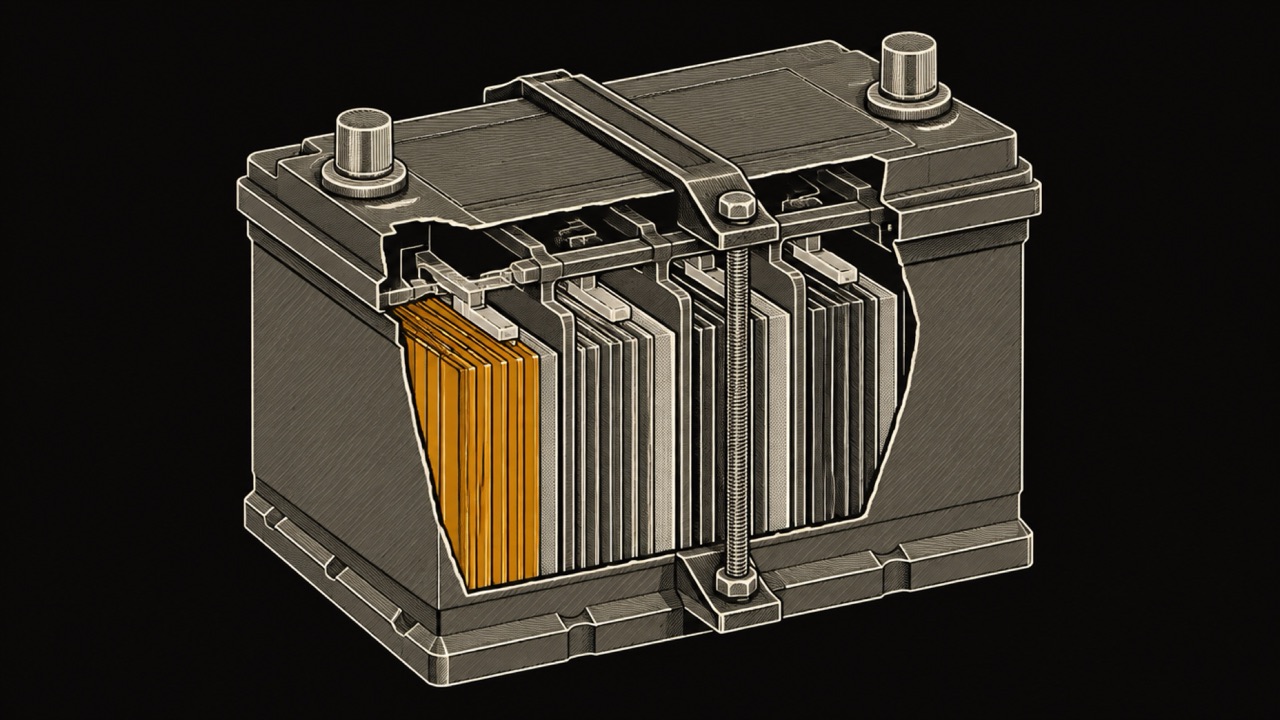
Car batteries last three to five years on average. AAA gives that range, and AAA Hudson Valley repeated it in January 2026. The same AAA guidance says a battery may last five years or longer in cooler northern climates and typically about three years in hot southern ones.
The regional gap is measurable. AAA data reported by Consumer Reports in 2019 puts battery life at 58 months or more in the furthest northern regions of the US and at less than 41 months in the most southern regions. That is why a battery that lasts five years in the far north is a poor guide for one in the south.
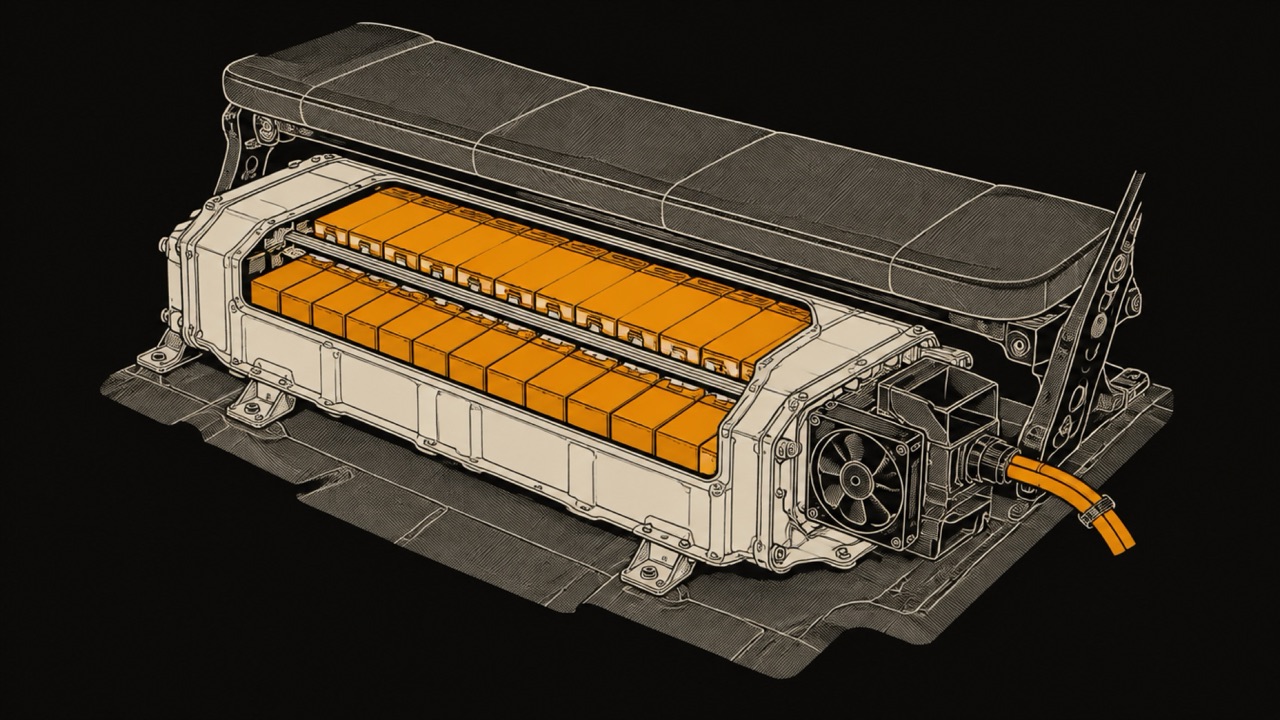
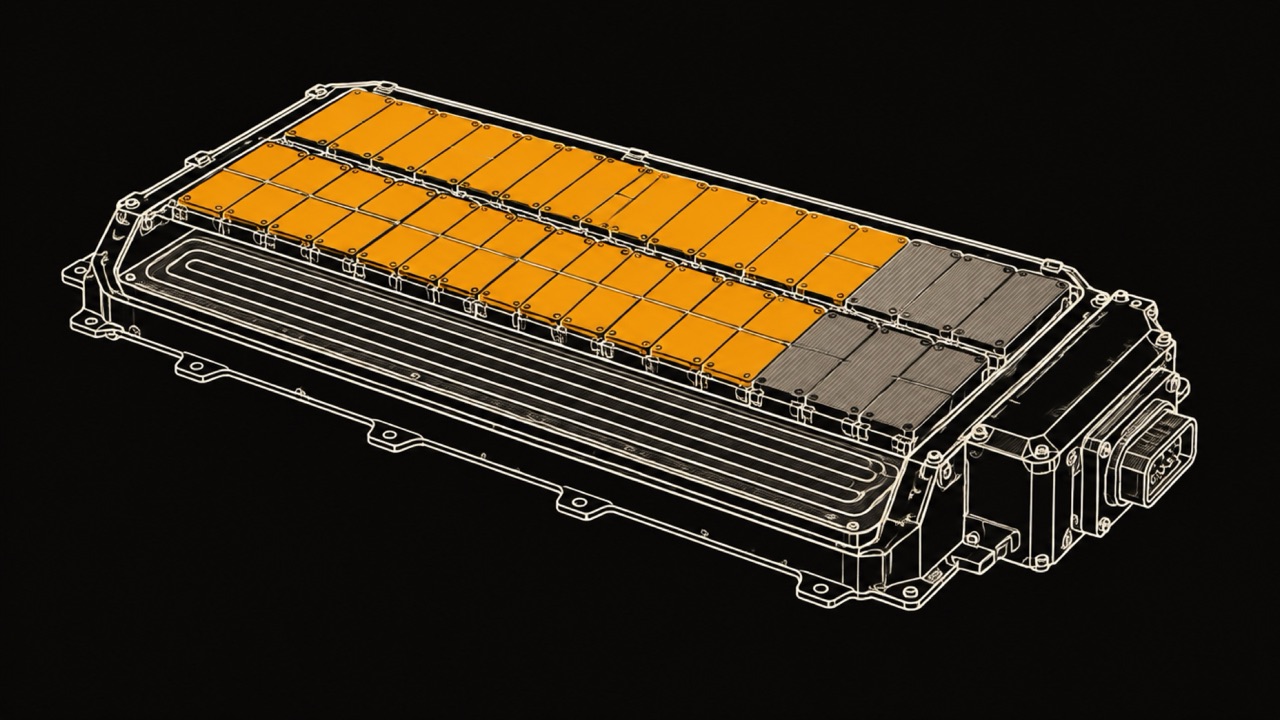
This guide is about the 12-volt battery that starts the engine and powers the electronics. Hybrids and electric cars carry a large high-voltage battery as well, which ages on a very different scale: see how long EV batteries last and hybrid battery lifespan.
A car usually carries one of three lead-acid types. A flooded battery is the traditional design with liquid electrolyte. An enhanced flooded battery (EFB) is a tougher version made for start-stop cars. An absorbent glass mat (AGM) battery holds its electrolyte in glass fiber and suits cars with high electrical demand.
Sources agree on the order and disagree on the gap. AAA South Jersey gives an AGM three to six years, against three to five for a flooded battery. Walser Automotive Group gives it four to seven. OPTIMA, which makes AGM batteries, claims two to three times the life of a flooded battery, so treat that figure as a maker's claim.
An AGM costs 25% to 50% more than a flooded battery, according to AAA South Jersey, and an upgrade is not always the right move. AAA recommends that a replacement always be the same type as the factory battery, with the same group number and never a lower cold cranking amps (CCA) or amp-hour rating than the manufacturer specifies.
| Battery type | Typical life | Source | Why it matters |
|---|---|---|---|
| Flooded lead-acid | 3 to 5 years | AAA | The baseline for most older cars without start-stop |
| EFB | 4 to 6 years | Walser, 2026 | Built for start-stop, where a flooded battery is not enough |
| AGM | 3 to 6 years | AAA South Jersey | The conservative figure for high-demand cars |
| AGM | 4 to 7 years | Walser, 2026 | The more generous figure, for the same battery type |
Five things shorten a car battery's life, and most of them are within an owner's control. Time wears every battery out, but these decide whether it reaches year five or gives up in year two.
Heat does most of the damage, and cold exposes it. Consumer Reports explains that high temperatures accelerate the onset of battery failure, which is why batteries in the southern US last the shortest time.
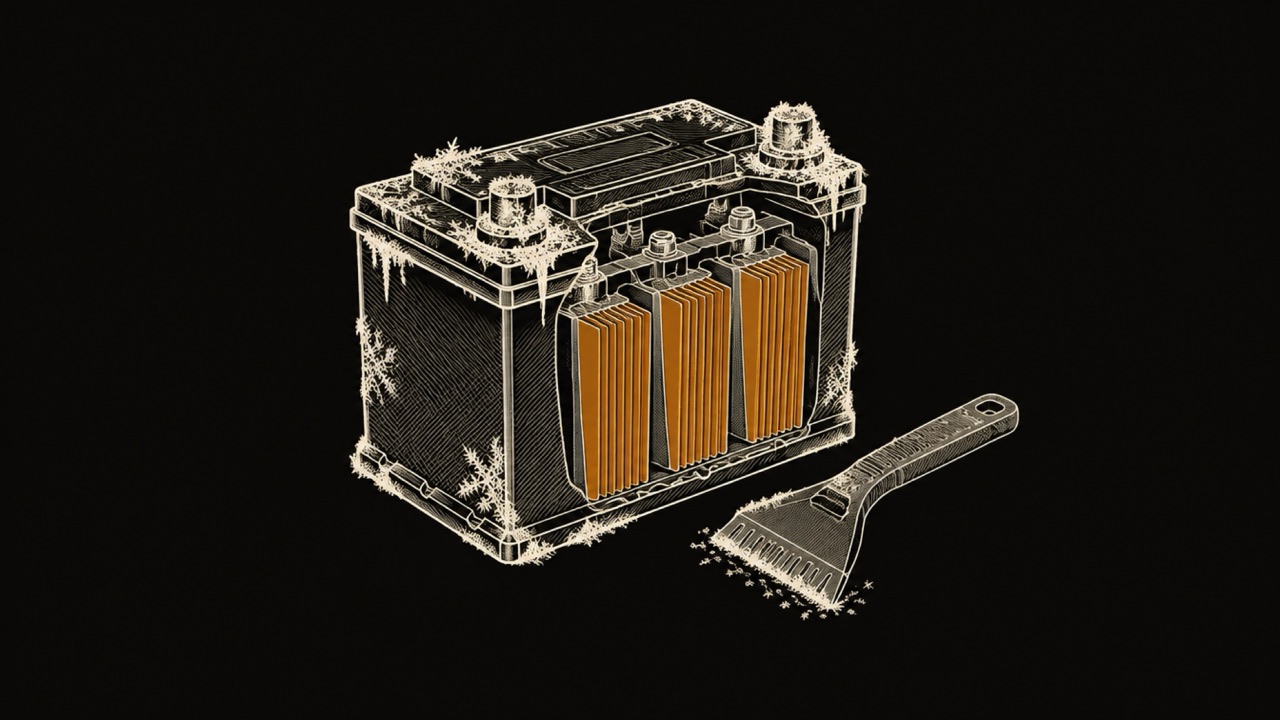
Cold then finds the weakness. AAA Hudson Valley reports that a battery loses about 35% of its strength at 32°F (0°C) and about 60% at 0°F (-18°C). A battery weakened over the summer may crank fine in October and fail on the first hard frost, so test it before the season: car maintenance in winter has the full list.
A 4-year-old car battery may still be good, and only a test tells you. AAA says to have it tested every year once it reaches its third year. Consumer Reports ties the schedule to climate: an annual load test after two years in a warmer climate, and after four years in a colder one.
A load test measures whether the battery holds its voltage while supplying a heavy current, which a plain voltage reading cannot show. In a hot state a 4-year-old battery is already past the typical three years, so a good test result buys months rather than years. In a cool state it may have more time left.
Ten years is possible but not a plan. Cars.com notes that some car batteries have been known to last 10 years, while three to five remains the usual range.
Read the voltage across the terminals twice: engine off, then engine running. OPTIMA says most 12-volt batteries should measure at least about 12.6 volts to count as fully charged, and the exact figure varies with chemistry. Let the car rest first, because a reading taken right after a drive comes out high.
The running figure tests the charging system, not the battery. JS Alternators, an alternator supplier, gives 13.5 to 14.8 volts as healthy. It adds that some cars with computer-controlled charging can normally show 12.5 to 13.2 volts at highway cruise, so a low figure on the highway alone proves nothing.
WrenchTime, an iPhone app for car and motorcycle maintenance, reads Battery Voltage over a Bluetooth OBD-II adapter, so you can watch the running figure from the driver's seat: see the OBD-II app for iPhone guide. It is the voltage the car's control module reports, useful as a trend and no substitute for a load test.
| Reading | Condition | What it means |
|---|---|---|
| 12.6 V or more | Engine off | Fully charged (OPTIMA) |
| 12.2 to 12.4 V | Engine off | Partly discharged: charge it, sulfation starts below 12.4 V |
| Below 12.0 V | Engine off | Discharged or failing |
| 13.5 to 14.8 V | Engine running | Alternator charging normally |
| Below 13.0 V | Engine running | Undercharging: alternator, regulator or wiring |
| Above 15.0 V | Engine running | Overcharging: voltage regulator fault, stop driving |
Source: OPTIMA and JS Alternators. Check your own car's service manual for its exact values.
A parked car slowly empties its battery, so how long it can sit depends on the draw and the charge left. Parked cars keep drawing current for alarms, radio presets and modules, called parasitic draw. OPTIMA says 25 mA is acceptable, 85 mA is not uncommon on newer vehicles, and over 100 mA points to an electrical issue.
OPTIMA says an 85 mA draw exhausts a full 50Ah battery in just over three weeks. As an example calculation, 50 divided by 0.085 is 588 hours, about 24.5 days. The car stops starting well before the battery is empty, so a shorter stop can already leave you stranded, and a battery that was not fully charged gives you less time.
For a longer stop, keep the battery on a maintainer. If that is not possible, OPTIMA advises charging it to at least 12.6 volts and disconnecting it, then giving it a full charge when the car comes out of storage.
The signs of a dying car battery usually appear before it fails, and AAA lists these six. Any one of them is a reason to have the battery tested or replaced now rather than at the next service.
Replacing a car battery costs $268 to $368 installed, according to Jerry in November 2026, with the battery at about $200 to $300 or more and labor at about $39 to $117 or more. An AGM adds 25% to 50% over a flooded battery, according to AAA South Jersey.
Check the date code before paying. Consumer Reports advises buying a battery less than 6 months old, preferably 3 months or newer. A code of 10-8 or K-8, for example, means October 2018, because a battery loses life sitting on a shelf. AAA adds that quality batteries offer free replacement for three or more years.
Here is a sample plan for a flooded battery in a temperate climate, driven daily. In a hot state, move every step one year earlier. The point is to replace the battery on your own schedule rather than in a parking lot.
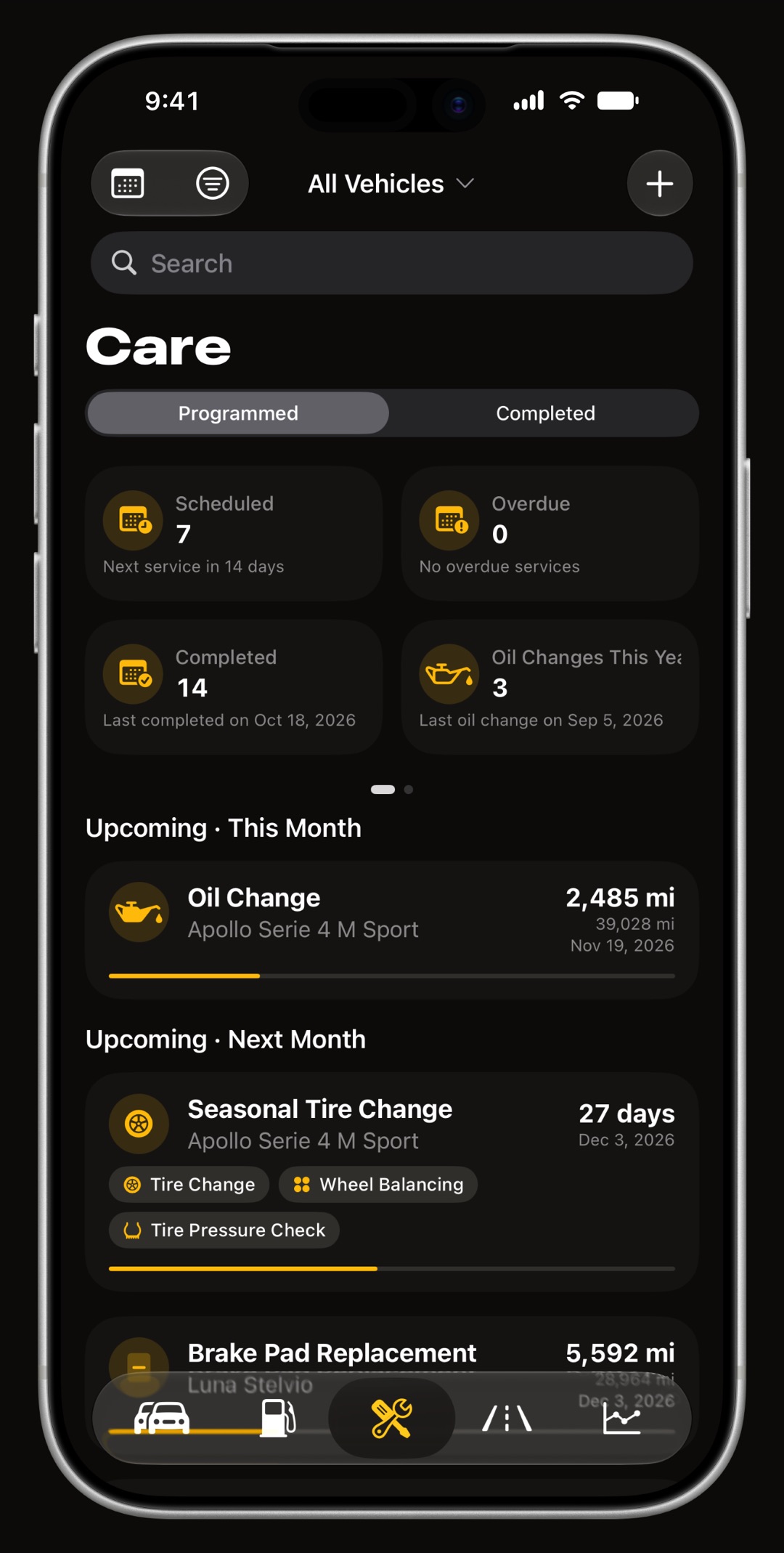
The date of the last replacement is the number that matters, and it is the one nobody remembers. Log Battery Replacement in WrenchTime with the date, the odometer and the cost, then set a Battery Check to repeat every year with a reminder by date. The steps are in how to schedule maintenance and reminders. The free version covers 1 vehicle with 2 maintenance entries per month, and WrenchTime Pro removes the limits.
Yes, but it is rare. Cars.com notes that some batteries have been known to last 10 years, while three to five is the usual range. A mild climate, regular long drives and a secure mount help, but an old battery should still be tested every year.
It can be, and only a test tells you. AAA advises an annual test from the third year, and Consumer Reports advises one after two years in a warm climate or four in a cold one. In a hot state a 4-year-old battery is already past the typical three years.
A new car battery lasts about as long as any other, three to five years on average according to AAA. Climate and use matter more than whether it came from the factory or a store. Check the date code when you replace one: Consumer Reports advises buying one less than 6 months old.
Less than three weeks on a newer car. OPTIMA says an 85 mA draw empties a full 50Ah battery in just over three weeks, and the car stops starting well before that. Use a maintainer for longer stops.
No. Jerry puts the battery alone at about $200 to $300 or more, and a professionally installed replacement at $268 to $368 in November 2026. An AGM costs 25% to 50% more than a flooded battery, according to AAA South Jersey.
More from the blog
Winter
Before the first freeze, test the battery, fit winter tires below 45°F, check the antifreeze, wipers and oil, then wash road salt off the underbody all season.
Hybrid battery
A hybrid battery usually lasts at least 10 years or 100,000 to 150,000 miles. Lab data, warranty rules, replacement costs and the warning signs to watch.
EV battery
Fleet data shows EV batteries lose about 2.3% of their capacity a year and rarely need replacing, so most outlast the 8-year, 100,000-mile warranty.

Free to download. One vehicle, real features, no ads. Your garage will thank you.
Download WrenchTime on the App Store