Service records
Which car maintenance records should you keep?
Keep every invoice and parts receipt with the date, mileage and work done, for as long as you own the car, because no outside report can rebuild that history.
Buying used
No single free vehicle history report matches a paid Carfax or AutoCheck report, so the best free option is a combination. NICB VINCheck shows theft and insurance total losses, an NMVTIS-based check such as VehicleHistoryReport.com shows title brands and the latest title odometer reading, and NHTSA's recall lookup shows open safety recalls. Accidents and service visits are the gap: get the full Carfax or AutoCheck report free through the listing or the dealer, and ask the seller for the maintenance records.
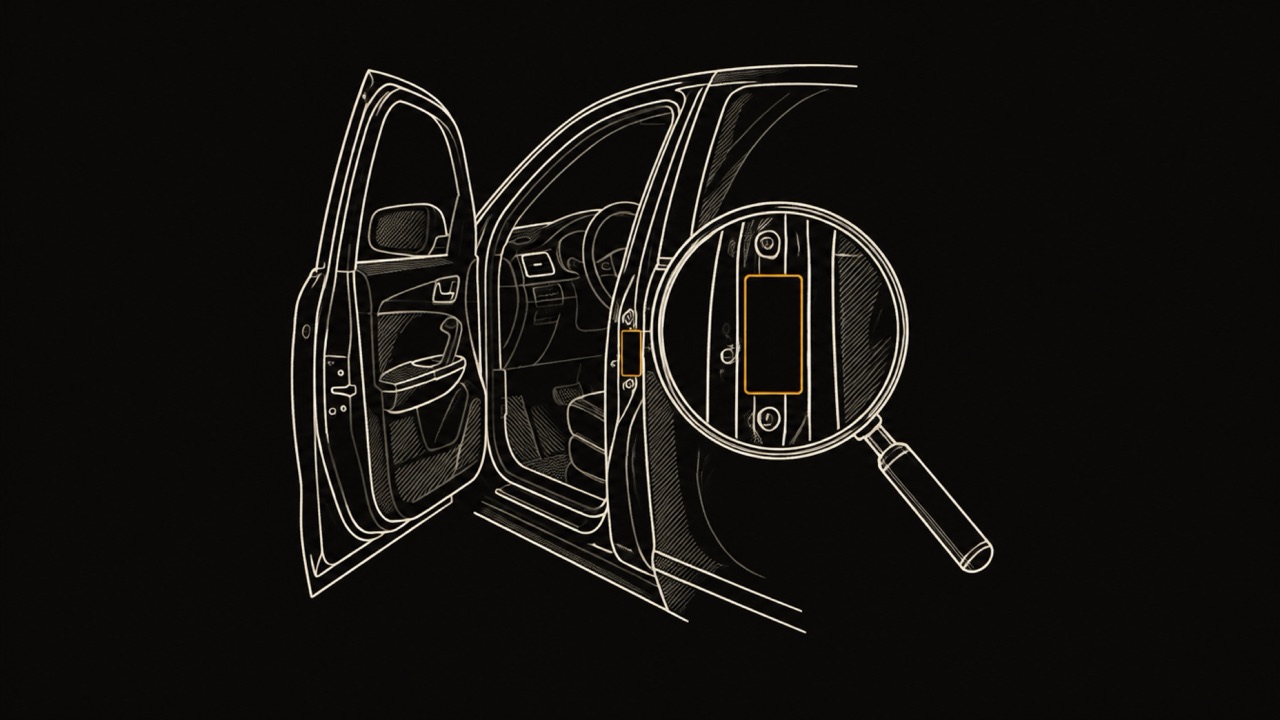
A vehicle history report is a summary of the records reported about one vehicle, looked up by its VIN: title records, odometer readings, insurance total losses, theft reports, recalls and, in the paid reports, accidents and service visits. The VIN (vehicle identification number) is the 17-character code standardized in 1981. NHTSA says to look for it on the lower left of the windshield, on the registration card and often on the insurance card; it is also on the driver's door jamb.
Every source shows only what was reported to it. Carfax states that it "does not have the complete history of every vehicle", and NICB warns that a clean VINCheck result "does not guarantee that the vehicle you are searching for has a clean history." A repair paid privately at a shop that reports nothing, or an oil change done in a driveway, may appear in none of them.
Three terms come up in every report. A total loss is a vehicle an insurer paid out on because repairing it would cost more than a set percentage of its value. A title brand is a label a state puts on the title, such as salvage, flood, junk or rebuilt; the brand types and their definitions vary by state. A salvage record, in NICB's words, means an insurer declared the vehicle a total loss; the car can still be legally rebuilt and re-titled.
Each free vehicle history report answers a different question, and none answers all of them. The free government and nonprofit tools cover theft, total losses, title brands and recalls. Accident and service records come almost only from the commercial reports, Carfax and AutoCheck, which are free only when a listing or a dealer pays for them. The table compares the seven options by data type, from each source's own pages as of October 2026.
| Source | Cost to you | Theft | Total loss | Title brands | Odometer | Open recalls | Accidents | Service records |
|---|---|---|---|---|---|---|---|---|
| NICB VINCheck | Free, five searches a day | Yes, insurer reports | Yes, salvage and flood | No | No | No | No | No |
| NMVTIS report (approved provider) | Up to $4 | No | Yes | Yes | Latest title reading | No | Total losses only | No |
| VehicleHistoryReport.com | Free, capped requests | Not stated | Yes, junk, salvage, flood | Yes | Latest title reading | Not stated | Total losses only | No |
| NHTSA recall lookup | No fee shown | No | No | No | No | Yes, unrepaired | No | No |
| Carfax report from a listing or dealer | $0 through the listing or dealer | Not stated | Not stated | Flood or lemon | Rollback check | Yes | Reported ones | Reported ones |
| AutoCheck report on a Cars.com listing | $0 on many listings | Not stated | Not stated | Not stated | Not stated | Not stated | Yes | Yes |
| iSeeCars free VIN check | Free theft check, full report on a monthly plan | Yes, NICB data | Paid plan | Paid plan | Paid plan | Paid plan | Paid plan | No |
Checked on October 13, 2026 against NICB, NMVTIS, VehicleHistoryReport.com, NHTSA, Carfax, Cars.com and iSeeCars. "Not stated" means the source's page does not say. Coverage changes, so check each site.
NICB VINCheck is the best free check for theft and insurance total losses. The National Insurance Crime Bureau, a nonprofit, checks a VIN against theft and salvage records reported by its participating insurers, which represent 92.49% of US earned insurance premium (NICB, as of August 2026). The result says whether the vehicle was reported stolen and not recovered, or reported as salvage or flood-damaged. It covers vehicles insured in the United States, plus some motorcycles and watercraft.
VINCheck is free and limited to five searches per IP address in a 24-hour period. NICB is explicit about its limits: it shows only records from participating insurers, does not query law enforcement records, and "is not a comprehensive vehicle history report and should not be relied upon when purchasing a vehicle."
An NMVTIS report is the best source for title brands and the title odometer reading. The National Motor Vehicle Title Information System is the federal title database run by the Department of Justice. It gathers data from state titling agencies, salvage yards and insurers, and offers "accurate information about a vehicle's title, odometer data, and certain damage history" (NMVTIS buying tips). The odometer figure is the most recent reading in the state's title record, and the damage history is limited to vehicles an insurer declared a total loss or a state branded.
NMVTIS does not sell reports itself. Consumers buy them from approved data providers and, according to NMVTIS, should expect to pay up to $4 per report. The list of approved providers names twelve consumer sites, including Bumper.com, Carsforsale.com, Clearvin.com, EpicVin.com, GoodCar.com and VinAudit.com, and states that consumers "CANNOT receive NMVTIS Vehicle History Reports from Carfax, DMVDesk, or Experian."
VinAudit, one of those providers, shows a free summary report and sells a full report at $9.99, five for $19.99 or ten for $29.99 (VinAudit, checked October 2026). Its full report adds theft, lien, impound and sale records to the NMVTIS data, which makes it a cheap paid upgrade when the free checks raise a question.
VehicleHistoryReport.com is the best free way to see NMVTIS title data without paying for a report. Its free report is provided by Carsforsale.com, an approved NMVTIS data provider, and includes vehicle details, online history, and insurance and title details on junk, salvage and flood brands (VehicleHistoryReport.com). The site's own limit messages cap use at seven requests a day and seven a month.
The site's NMVTIS disclaimer sets out what the data cannot show: NMVTIS "does not contain detailed information regarding a vehicle's repair history", not every state reports in real time, and significant damage is missing unless an insurer called the vehicle a total loss or a state branded the title.
NHTSA's recall lookup is the best source for open safety recalls on a specific vehicle. Searching by VIN or license plate on nhtsa.gov/recalls shows any unrepaired recall from the covered manufacturers, or the message "0 unrepaired recalls associated with this VIN." The list of covered makes includes motorcycle brands such as BMW Motorcycles, Ducati, Honda Motorcycles, KTM, Suzuki Motorcycles and Yamaha.
The lookup leaves out recalls that were already repaired, safety recalls more than 15 years old (unless the manufacturer offers longer coverage), recalls by small manufacturers including some ultra-luxury brands, non-safety campaigns, and international vehicles. NHTSA recommends checking recalls twice a year, and the remedy for a safety recall is free from the manufacturer's dealer.
A Carfax report provided by a listing or a dealer is the best way to get a full vehicle history report without paying. According to Carfax Support, every Carfax car listing comes with a free report, dealer websites often link one, and any dealer can be asked for a copy at the showroom. For a car you already own, a free Carfax Car Care account shows that car's own report.
A Carfax report can list accidents reported to Carfax, service history, type of use, the number of previous owners and length of ownership, odometer rollback, flood or lemon titles, and open recalls. Carfax describes its database as "billions of records from more than 151,000 domestic and international sources", covering vehicles built since 1981 (Carfax). Service history appears only when the shop that did the work reports it.
An AutoCheck report on a Cars.com listing is the best free second opinion on a car someone is selling. AutoCheck is powered by Experian, and many Cars.com listings carry a "Free AutoCheck Report" link; Cars.com adds that a free account may unlock additional free AutoCheck reports (Cars.com, December 2025).
Cars.com also points out the limit of the truly free tools: NICB VINCheck and VinCheck.info provide less detail than an AutoCheck or Carfax report, especially on accident and maintenance histories. Running both a Carfax and an AutoCheck report, when a listing offers them, catches records reported to one company and not the other.
The iSeeCars VIN check is the best pick when the question is price as much as history. Its free part is a theft record check that "shows National Insurance Crime Bureau database reports", the same data as NICB VINCheck. The full iVIN report, on a low-cost monthly plan, adds market value, recall history, title and lien information where the state DMV provides it, an accident check and a selling history with past prices (iSeeCars).
iVIN reports cover only US passenger vehicles from model year 1981 onward, so a motorcycle or an older classic needs another source.
No free tool matches Carfax on accident and maintenance records. The free stack of NICB VINCheck, an NMVTIS summary and NHTSA's recall lookup covers theft, insurance total losses, title brands, the title odometer reading and open recalls, which are the records that make a car unsafe or hard to resell. It does not show minor accidents, the number of owners or service visits.
The free alternative to paying for Carfax is getting someone else to pay for it. Carfax includes a free report with every Carfax listing and dealers often provide one, many Cars.com listings include a free AutoCheck report, and a private seller can be asked to share the report or run one before the sale.
Checking a used car's history for free needs only the VIN, and the order matters: the free checks first, then the seller's documents, then the car itself.
A vehicle history report says what happened to a car; service records say how it was looked after, and free reports almost never show them. NMVTIS carries no repair history, NICB carries only insurance records, and Carfax lists a service visit only when the shop reports it. The NMVTIS buying tips tell buyers to ask for the car's "maintenance record from the owner, dealer, or repair shop", and to ask the dealer or shop that did most of the work when the owner has no copies. Those records also decide how much mileage is too much for a used car, because a high odometer reading with every major service on file is a different car from the same reading with none.
An inspection covers what neither the report nor the records can. Carfax calls its own reports "no substitute for actually seeing the car in person" and recommends a qualified mechanic for any car you are serious about; Carfax Support puts the typical cost of that inspection at $100 to $150. The guide to which car maintenance records to keep explains what a complete service history contains.
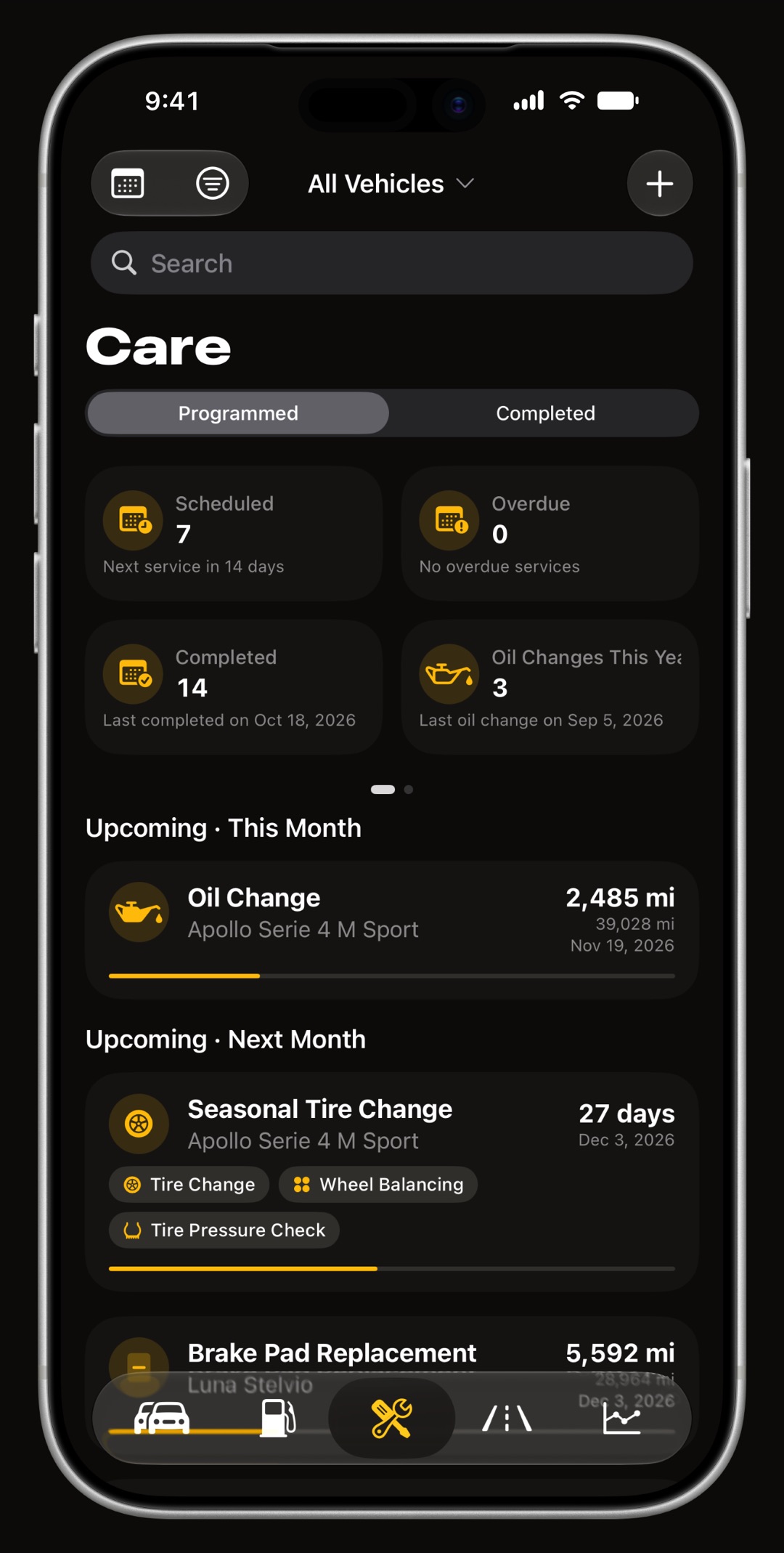
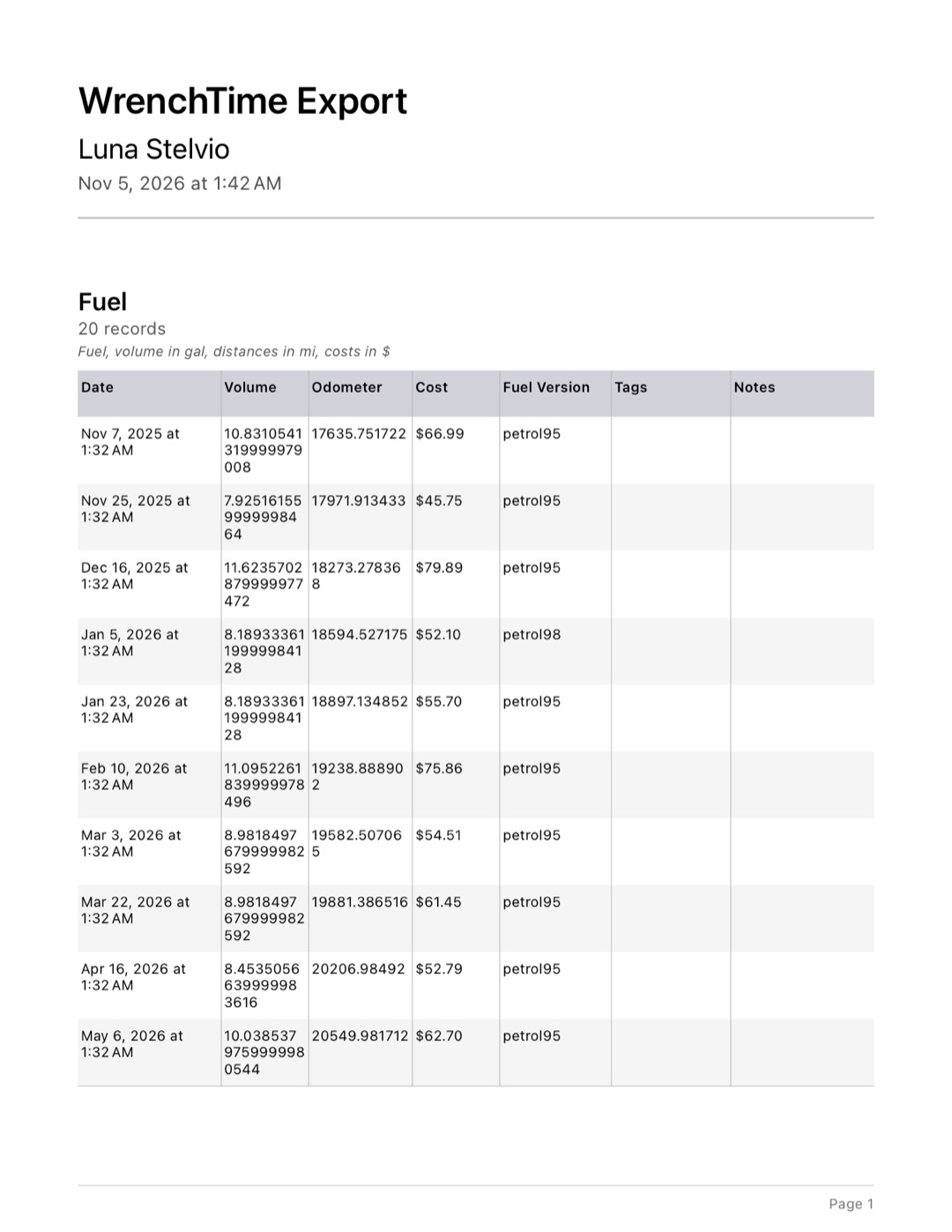
For a seller, an organized log answers the buyer's questions before they are asked. WrenchTime, an iPhone app for cars and motorcycles, records each completed service in its Care tab with the date, the odometer reading, the cost, notes and the invoice attached as a document, keeps an odometer audit trail of every change and where it came from, and stores the VIN on the vehicle. It exports a per-vehicle PDF or CSV of the whole history, and the attached invoices as one PDF with an index. WrenchTime does not run VIN checks or produce a history report; it keeps the record no report has. The article on what an iPhone car maintenance app should do covers the rest.
The best free vehicle history report is a stack of free checks plus the full report a listing or dealer already paid for, followed by the seller's records and an inspection.
The next buyer of your car will run the same free checks and find the same gap. Download WrenchTime on the App Store and log every service from the day you get the car, with the invoice attached, so the history exists when you sell. The free version covers 1 vehicle with 2 maintenance entries and 3 fuel entries per month, with attached documents and CSV and PDF export included, and WrenchTime Pro removes the limits. The car expense tracker guide shows how receipts and exports work.
Yes, but only partial ones. NICB VINCheck, NHTSA's recall lookup and NMVTIS-based summaries such as VehicleHistoryReport.com are free and cover theft, total losses, title brands and recalls. A full report with accidents and service records is free only through a listing, a dealer or the seller.
No single site covers everything. Start with NICB VINCheck for theft and insurance total losses, add an NMVTIS-based check for title brands and the title odometer reading, then NHTSA's recall lookup for open recalls.
Not for accident and maintenance detail. Cars.com notes that free tools such as NICB VINCheck give less detail than Carfax or AutoCheck. The closest free route is a listing that includes a Carfax or AutoCheck report, or a dealer or seller who shares one.
A free Carfax Car Care account shows your own car's Carfax report, and NHTSA's lookup shows its open recalls by VIN or license plate. Neither knows about work you did yourself, so keep your own service records.
NMVTIS says consumers should expect to pay up to $4 per report from an approved data provider. Carfax, DMVDesk and Experian do not sell NMVTIS reports to consumers. Some providers, such as VehicleHistoryReport.com, give a free summary.
Only partly. Carfax and AutoCheck list service visits that shops report to them, while NMVTIS and NICB show none. Ask the seller for receipts or a maintenance log, and the dealer or shop that did most of the work.
More from the blog
Service records
Keep every invoice and parts receipt with the date, mileage and work done, for as long as you own the car, because no outside report can rebuild that history.
Diagnostics
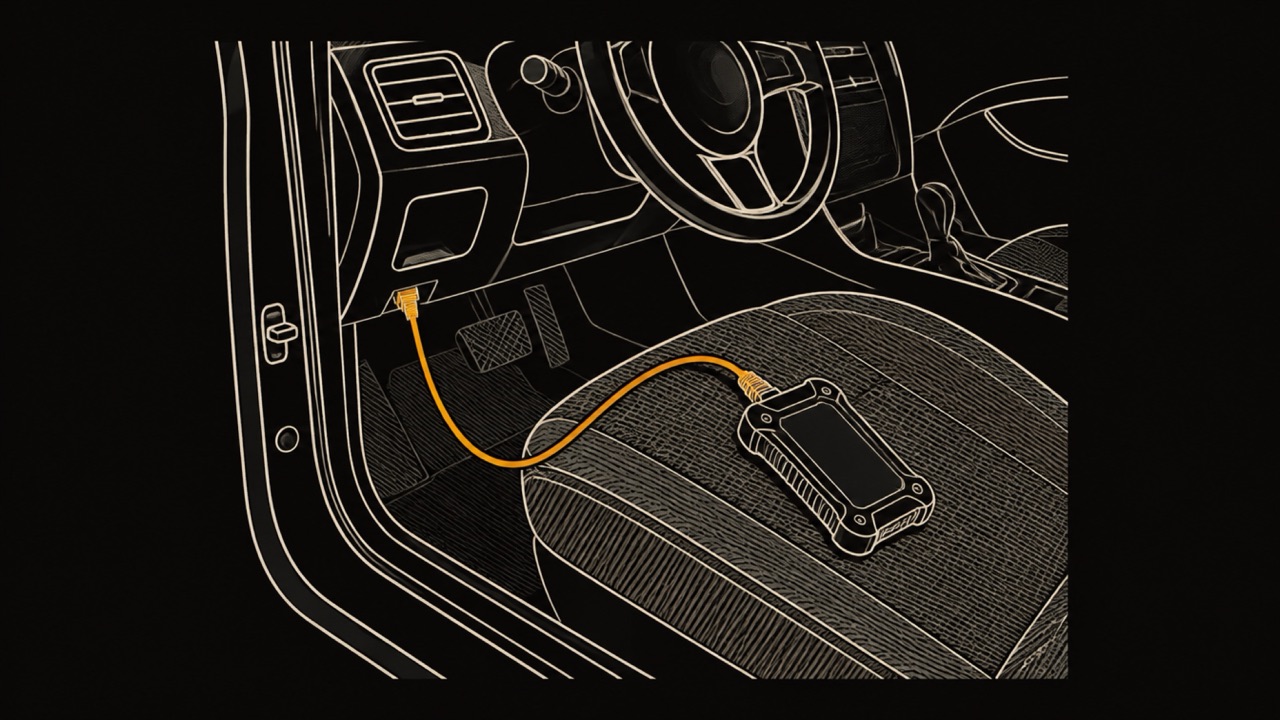
Plug in with the ignition off, switch to on without starting the engine, read and write down every code, and look each one up before clearing anything.
Choosing an app
Keep one record where mileage, service, fuel, charging and trips inform each other, on your phone and without an account, not a calendar with an oil-change icon.
Free to download. One vehicle, real features, no ads. Your garage will thank you.
Download WrenchTime on the App Store