Buying used
What is the best free vehicle history report?
No free report matches Carfax on its own, but NICB VINCheck, an NMVTIS check, NHTSA's recall lookup and a listing's free report together cover most of it.
Used cars
A used car inspection checklist runs in six stages: paperwork and VIN, body and tires, engine bay, interior and warning lights, a test drive, then an OBD2 scan. Do it in daylight with a cold engine, and treat it as a filter: it tells you which cars deserve a mechanic's inspection, usually $100 to $200, and which to leave. The scan is the step most lists skip, and it can show that a fault was cleared shortly before you arrived.
A used car inspection checklist should follow the order of the visit, because each stage decides whether the next one is worth your time. A title problem ends the visit before you open the hood. The table below lists the six stages, what to look at in each, and why that stage matters on its own.
| Stage | What to check | Why it matters |
|---|---|---|
| Paperwork and VIN | Title, VIN, service records, history report | A branded title or a VIN that does not match ends the visit |
| Body and tires | Panel gaps, paint, rust, tire tread | Uneven gaps and fresh paint point to repairs, worn tires to a near-term bill |
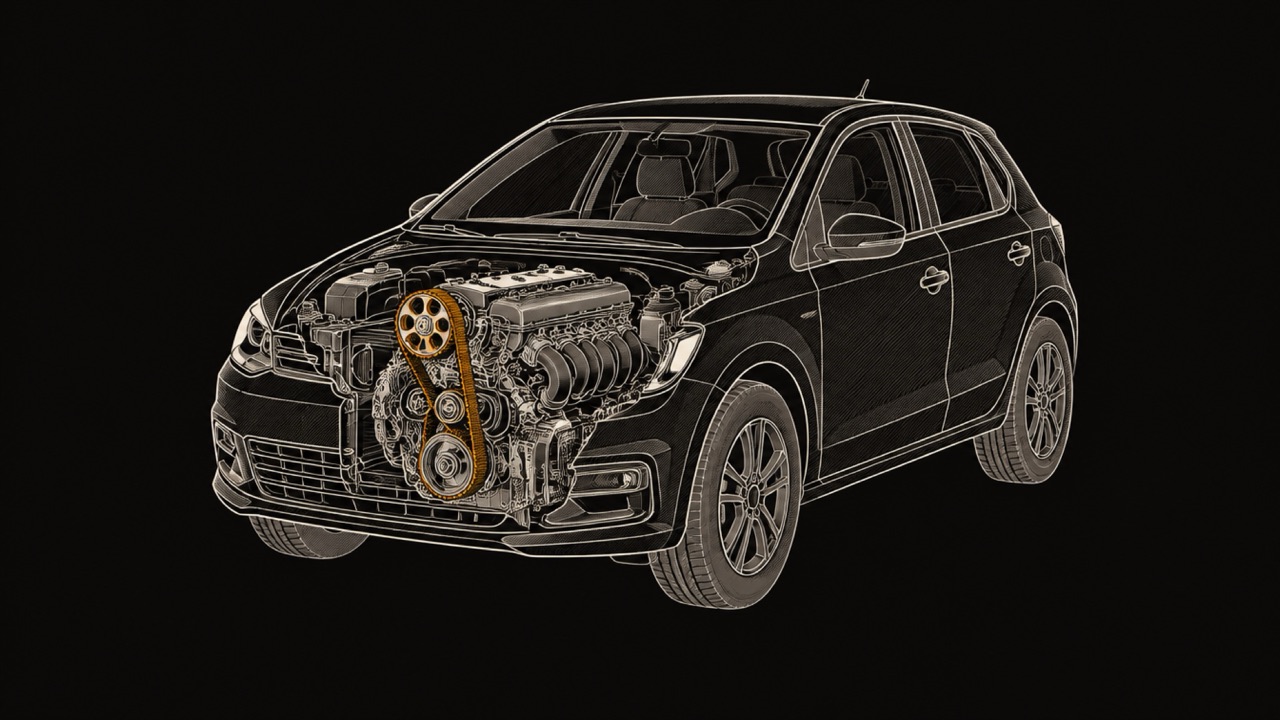
| Engine bay | Oil, coolant, transmission fluid, belts, battery | Fluids show how the car was kept and can reveal an expensive fault |
| Interior | Warning lights, seats, carpets, smell, controls | Wear should match the mileage, and damp carpets can mean flood damage |
| Test drive | Cold start, steering, brakes, shifting, noises | Most mechanical faults only show up under load |
| OBD2 scan | Check engine status, codes, readiness monitors | Shows faults and recent clears that a dashboard does not |
Bring a flashlight, a paper towel for the dipsticks, a tread gauge or a quarter, and an OBD2 adapter or scanner. Go in daylight, because paint repairs and panel color differences are hard to see under street lights or in rain.
Consumer Reports asks the seller not to drive the car for at least an hour before the inspection. Asking for a cold engine also lets you hear a cold start, when many engines show their problems, so an engine already warm when you arrive is a reason to ask why.
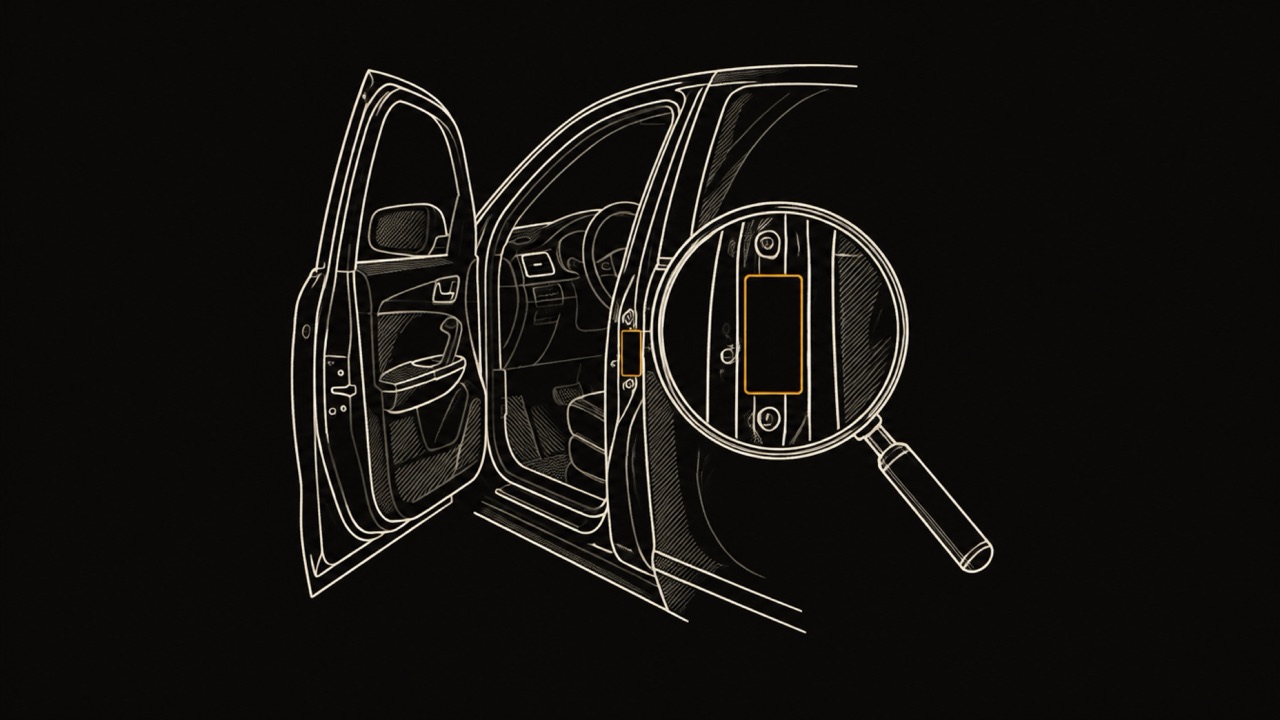
Start with the VIN, the 17-character vehicle identification number. It should match on the dashboard plate, the driver's door jamb and the title. Then ask for service records, and compare the mileage on oil-change stickers and invoices with the odometer.
A history report comes next, and it is a filter rather than a verdict. An NMVTIS report covers title, odometer and certain damage history for up to $4, and the National Insurance Crime Bureau offers a free VIN lookup that includes flood damage. Our guide to free vehicle history reports compares the options.
A report does not replace an inspection. The FTC notes that a history report may show accidents and flood damage, but typically will not list mechanical problems.
At a US dealer, read the Buyers Guide, which the FTC requires in every used car offered for sale. It says whether the car is sold with a warranty or as is, and as is means the dealer will not pay for any problems or repairs. Federal law does not require dealers to give you three days to cancel, so the check has to happen before you sign.
Walk around the car and look along each side from low down, where ripples and color differences show. Then check these points, each of which can lead to a repair bill or a lie about the car's past.
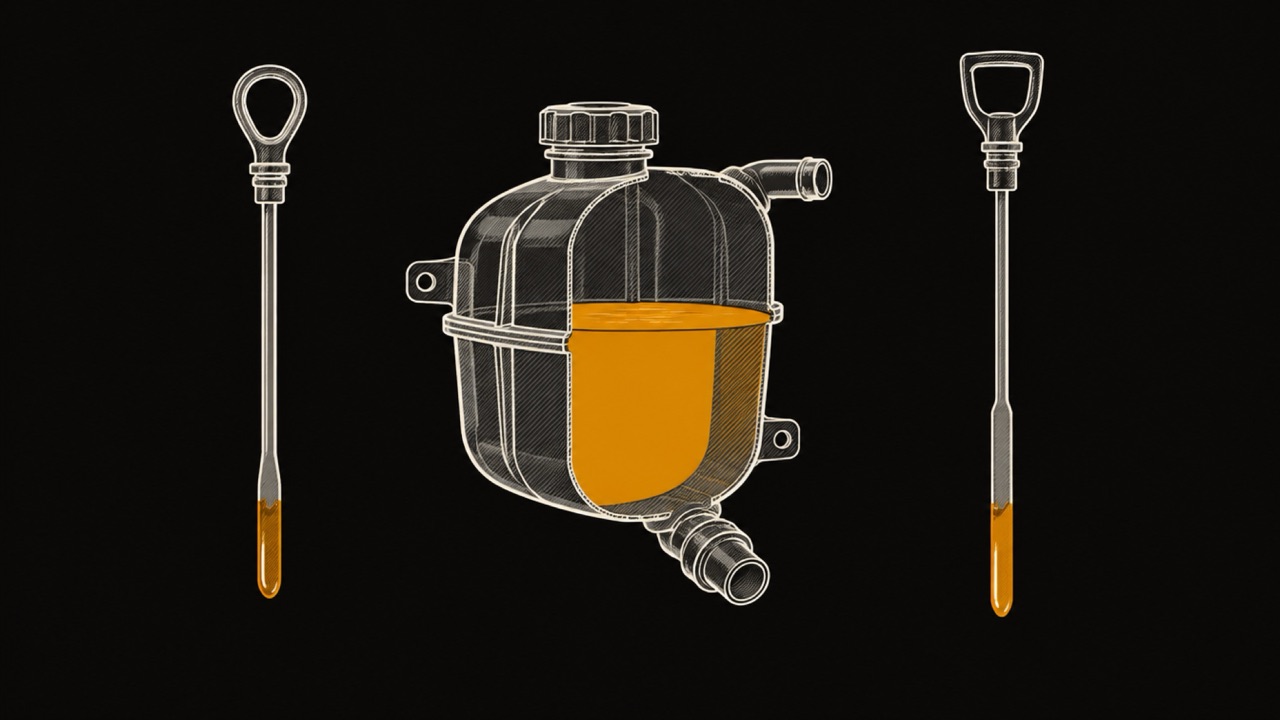
Open the hood and read each fluid, wiping the dipstick with the paper towel before you judge the oil. Do the oil and coolant with the engine cold. Consumer Reports, in a checklist updated in March 2026, says to check transmission fluid with the engine warmed up and running, so read that one after the test drive. Also look for leaks, cracked belts and soft hoses.
| Check | Healthy | Warning sign | What it can mean |
|---|---|---|---|
| Engine oil | Not gritty | Water droplets, gray or foamy oil | A cracked block or a blown head gasket |
| Coolant | Greenish or orange | Milky or rusty, green stains on the radiator | Green stains are a sign of leaks |
| Transmission fluid | Pinkish, no burnt smell | Brown, burnt smell, metal particles | Metal particles signal a more serious problem |
| Brake and power steering fluid | Between the reservoir notches | Outside the notches | Ask a mechanic to find out why |
| Battery | Load tested in the last two years | Approaching 4 to 5 years old | Plan to replace it, and ask a shop for a load test |
Turn the key to on without starting the engine. The warning lamps should light up, then go out once the engine runs. A check engine lamp that never lights deserves a question, and one that stays on is a fault to ask about. Auto Care Plus lists both checks in its pre-purchase checklist.
Then compare wear with the odometer. Kelley Blue Book, citing NHTSA in 2018, reports an estimate of more than 450,000 vehicles sold each year with false odometer readings, and says pedals, brakes and wipers should match the mileage shown.
Consumer Reports suggests asking why when a car averages more than 20,000 miles or fewer than 5,000 miles a year. Our guide on how much mileage is too much covers what to expect at each age. Finish by testing every window, lock, seat, the air conditioning and the heater.
Drive the car from cold, on a route with a rough road, a stop and a stretch of highway. Keep the radio off. Auto Care Plus lists test speeds of 30 mph, 45 mph and 60 mph, which covers the gears and the speeds where vibration appears.
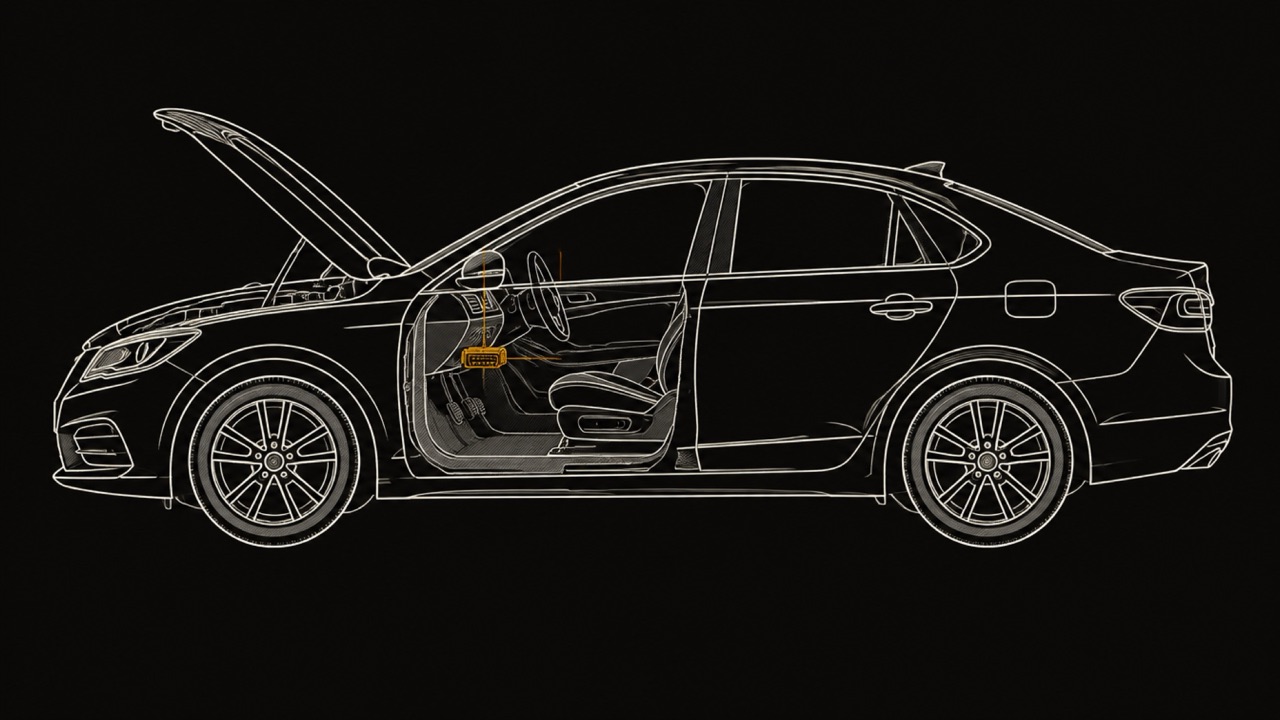
An OBD2 scan reads the car's own diagnostics through the port under the dashboard, and it needs the seller's permission and about as long as it takes to look at the tires. The California Air Resources Board says OBD II is required on gasoline cars and trucks from model year 1996 and on diesels from 1997. If you have never used one, read how to use an OBD2 scanner first.
The check that matters most is a recent clear. Clearing a code turns the check engine light off, but it also resets the readiness monitors, the self-tests the car runs while driving. The New York DMV lists clearing codes among the causes of a car being not ready, along with a disconnected or replaced battery.
Not ready is a question, not a verdict. The battery may simply be new, and the California Air Resources Board says about a week of normal driving usually completes the indicators. California's Smog Check has let the evaporative monitor stay unset on gasoline cars from 2000 on, and rules effective October 2025 move toward requiring every monitor, so one incomplete monitor alone means little. Several incomplete on a car with no recent battery work means ask why.
Permanent codes are the second check, and clearing cannot remove them. The California Bureau of Automotive Repair says they cannot be cleared by a scan tool or by disconnecting the battery, on model-year 2010 and newer vehicles that support them. They clear themselves only after the monitor runs again and finds no problem.
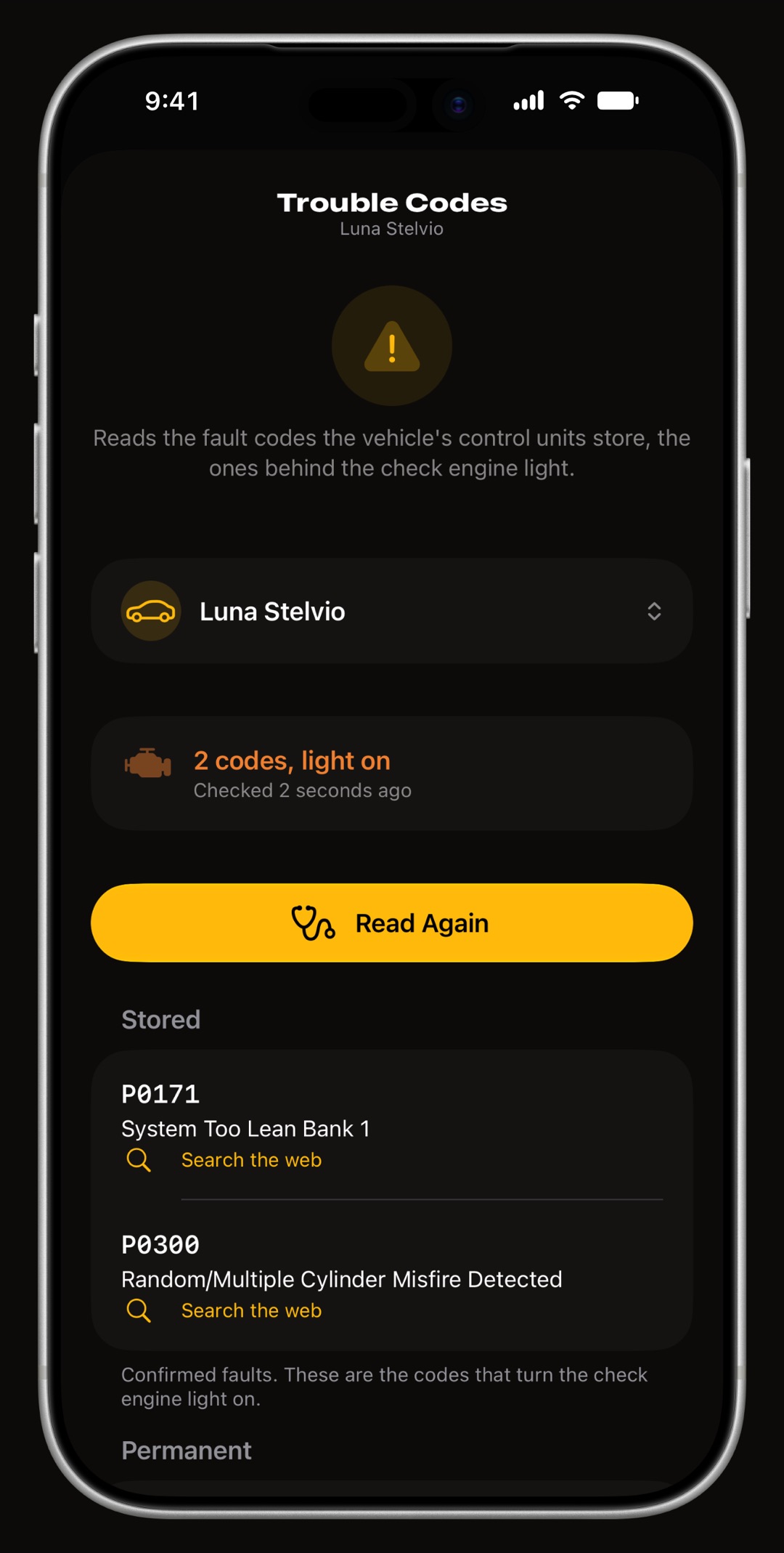
WrenchTime is an iPhone app that logs a vehicle and reads it. With a Bluetooth Low Energy ELM327 adapter or the OBDLink MX+, its Trouble Codes tool, part of WrenchTime Pro, reads stored, pending and permanent codes from every module that answers the standard request, with the check engine status, readiness monitors and freeze frame. The OBD-II code reader for iPhone guide shows how, and any other scanner that reads these items does the same job.
| Reading | What it means | What to do |
|---|---|---|
| Check engine status on | The car has a confirmed fault right now | Look up the code and get a repair price before you negotiate |
| Stored code | A fault the car has confirmed | Ask for the repair history, then price the fix |
| Pending code | A fault seen once and not yet confirmed | Ask a mechanic to look at it, since it may turn into a stored code |
| Permanent code | A recent fault the car has not yet proven fixed | Treat it as unresolved, even with the light off |
| Several monitors not ready | Codes cleared or battery disconnected recently | Ask why, and rescan after a week of driving if you can |
| All monitors ready, no codes | No current fault the standard diagnostics can see | Carry on to the mechanic's inspection |
A pre-purchase inspection is a mechanic's check of a car you do not own yet, and it usually costs $100 to $200. Consumer Reports puts a thorough one at around $100 to $150, and Cars.com quoted a RepairPal estimate of $132 to $200 in 2024. Rarer cars can cost more, so ask the price first.
The FTC calls an independent inspection always a good idea and tells buyers to ask for a written report with a cost estimate for all necessary repairs. That report is also your negotiating tool, because a seller finds it hard to argue with an estimate from a third party.
Walk away when a problem is about honesty rather than wear. A worn clutch has a price, and a seller hiding a fault does not. Any one of these signs is enough to leave, however good the car looks.
A hybrid or electric car goes through the same paperwork, body, interior and test drive stages, and adds one question: the state of the high-voltage battery. An electric car has no oil to read, so the engine bay stage shrinks to coolant, brake fluid and the 12-volt battery. Read how long hybrid batteries last or how long EV batteries last before you visit, and ask the seller for any battery health report.
Scan the car again the day you buy it, so you have a dated baseline. WrenchTime keeps each Trouble Codes scan with its date and odometer reading, and logs fuel, service and running costs in the same place, which also gives you the maintenance records you wished the last owner had kept. The free version covers 1 vehicle with 2 maintenance entries per month, and Trouble Codes are part of WrenchTime Pro.
Check the title and VIN, the body and tires, the fluids, the interior and warning lights, then take a test drive and run an OBD2 scan. A car that passes all six stages is worth a mechanic's inspection, which finds what a driveway cannot.
Consumer Reports puts a thorough inspection at around $100 to $150, and a RepairPal estimate quoted by Cars.com in 2024 is $132 to $200. Rarer cars cost more. Ask the price first, and ask for a written report with a repair estimate you can use to negotiate.
Yes, for a while: clearing codes turns the light off. It also resets readiness monitors to not ready, and on model-year 2010 and newer cars that support them, permanent codes survive the clear. An OBD2 scan shows both, so a recent clear is hard to hide.
Yes, with the seller's permission. A scan only reads data, so it changes nothing in the car as long as you do not clear anything. If a seller refuses a read-only scan, treat that the way you would treat a refused mechanic's inspection.
No. The FTC notes that a history report may show accidents and flood damage but typically will not list mechanical problems, and an accident nobody reported will not appear. Use a report to choose which cars to see, then inspect the car itself.
There is no single number, and condition and records matter more than the figure. Consumer Reports suggests asking why when a car averages more than 20,000 miles or fewer than 5,000 miles a year, which is a better test than a fixed limit.
More from the blog
Buying used
No free report matches Carfax on its own, but NICB VINCheck, an NMVTIS check, NHTSA's recall lookup and a listing's free report together cover most of it.
Buying used
Why no odometer reading is too much by itself, how to judge miles per year against the US average, what is due at each stage, and how to tell the number is real.
OBD2
Every OBD2 readiness monitor and what it checks, how many can be incomplete at an emissions test by model year, and the drive cycles states publish to get them ready.
Free to download. One vehicle, real features, no ads. Your garage will thank you.
Download WrenchTime on the App Store