Buying used
What is the best free vehicle history report?
No free report matches Carfax on its own, but NICB VINCheck, an NMVTIS check, NHTSA's recall lookup and a listing's free report together cover most of it.
Buying used
No odometer reading is too much on its own. What matters is mileage against age and proof of care. US drivers average 13,476 miles a year (FHWA), so a car with far more than about 13,500 miles per year of age has worked hard, and Consumer Reports says a modern car from a reliable brand should manage 200,000 miles or more. A 10-year-old car at 135,000 miles is normal; at 200,000 miles it needs records.
There is no mileage that is too much for a used car by itself. How much mileage is too much depends on the car's age, how it was maintained and what is already due. Consumer Reports, in an article updated in January 2026, says a modern car from a brand known for reliability should be capable of 200,000 miles or more.
The old rule of 100,000 miles as the end of a car's life is out of date. The same Consumer Reports article puts it plainly: "There was a time when approaching 100,000 miles on a car meant you should start thinking about a trade-in." A six-figure odometer on its own says only that the car has been used, not that it is used up.
High mileage is better read as a rate than as a total. In this guide, a high-mileage car is one that has covered clearly more miles per year of age than the US average of 13,476 miles, the figure from the Federal Highway Administration (FHWA). A 15-year-old car at 190,000 miles is below that rate; a 4-year-old car at 90,000 miles is well above it.
Good mileage for a used car is mileage close to, or below, what its age predicts. The FHWA puts the average at 13,476 miles per driver per year, which is 21,688 km. Multiplying that by the car's age gives the odometer reading an average car would show, and the table below does that for the ages a used-car shopper usually sees.
The average US light vehicle is 12.8 years old, according to an S&P Global Mobility analysis published in May 2025, with passenger cars at 14.5 years and light trucks at 11.9 years across 289 million vehicles in operation. At the FHWA rate, a car of that average age would show about 172,000 miles, which is why plenty of cars for sale carry six figures.
| Vehicle age | Expected miles at 13,476 a year | Kilometers |
|---|---|---|
| 3 years | About 40,000 | About 65,000 |
| 5 years | About 67,000 | About 108,000 |
| 8 years | About 108,000 | About 174,000 |
| 10 years | About 135,000 | About 217,000 |
| 12.8 years (average US vehicle) | About 172,000 | About 278,000 |
| 15 years | About 202,000 | About 325,000 |
Example calculation from the FHWA average of 13,476 miles a year and the S&P Global Mobility average age, rounded to the thousand.
Miles per year on a used car is the odometer reading divided by the car's age in years. Compare the result with the FHWA average of 13,476 miles. Count the age from when the car was first registered, in halves if needed, so a car first registered three and a half years ago counts as 3.5 years, not 3 or 4.
Example calculation: an 8-year-old car with 140,000 miles has covered 17,500 miles a year (140,000 ÷ 8). That is about 30% above the 13,476-mile average, so the car has worked harder than most of its age. It is not disqualified; it should come with receipts for the work Consumer Reports places between 60,000 and 150,000 miles.
Example calculation: a 4-year-old car with 70,000 miles has covered 17,500 miles a year, while a 9-year-old car with 90,000 miles has covered 10,000 miles a year. The older car has been driven less hard per year, but age brings its own items: Consumer Reports says batteries typically need replacing every three to five years, whatever the odometer reads.
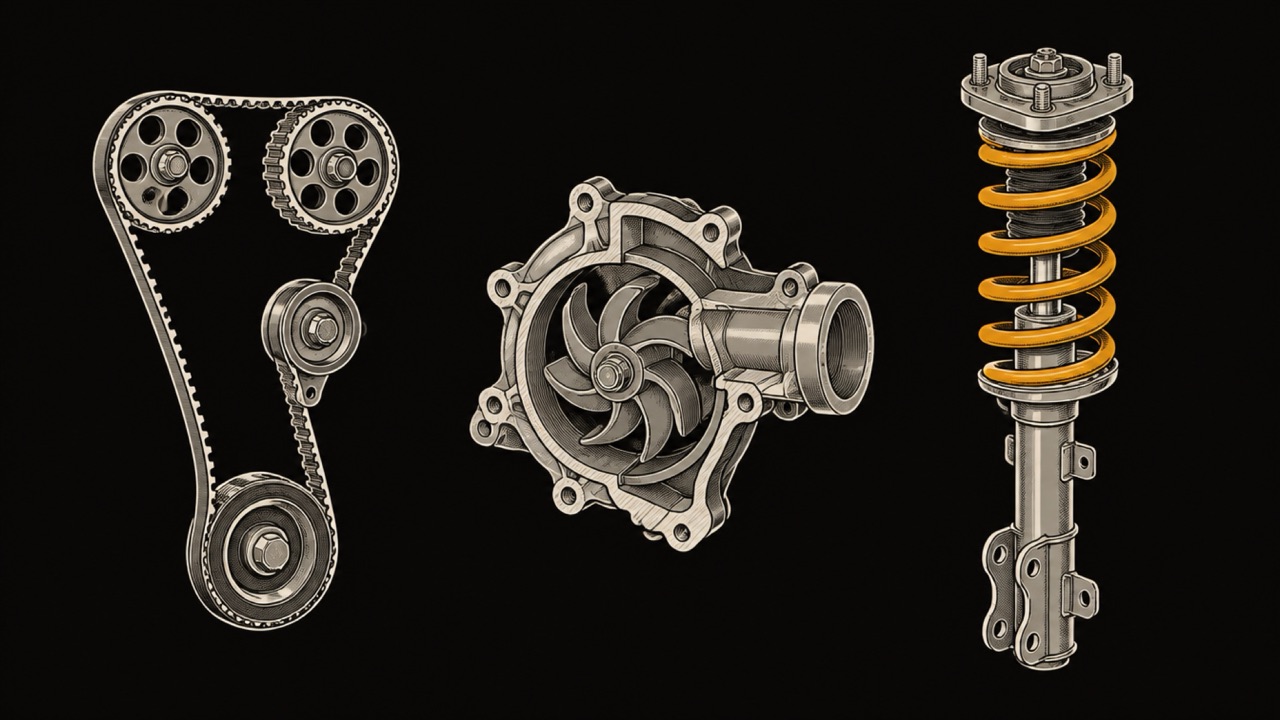
What a used car needs at 100,000, 150,000 and 200,000 miles follows a predictable pattern. Consumer Reports' guide to reaching 200,000 miles, updated in June 2026, splits a car's life into mileage bands, and the table below lists the work it places in each. A buyer can use it as a checklist of receipts to ask for.
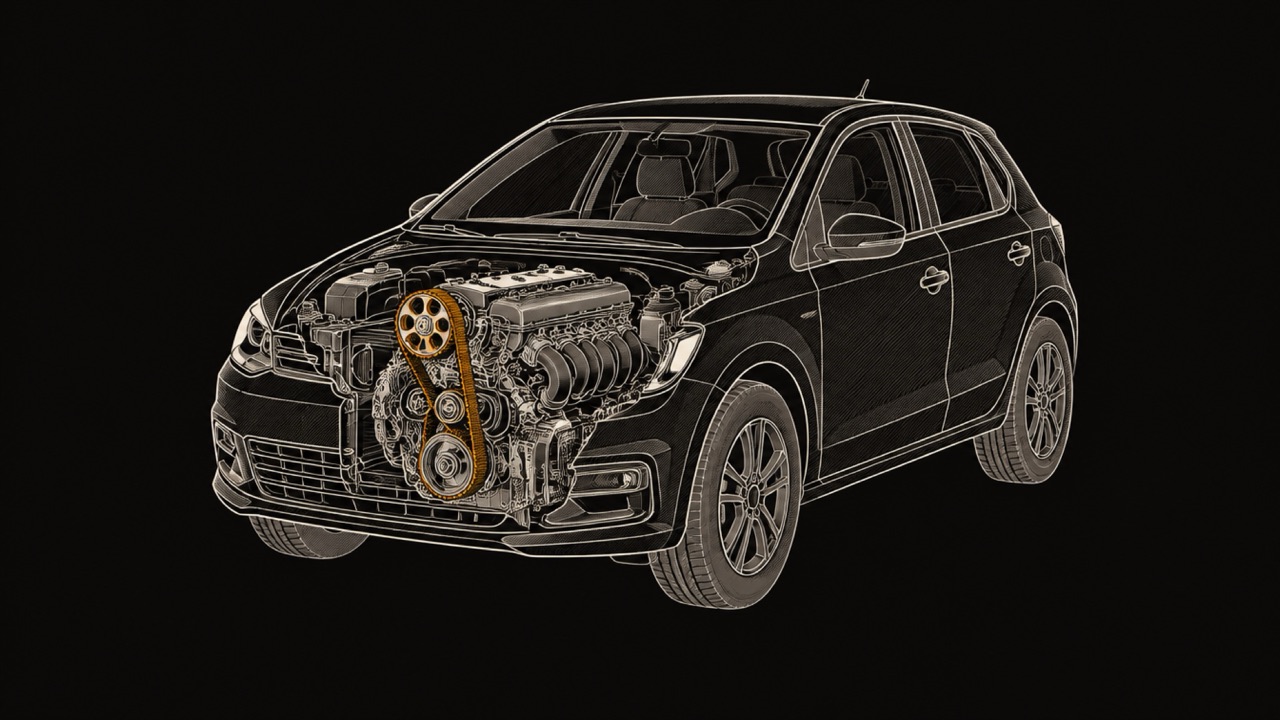
The 100,000 to 150,000-mile band is where Consumer Reports puts the timing belt on cars that have one, and it says parts replacement there can cost "$1,000 or more". Most recent cars use a timing chain that should last the vehicle's life, so check which the engine has before treating a missing belt receipt as a problem.
| Mileage band | Typical work |
|---|---|
| 36,000 to 60,000 miles | New tires, brake pads and possibly rotors |
| 60,000 to 100,000 miles | Suspension parts such as shock absorbers, struts and bushings |
| 100,000 to 150,000 miles | Timing belt (where fitted), spark plugs, starter, alternator, suspension parts |
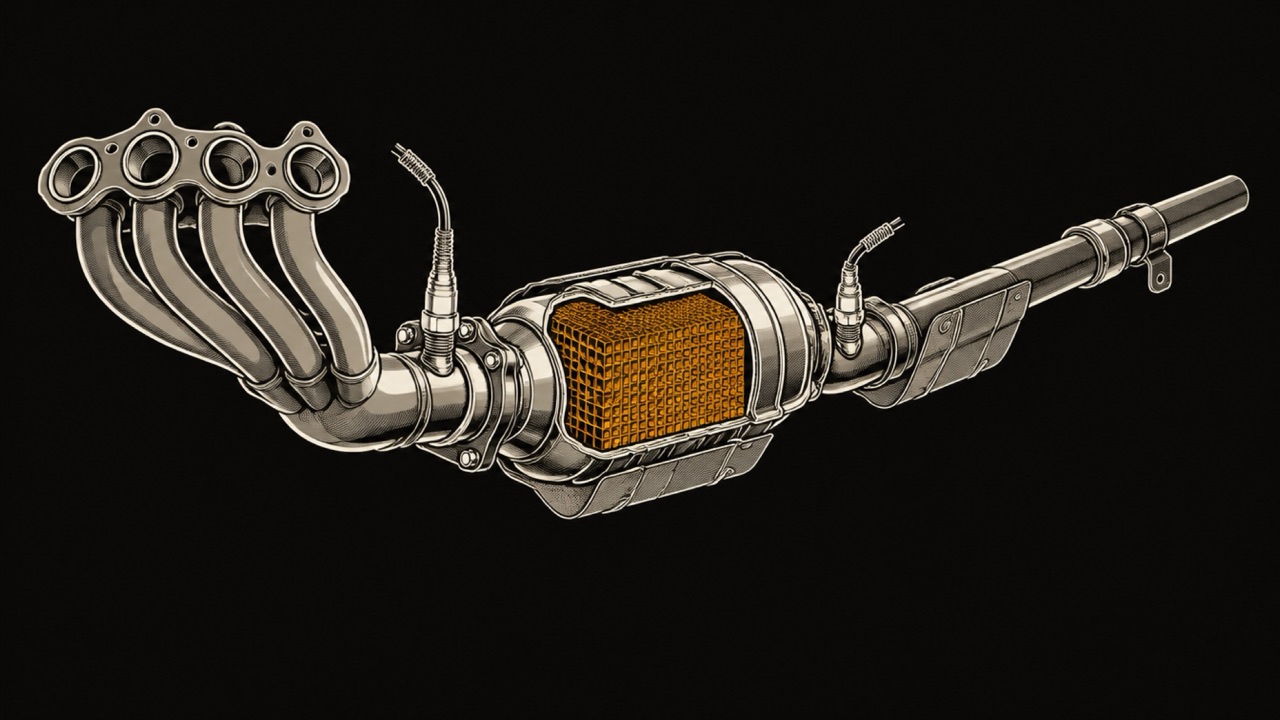
| 150,000 to 200,000 miles | Possible larger repairs: leaking engine oil seals, a new exhaust system, a head gasket |
Source: Consumer Reports, How to Make Your Car Last 200,000 Miles and More, updated June 5, 2026.
A car with over 200,000 miles is not automatically a bad buy, but it is a car with less margin. Consumer Reports says a modern car from a reliable brand should be capable of 200,000 miles or more, and its chief mechanic, John Ibbotson, adds that "the potential for big repairs goes up after 150,000 miles."
Buy a car past 200,000 miles only when three things line up: records showing the big jobs in the table above were done, an independent inspection with a written cost estimate, and a price low enough to absorb the repairs the inspection finds. Without the records, the odometer is the only history the car has, and that is not enough.
The mileage on a used car is only worth judging if it is real. The National Highway Traffic Safety Administration (NHTSA) has estimated that more than 450,000 vehicles a year are sold with false odometer readings, costing buyers over $1 billion a year, as the Georgia Consumer Protection Division reports. The estimate comes from an NHTSA study of 2002, according to Wikipedia. The same page cites the US Department of Justice for an average loss of about $4,000 per vehicle.
Odometer rollback means winding back the reading so a car looks less used than it is. Federal rules make the seller state the mileage in writing when a vehicle changes hands, and 49 CFR 580.17 sets how long that requirement lasts: 20 years for a model year 2011 or newer vehicle, and 10 years for a model year 2010 or older one.
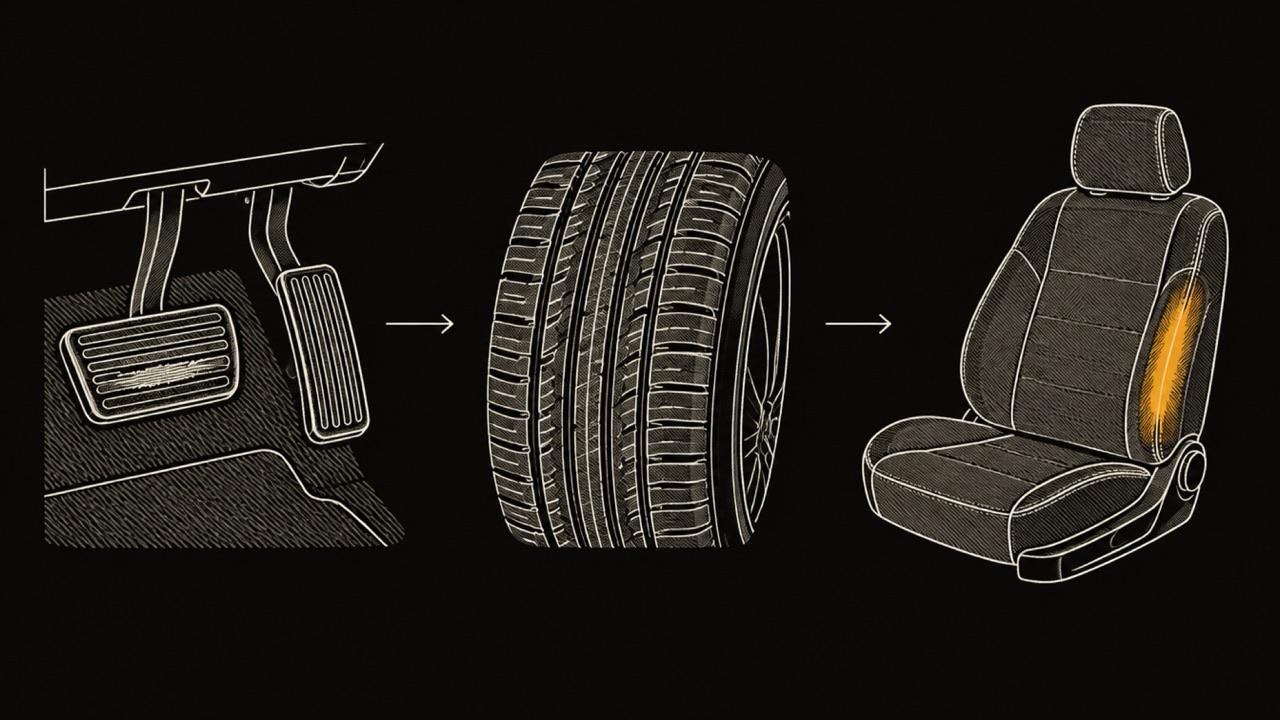
The checks the Georgia page lists cost nothing. Compare the odometer with the title, earlier disclosure statements, service records and oil-change or inspection stickers; look for marks on the instrument cluster, misaligned digits or loose dash screws; check that the wear on the pedals, tires and seats fits the mileage; and get a fully completed, signed mileage disclosure at the sale. Our list of free vehicle history checks covers the reports.
Before buying a high-mileage car, ask for service records that carry both a date and an odometer reading, so the mileage can be followed over the years and the big jobs can be matched to their band. Our guide to which maintenance records to keep lists what a complete file looks like.
Pay for an independent inspection as well. The Federal Trade Commission (April 2024) says "a vehicle history report is not a substitute for an independent vehicle inspection", because "typically it will not list mechanical problems", and advises asking the mechanic for a written report with a cost estimate for all necessary repairs, even on a dealer-certified car.
An OBD-II scan adds a check the seller cannot talk around, and it is one stage of a full used car inspection checklist. Stored trouble codes show what the engine computer has flagged, and the OBD2 readiness monitors show whether the car has finished its self-tests since the codes were last cleared. WrenchTime, a car maintenance app for iPhone, can run that scan with a Bluetooth ELM327 adapter: its OBD-II code reader for iPhone reads stored, pending and permanent codes, the readiness monitors and the freeze frame, and saves each scan with its date and odometer reading.
How much mileage is too much for a used car, in five points.
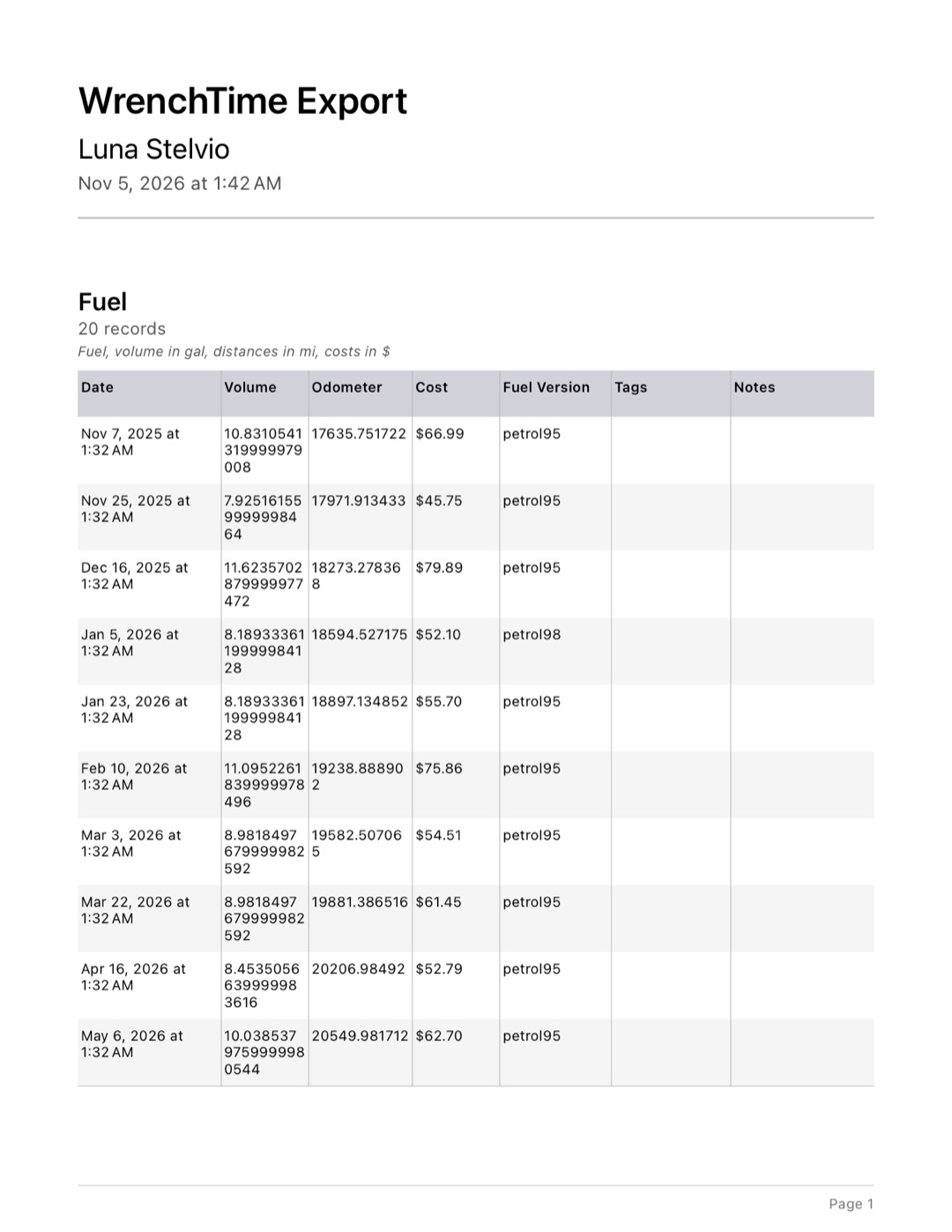
The mileage a buyer trusts is the one with a paper trail. WrenchTime keeps an odometer history that records every change with its old and new value and where it came from, next to every service with the odometer it was done at, and lets you export the vehicle's history as a PDF with tables. The free version covers 1 vehicle and 3 entries a month.
Not by itself. At the FHWA average of 13,476 miles a year, 130,000 miles is roughly what a 10-year-old car shows, so it is normal for that age. On a 5-year-old car it means about 26,000 miles a year, which calls for records of the work Consumer Reports places between 60,000 and 150,000 miles.
Not automatically. Consumer Reports says a modern car from a reliable brand should manage 200,000 miles or more, but its chief mechanic warns that the potential for big repairs rises after 150,000 miles. Buy one only with service records, an independent inspection and a price that leaves room for that work.
About 13,500. The Federal Highway Administration puts the average at 13,476 miles per driver per year, higher for drivers aged 20 to 54 (about 15,100 to 15,300 miles) and lower for drivers over 65 (7,646 miles). Divide the odometer by the car's age to compare.
About 21,700 km per year of age, the metric equivalent of the FHWA average of 13,476 miles. A 10-year-old car would then show about 217,000 km. The 200,000-mile life Consumer Reports describes for a reliable modern car is about 322,000 km.
Compare the odometer with the title, the signed mileage disclosure, service records and oil-change stickers, and check that the wear on the pedals, tires and seats fits the mileage. NHTSA has estimated that more than 450,000 vehicles a year are sold with false readings, so an independent inspection is worth its cost.
More from the blog
Buying used
No free report matches Carfax on its own, but NICB VINCheck, an NMVTIS check, NHTSA's recall lookup and a listing's free report together cover most of it.
Service records
Keep every invoice and parts receipt with the date, mileage and work done, for as long as you own the car, because no outside report can rebuild that history.
OBD2
Every OBD2 readiness monitor and what it checks, how many can be incomplete at an emissions test by model year, and the drive cycles states publish to get them ready.
Free to download. One vehicle, real features, no ads. Your garage will thank you.
Download WrenchTime on the App Store