Diagnostics
How to use an OBD2 scanner
Plug in with the ignition off, switch to on without starting the engine, read and write down every code, and look each one up before clearing anything.
OBD2
OBD2 readiness monitors are self-tests your car's engine computer runs on its emissions systems while you drive, and each one reports Complete (ready) or Incomplete (not ready). A petrol car has three continuous monitors (misfire, fuel system, comprehensive components) and up to seven non-continuous ones, such as the catalyst, the evaporative (EVAP) system and the oxygen sensors. New York (citing EPA guidelines) and Arizona, two US states, reject a 2001 or newer car with more than one monitor not ready.
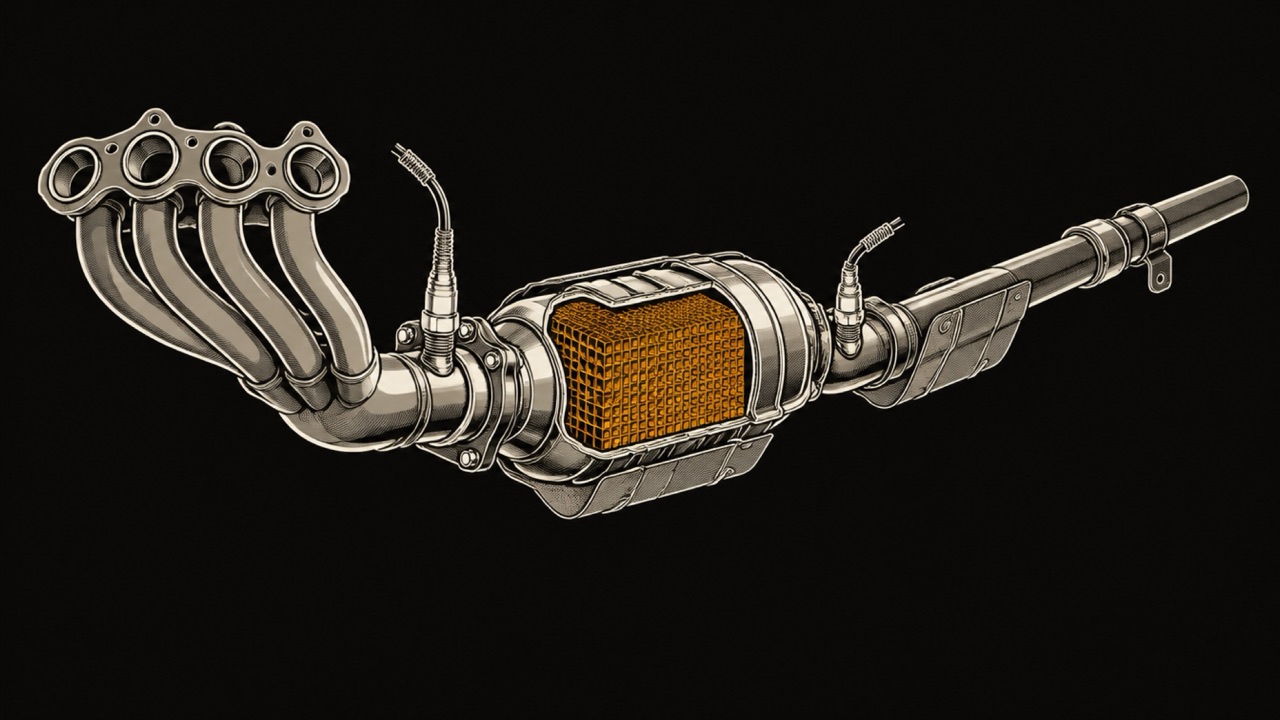
A readiness monitor is a self-test the engine computer runs on one emissions system, such as the catalytic converter or the oxygen sensors. OBD Auto Doctor puts it in one line: "The purpose of readiness monitors is to self-test the car's emission control systems." The tests run while the car is driven, and scan tools often list them under I/M (inspection and maintenance) readiness, after the American inspection programmes that read them.
How many monitors a car has depends on its engine and its year. The Ohio EPA readiness fact sheet (revised September 2024) says a vehicle performs up to eleven diagnostic checks, and the New York DMV says about ten, depending on year, make and model.
Ready does not mean healthy. A monitor reads Complete once its test has run, which says nothing about the result on its own: the Ohio EPA status key defines Complete as a self-diagnostic test that has been run. The Ohio EPA also notes that after a correct repair, the check engine light turns off on its own while the car completes its drive cycle.
The OBD2 readiness monitors list for a petrol car has ten entries: three continuous monitors and seven non-continuous ones. The descriptions below come from scan tool maker Innova (January 2024), the monitor names from OBD Auto Doctor and, for the EVAP monitor, from California's OBD II regulation. No car supports all ten: a monitor the manufacturer did not fit shows as N/A on a scanner and at the inspection station.
| Monitor | Type | What it checks |
|---|---|---|
| Misfire | Continuous | Engine misfires, detected from changes in crankshaft speed |
| Fuel system | Continuous | The fuel trim that corrects the air-fuel mixture |
| Comprehensive components (CCM) | Continuous | The inputs and outputs of sensors, actuators and switches, for sensible readings |
| Catalyst (CAT) | Non-continuous | The catalytic converter's efficiency, read through the oxygen sensors |
| Heated catalyst | Non-continuous | The catalytic converter's heater, on cars that have one |
| Evaporative system (EVAP) | Non-continuous | Purge flow and vapour leaks in the fuel tank system, down to a leak the size of a 0.020 inch (0.5 mm) hole |
| Secondary air | Non-continuous | The system that injects air into the exhaust stream to aid the converter |
| Oxygen sensor (O2S) | Non-continuous | The oxygen sensors that measure how much oxygen is in the exhaust |
| Oxygen sensor heater | Non-continuous | The heater inside each oxygen sensor |
| EGR and/or VVT | Non-continuous | Exhaust gas recirculation function tests, run at preset times; the monitor is named EGR and/or VVT where variable valve timing is included |
Sources: Innova, OBD Auto Doctor, California Code of Regulations, Title 13, Section 1968.2 (EVAP).
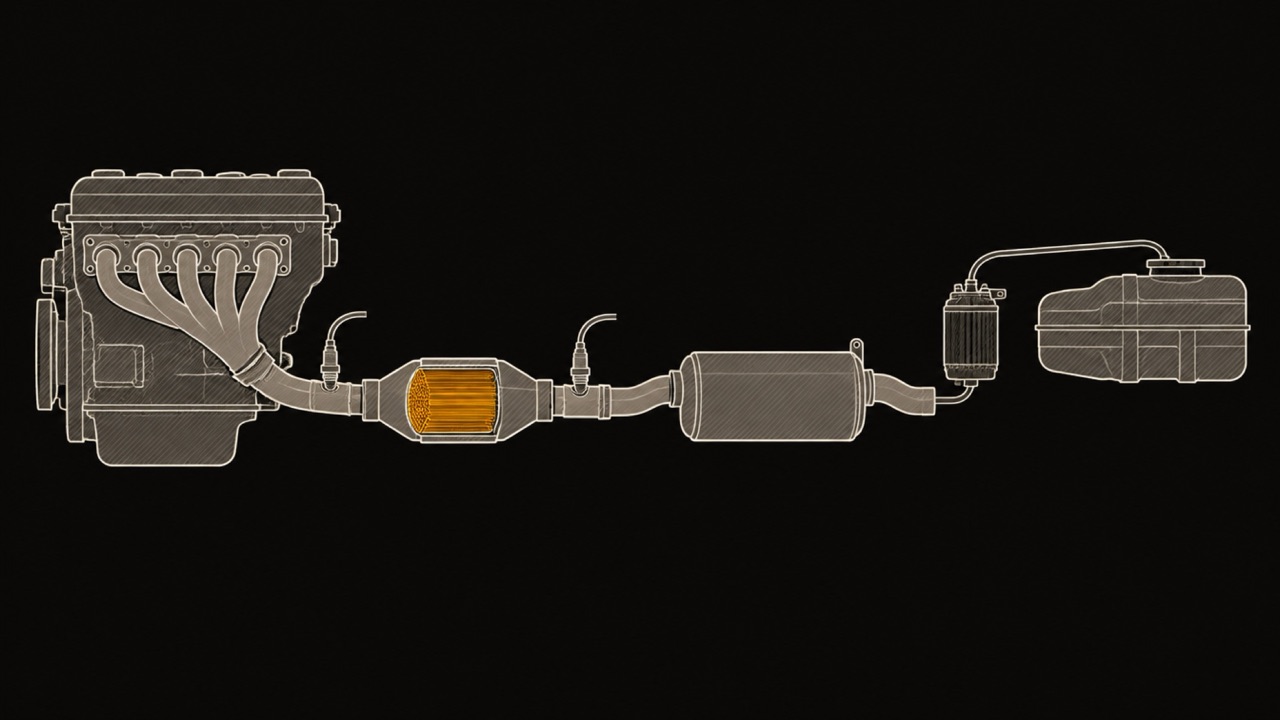
On most cars, three monitors are continuous and run the whole time the engine runs: misfire, fuel system and comprehensive components, as scan tool maker Innova classifies them. OBD Auto Doctor notes that the manufacturer decides, so on some cars these can run as non-continuous tests. Because they check all the time, they do not wait for special driving conditions, and a continuous monitor stuck at Not Complete is worth a closer look with a scan tool.
Non-continuous monitors run once a trip, and only when their conditions are met: a cold start, a stretch of steady cruising, a certain engine temperature. The EVAP test is the pickiest. OBD Auto Doctor notes it may need the fuel level between 35% and 85% before it starts, and state drive cycles ask for a partly full tank: between a quarter and three quarters in New Jersey, between half and three quarters in New York.
A single long drive is not always enough to set them all. The New York DMV says most cars need two drive cycles, separated by a cool-down period in which the car is not driven, before every monitor reads Complete.
A diesel shares the three continuous monitors with a petrol engine but has its own non-continuous list, built around exhaust aftertreatment. OBD2 applies to most 1997 and newer diesels under 8,501 lbs gross vehicle weight rating, according to the New York DMV. The list below follows OBD Auto Doctor, with Innova's descriptions.
The usual rule comes from EPA guidance, as OBD Auto Doctor summarises it: a 1996 to 2000 car may have up to two monitors not ready, and a 2001 or newer car one. Arizona rejects a car above those limits, and the New York DMV applies the one-monitor limit to 2001 and newer cars.
California is stricter. Its Bureau of Automotive Repair table allows only the EVAP monitor to be incomplete on a 2000 or newer petrol car. A regulation effective October 1, 2025 requires every monitor that can feasibly be set, but BAR says the current pass/fail criteria remain unchanged for now and will change only where Smog Check data show the monitors can be completed, with notice well in advance. These are US state programmes and the table is a US reference. Rules differ from one state to the next, so check the programme in the state concerned before a test.
| Program | Model years | Fuel | Monitors allowed incomplete |
|---|---|---|---|
| Arizona | 1996-2000 | Petrol | Two |
| Arizona | 2001 and newer | Petrol | One |
| New York (EPA guidance) | 2001 and newer | Petrol | One |
| California | 1996-1999 | Petrol | Any one |
| California | 2000 and newer | Petrol | EVAP only |
| California | 1998-2006 | Diesel | None |
| California | 2007 and newer | Diesel | PM filter and NMHC catalyst only |
Sources: Arizona DEQ, New York DMV, California Bureau of Automotive Repair (table implemented May 4, 2015; diesel 2007 and newer row July 5, 2023).
Readiness monitors read Not Ready when the engine computer's memory has been reset and the self-tests have not run again since. According to the New Jersey Motor Vehicle Commission, over 40% of the vehicles that fail its OBD inspection each year are rejected because they are not ready to be inspected.
California's Bureau of Automotive Repair says the monitors must be rerun after a repair such as disconnecting the battery or replacing a defective emissions component. The New York DMV adds two less obvious causes: a pending problem that has not turned on the check engine light yet, and an engine computer that needs a software update.
You get readiness monitors ready by driving: a drive cycle is the mix of cold start, idling, steady cruising and coasting that gives every self-test its conditions. The Ohio EPA says two or three days of normal highway and city driving usually does it after a reset, older cars may take longer, and every new reset starts the process over.
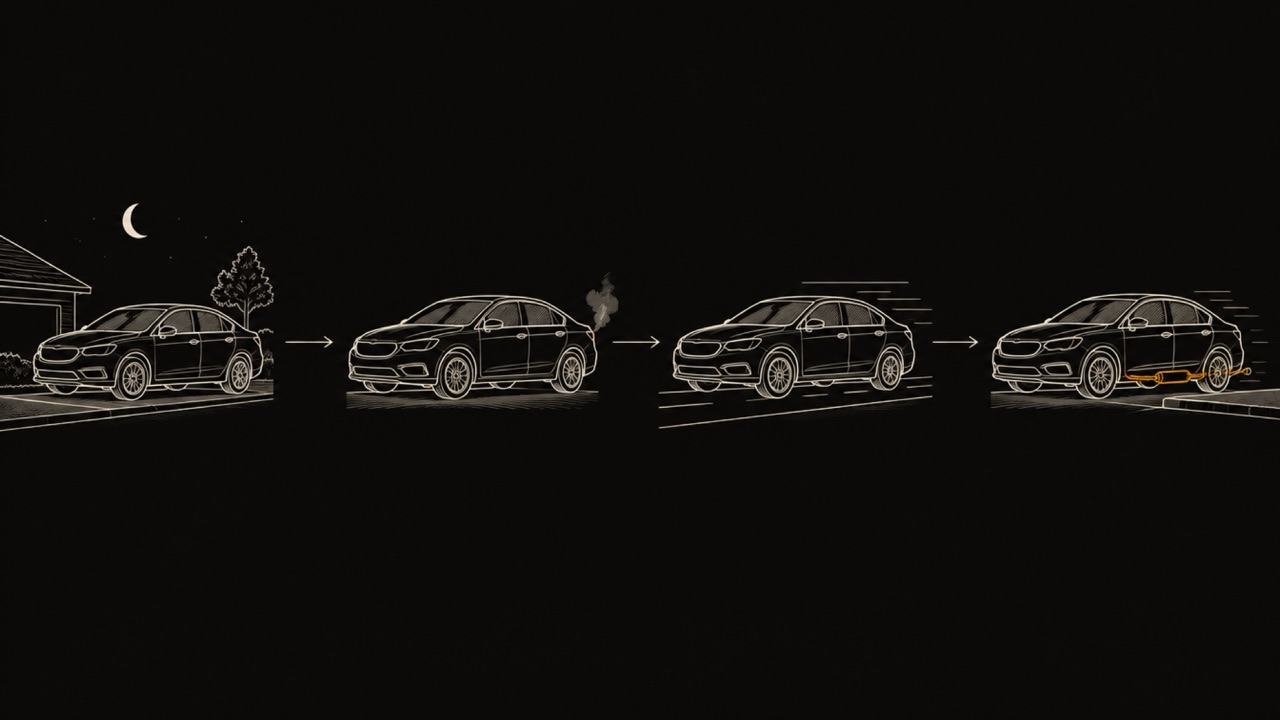
The manufacturer's own drive cycle is the reliable one, and the owner's manual or a dealer has it. When it is not available, the New York DMV publishes the generic cycle below, to be driven twice with a cool-down in between. New Jersey's version is simpler: park overnight or at least 8 hours, warm up, drive on the highway at at least 55 mph, then 20 minutes of stop-and-go traffic with at least four idles.
You check readiness monitors with an OBD2 scan tool, which the Ohio EPA calls the best way short of retesting the car. The scanner's I/M readiness screen lists each monitor as Complete, Not Complete or N/A, the same status the inspection station reads. Most US car parts shops can run the check for you, and using the scan tool to reset the monitors starts the drive cycle over.
A Bluetooth adapter and a phone app read the same status as a handheld scanner. The guide to which Bluetooth OBD2 adapters work with an iPhone explains the hardware side, and the roundup of the best OBD2 apps for iPhone compares what each app reads.
WrenchTime, an iPhone app for car and motorcycle maintenance, reads the readiness monitors in its Trouble Codes tool (WrenchTime Pro) over a Bluetooth ELM327 adapter or an OBDLink MX+. The same scan shows stored, pending and permanent codes and whether the check engine light is on, and each scan is saved with its date and odometer reading, so you can compare before and after a drive cycle.
No. Clearing trouble codes, or disconnecting the battery, resets every readiness monitor to Not Ready, and a car that arrives with too many incomplete monitors is rejected even with the check engine light off. The step-by-step guide on how to use an OBD2 scanner covers when clearing makes sense.
The Ohio EPA goes further and advises leaving the codes in place after a repair when possible: if the repair was right, the check engine light turns off by itself as the car completes its drive cycle, and that is the sign the car is ready to test. The same advice applies to a converter fault, covered in what the P0420 code means.
If a car fails only for readiness, the inspection station in New York issues a 10-day extension when the inspection has already expired, according to the New York DMV, so you can drive the cycle and come back for a retest.
The whole article in five lines.
Before the inspection, plug in a Bluetooth adapter, run a scan in WrenchTime and see which monitors are complete, next to any stored or pending code and the freeze frame the car saved with the first fault. Clearing codes is possible only after a read, with the engine off and after two confirmations, and the first one warns that it resets the readiness monitors. The OBD-II code reader for iPhone guide walks through the whole scan.
The free version covers 1 vehicle with 3 fuel entries per month; Trouble Codes is part of WrenchTime Pro, and a demo mode in Settings shows a full scan with sample readiness monitors before you buy an adapter. Download WrenchTime on the App Store.
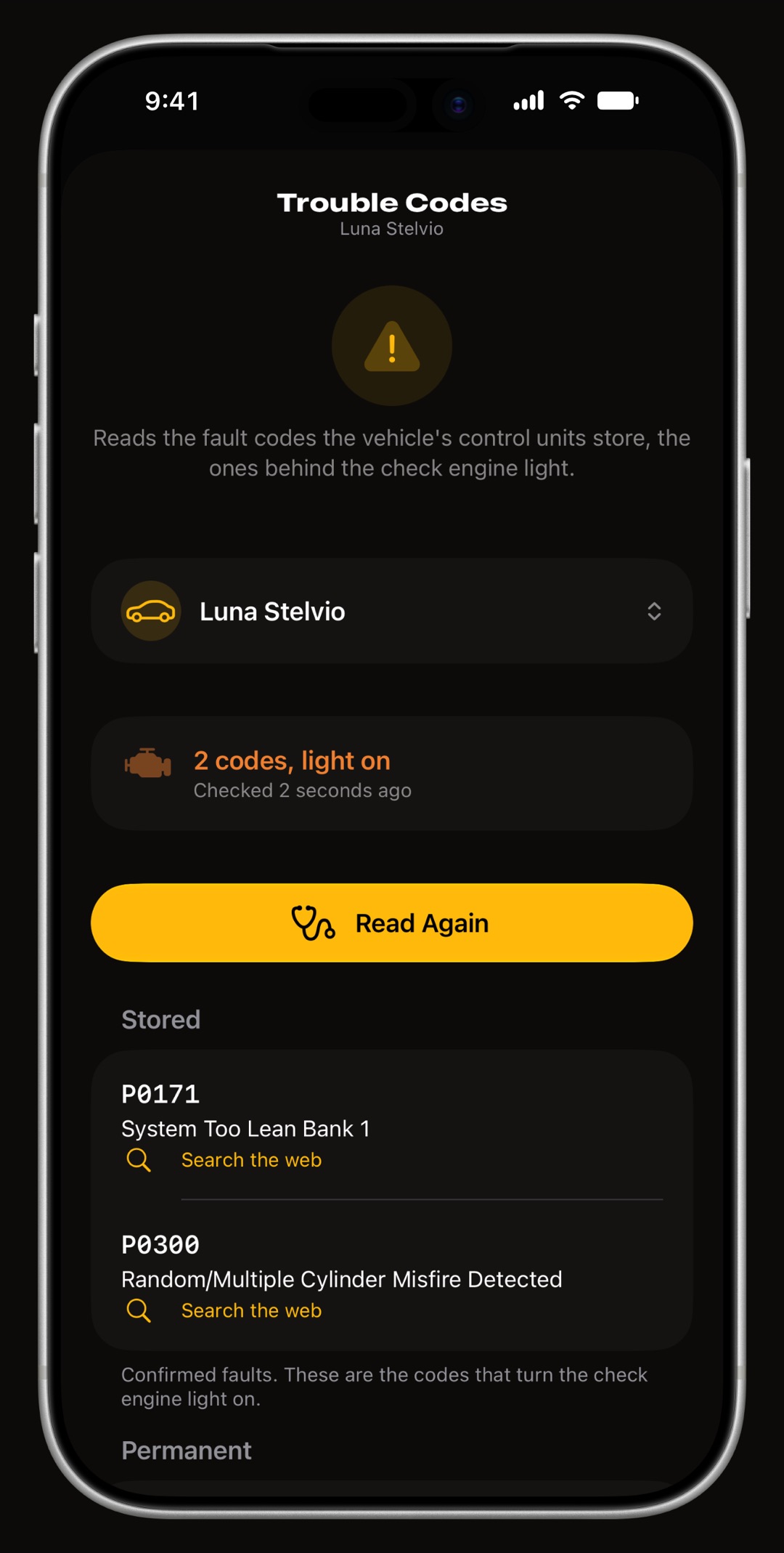
I/M readiness is the scanner screen that shows whether each emissions self-test has run since the codes were last cleared. Each monitor reads Complete, Not Complete or N/A, the same status an inspection station reads, according to the Ohio EPA. It shows that a test has run, not its measured result.
In Arizona, a 1996 to 2000 car may have two monitors not ready and a 2001 or newer car one, the same limits OBD Auto Doctor attributes to EPA guidance. California is stricter: on a 2000 or newer petrol car only the EVAP monitor may be incomplete, according to the Bureau of Automotive Repair.
Usually two or three days of normal highway and city driving, according to the Ohio EPA, and older cars may take longer. The New York DMV says most cars need two drive cycles separated by a cool-down period. Each new code clear or battery disconnect starts the count over.
Yes. Disconnecting or replacing the battery sets the readiness monitors back to Not Ready, and California's Bureau of Automotive Repair says they must be rerun afterwards. Drive the car for a few days of mixed driving before an emissions test.
The fuel system monitor is continuous, so it runs whenever the engine runs and normally reads Complete after ordinary driving. If it stays Not Complete, read the codes with a scan tool: the New York DMV lists a pending problem not yet on the check engine light among the causes of a not-ready result.
N/A means the manufacturer did not fit that monitor to the car, so it is not tested and does not count against you, according to the Ohio EPA. Unsupported is different: a monitor the car was built with that no longer reports, which Ohio requires fixed before a pass.
More from the blog
Diagnostics
Plug in with the ignition off, switch to on without starting the engine, read and write down every code, and look each one up before clearing anything.
Diagnostics
Six OBD2 apps for iPhone compared on price, adapter, readiness, Mode 06, manufacturer modules, CarPlay and logs, from what each developer states.
Motorcycle tyres
Motorcycle tyre life in miles by tyre type, the age limits makers set, how to read the DOT date code and when the tread is done.
Free to download. One vehicle, real features, no ads. Your garage will thank you.
Download WrenchTime on the App Store