Motorcycle chain
Motorcycle chain maintenance: clean, lube and adjust
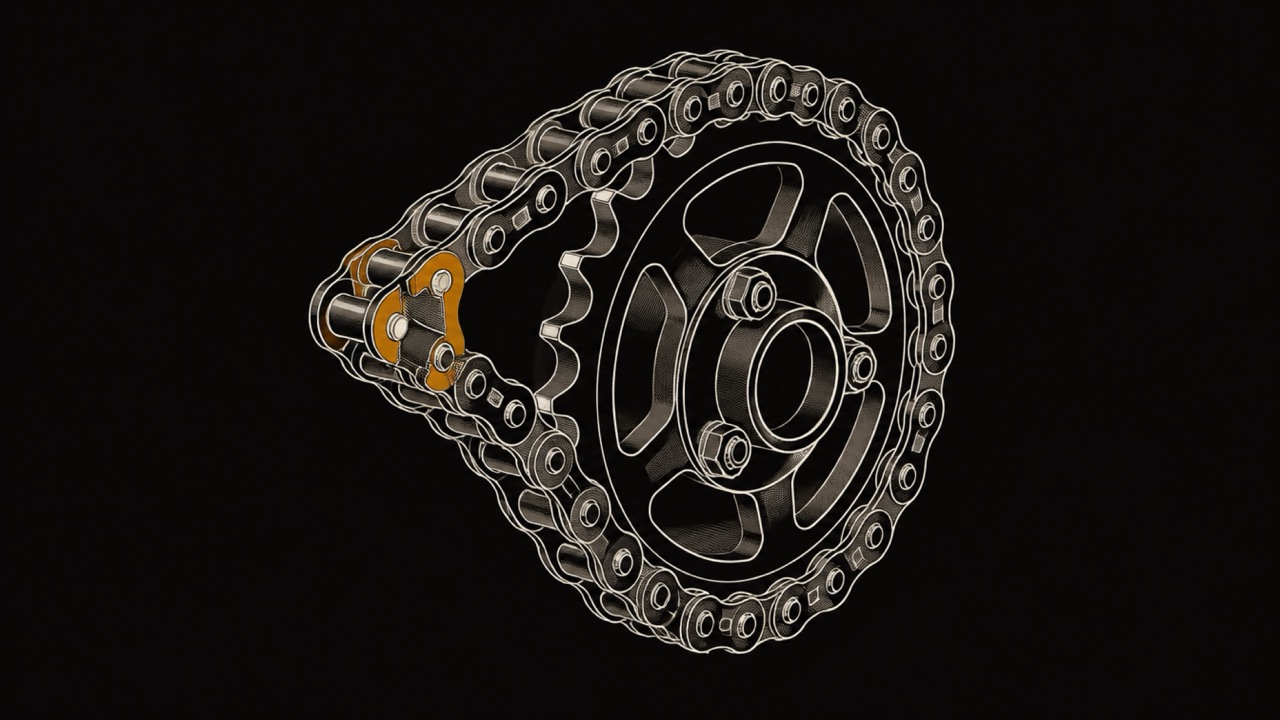
Clean and lube a motorcycle chain every 300 to 500 miles and after rain, check slack every 500 miles, and replace chain and sprockets together at the wear limit.
Motorcycle tyres
Motorcycle tyres last about 3,000 to 15,000 miles, according to Harley-Davidson, and they age out even with tread left: manufacturers typically recommend replacing a tyre older than 6 years, and Michelin sets the outer limit at 10 years from the DOT date. By Michelin's figures, sport tyres can wear out below that range and touring tyres can last beyond it, and on average the rear tyre wears out at least twice as fast as the front.
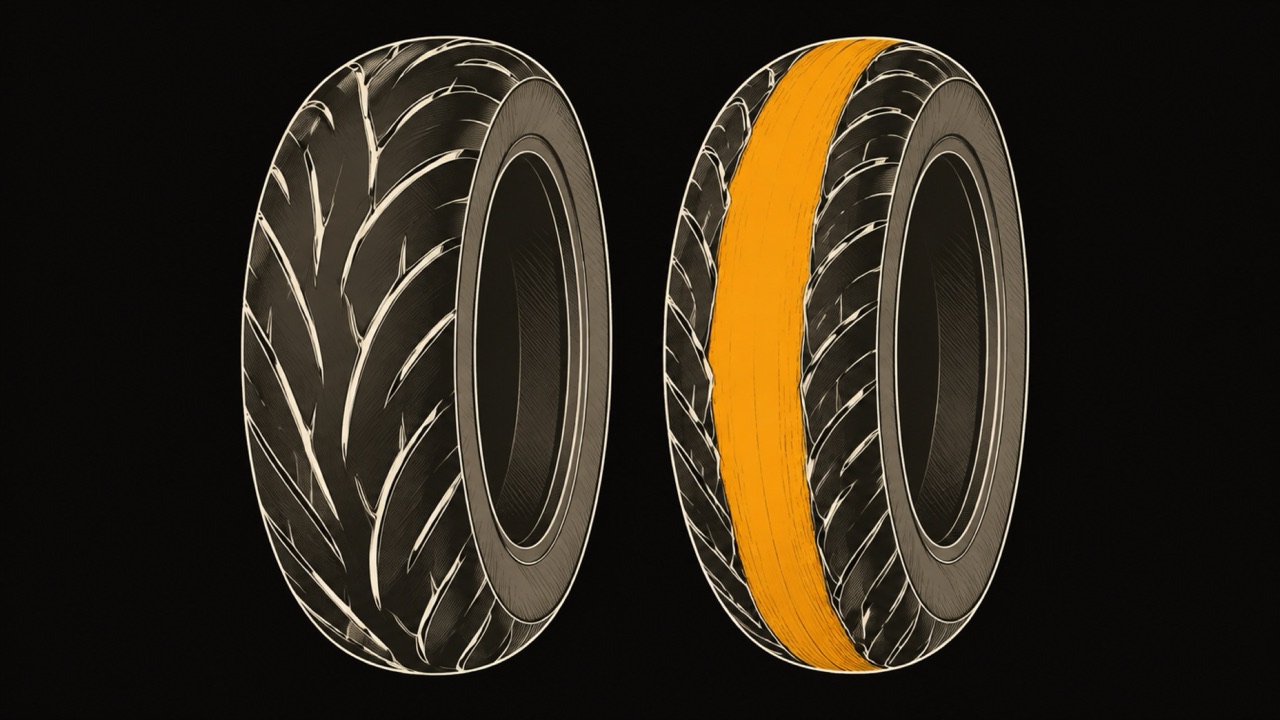
Motorcycle tyres last about 3,000 to 15,000 miles on average, according to Harley-Davidson's tyre age FAQs. The range is wide because the tyre's design matters more than anything else: a soft sport compound buys grip with tread life, and a hard touring compound does the opposite.
Michelin states that no reliable universal mileage guide exists for motorcycle tyres, and then gives its own planning figures by tyre type on Michelin Canada's tyre change page. The miles in the table below are converted from Michelin's kilometres and rounded.
| Tyre type | Michelin figure (km) | About (miles) |
|---|---|---|
| Sport | 3,000 to 8,000 km | 1,900 to 5,000 mi |
| Sport-touring | 15,000 to 25,000 km | 9,300 to 15,500 mi |
| Touring | 30,000 km and more | 18,600 mi and more |
Source: Michelin Canada, accessed November 2026. Miles converted at 1.609 km per mile.
Motorcycle tyres age out between 6 and 10 years after they were made, whatever the tread looks like. Rubber deteriorates with age, from ozone, heat and UV exposure according to Michelin, so a tyre with plenty of tread can still be past its life. Harley-Davidson notes that manufacturers typically recommend replacing a motorcycle tyre that is more than 6 years old.
Michelin draws the line later but adds a check: after 5 years a tyre should be examined every year by a professional, and any tyre still on the bike 10 years after the date on its DOT code should be changed regardless of tread, according to Michelin USA. Michelin counts the years from the manufacture date, not from the day the tyre was fitted.
| Source | Age guidance | What it means for you |
|---|---|---|
| Harley-Davidson | Manufacturers typically recommend replacing after 6 years, regardless of tread | The earliest rule: plan a new tyre at 6 years even on a low-mileage bike |
| Michelin | Yearly professional check after 5 years | From year 5 the tyre needs a trained eye, not just a glance at the tread |
| Michelin | Change at 10 years from the DOT date, regardless of tread | The hard outer limit, counted from manufacture, not from fitting |
Sources: Harley-Davidson and Michelin USA, accessed November 2026.
The date code is the last part of the DOT code on the sidewall: four digits giving the week and then the year the tyre was made. Harley-Davidson gives the example 1016, a tyre made in the tenth week of 2016.
Reading it takes two steps: the first two digits are the week, the last two are the year. A tyre stamped 2223 was made in the 22nd week of 2023, so it reaches Harley-Davidson's 6-year mark in mid 2029 and Michelin's 10-year limit in mid 2033. That is why Michelin counts from the manufacture date on the sidewall, not from the day the tyre was bought or fitted.
In the UK, the legal minimum tread depth for motorcycles over 50cc is 1 mm across three quarters of the tread width, with tread visible on the rest, according to TyreSafe. A motorcycle tyre is done sooner than that in practice: when its tread reaches the wear bars, the small raised blocks moulded into the grooves. Michelin calls 2/32 inch, about 1.6 mm, the wear limit and strongly advises changing the tyre before it gets there, according to Michelin USA.
The legal minimum depends on where you ride. In the US, Harley-Davidson puts the legal limit at typically 1/32 inch, about 0.8 mm, so check the rule where your bike is registered.
Michelin also lists damage that ends a tyre immediately, whatever the tread depth: a cut that exposes the cords, a bulge in the sidewall or tread, the tread separating from the carcass, and damage from riding flat. Michelin also lists deformation or cracks in the tread, shoulders or sidewalls as signs to have checked.
The rear tyre wears out first because of weight distribution, power delivery and heavy braking, the three reasons Dunlop gives. On average a rider goes through at least two rear tyres for every front, according to Dunlop, which adds that the ratio is not fixed for every make and model.
A powerful bike adds to the strain: Dunlop notes that hypersport motorcycles work their tyres harder simply because they demand more grip. Two rears per front also means the two tyres rarely reach the end of their life together, so each one needs its own record of when it was fitted.
Pressure is the factor a rider controls most directly, and it shows on the tread. An overinflated tyre wears along the centre, and an underinflated or overloaded one wears the shoulders faster and can cup, according to Dunlop. Michelin asks for a pressure check twice a month, with the tyres cold, at the pressure in the owner's manual rather than the maximum printed on the sidewall.
Which limit you reach first depends on how far you ride in a year. Example calculation: a rider covering 3,000 miles a year on sport-touring tyres at the low end of Michelin's range, about 9,300 miles, wears out the rear in about 3 years. At two rears per front, the front would last about 6 years on tread, which is exactly where Harley-Davidson's age limit falls. For that rider the front tyre is replaced by age, not by wear.
A rider covering 10,000 miles a year on the same tyres reaches the rear wear bars in under a year and never sees the age limit. So the right reminder for a tyre is two reminders: one by distance for the wear, one by date for the age. WrenchTime, a maintenance log for iPhone that treats motorcycles as first-class vehicles, schedules a tyre change by date, by distance or both, and treats whichever comes first as the one that matters.
No: a motorcycle tyre 10 years past the date on its DOT code should be changed regardless of the tread it has left, according to Michelin USA, and Harley-Davidson draws the line earlier, at 6 years. Rubber deteriorates with age even when the tread looks fine, which matters most on a motorcycle, where two small contact patches carry the whole machine through every corner.
Storage does not stop the clock. A tyre that sat on a bike in a garage for years ages from its manufacture date like any other, so a bike bought after a long layup may need new tyres before its first ride, whatever the tread shows. Storing a bike well slows the damage but does not reset it: see how to winterise a motorcycle.
WrenchTime logs a tyre change like any other job: the date, the odometer it was done at, the cost and the invoice, and in the same step the next change by miles, by date or both, with a local notification on whichever arrives first. Tyre pressure is recorded front and rear on a diagram of the bike, in the unit you use. The motorcycle maintenance app guide covers the rest, from chain maintenance to fork service. It is free for 1 vehicle with 2 Care entries a month.
Motorcycle tyres last about 3,000 to 15,000 miles, according to Harley-Davidson. Michelin's figures put sport tyres at about 1,900 to 5,000 miles and touring tyres beyond 18,600 miles. On average the rear wears out at least twice as fast as the front.
Harley-Davidson notes that manufacturers typically recommend replacing a motorcycle tyre more than 6 years old, whatever the tread. Michelin sets the outer limit at 10 years from the DOT date and asks for a yearly professional check from the fifth year on.
No. Michelin says a tyre 10 years past its DOT manufacture date should be changed regardless of tread depth, and Harley-Davidson draws the line earlier, at 6 years. Rubber deteriorates with age, from ozone, heat and UV, even when the tread looks fine.
Age counts from the manufacture date whether the tyre is ridden or stored, so the same 6 to 10 year limits apply. Harley-Davidson advises storing tyres dry, out of direct sunlight, between 0 and 25°C (32 to 77°F), away from motors that make ozone.
Riders go through at least two rear tyres for every front, on average, according to Dunlop, which names weight distribution, power delivery and heavy braking as the reasons.
More from the blog
Motorcycle chain
Clean and lube a motorcycle chain every 300 to 500 miles and after rain, check slack every 500 miles, and replace chain and sprockets together at the wear limit.
Motorcycle oil
Every few thousand miles or once a year, whichever comes first, with your owner's manual setting the exact figure and hard riding or storage shortening it.
Winter storage
Fill the tank with stabilised fuel, change the oil, keep the battery on a maintainer, lift the tyres off the floor and store the motorcycle under a breathable cover.

Free to download. One vehicle, real features, no ads. Your garage will thank you.
Download WrenchTime on the App Store