Diagnostics
How to use an OBD2 scanner
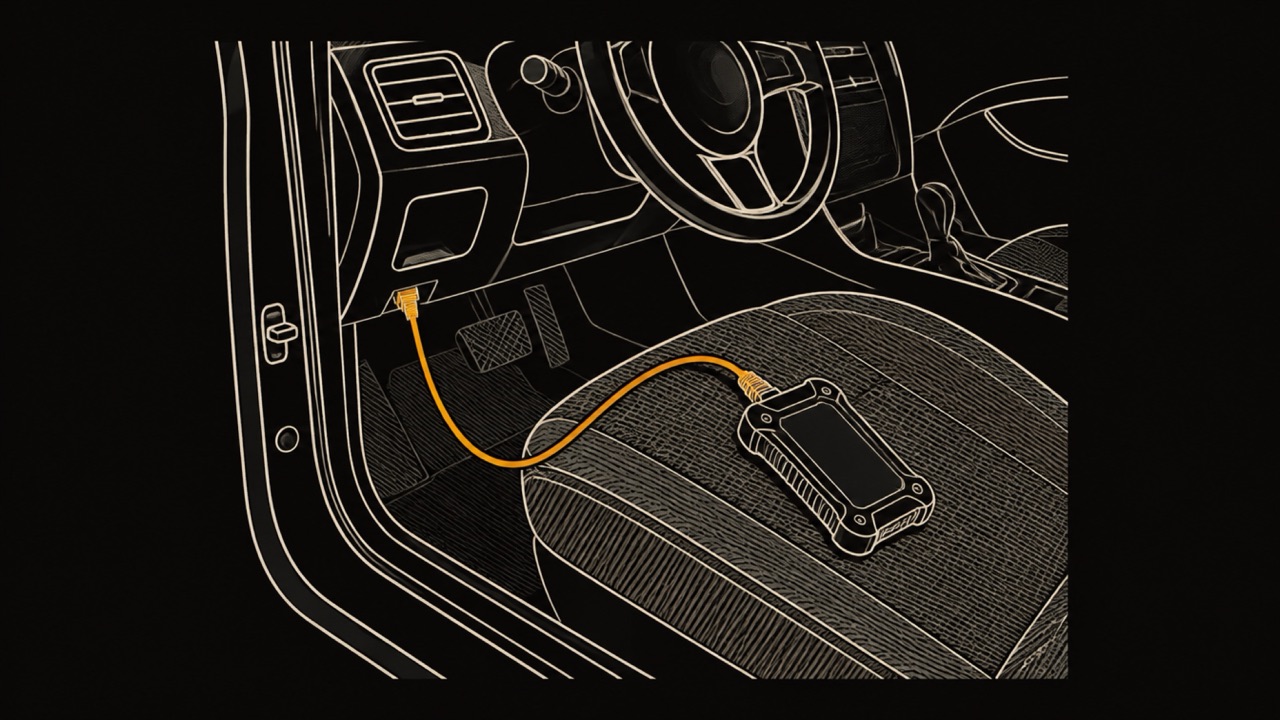
Plug in with the ignition off, switch to on without starting the engine, read and write down every code, and look each one up before clearing anything.
Diagnostics
To reset an engine management light (the check engine light in the US), repair the fault, then clear the code with an OBD2 scanner, or let the car turn the light off itself after about three clean drive cycles. Disconnecting the battery can also work, with less control. Knowing how to reset an engine management light is the easy part: a reset fixes nothing, it sets the readiness monitors to not ready, and a flashing light should not be reset at all.
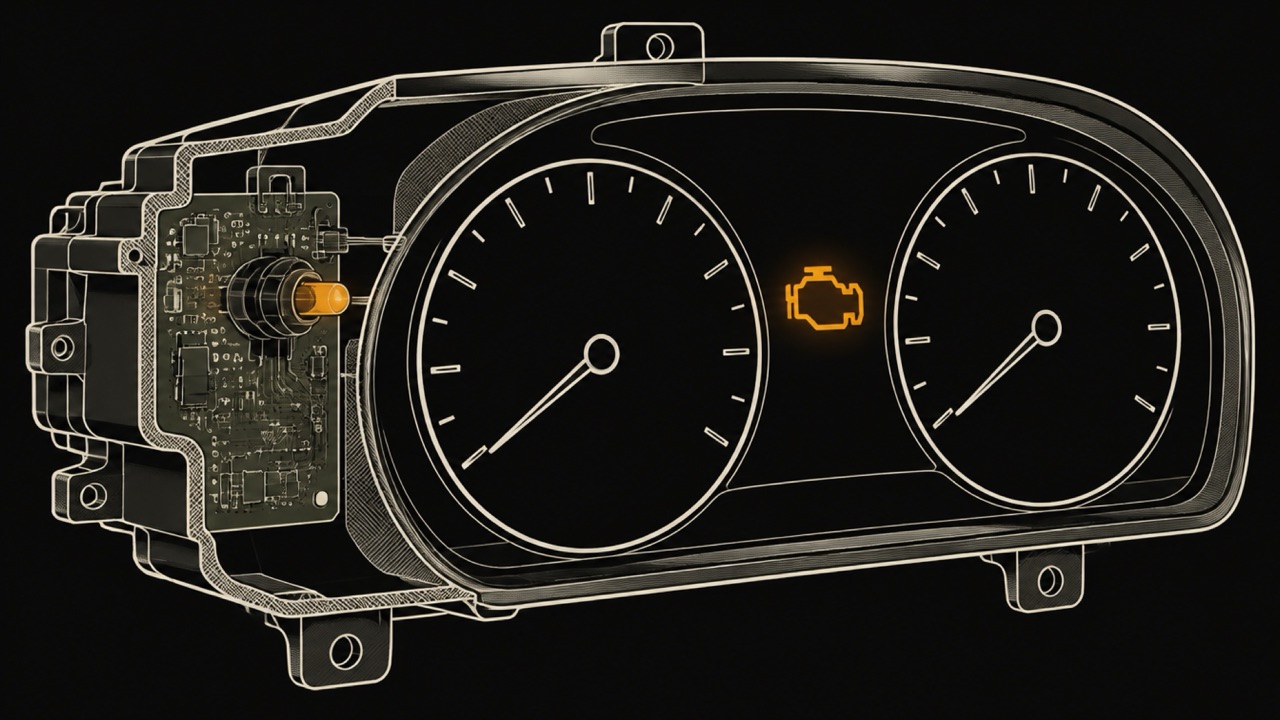
Reset an engine management light only after you know what set it and the fault is repaired. The light is the main warning the driver gets, and the code behind it is the record of what went wrong. Erasing either before the repair leaves you with the same fault and less information.
A flashing light is the clearest case for leaving the reset alone. The California Air Resources Board says a blinking light indicates a malfunction that could be damaging the catalytic converter, and that many manufacturers recommend service as soon as possible. A steady light is less urgent, but it still needs a diagnosis.
The best reset after a repair is often no reset. The Ohio EPA advises not clearing the codes when possible: if the repair was correct, the light turns off on its own as the car completes its drive cycle, which also tells you the car is ready to be tested. A drive cycle is the set of driving conditions the car needs to rerun its self-tests.
There are three ways to turn an engine management light off, and they differ in what they erase. Stored codes describe the fault. The freeze frame is the snapshot of engine conditions the car saved when the fault appeared. Readiness monitors are the self-tests an emissions inspection checks. Permanent codes are the ones only the car can remove.
| Method | Light | Stored codes | Readiness monitors | Permanent codes | Why it matters |
|---|---|---|---|---|---|
| Repair, then drive | Off after about three clean trips | Kept as history, then erased by the car | Not reset by the repair, completed by driving | Cleared when the monitor passes | The light going out proves the repair worked |
| OBD2 scanner | Off at once | Erased, with the freeze frame | Reset to not ready | Stay | Fast and controlled, and you can read the codes first |
| Battery disconnect | Usually off | Erased | Reset to not ready | Stay | No tool needed, but you learn nothing about the fault |
Sources: Ohio EPA, New York DMV, California Bureau of Automotive Repair, Innova manual, Saab service documentation, WrenchTime's code reader guide for the freeze frame
An OBD2 scanner is the cleanest way to reset an engine management light, because it can read the code before it erases it. The clear command is a standard OBD-II service, listed as service 04, clear diagnostic trouble codes and stored values, so a basic reader and a phone adapter can both send it. The full walkthrough is in how to use an OBD2 scanner.
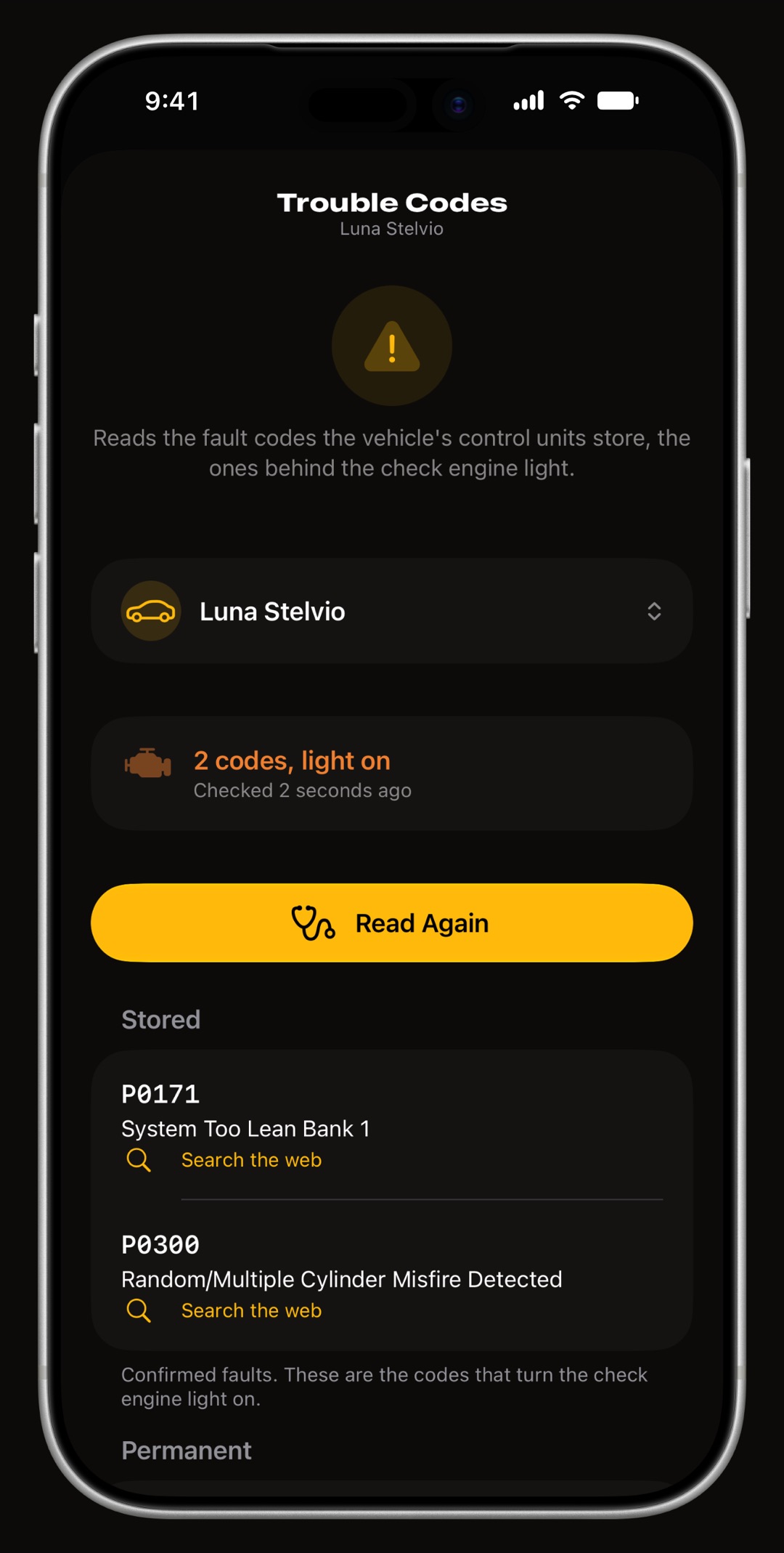
WrenchTime, an iPhone app for car and motorcycle records, does this with a Bluetooth adapter: it reads the codes first, and offers Clear Codes only after a read, with the engine off and after two confirmations.
Without a scanner, start with the fuel cap, then let the car do the work. Remove the cap and tighten it again: if the cap was the cause, Bowman Chevrolet says the light should go off after about 10 miles to 20 miles. Other repaired faults usually need about three clean trips, as the next section shows.
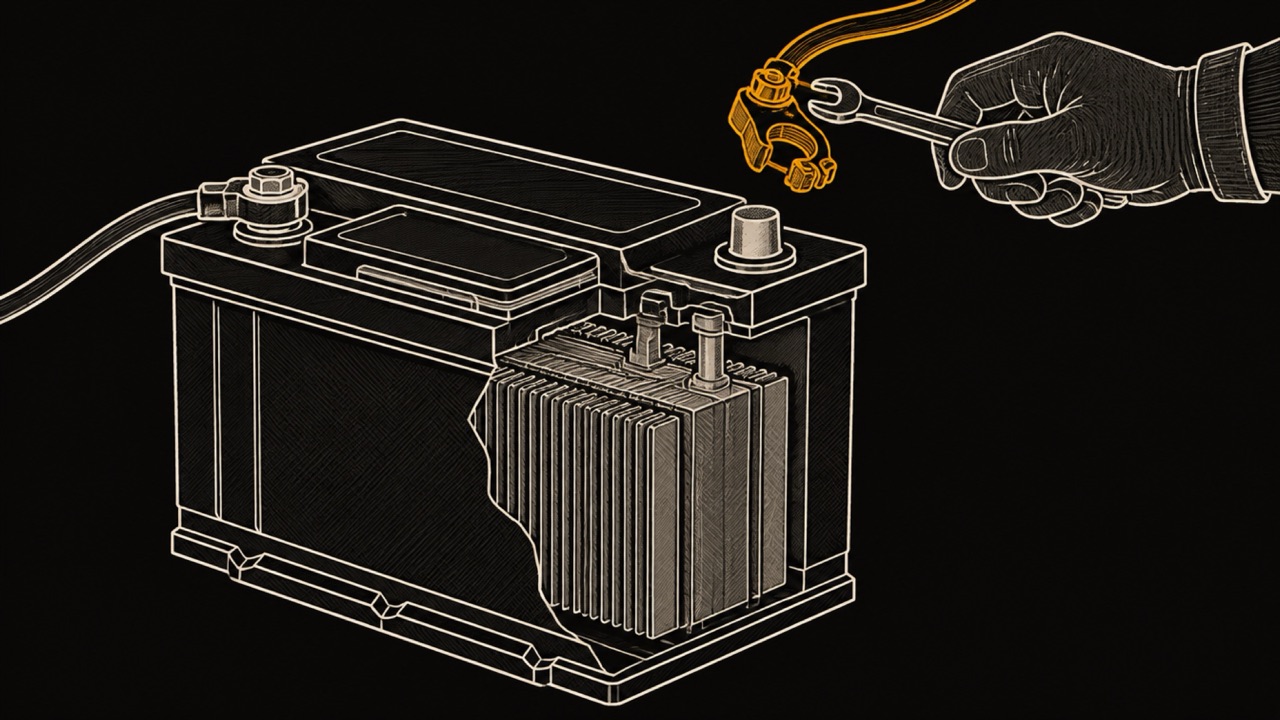
Disconnecting the battery is the last resort, and Bowman Chevrolet advises having a mechanic check the cause first. Turn the ignition off, wear safety glasses and gloves, loosen the nut on the negative terminal, pull the cable off, wait 30 seconds to 60 seconds, then reconnect and tighten it. The Ohio EPA notes that a battery disconnect also clears the codes.
An engine management light usually resets by itself after about three clean trips once the cause is gone. The stored code lasts much longer than the light, so a light that is off does not mean the memory is empty. The two documents below differ by fault type, and other manufacturers may differ too, so treat these figures as a pattern and not a rule.
| Event | Typical wait | Source |
|---|---|---|
| Light turns off | 3 trips in a row without the fault | Innova OBD2 scan tool manual |
| Light turns off | 3 consecutive driving cycles | Saab 9-3 (2001) service documentation |
| Stored code erased | A further 40 warm-up cycles | Innova manual and Saab service documentation |
| Fuel or misfire code erased | 80 warm-up cycles | Innova manual |
An engine management light comes back because the fault is still there. A reset erases the record, and the car then runs its self-tests again and sets the same code when the test fails. A light that returns within a few drives is useful evidence: the repair did not address the cause, or a second fault shares the symptom.
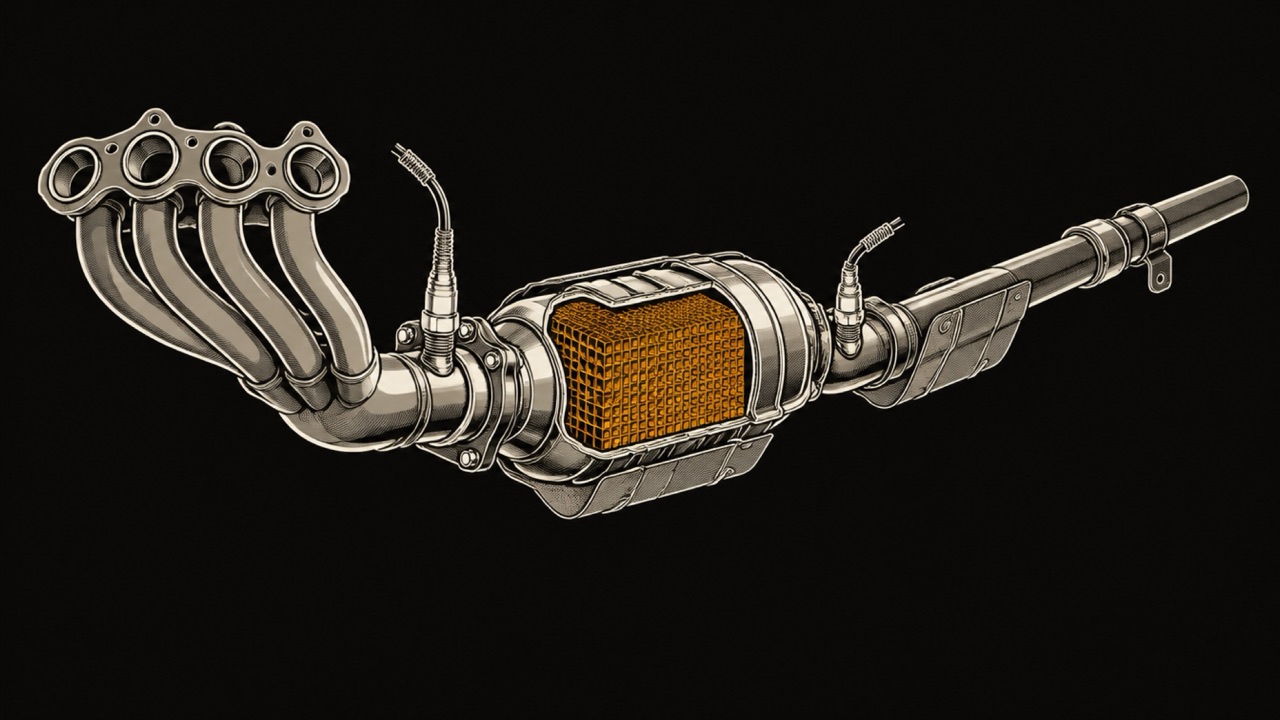
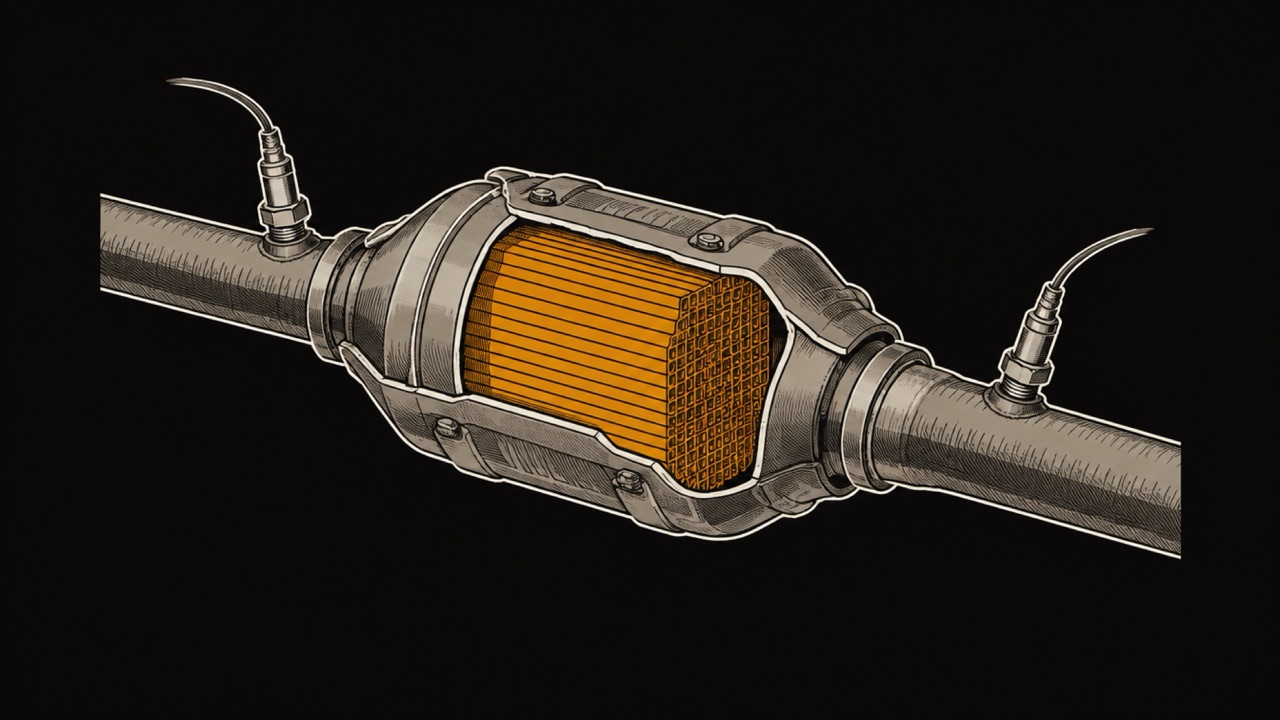
A common example is a catalytic converter code, where an exhaust leak or a tired oxygen sensor can look like a bad converter. The guide to what the P0420 code means walks through that order of checks.
A permanent code is a different case: the light can be off while the code remains. On model-year 2010 and newer vehicles, the California Bureau of Automotive Repair says a permanent code cannot be reset by disconnecting the battery or cleared with a scan tool. It clears itself when the monitor runs and finds no problem.
No, resetting an engine management light right before an emissions test usually gets the car rejected, because clearing codes also resets the OBD2 readiness monitors. US emissions inspections read those monitors along with the light, so a car with the light off is still rejected as not ready when more monitors are unfinished than the programme allows. The safe approach is the same before an MOT: repair the fault first, then let the car complete its drive cycles. Rules differ by country, so check the current rules for your own test before you book it.
California shows why the shortcut has closed. Permanent codes joined the Smog Check failure criteria for model-year 2010 and newer vehicles on July 1, 2019, and 3,124 vehicles that would previously have passed failed for them in the first month, according to the Bureau of Automotive Repair. US rules also differ by state, so the table below is a US reference only.
| Program | Rule or guidance | Driving after a clear |
|---|---|---|
| Nevada | A lit light is an automatic failure, and erasing codes right before a test is an automatic rejection | Up to one week under varying conditions |
| New York | EPA guidelines, as cited by the DMV, allow only one monitor not ready on 2001 and newer vehicles | In most cases two drive cycles, with a cool-down between them |
| California | On 2000 and newer petrol vehicles, only the evaporative monitor may be unset for now; a rule effective October 1, 2025 requires every monitor that can feasibly be set, with exceptions, and BAR is phasing it in | On model-year 2010 and newer vehicles, a permanent code is ignored only after at least 15 warm-up cycles and 200 miles since the last clear |
| Ohio | Keep the light on after the repair when possible, and let it turn off by itself | At least two or three days, motorway and town |
Sources: Nevada DMV, New York DMV, California Bureau of Automotive Repair, Ohio EPA
Here is an example with invented details: a steady light on a daily driver, an MOT due next month, and a fuel cap left loose after a fill-up.
With a Bluetooth Low Energy ELM327 adapter or the OBDLink MX+, WrenchTime reads stored, pending and permanent codes, describes generic codes in plain language, and shows the readiness monitors and the freeze frame in the same scan. Every scan is saved, so you can see whether a code returns after the repair. The OBD-II code reader for iPhone guide walks through it.
Trouble Codes is part of WrenchTime Pro. It does not read manufacturer-specific diagnostics, and it cannot remove permanent codes, which only the car can clear. The free version covers 1 vehicle, so you can start the car's log before you need the scanner.
Yes. An OBD2 scanner or a phone adapter clears the code in a few moments, with the ignition on and the engine off. Repair the fault first, because the reset removes the warning and leaves the problem, and read the code before you clear it.
Do not count on it. AutoZone is a US parts chain, and we did not find a published policy on clearing codes, so call the shop first. Reading the code matters more than erasing it, since the code is what tells you what to fix.
Usually about three clean trips or drive cycles after the cause is gone, according to the scan tool manual and service documentation we checked. The stored code stays longer, commonly 40 warm-up cycles, or 80 for fuel and misfire faults. Other manufacturers may differ.
Usually, yes, for regular codes. A battery disconnect also leaves the readiness monitors not ready, as a scanner does, and it cannot remove permanent codes on model-year 2010 and newer vehicles. Use it only after the fault has been checked.
Use an OBD2 scanner, or fix the cause and drive. After a loose fuel cap, the light should go off within about 10 miles to 20 miles. After other repairs, a car usually turns the light off by itself after about three clean trips.
More from the blog
Diagnostics
Plug in with the ignition off, switch to on without starting the engine, read and write down every code, and look each one up before clearing anything.
OBD2
Every OBD2 readiness monitor and what it checks, how many can be incomplete at an emissions test by model year, and the drive cycles states publish to get them ready.
Trouble codes
What the P0420 fault code means, what usually causes it, whether you can keep driving, what the repair costs and when the catalytic converter is under warranty in the US.
Free to download. One vehicle, real features, no ads. Your garage will thank you.
Download WrenchTime on the App Store