How to scan a used car with an OBD2 reader before buying
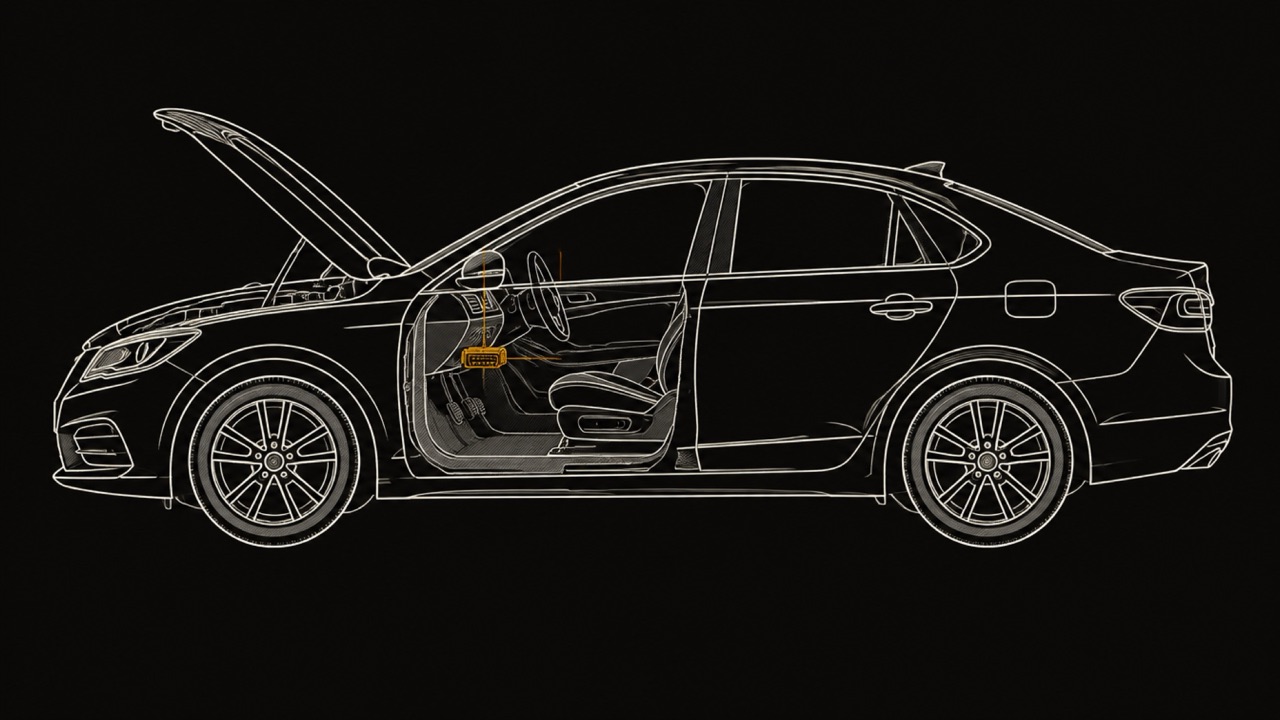
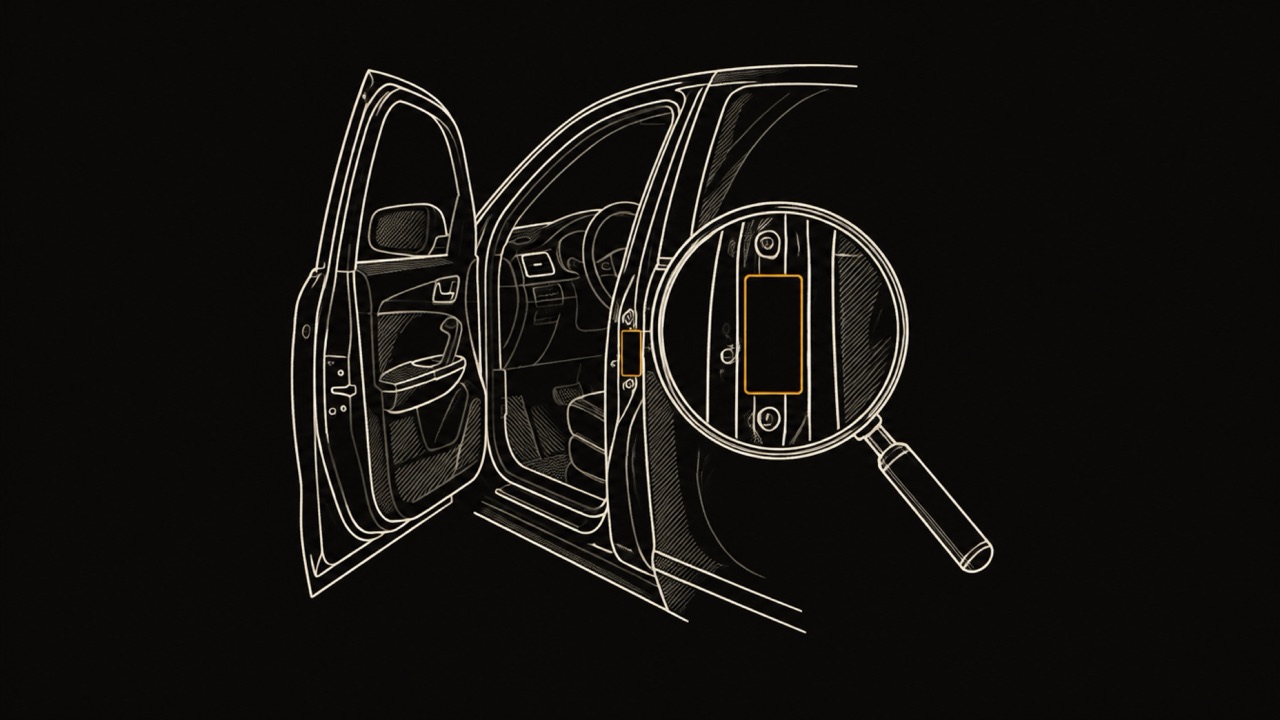
An OBD2 scan reads the car's own diagnostics through the port under the dashboard, and it needs the seller's permission and about as long as it takes to look at the tyres. The California Air Resources Board says OBD II is required in the US on petrol cars and trucks from model year 1996 and on diesels from 1997. Other markets have their own dates, so check the year of the car you are viewing. If you have never used one, read how to use an OBD2 scanner first.
The check that matters most is a recent clear. Clearing a code turns the check engine light off, but it also resets the readiness monitors, the self-tests the car runs while driving. The New York DMV lists clearing codes among the causes of a car being not ready, along with a disconnected or replaced battery.
Not ready is a question, not a verdict. The battery may simply be new, and the California Air Resources Board says about a week of normal driving usually completes the indicators. California's Smog Check has let the evaporative monitor stay unset on petrol cars from 2000 on, and rules effective October 2025 move toward requiring every monitor, so one incomplete monitor alone means little. Several incomplete on a car with no recent battery work means ask why.
Permanent codes are the second check, and clearing cannot remove them. The California Bureau of Automotive Repair says they cannot be cleared by a scan tool or by disconnecting the battery, on model-year 2010 and newer vehicles that support them. They clear themselves only after the monitor runs again and finds no problem.
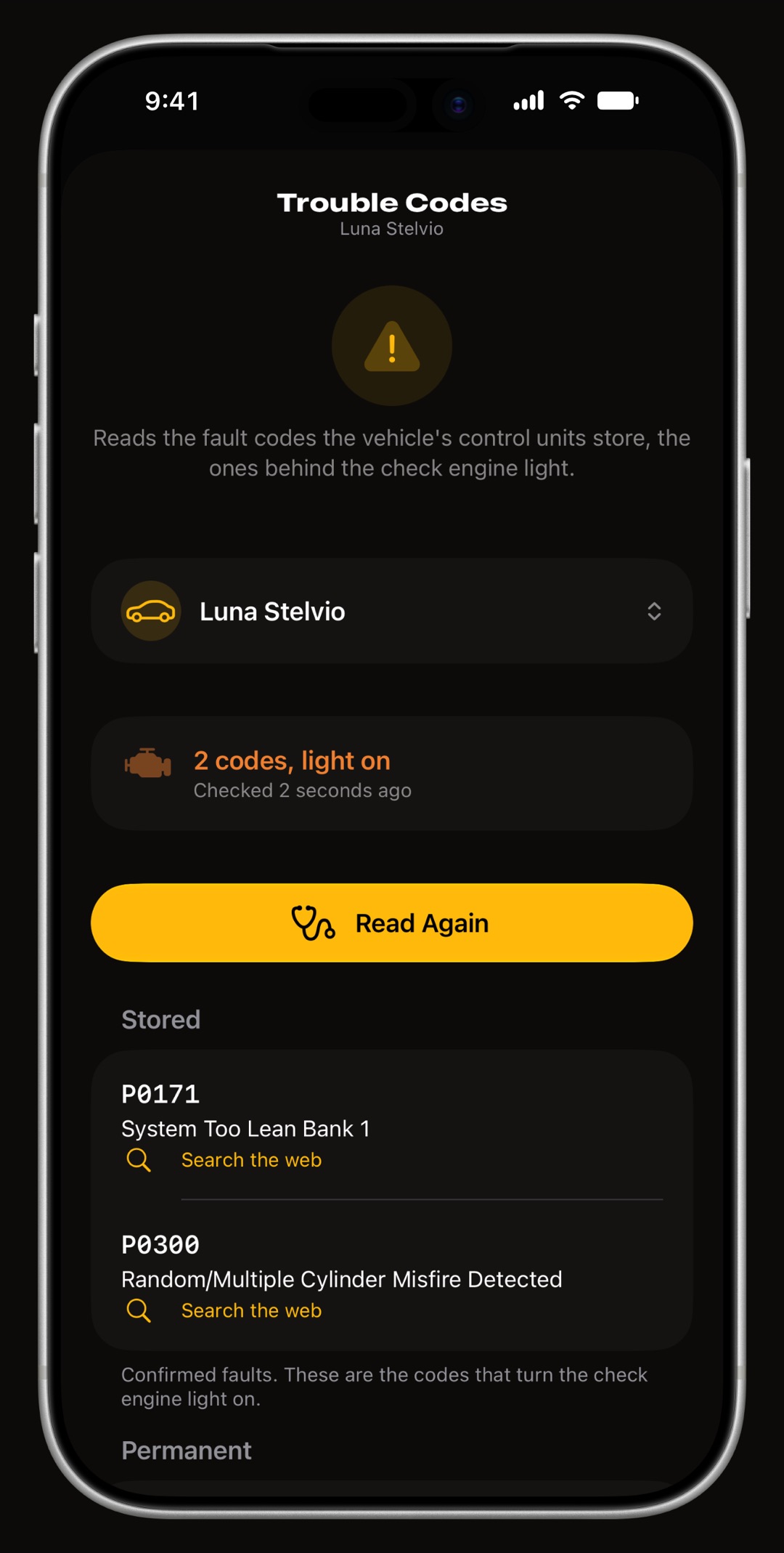
WrenchTime is an iPhone app that logs a vehicle and reads it. With a Bluetooth Low Energy ELM327 adapter or the OBDLink MX+, its Trouble Codes tool, part of WrenchTime Pro, reads stored, pending and permanent codes from every module that answers the standard request, with the check engine status, readiness monitors and freeze frame. The OBD-II code reader for iPhone guide shows how, and any other scanner that reads these items does the same job.
How to read an OBD2 scan on a used car
| Reading | What it means | What to do |
|---|
| Check engine status on | The car has a confirmed fault right now | Look up the code and get a repair price before you negotiate |
|---|
| Stored code | A fault the car has confirmed | Ask for the repair history, then price the fix |
|---|
| Pending code | A fault seen once and not yet confirmed | Ask a mechanic to look at it, since it may turn into a stored code |
|---|
| Permanent code | A recent fault the car has not yet proven fixed | Treat it as unresolved, even with the light off |
|---|
| Several monitors not ready | Codes cleared or battery disconnected recently | Ask why, and rescan after a week of driving if you can |
|---|
| All monitors ready, no codes | No current fault the standard diagnostics can see | Carry on to the mechanic's inspection |
|---|
- Never clear anything. A scan only reads. Clearing changes someone else's car and resets the very evidence you came to see.
- Compare the VIN. Many cars report their VIN over OBD2. It should match the dashboard plate, and a mismatch deserves a question.
- Know the limits. A clean scan says nothing about the body, the suspension or wear. Standard OBD2 covers emissions diagnostics and does not read manufacturer-specific codes.