EV charging
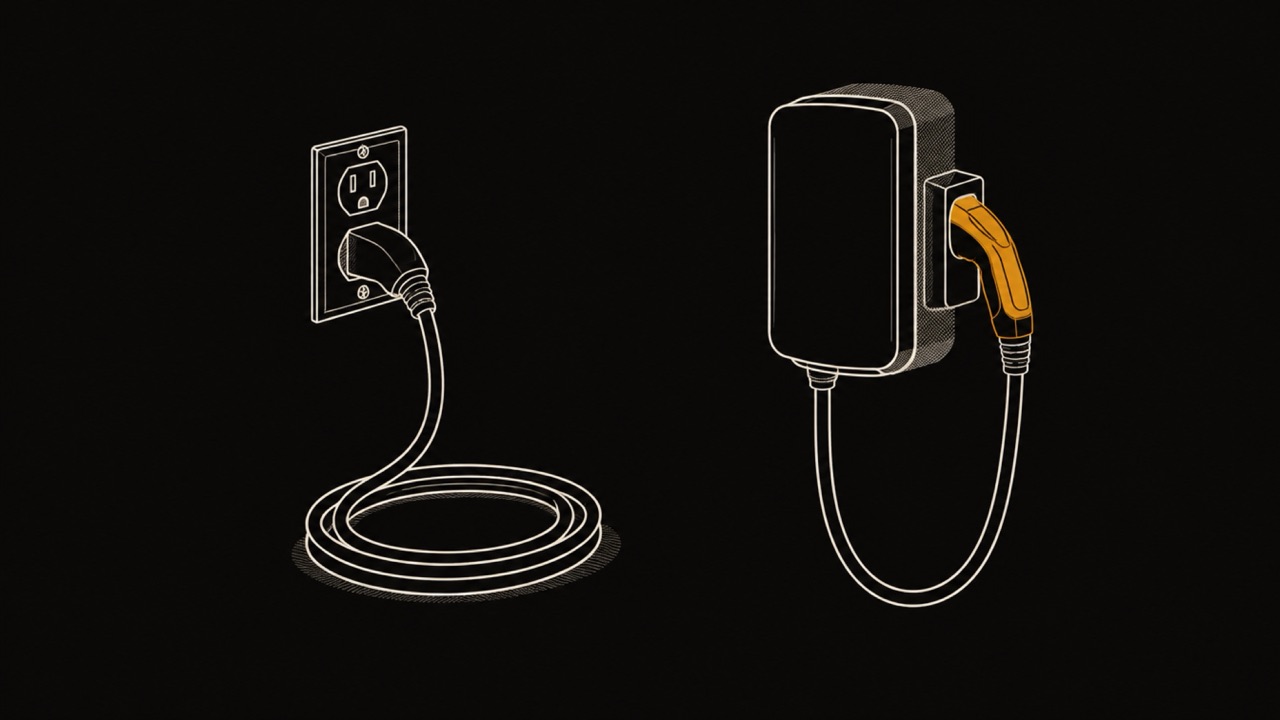
Level 1 vs Level 2 charging: which do you need?
Level 2 is about five times faster and wastes a little less energy, but Level 1 is often enough for a plug-in hybrid or a short commute with a long night parked.
EV charging
The cost to charge an electric car at home in the UK is about £8.77 per 100 miles at the Ofgem price cap average of 26.32p per kWh for October to December 2026, or about £88 for a 1,000-mile month. Public charging averaged 54p per kWh on standard chargers and 79p on rapid and ultra-rapid chargers in September 2026, according to Zapmap, which is about £18 and £26 per 100 miles. A 40 MPG petrol car at 175.28p per litre costs £19.92. All of it assumes 3 miles per kWh. Your real cost depends on your tariff, your car's efficiency and how much of your charging happens at home.
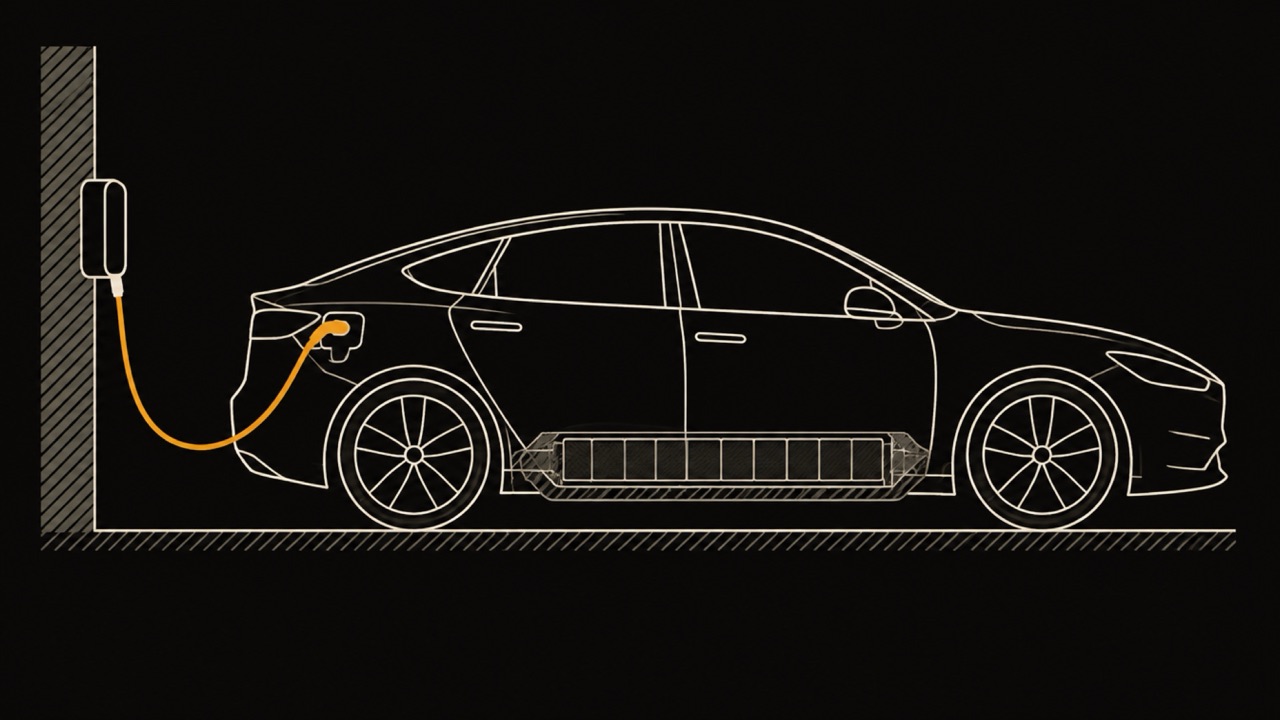
Ofgem's price cap puts the average home electricity unit rate at 26.32p per kWh from October to December 2026 for a standard variable tariff paid by Direct Debit, with a standing charge of 54.83p a day, according to Ofgem. The government has also removed VAT from domestic electricity in Great Britain until the end of March 2027, so no VAT is added to that rate (gov.uk). A kilowatt-hour (kWh) is the unit on both your electricity bill and a charger screen: 1 kWh runs a 1,000-watt appliance for one hour.
The average public charging price in September 2026 was 54p per kWh on standard chargers (3 to 49 kW) and 79p per kWh on rapid and ultra-rapid chargers (50 kW and above), according to Zapmap's Charging Price Index. Both are pay-as-you-go prices without a membership or special deal, so a subscription or promotion can bring what you pay below them.
The example below converts those prices into cost per 100 miles, per month and per year for an EV that covers 3 miles per kWh, the conservative rule of thumb Blink Charging cites, and a petrol car at 40 MPG. Each EV row divides 100 miles by 3 miles per kWh (33.3 kWh) and multiplies by the price; the petrol row divides 100 miles by 40 MPG (2.5 gallons, or 11.37 L, because 1 imperial gallon is 4.546 L) and multiplies by 175.28p per litre. The months are 1,000 miles and the years 12,000 miles.
| Charging or fuelling method | Price used | Cost per 100 miles | Cost per month (1,000 miles) | Cost per year (12,000 miles) |
|---|---|---|---|---|
| Home charging, price cap average, losses not counted | 26.32p/kWh | £8.77 | £88 | £1,053 |
| Public charging, standard (3 to 49 kW) | 54p/kWh | £18.00 | £180 | £2,160 |
| Public charging, rapid and ultra-rapid (50 kW and above) | 79p/kWh | £26.33 | £263 | £3,160 |
| Petrol car, 40 MPG | 175.28p/litre | £19.92 | £199 | £2,391 |
Prices: Ofgem (price cap, October to December 2026), Zapmap (public charging, September 2026) and gov.uk weekly road fuel prices (unleaded petrol, week commencing mid-October 2026). Efficiency: 3 miles per kWh rule of thumb from Blink Charging.
The cost to charge an EV is the energy you add, in kWh, multiplied by the price per kWh. At the October 2026 price cap average of 26.32p, a car that uses 33.3 kWh per 100 miles costs £8.77 per 100 miles. The standing charge of 54.83p a day is on your bill whether or not you charge, so leave it out of the cost per mile.
Three numbers are all you need. Your car's efficiency is on the trip screen as miles per kWh or kWh per 100 miles. Your home price per kWh is the unit rate on your electricity bill. A public price is on the charger, in pence per kWh, as the Public Charge Point Regulations 2023 require, and again in its app or on the receipt. If you think in kilometres, the same formula works in kWh per 100 km: 3 miles per kWh is about 33.3 kWh per 100 miles, or 20.7 kWh per 100 km.
A full charge of a 75 kWh battery costs about £19.74 at the October 2026 price cap average of 26.32p per kWh and about £40.50 at the standard public average of 54p per kWh. Most drivers rarely charge from empty to full, so the more useful figure is a typical session. Charging the same battery from 10% to 80% adds 52.5 kWh, about £13.82 at home and £28.35 on a standard public charger.
On a rapid charger at the 79p average, the same 52.5 kWh costs about £41.48, which is why fast charging suits a long journey better than a weekly top-up. At home, add charging losses: drawing 52.5 kWh into the battery through a 90% efficient Level 2 charger takes about 58.3 kWh from the wall, or £15.35 at the price cap. Overnight on Intelligent Octopus Go, whose off-peak rate starts at 7.6p per kWh, the same wall energy costs about £4.43.
| Session | Energy added | Home, 26.32p/kWh | Public, 54p/kWh |
|---|---|---|---|
| 20% to 80% | 45 kWh | £11.84 | £24.30 |
| 10% to 80% | 52.5 kWh | £13.82 | £28.35 |
| 0% to 100% | 75 kWh | £19.74 | £40.50 |
Prices: Ofgem, Zapmap and Octopus Energy. Home costs do not include charging losses.
Charging loss is the electricity drawn from the wall that never reaches the battery: heat in the car's onboard charger, the cable and the battery itself. At home the meter counts the wall side, so losses show up on the electricity bill. Most cost estimates skip them, which understates home charging by roughly a tenth on Level 2 and a fifth or more on Level 1.
Recurrent compiled the studies that measured it. Level 1 charging, a standard household outlet (120 V in those US studies), loses the most, and DC fast charging is efficient in mild weather but can lose more than half its energy in deep cold. The speed and equipment side of the Level 1 or Level 2 decision is in Level 1 vs Level 2 charging.
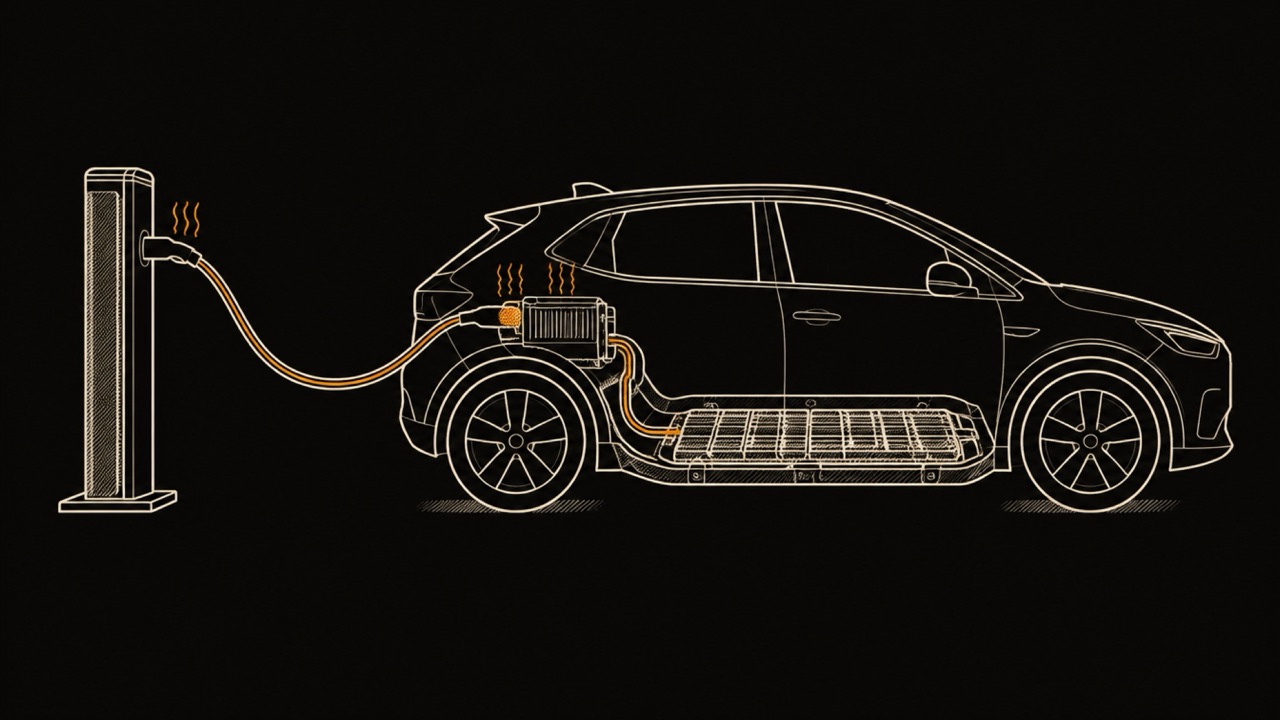
Home charging costs depend mostly on your tariff. Ofgem's price cap puts the average unit rate at 26.32p per kWh from October to December 2026 on a standard variable tariff paid by Direct Debit, plus a standing charge of 54.83p a day (Ofgem). At 3 miles per kWh, that is £8.77 per 100 miles before charging losses. Rates vary by region and payment method, so use the unit rate on your own bill.
The government has removed VAT from domestic electricity in Great Britain from October 2026 until the end of March 2027, so no VAT is added to that rate; Northern Ireland is not covered and stays at 5% (gov.uk). A time-of-use EV tariff goes further. Intelligent Octopus Go lists an off-peak rate from only 7.6p per kWh between 11.30pm and 5.30am for smart charging, with the rate outside those hours varying by region, which works out at £2.53 per 100 miles. Ask your supplier for its EV tariff and use its off-peak price in the formula. Equipment is a separate, one-time cost covered in Level 1 vs Level 2 charging.
| Tariff or charger | Price (pence per kWh) | Cost per 100 miles | Cost per 1,000 miles |
|---|---|---|---|
| Intelligent Octopus Go, off-peak (from) | 7.6 | £2.53 | £25 |
| Price cap, standard variable (GB average) | 26.32 | £8.77 | £88 |
| Public, standard chargers (3 to 49 kW) | 54 | £18.00 | £180 |
| Public, rapid and ultra-rapid (50 kW and above) | 79 | £26.33 | £263 |
| Dearest rapid network (InstaVolt) | 92 | £30.67 | £307 |
Sources: Octopus Energy, Ofgem, Zapmap Charging Price Index and Zapmap rapid charging prices. Charging losses not included.
Public charging averaged 54p per kWh on standard chargers (3 to 49 kW) and 79p per kWh on rapid and ultra-rapid chargers (50 kW and above) in September 2026, according to Zapmap's Charging Price Index. At 3 miles per kWh, that is £18.00 and £26.33 per 100 miles. Zapmap's rapid charging prices name InstaVolt as the highest network-wide price at 92p per kWh, or £30.67 per 100 miles.
Charger type sets most of the price. DC fast charging feeds the battery directly with direct current at high power, which is why it costs more and why motorway trips cost more per mile than commuting on home power. How often you fast charge also matters for the battery, covered in how charging habits affect battery life.
Public chargers do not all bill the same way, but the Public Charge Point Regulations 2023 require operators to show the total price in pence per kWh at or near the charger, to accept contactless payment without a pre-existing contract and to accept payment through a roaming provider. Beyond that, some networks add a session fee or an idle fee for staying plugged in after the session ends, and memberships can lower the per-kWh price. Zapmap's index counts the pay-as-you-go price, so promotions can bring your price lower. VAT also differs: Zapmap reported in June 2025 that public charging is taxed at 20% against 5% for charging at home, and the home rate is now zero until the end of March 2027.
Charging an electric car at home costs less than half as much as petrol per mile. At the averages above, home charging costs £8.77 per 100 miles, or £9.75 with Level 2 losses, against £19.92 for a 40 MPG car at 175.28p per litre, the gov.uk weekly unleaded price for mid-October 2026. MPG here is the imperial figure: 1 imperial gallon is 4.546 L, so 100 miles at 40 MPG burns 2.5 gallons, or 11.37 L. Public charging at 54p costs £18.00 per 100 miles, slightly less than petrol; a rapid charger at 79p costs £26.33, about a third more.
A quick break-even rule compares a kWh price with a litre price. Multiply the kWh price by your car's kWh per 100 miles and divide by its litres per 100 miles. For a 3 miles per kWh EV (33.3 kWh) against a 40 MPG car (11.37 L), that factor is 2.93, so public charging at 54p per kWh matches petrol at 158.4p a litre. With petrol at 175.28p, the average standard public charger is cheaper; a rapid charger at 79p per kWh matches petrol at 231.7p, and the price cap rate of 26.32p matches petrol at 77.2p.
Most owners mix both, so the real comparison is a blend. An EV charged 80% at home with Level 2 and 20% on standard public chargers costs 0.8 × £9.75 + 0.2 × £18.00 = £11.40 per 100 miles, about 57% of the 40 MPG car. Petrol prices also move: gov.uk's weekly figure rose from 172.01p per litre in late September 2026 to 175.28p in mid-October. To compare with your own petrol car, calculate its real MPG first.
The cost to charge an electric car moves with eight factors. Battery size is not one of them per mile: a bigger battery costs more per full charge but not per mile driven.
A plug-in hybrid (PHEV) has two energy costs, so it needs two formulas: the EV formula for electric miles and miles ÷ MPG × petrol price for the rest. For example, a 1,000-mile month with 600 electric miles at 3 miles per kWh, charged at home at 26.32p, costs £52.64 in electricity. The other 400 miles at 40 MPG are 10 gallons, or 45.46 L, and at 175.28p per litre cost £79.68, for £132.32 in all, or £13.23 per 100 miles.
The electric share decides most of that result, and it is easy to guess wrong. WrenchTime lets a plug-in hybrid log the electric-only share of each trip, with a suggested value drawn from your own history, so its fuel and electricity figures do not contaminate each other.
UK averages are a starting point, not your cost. Your own tariff, your home and public mix, your charging losses and the season all differ, and the only way to see the combined result is to record each charging session: energy in kWh, cost, charger type, location, battery percentage before and after, and odometer. A few weeks of sessions give your real cost per kWh and per mile.
WrenchTime, an iPhone app for logging maintenance, fuel and EV charging on cars and motorcycles, records each charging session with exactly those fields and shows charging efficiency in mi/kWh, kWh/100 mi, km/kWh or kWh/100 km, a home charging ratio, and charts for cost over time, electricity price trend and cost per distance. With WrenchTime Pro it can also read the energy, total cost and price per kWh off a charger screen or receipt, on device. The EV charging log guide covers the details.
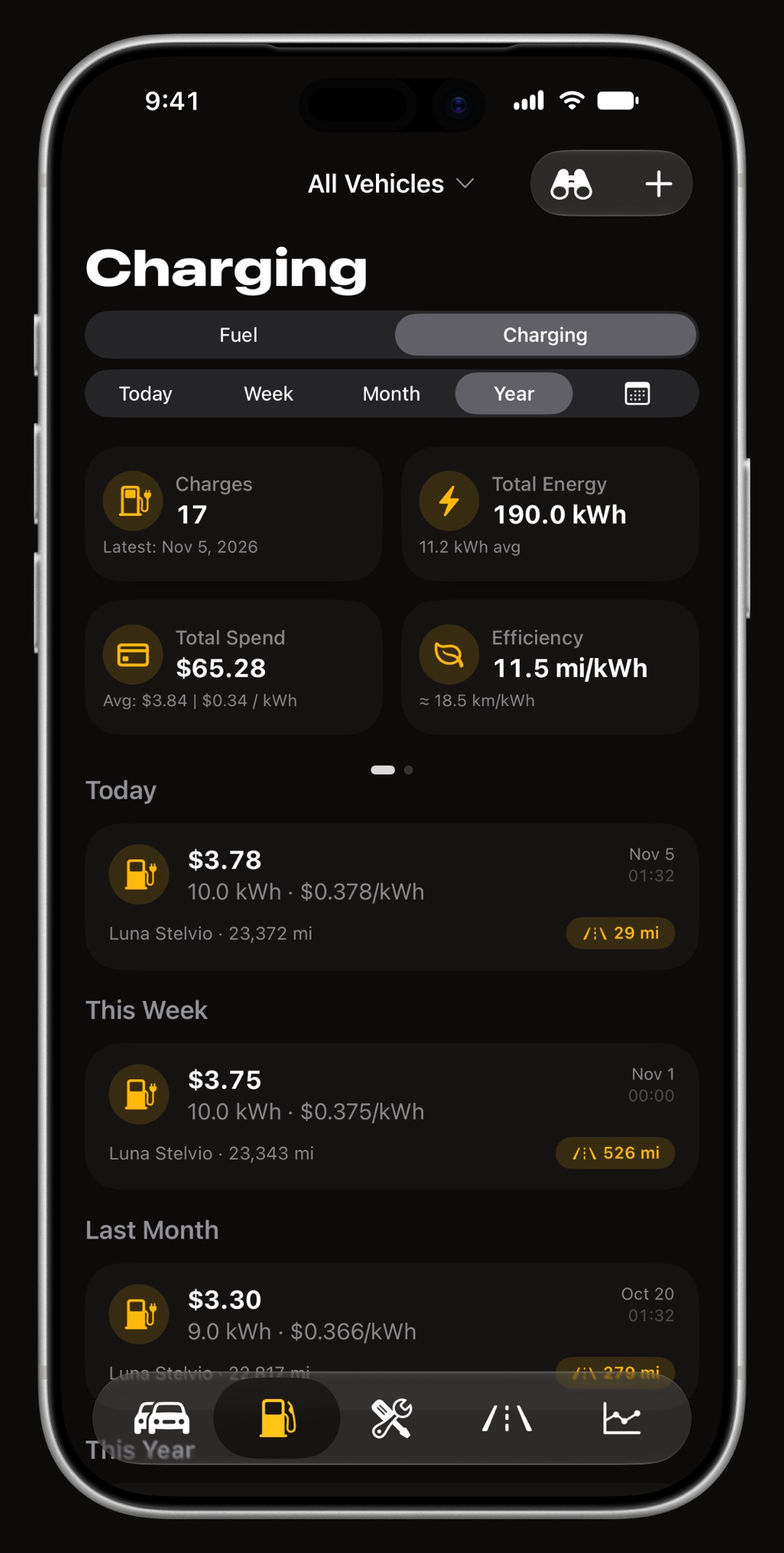
The numbers and formulas on this page, each with its source.
Log your next few charging sessions in WrenchTime and your own cost per kWh, cost per mile and home charging ratio replace the UK averages above. The free version covers 1 vehicle with 3 charging entries per month, and WrenchTime Pro removes those limits and adds charger screen and receipt scanning. The EV charging log guide explains how it works.
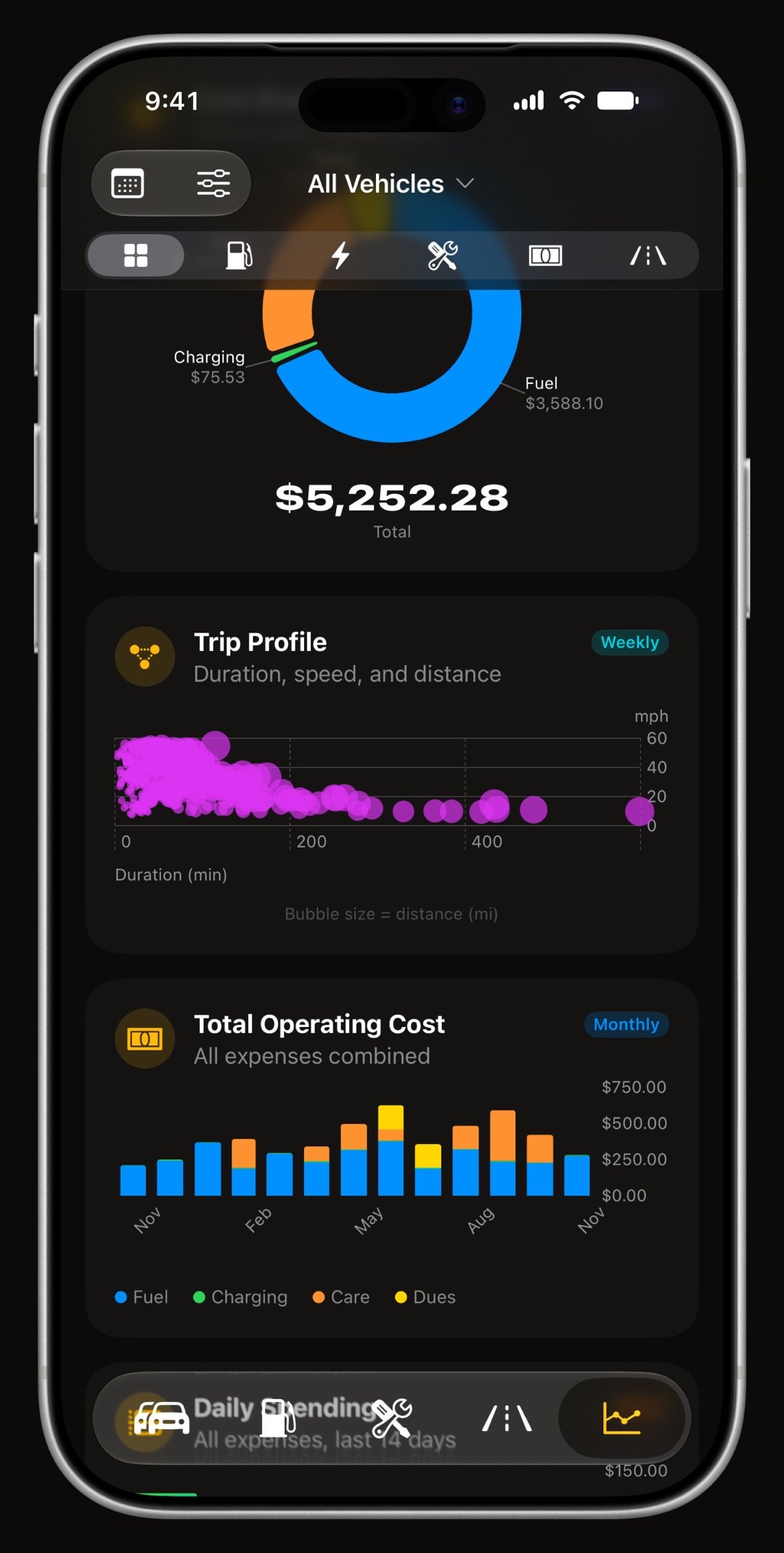
A full charge of a 75 kWh battery costs about £19.74 at the Ofgem price cap average of 26.32p per kWh and about £40.50 at the standard public average of 54p. A typical 10% to 80% session adds 52.5 kWh: about £13.82 at home and £28.35 on a standard public charger, before home charging losses.
At home, yes: about £8.77 per 100 miles at 26.32p per kWh and 3 miles per kWh, against £19.92 for a 40 MPG car at 175.28p per litre (gov.uk, mid-October 2026). Standard public charging at 54p per kWh costs £18.00 per 100 miles, slightly less than petrol, and rapid charging at 79p costs £26.33.
About £88 a month at home for 1,000 miles, at 3 miles per kWh and Ofgem's price cap average of 26.32p per kWh, or £97 with Level 2 charging losses. The same 1,000 miles cost about £180 on standard public chargers at 54p and £263 on rapid chargers at 79p.
A home rate pays only for electricity, while a public price also pays for the charger, its installation and the operator running it. Zapmap's index put public charging at 54p per kWh on standard chargers and 79p on rapid ones in September 2026, against 26.32p for the home price cap average. Rapid charging usually costs the most.
Almost always. Home charging appears on your electricity bill, about £8.77 per 100 miles at the October 2026 price cap average, and public chargers show a price in pence per kWh. Some operators run promotions, according to Zapmap, so the price you pay can be lower than the posted rate.
Multiply the kWh you add by your price per kWh. For cost per 100 miles, divide 100 by your car's miles per kWh and multiply by the price. At home, divide the result by 0.9 for Level 2 charging losses, or by 0.8 on Level 1.
More from the blog
EV charging
Level 2 is about five times faster and wastes a little less energy, but Level 1 is often enough for a plug-in hybrid or a short commute with a long night parked.
EV battery
Fleet data shows EV batteries lose about 2.3% of their capacity a year and rarely need replacing, so most outlast the 8-year, 100,000-mile warranty.
Fuel economy
Divide the miles between two full tanks by the gallons it took to refill (litres ÷ 4.546), then average over at least three tanks by totals, never by per-tank figures.

Free to download. One vehicle, real features, no ads. Your garage will thank you.
Download WrenchTime on the App Store