Hybrids
What maintenance does a hybrid car need?
A hybrid needs the same servicing as a petrol car plus a few hybrid-only checks, mainly the battery's cooling intake and the inverter coolant, and it usually costs no more to maintain.
Hybrid battery
Hybrid batteries usually last at least 10 years, or 100,000 to 150,000 miles, according to Kelley Blue Book (2025), and many packs reach 200,000 miles. In U.S. Department of Energy testing, a 2010 Toyota Prius pack still held about 81% of its original capacity after 160,098 miles. In the UK, Toyota UK says its warranty covers the hybrid battery and components for up to 10 years or 100,000 miles, and cover can be extended to 15 years from first registration through dealer servicing. A replacement pack costs roughly £800 to £5,500 in the UK, depending on the car and on whether it is new or reconditioned.
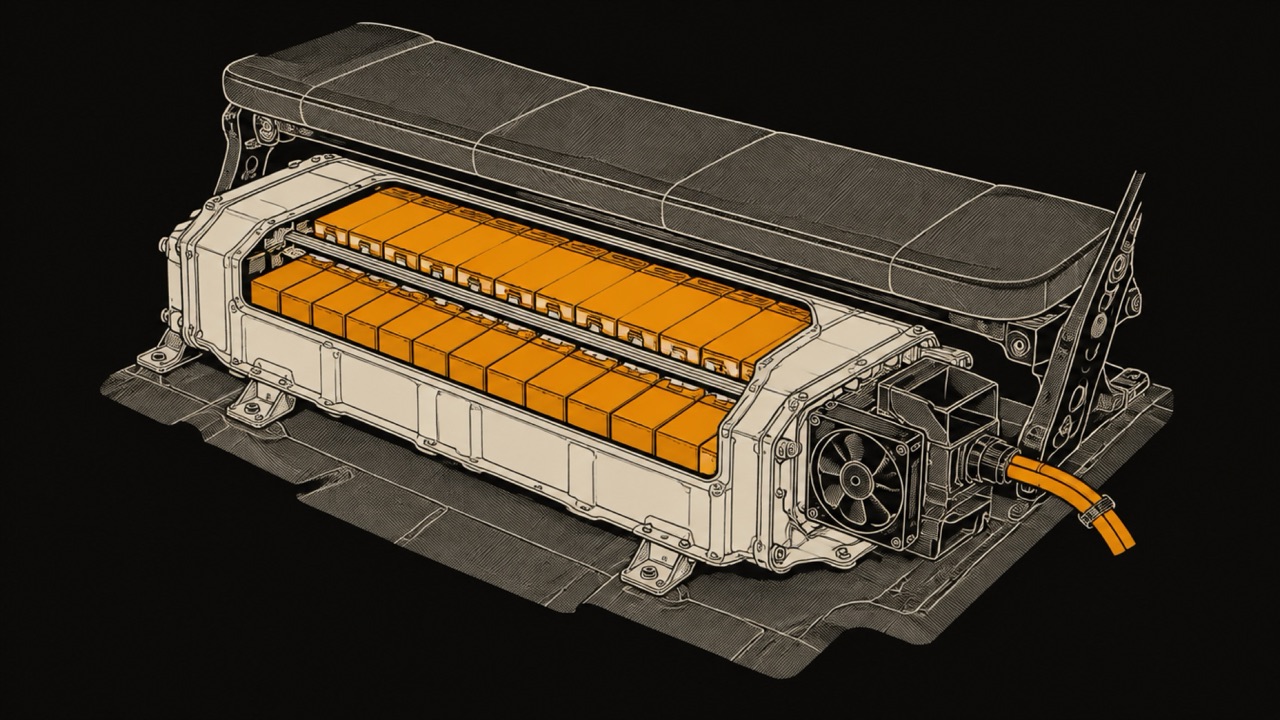
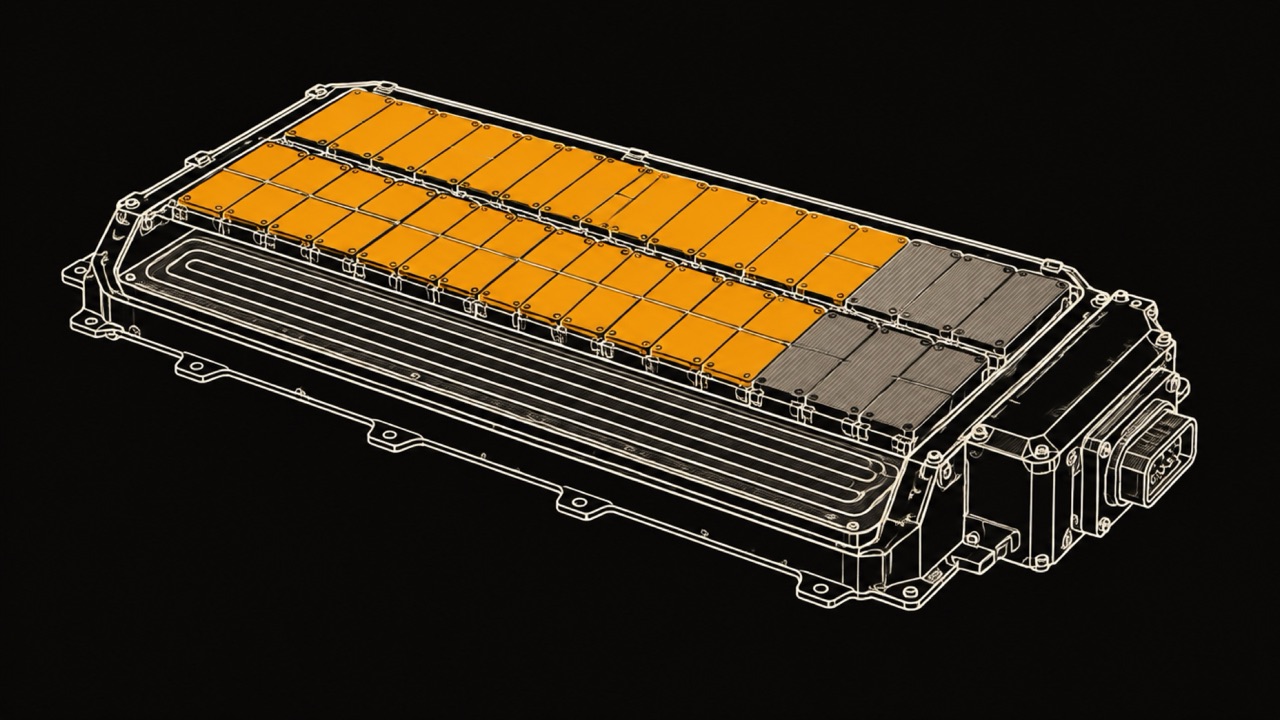
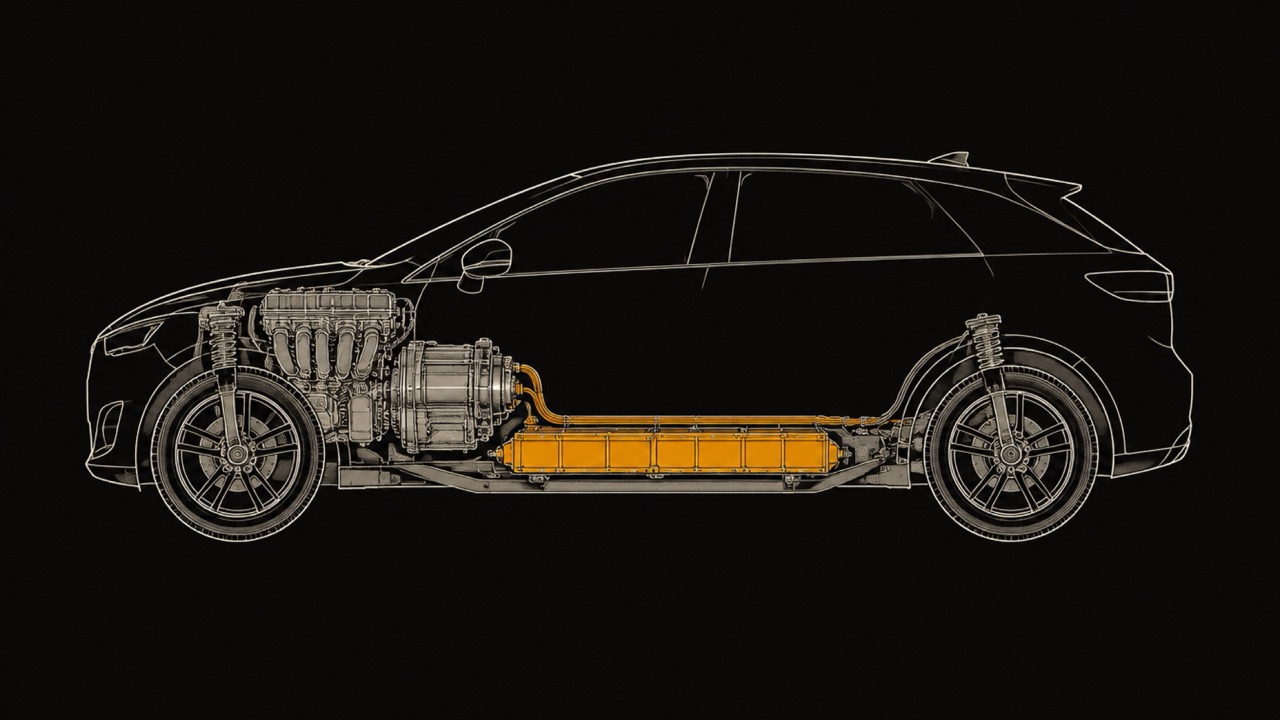
The hybrid battery, also called the traction or high-voltage battery, is the large pack that powers the electric motor. It is not the small 12-volt battery that runs the lights and computers. This guide is about the large pack, and a section further down explains how to tell the two apart. For the full service schedule of a hybrid, see the hybrid car maintenance schedule.
Published estimates for the traction battery cluster around the same figures. Kelley Blue Book (2025) says today's hybrid batteries last at least 10 years, or 100,000 to 150,000 miles. Mazda USA puts the typical range at 100,000 to 200,000 miles. AAA's Via magazine (March 2026) quotes 100,000 to 150,000 miles as a safe range, with most packs probably good for up to 200,000 miles. Kia, as reported by Kelley Blue Book, expects its hybrid batteries to last 150,000 miles or up to 15 years.
The range is wide because a battery's life depends on how and where the car is used. Heat, long periods parked, the mix of city and motorway driving and the state of the battery's cooling system all move the figure up or down, and a section below covers each one. The model generation matters too: early hybrids from the early 2000s used older battery designs than a current model.
A hybrid battery rarely dies all at once. It loses capacity, measured in amp-hours (Ah), the amount of charge it can store. AAA's expert treats a pack at about 70% of its original capacity as failed, and California's warranty rule for the 2026 model year draws its line at the same 70%. Above that line the car still works, but the engine has to do more of the work.
| Source | Years | Miles |
|---|---|---|
| Kelley Blue Book (2025) | At least 10 | 100,000 to 150,000 |
| AAA Via magazine (2026) | Not stated | 100,000 to 150,000, many up to 200,000 |
| Mazda USA | Not stated | 100,000 to 200,000 |
| Kia, as reported by Kelley Blue Book | Up to 15 | 150,000 |
Sources: Kelley Blue Book, AAA Via, Mazda USA.
The most detailed public test of a modern hybrid pack comes from the U.S. Department of Energy. Idaho National Laboratory and ECOtality tested the battery of a 2010 Toyota Prius when it was new, at 93 miles in July 2009, and again at 160,098 miles in February 2012. Measured capacity fell from 6.09 Ah to 4.94 Ah, an 18.9% loss, and usable energy from 1,310 Wh to 1,050 Wh. After 160,000 miles of fleet driving the pack still held about 81% of its capacity.
That result is one car, so it shows what a pack can do rather than what every pack will do. An earlier Idaho National Laboratory study of six first-generation hybrids (two 2001 Honda Insights, two 2003 Honda Civic Hybrids and two 2002 Toyota Priuses), each driven about 160,000 miles, found that all six batteries had lost capacity. Measured against the manufacturer's rating, the Insights averaged 84.6% remaining, the Civics 68.3% and the first-generation Priuses 39.2%, as reported in an Idaho National Laboratory paper (2006).
The same 2006 paper adds two details an owner should know. All six worn packs could still absorb the charge pulses of the test cycle, so they kept working as hybrids despite the lost capacity. And one Honda Insight's traction battery failed outright at 72,000 miles during fleet testing, which shows that an early failure can happen even when the typical pack lasts far longer.
| Measurement | At 93 miles (July 2009) | At 160,098 miles (February 2012) | Change |
|---|---|---|---|
| Measured capacity | 6.09 Ah | 4.94 Ah | 18.9% lower |
| Measured energy | 1,310 Wh | 1,050 Wh | About 20% lower |
Source: Idaho National Laboratory for the U.S. Department of Energy, report INL/EXT-13-28026, January 2013.
A full hybrid, such as a Prius, can drive short distances on electric power alone and charges its battery from the engine and from braking. The lifespan figures and lab results above describe full hybrids. A plug-in hybrid (PHEV) has a larger battery that is charged from the grid and drained much deeper on every trip. A mild hybrid usually uses a small 48-volt battery that assists the engine but cannot drive the car by itself.
Plug-in hybrid batteries work harder, so their wear shows more. AAA notes that range loss is more noticeable on a PHEV and that high-speed charging can shorten battery life. Kelley Blue Book (2025) reports Kia's estimate that DC fast charging can cost roughly 10% of a battery's life over eight years compared with Level 2 charging, and recommends unplugging at about 80% and never letting the charge fall below 20%.
No lab data comparable to the DOE Prius test was found for mild hybrid batteries. Their battery is much smaller than a full hybrid's, and the owner's manual and warranty booklet are the reference for how long it is covered. A fully electric car is a different case again, with a far larger pack: see how long EV batteries last for that data.
In the UK the cover comes from the manufacturer. Toyota UK states that its warranty includes cover for the hybrid battery and components for up to 10 years or 100,000 miles, whichever comes first (page updated November 2024). The US federal standard of at least 8 years or 100,000 miles, and California's 70% capacity rule from the 2026 model year, are US rules for cars sold in the US: Kelley Blue Book (2025) and Mazda USA are the sources, and they are shown here as a reference only.
Once the main cover ends, Toyota UK says a stand-alone Hybrid Health Check can extend the hybrid battery and component cover up to 15 years from the date of first registration, and its warranty page describes a new 12-month Hybrid Battery Warranty with every service at a Toyota dealer. The same page puts the manufacturer warranty at 3 years or 60,000 miles for key components including the engine, transmission and hybrid system. Neither page states a mileage limit for the extended cover, so confirm it with a Toyota Centre. Kia UK gives 7 years or 100,000 miles on its petrol, hybrid and plug-in hybrid cars, but itemises a separate battery warranty only for electric cars, so check its terms for a hybrid. For comparison, Toyota in the US covers every 2020 and newer hybrid battery for 10 years or 150,000 miles, according to the Toyota newsroom (2019).
The UK warranty clock starts on the date of first registration, not the date you bought the car, which matters for a used hybrid. Keep the registration date and every service invoice: Toyota's extended cover depends on dealer servicing, and a warranty claim and a buyer will both ask for the history, so it pays to keep your maintenance records from the first day.
| Coverage | Years | Miles | Condition | Source |
|---|---|---|---|---|
| Toyota UK, hybrid battery and components | 10 | 100,000 | Warranty cover stated by Toyota UK; confirm the current terms with a Toyota Centre | Toyota UK (updated November 2024) |
| Toyota UK, extended hybrid battery cover | Up to 15 from first registration | Not stated | Renewed in 12-month blocks through a Hybrid Health Check or a service at a Toyota dealer | Toyota UK |
| Toyota UK, manufacturer warranty | 3 | 60,000 | Key components including the engine, transmission and hybrid system | Toyota UK |
| Kia UK, petrol, hybrid and plug-in hybrid cars | 7 | 100,000 | General warranty; a separate battery warranty is itemised for electric cars only | Kia UK |
| US reference: Toyota hybrid battery, 2020 model year and newer | 10 | 150,000 | From date of first use, transfers to later owners | Toyota newsroom (2019) |
In the UK, published figures from UK Hybrid Automotive put a brand new Toyota hybrid battery at about £1,800 to £3,200 for a Yaris Hybrid and £4,000 to £5,500 for a RAV4 Hybrid, and a reconditioned pack at about £800 to £1,500 and £1,500 to £3,000 for the same two cars. These are a specialist's figures, not a manufacturer's price list, so ask for a written quote. Inside the warranty period, a covered failure costs nothing. The US figures are higher: a new hybrid battery costs about $2,000 to $8,000 depending on make and model, according to Kelley Blue Book (2025) and Mazda USA, and AAA (2026) quotes $4,000 to $5,000 for a full traction battery, about a quarter of the price of an EV battery, and $1,000 to $2,500 for a used or refurbished pack. They are shown in the table as US references.
Replacement is not always all or nothing. AAA notes that on some newer vehicles individual battery modules can be swapped instead of the whole pack, and that Toyota is exploring a refurbished battery programme for the Prius. A refurbished pack costs less but its remaining life is harder to judge, so the seller's own warranty on it matters.
| Option | Typical price (USD) | Pros | Cons | Source |
|---|---|---|---|---|
| New pack | $2,000 to $8,000 (Kelley Blue Book); $4,000 to $5,000 (AAA) | Full new capacity, usually a parts warranty | Highest cost | Kelley Blue Book (2025); AAA (2026) |
| Used or refurbished pack | $1,000 to $2,500 | Lower cost | Remaining life uncertain | AAA (2026) |
| Warranty replacement | $0 if covered | No cost to the owner | Only within the warranty's years and miles | Warranty terms |
A failing hybrid battery stores less energy, so the petrol engine has to run more and fuel economy falls. AAA (2026) says a fuel economy drop of 10% to 15% is the point to schedule service. Kelley Blue Book and Mazda USA list the other common signs below.
A hybrid battery health check is a job for a dealer or a hybrid specialist with a scan tool that reads the pack's condition. A gradual decline is easier to spot from your own records than from a single test, which is what the tracking section further down is for.
Every hybrid has two batteries. The 12-volt auxiliary battery powers the 12-volt systems: lights, audio and computer controls. It does not drive the car, and according to NAPA Know How (2022) many hybrids do not use it to start the engine. A hybrid has no alternator: the high-voltage battery recharges the 12-volt battery through the inverter and converter.
A hybrid that will not switch on at all very often has a flat 12-volt battery, not a dead traction pack, because the 12-volt battery wakes up the computers that bring the hybrid system online. A 12-volt battery is an ordinary, inexpensive part that a shop can test in minutes, so it is the first thing to rule out before anyone quotes for a traction battery.
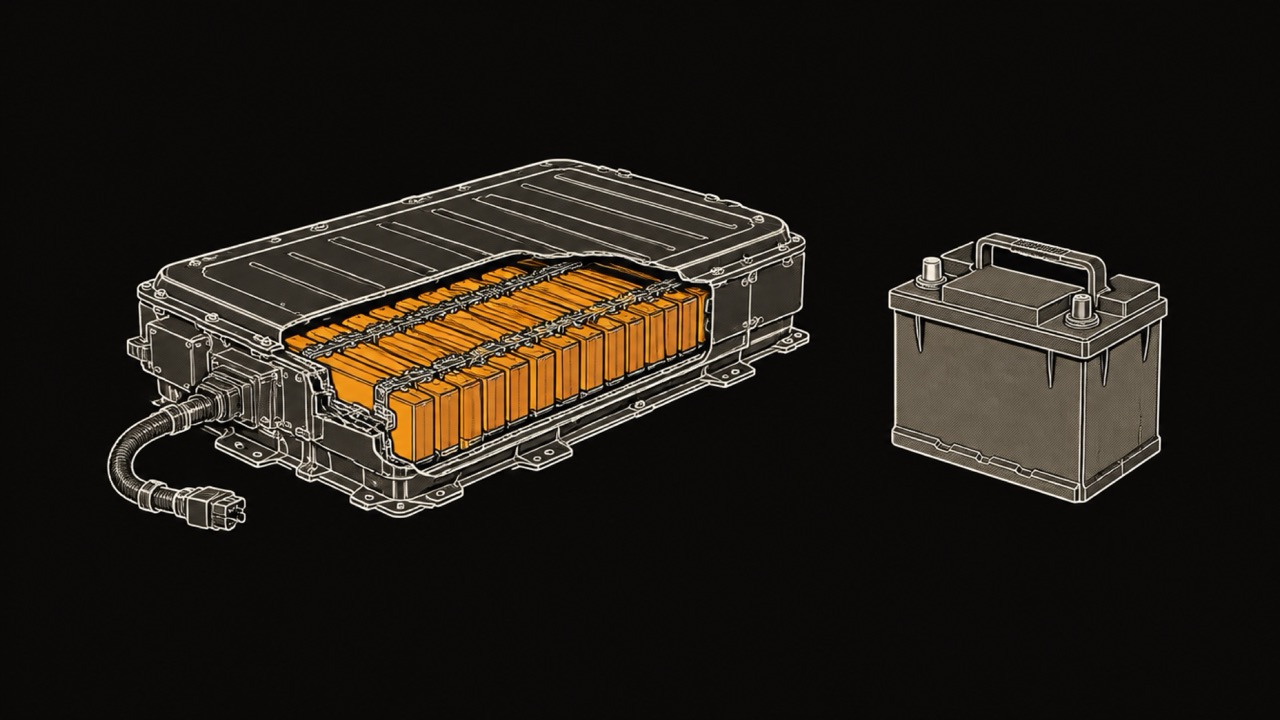
Heat is the biggest factor in hybrid battery wear, according to AAA (2026). Kelley Blue Book (2025) gives 15°C to 35°C (59°F to 95°F) as the ideal range for battery efficiency and performance. Parking in a garage or in the shade helps, and Mazda USA recommends parking in moderate temperatures and avoiding quick starts and hard stops.
Long periods parked also hurt. For a hybrid that sits unused, Kelley Blue Book suggests running it every week or two for 20 to 30 minutes. AAA's view is that more motorway miles on petrol and fewer electric city miles help longevity, because the battery cycles less.
The battery's cooling system needs attention. Many hybrids cool the pack with a fan that draws cabin air through a vent near the rear seat, and Kelley Blue Book notes that its filter must be cleaned or replaced periodically, like an engine air filter. AAA says liquid-cooled packs typically need a battery coolant service from about 100,000 miles on some models: the owner's manual has the interval for each car.
Because a 10% to 15% fuel economy drop is the warning sign, the cheapest battery monitor is a fuel log compared against your own history. Fill the tank completely each time, write down the litres and the odometer, and work out miles per imperial gallon tank to tank by dividing the miles by the litres and multiplying by 4.546. The method is explained step by step in how to calculate your real MPG tank to tank.
Compare like with like. Every car's fuel economy falls in winter, so compare this January with last January, not with last July. As an example, a hybrid that averaged 60 MPG over last year's summer tanks and now averages 51 MPG over this summer's has lost 15%, which is the point AAA says to book a check.
The trip computer is not a substitute for the pump. In Idaho National Laboratory's 2006 end-of-life tests, the onboard fuel economy display of every worn hybrid read higher than the measured result, by 11% to 22% depending on the car. A drift of that size hides exactly the decline you are looking for, so the numbers to trust are the litres you paid for.
Keep battery-related work with the same care: cooling fan filter cleanings, inspections, health checks and any warranty claim, each with its date and mileage. That history supports a claim if the pack fails inside the warranty and reassures a buyer if you sell.
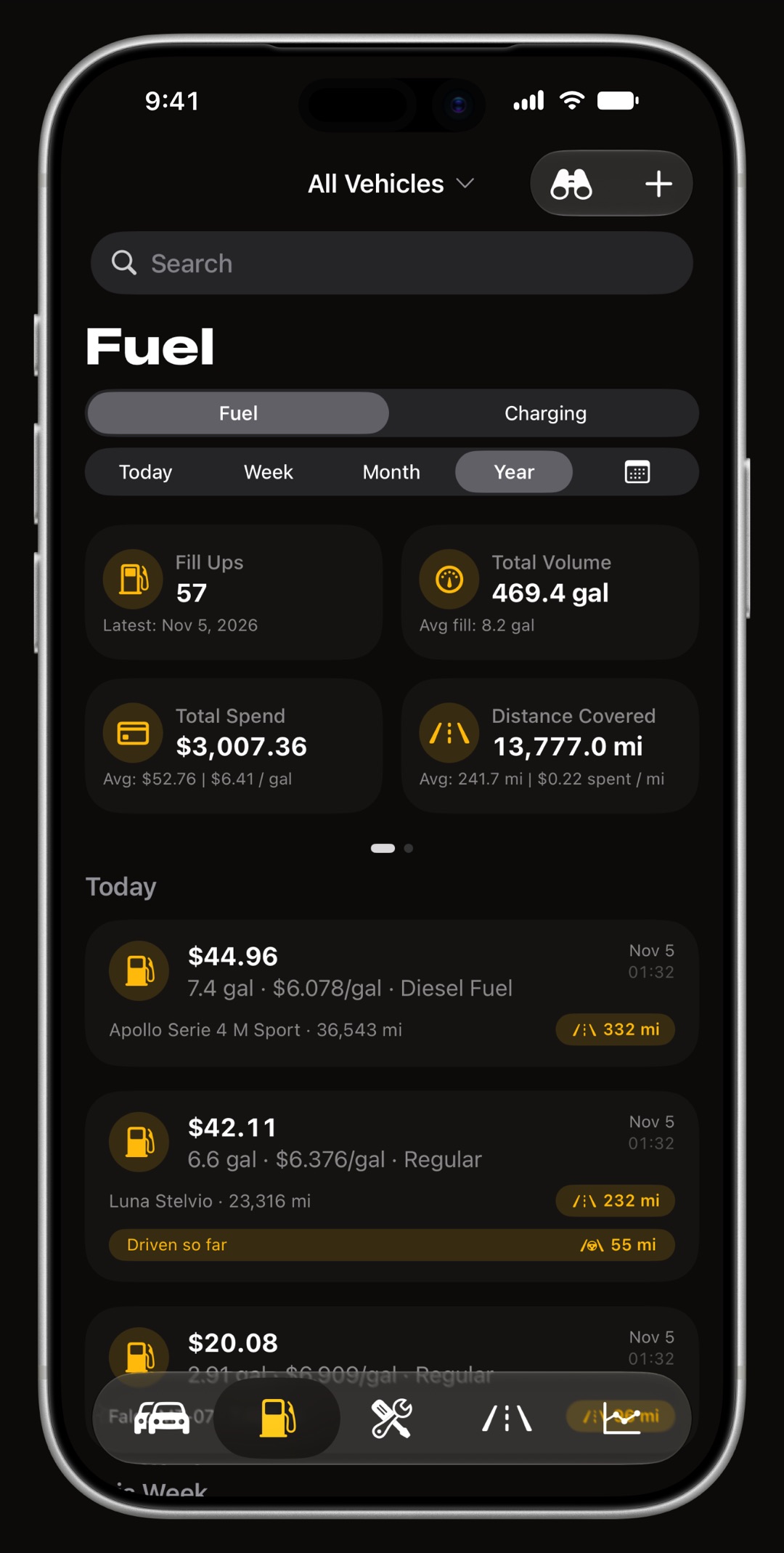
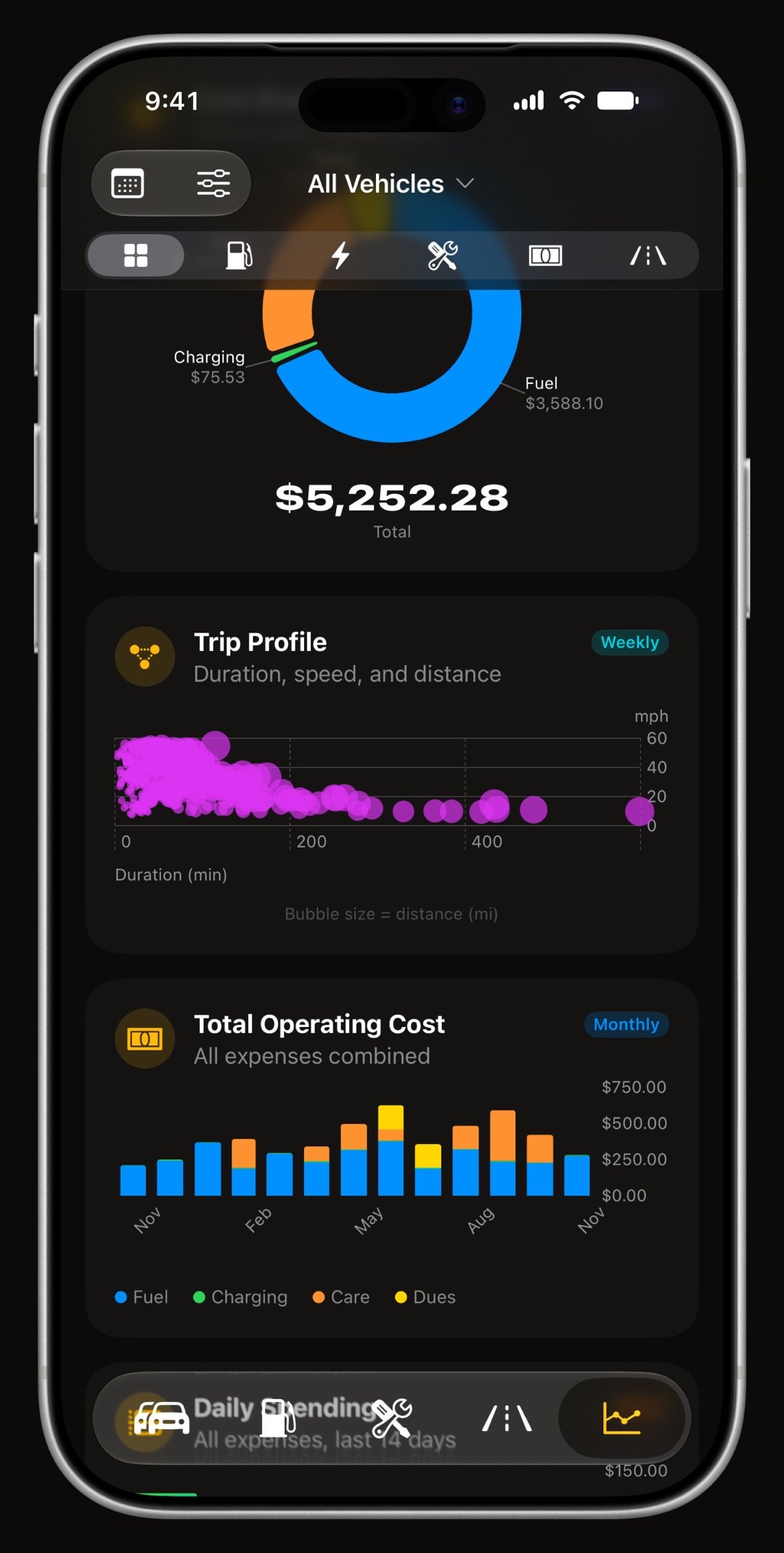
If you use WrenchTime, an iOS app for logging fuel, charging, maintenance and trips for cars and motorcycles, mark each fill-up as a full tank and the app computes tank-to-tank consumption. When your economy falls meaningfully against your own history, it shows an efficiency drop alert with a sheet explaining what changed. That is the early signal a weakening hybrid pack gives. The fuel economy tracker guide explains how it works.
WrenchTime also lets you schedule hybrid-related jobs, such as a cooling filter check, by date or mileage with reminders, and keeps every completed job with its date, odometer and cost. Plug-in hybrid owners can log every charging session separately from fuel. With a Bluetooth OBD-II adapter, the app shows the hybrid battery's charge level and voltage where the car reports them: a live reading, not a battery health test.
A hybrid battery is built to last most or all of the car's life, and the figures below are the ones to remember when you own, buy or sell a hybrid.
Log your next fill-up in WrenchTime and let your own fuel economy history become the early warning for your hybrid's battery. The free version covers 1 vehicle with 3 fuel entries per month, and WrenchTime Pro removes those limits. The fuel economy tracker guide shows what the app records.
A hybrid battery usually lasts at least 10 years, or 100,000 to 150,000 miles, according to Kelley Blue Book (2025), and many reach 200,000 miles. Kia expects up to 15 years. Heat, long periods parked and a clogged cooling vent shorten that life.
UK specialist figures put a new Toyota hybrid battery at about £1,800 to £5,500 and a reconditioned one at about £800 to £3,000, depending on the model (UK Hybrid Automotive). In the US a new pack costs about $2,000 to $8,000, according to Kelley Blue Book (2025). A failure covered by warranty costs nothing.
Yes, usually. Toyota UK covers the hybrid battery and components for up to 10 years or 100,000 miles and can extend that to 15 years from first registration through dealer servicing. Kia UK gives 7 years or 100,000 miles on its hybrids. Check the terms for your car, as they differ by maker.
Watch for a fuel economy drop of 10% to 15%, the engine running more than usual, a hybrid system warning light and weaker acceleration. AAA says a 10% to 15% drop is the time to book service. A dealer or hybrid specialist can test the pack with a scan tool.
A failing hybrid battery triggers warnings and reduced performance, and it should be checked promptly; what the car can still do varies by model, so the owner's manual is the reference. If the car will not switch on at all, check the 12-volt battery first.
If a hybrid sits unused, Kelley Blue Book (2025) suggests running it every week or two for 20 to 30 minutes. Regular driving keeps the battery cycling and charged, and parking in moderate temperatures, away from heat, helps it last longer.
More from the blog
Hybrids
A hybrid needs the same servicing as a petrol car plus a few hybrid-only checks, mainly the battery's cooling intake and the inverter coolant, and it usually costs no more to maintain.
EV battery
Fleet data shows EV batteries lose about 2.3% of their capacity a year and rarely need replacing, so most outlast the 8-year, 100,000-mile warranty.
Fuel economy
Divide the miles between two full tanks by the gallons it took to refill (litres ÷ 4.546), then average over at least three tanks by totals, never by per-tank figures.

Free to download. One vehicle, real features, no ads. Your garage will thank you.
Download WrenchTime on the App Store