Cooling system
How often should you change coolant?
Every 2 years or 30,000 miles for older green coolant, five to ten years or 100,000 miles and more for long-life types, whichever comes first, with the manufacturer numbers side by side.
Cooling system
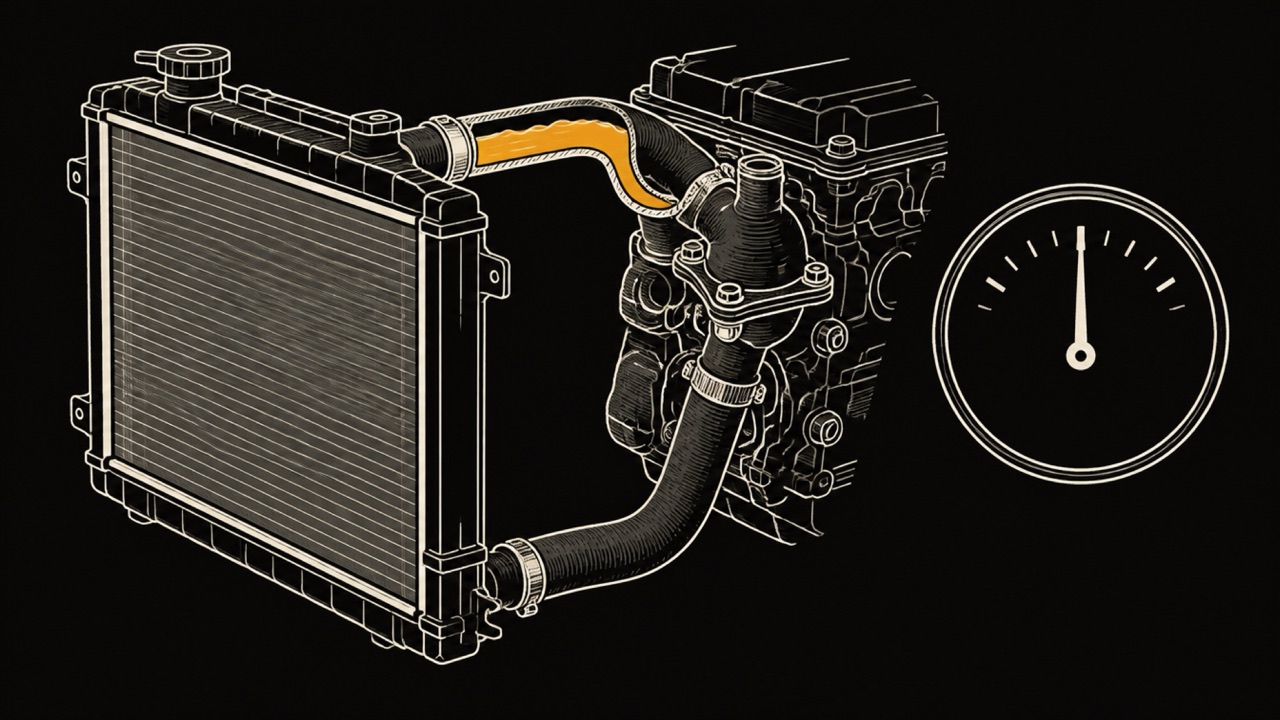
A normal coolant temperature for a fully warmed-up car is about 195 to 220°F (90 to 105°C). ALLDATA puts most cars built in the last 25 years at 195 to 225°F (91 to 107°C), and HP Academy calls 85 to 105°C (185 to 220°F) the safe window. Coolant does not boil at 212°F because the system is pressurized: a 50/50 mix under a 15 psi cap is rated to 265°F (129°C). On the dashboard, a needle resting near the middle is normal.
The normal coolant temperature range for most modern cars is 195 to 225°F (91 to 107°C) once the engine is fully warm, according to ALLDATA's 2019 overview of cooling systems built in the last 25 years. HP Academy, which writes for tuners and race engines, gives a slightly narrower safe window of 85 to 105°C (185 to 220°F).
Below about 185°F (85°C) the engine has not finished warming up. HP Academy notes that an engine running that cold for long wears faster, because the oil is thicker and the fuel does not burn completely. Above about 220°F (105°C) the same source warns that the engine starts to risk overheating damage.
The exact figure for one engine depends on its thermostat rating and its manufacturer's design, and a thermostat is fully open only about 10°F to 15°F above its rating, so two healthy cars can settle at different readings and both be normal. The table puts the bands from a cold start to the boiling point in one place.
| Band | °F | °C | What it means |
|---|---|---|---|
| Warming up | Below 185 | Below 85 | Normal for the first minutes after a cold start, a problem if it never climbs |
| Thermostat opening | About 195 on a 195-degree thermostat | About 90 | Warm coolant starts flowing to the radiator |
| Normal operating | 195 to 220 | 90 to 105 | Where a healthy engine settles once warm |
| Upper end of many specs | 220 to 225 | 105 to 107 | Still inside ALLDATA's range, worth watching |
| Overheating risk | Above 225 | Above 107 | Ease off and find the cause |
| 50/50 coolant boils, 15 psi cap, sea level | 265 | 129 | Coolant turns to steam and stops cooling |
Sources: ALLDATA, 2019, HP Academy, Stant thermostat listing, Peak antifreeze data sheet, 2019.
A dashboard temperature gauge often stays in the middle because it is dampened on purpose to reduce needle movement, so the needle does not look erratic as the coolant warms and cools. GM's service bulletin PI1179 from February 2014 describes this for the 2014 Chevrolet Corvette, whose analog gauge runs a dampening program to reduce needle fluctuation.
The same GM bulletin says the car's digital coolant readout is unfiltered data, the actual temperature at the sensor, and that the two can disagree during warm-up until about 220°F (104°C). GM calls this a normal operating characteristic that needs no repair.
A needle in the middle therefore says the coolant is in the normal band, not at one exact figure. A needle that moves toward H is the signal that matters, and because a dampened gauge reacts slowly, the real temperature may already be well above normal when it does.
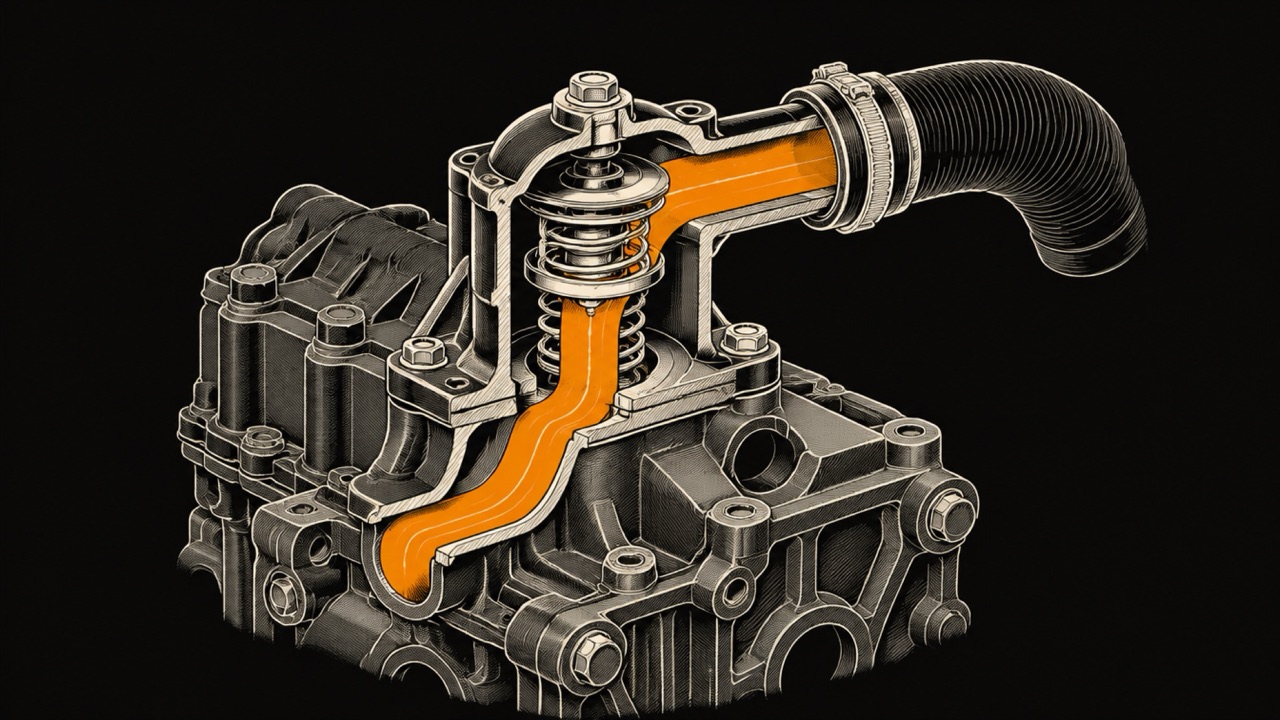
A thermostat opens at its rated temperature: a 195-degree thermostat starts to release hot coolant from the engine into the radiator at about 195°F (90°C), and it is fully open about 10°F to 15°F warmer, according to a Stant thermostat listing. The thermostat is the valve between the engine and the radiator, and it decides where a warm engine settles.
While the thermostat is closed, coolant does not reach the radiator, which is why the temperature climbs after a cold start and then levels off. ALLDATA dates the first thermostats to 1922, when they were added so engines would warm up faster, run more efficiently and last longer.
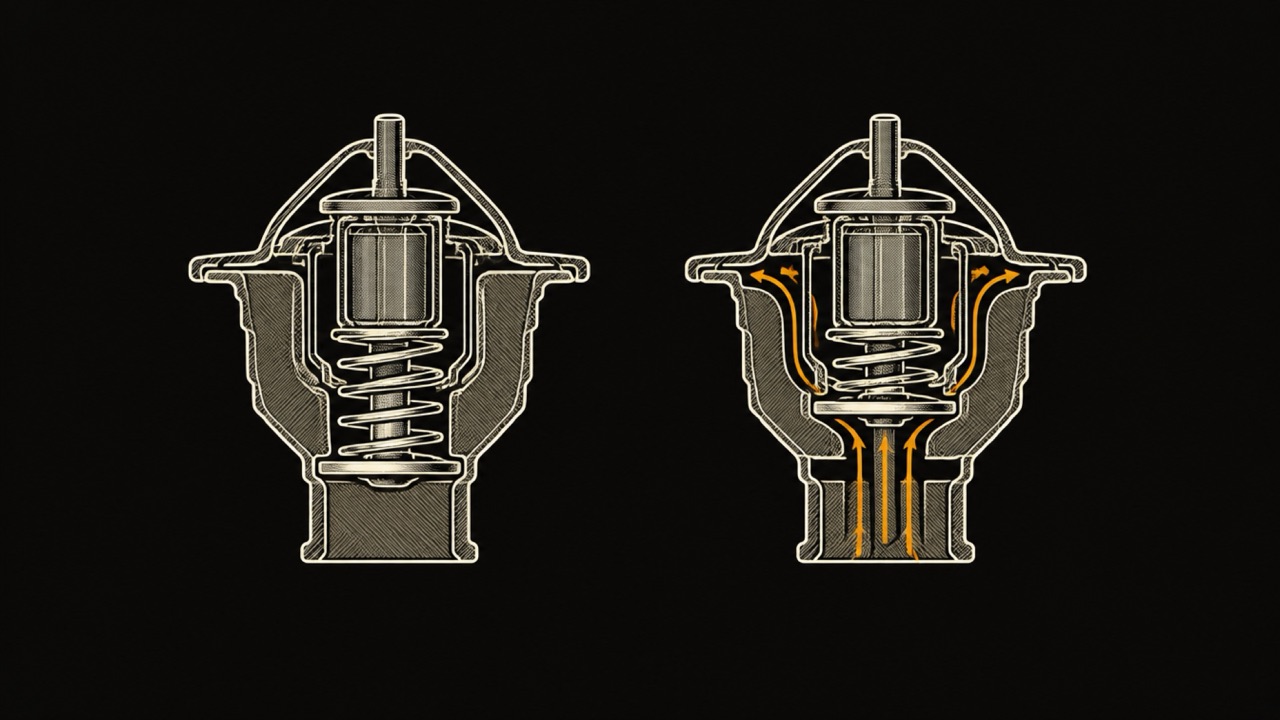
Coolant is too hot once it stays above about 220 to 225°F (105 to 107°C), the top of the ranges HP Academy and ALLDATA give. HP Academy warns that above 105°C (220°F) an engine can overheat and suffer gasket failure, cracked heads or knock. The coolant itself still has margin before it boils, because the system runs under pressure.
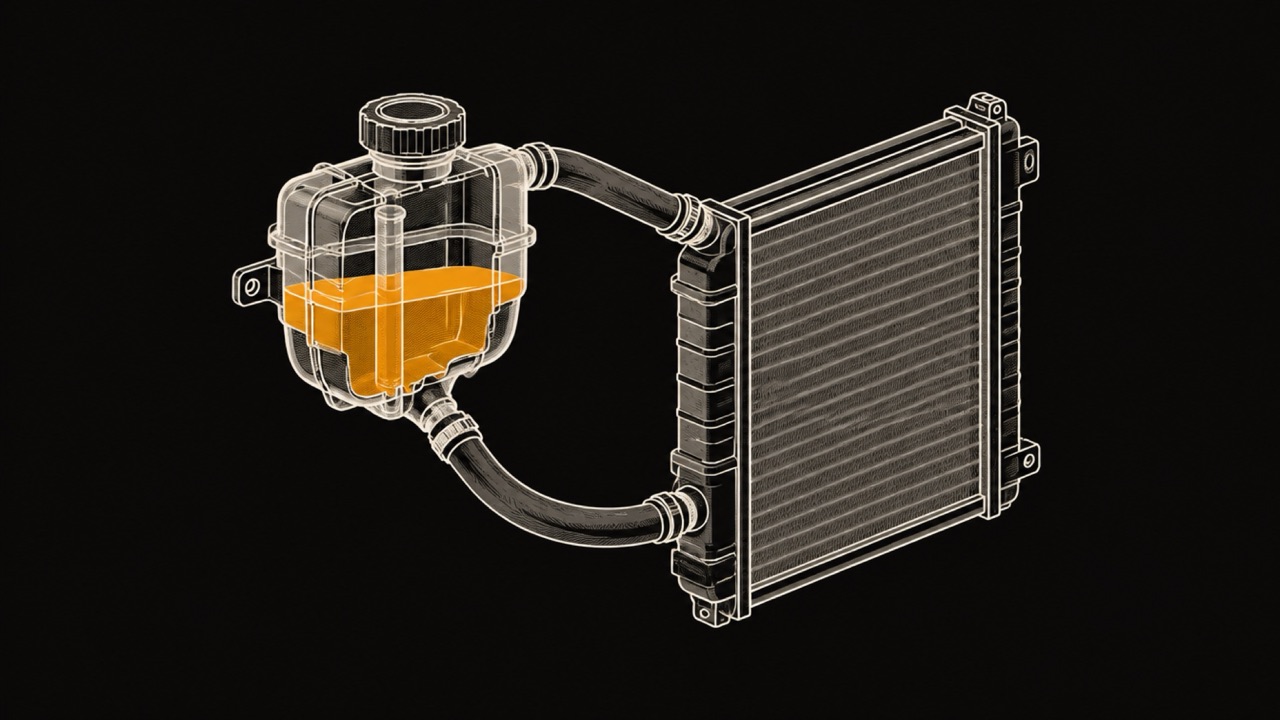
A modern cooling system is pressurized to about 14.5 to 21 psi (1.0 to 1.5 bar), which ALLDATA says lifts the boiling point from about 225°F (107°C) to well over 260°F (127°C). Peak's data sheet rates a 50/50 mix at 265°F (129°C) with a 15 psi cap at sea level, about 2.5°F higher for every extra psi of pressure and about 2°F lower for every 1,000 feet of altitude.
Example calculation: the same 50/50 mix under a 15 psi cap at 5,000 feet boils at about 265°F minus 10°F (2°F for each 1,000 feet), so about 255°F (124°C). An engine reading 220°F at sea level has about 45°F (25°C) of margin before the coolant boils, which is why a reading that keeps climbing matters more than any single number.
| Condition | Boiling point °F | Boiling point °C |
|---|---|---|
| 50/50 mix, no pressure (minimum spec) | 226 | 108 |
| 50/50 mix, 15 psi cap, sea level | 265 | 129 |
| 50/50 mix, 15 psi cap, 5,000 feet (example calculation) | About 255 | About 124 |
| 60/40 mix, 15 psi cap, sea level | 270 | 132 |
| 70/30 mix, 15 psi cap, sea level | 276 | 135 |
Source: Peak Global Lifetime antifreeze product data sheet, 2019; the altitude row applies its 2°F per 1,000 feet rule.
A coolant temperature of 90°C is normal: it equals 194°F, at the bottom of the 195 to 220°F band where many engines settle once the thermostat opens. HP Academy names 90 to 95°C as the sweet spot for most race engines, and its conclusion gives 195 to 220°F (90 to 105°C) as a typically safe range.
A reading of 90°F is a different story. At 90°F (32°C) the engine is still cold, which is normal only in the first minutes after a start. If the gauge or a scan tool shows that low after a long drive, the thermostat is the first part to suspect.
A common cause of low engine coolant temperature is a thermostat stuck open, which lets coolant reach the radiator before the engine is warm. Kelley Blue Book describes code P0128 as coolant temperature below the thermostat's ability to regulate, and lists a stuck-open thermostat alongside a bad coolant temperature sensor, a cooling fan stuck on and cold winter driving.
The symptoms are a gauge that reads cooler than usual, an engine that takes longer to warm up, a weak heater and lower fuel economy. A cold engine costs fuel even when nothing is broken: fueleconomy.gov puts a conventional car's city mileage about 15% lower at 20°F than at 77°F, and up to 24% lower on trips of 3 to 4 miles.
Outside temperature changes how long the coolant takes to reach its normal range, more than where it ends up. On a 50°F day a warmed-up engine still aims for the band its thermostat sets, typically 195 to 220°F, because the thermostat only lets coolant reach the radiator once that rating is reached. In cold air the engine needs longer to get there.
Fueleconomy.gov notes that in cold weather an engine takes longer to reach its most fuel-efficient temperature, which hurts short trips most. The article on how long an engine takes to warm up covers warm-up times and why driving off gently beats idling.
If the temperature gauge moves beyond the normal area toward H, the engine is overheating and may be damaged, as the Kia owner's manual puts it, so stop driving as soon as it is safe. Never open the radiator or reservoir cap while the engine is hot: the coolant is under pressure, and ALLDATA notes that releasing the pressure makes hot coolant boil violently.
The real coolant temperature, the number a dampened gauge hides, comes from the car's coolant temperature sensor and can be read through the OBD-II port. The standard engine coolant temperature parameter, PID 05 in SAE J1979, reports values from -40 to 215°C (-40 to 419°F), according to the CSS Electronics PID table.
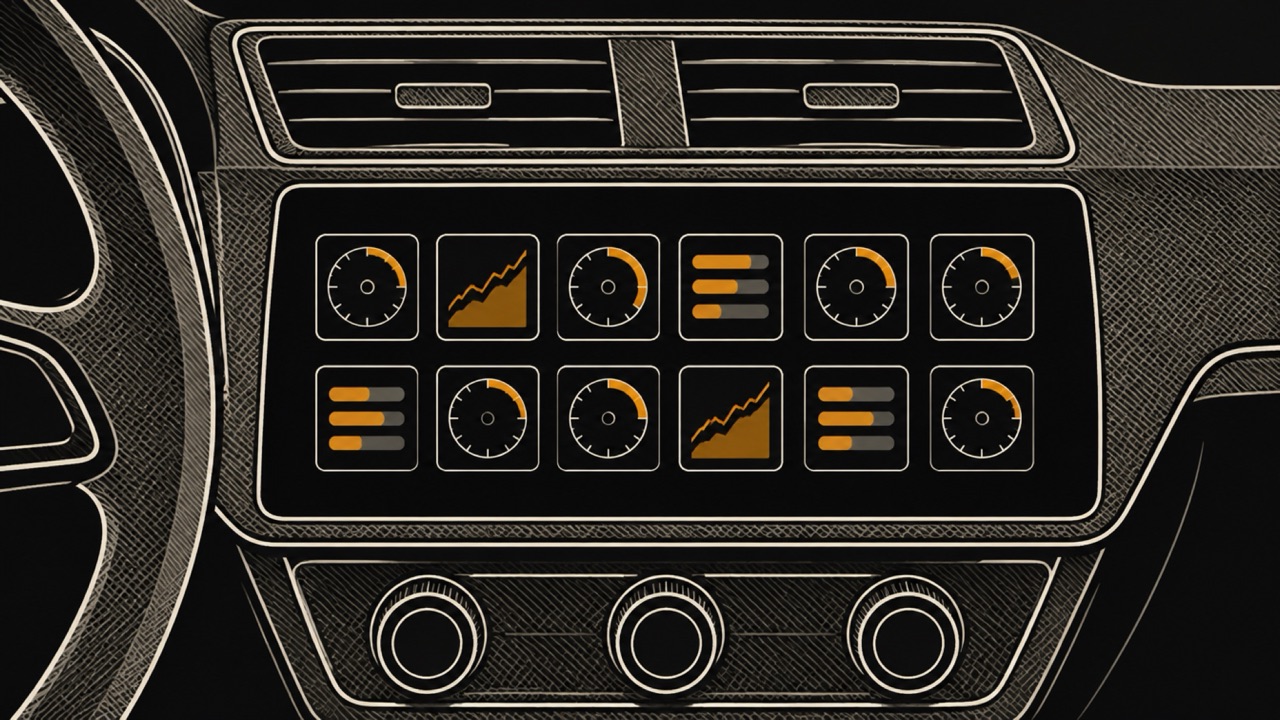
WrenchTime reads coolant temperature through a Bluetooth LE ELM327 adapter or the OBDLink MX+ and shows it as a gauge on the iPhone and as coolant temperature on CarPlay, in °F or °C as you choose. Watching the number over a few drives shows where your engine normally settles, which makes a change easy to spot.
Put coolant temperature on WrenchTime Live as a gauge of its own, or on the CarPlay grid as a trend line. Set your own caution and critical bands per vehicle, and on CarPlay a reading that stays in its critical band raises one alert. The free version gives you 3 instruments on the first Live page; CarPlay comes with WrenchTime Pro.
Yes, if it is 90°C: that is 194°F, at the bottom of the normal 195 to 220°F band where many engines settle once the thermostat opens. A reading of 90°F means the engine is still cold, which is normal only for the first minutes after a cold start.
Yes, 230°F (110°C) is above the 195 to 225°F that ALLDATA gives for most modern cars and above HP Academy's 220°F limit, though still below the 265°F boiling point of a 50/50 mix under a 15 psi cap. Ease off, watch whether it keeps climbing and have the cooling system checked.
A common cause is a thermostat stuck open, which can set code P0128. A failing coolant temperature sensor, a cooling fan stuck on and short trips in cold weather can also keep the reading low, along with a weak heater and lower fuel economy.
Wait until the engine has cooled completely: owner's manuals such as Kia's warn never to open the cap while the engine is hot, because the coolant is under pressure. No fixed number of minutes applies, so check that the upper hose and the cap are cool to the touch.
Yes. Many analog gauges are dampened to reduce needle movement, so the needle rests near the middle across the normal range. GM's bulletin PI1179 says the needle and the car's unfiltered digital reading can differ during warm-up, and calls that normal. Worry when the needle moves toward H.
More from the blog
Cooling system
Every 2 years or 30,000 miles for older green coolant, five to ten years or 100,000 miles and more for long-life types, whichever comes first, with the manufacturer numbers side by side.
Winter
Idle about 30 seconds and drive off gently: logged OBD data from 62 cold starts shows how many minutes of driving the engine really needs to warm up, by outside temperature.
CarPlay
How to see live OBD2 readings such as RPM, boost and coolant temperature on CarPlay, why most apps show a list, which apps draw gauges, and which adapters work with iPhone.
Free to download. One vehicle, real features, no ads. Your garage will thank you.
Download WrenchTime on the App Store