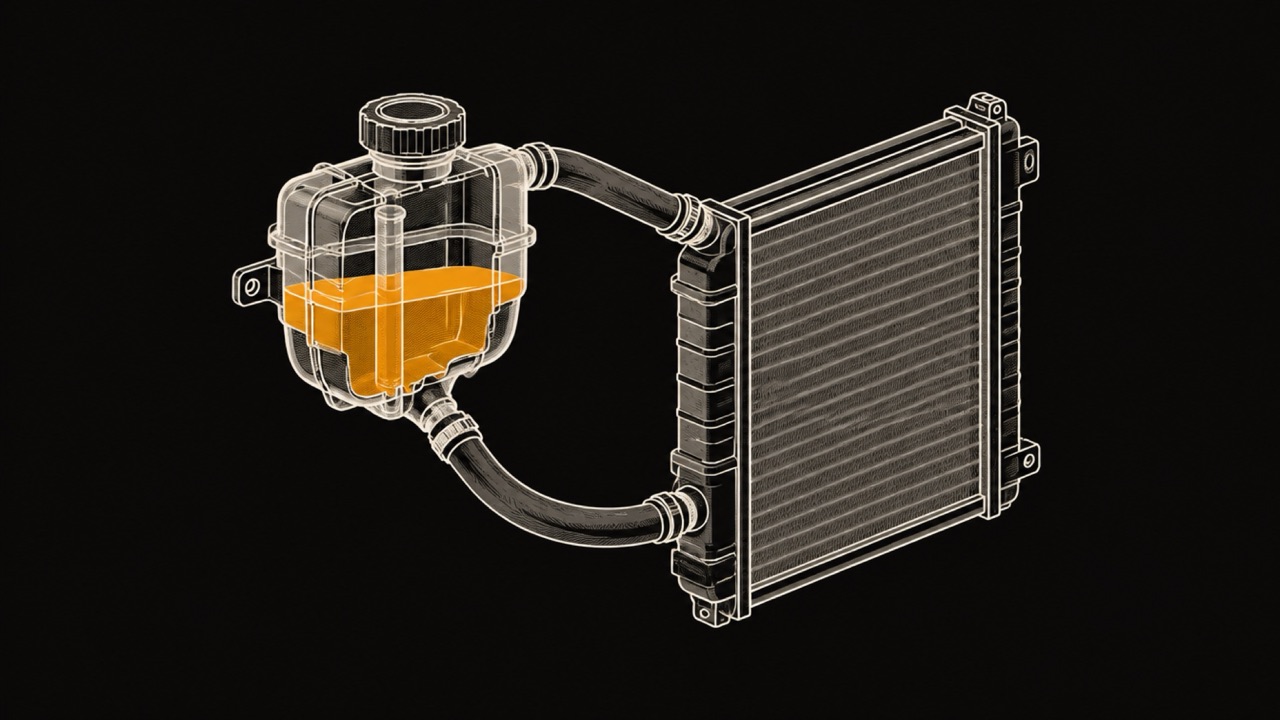
Cooling system
How often should you change coolant?
Every 2 years or 30,000 miles for older green coolant, five to ten years or 100,000 miles and more for long-life types, whichever comes first, with the manufacturer numbers side by side.
Brakes
Most cars need a brake fluid change every 2 to 3 years, whatever the mileage, and the owner's manual has the final word: Honda's Maintenance Minder falls back to every 3 years, a 2012 Nissan Leaf calls for every 2 years or 30,000 miles, and Tesla checks the fluid every 4 years and replaces it if needed. Time matters more than miles because brake fluid absorbs water from the air, and water lowers its boiling point. If you tow, descend long mountain grades or drive hard, have it checked more often.
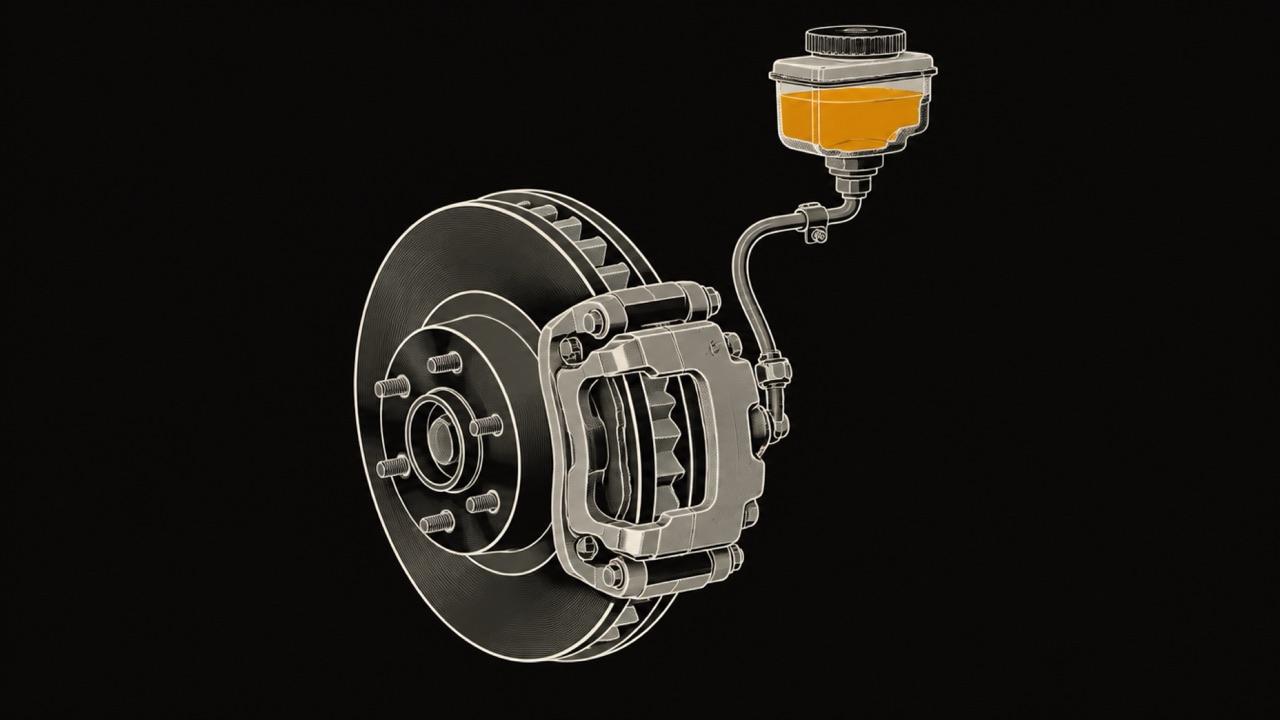
How often to change brake fluid comes down to time first and distance second. For most cars the answer is every 2 to 3 years; some schedules add a mileage limit, and the fluid is due at whichever limit arrives first. Service chains see the same spread: Jiffy Lube notes that some manufacturers say every 2 years, others every 3 years or every 45,000 miles, and some give no figure at all.
The owner's manual or the car's maintenance reminder always overrides a general rule. Brake fluid is like coolant in that respect: both wear out with age as well as use, which is why the guide to how often to change coolant reads the same way. A car that covers 4,000 miles a year still reaches the time limit.
The federal brake fluid standard does not set a change interval. FMVSS No. 116 sets how a new fluid must perform, including its minimum boiling points, and leaves the replacement schedule to each vehicle manufacturer. The container label it requires says it plainly: follow the vehicle manufacturer's recommendations.
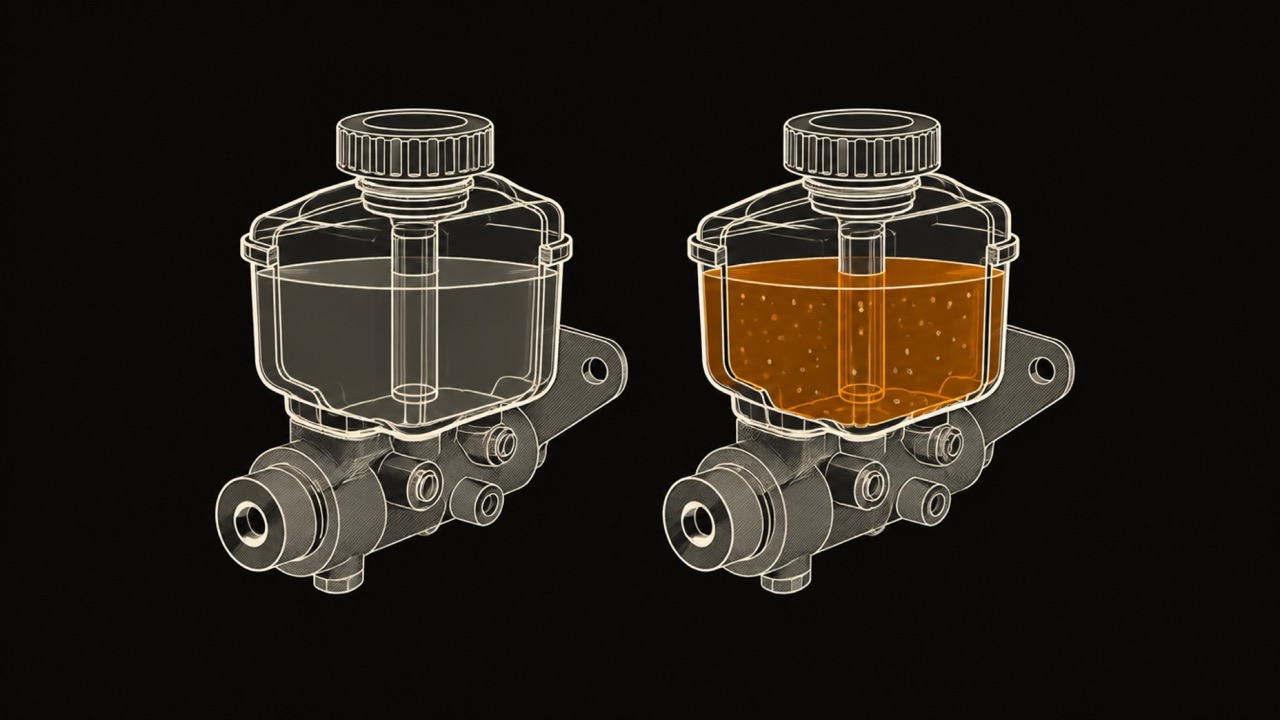
Brake fluid goes bad because it is hygroscopic, which means it absorbs moisture from the air over time, through the reservoir and the rubber parts of the system. Liqui Moly, a brake fluid maker, describes DOT 3, DOT 4 and DOT 5.1 fluids this way; silicone DOT 5 is the exception and does not absorb water.
Water lowers the fluid's boiling point. Hard braking heats the calipers, and if the fluid near them boils, it forms vapor bubbles. Vapor compresses where liquid does not, so the pedal goes soft or sinks toward the floor. That failure is called vapor lock, and it happens at the moment the brakes are working hardest, such as a long downhill or a series of hard stops.
The federal standard measures the effect directly. A brake fluid's dry boiling point is measured on new fluid; its wet boiling point is measured after a sample has been humidified under controlled conditions, which Liqui Moly puts at 3.2 to 4.0 percent water depending on the grade. For DOT 3 the required minimum falls from 401 °F to 284 °F, a loss of 117 °F (65 °C).
Water is not the only problem. Brake fluid carries corrosion inhibitors that protect the metal lines, calipers and the ABS unit, and they deplete with age. Two motorcycle recalls show what happens when fluid stays in too long: Harley-Davidson and Honda both traced deposits inside the brake system to fluid left in well past its 2-year schedule (details in the motorcycle section below).
| DOT grade | Base | Minimum dry boiling point | Minimum wet boiling point | Loss from dry to wet |
|---|---|---|---|---|
| DOT 3 | Glycol | 401 °F (205 °C) | 284 °F (140 °C) | 117 °F (65 °C) |
| DOT 4 | Glycol | 446 °F (230 °C) | 311 °F (155 °C) | 135 °F (75 °C) |
| DOT 5.1 (non-silicone DOT 5 grade) | Glycol | 500 °F (260 °C) | 356 °F (180 °C) | 144 °F (80 °C) |
| DOT 5 (silicone) | Silicone | 500 °F (260 °C) | 356 °F (180 °C) | 144 °F (80 °C) |
Source: 49 CFR 571.116, FMVSS No. 116, accessed October 2026. DOT 5.1 is labeled as a non-silicone DOT 5 grade and shares its minimums; the loss column is calculated from the two minimums. Water boils at 212 °F (100 °C).
Manufacturer schedules for brake fluid range from 2 years to no fixed replacement at all, which is why a general rule is only a starting point. A Honda owner asking how often to change brake fluid gets a Maintenance Minder code, a Toyota Camry owner of the same era got an inspection, and a Tesla owner gets a test every 4 years.
Honda's U.S. owner's manuals list "Replace brake fluid" as Maintenance Minder sub item 7, and add a time limit: if no message appears more than 36 months after item 7 was reset, change the brake fluid every 3 years (Honda owner's manual, accessed October 2026). The Minder decides when it is due; the 3-year rule catches a car that is driven too little to trigger it.
For Toyota the 2012 Camry is the clearest published example: its schedule did not call for a brake fluid change through 12 years or 120,000 miles, only periodic inspection (Cars.com, 2023). Newer Toyotas list brake fluid in their own Warranty and Maintenance Guide, so the model year matters.
| Vehicle | What the schedule says | Type of interval | Source |
|---|---|---|---|
| Honda cars (U.S. Maintenance Minder) | Replace when sub item 7 shows; every 3 years if no message appears for more than 36 months | Reminder plus time limit | Honda owner's manual |
| 2012 Nissan Leaf | Every 2 years or 30,000 miles; every year or 15,000 miles under severe service | Time and distance | Cars.com (2023) |
| 2012 Toyota Camry | No replacement through 12 years or 120,000 miles; periodic inspection | Inspection | Cars.com (2023) |
| Tesla Model 3 | Brake fluid health check every 4 years, replace if necessary; more often with heavy brake use | Test, then replace | Tesla owner's manual |
| Honda GL1800 Gold Wing motorcycle | Inspect every 4,000 miles; replace every 2 years or 12,000 miles | Time and distance | Honda service bulletin (2015) |
| Harley-Davidson motorcycles | Flush every 2 years, regardless of how far or how often you ride | Time only | Harley-Davidson recall letter (2020) |
Sources: Honda, Cars.com (2023), Tesla Model 3 owner's manual, Honda service bulletin GL1800 #23 (December 2015), Harley-Davidson recall 0171 letter (June 2020), all accessed October 2026.
Change or test brake fluid sooner than the schedule when the brakes work harder than normal or the fluid shows signs of age. Tesla's manual names towing, mountain descents and performance driving as reasons for more frequent checks, and Nissan's severe service schedule for the 2012 Leaf halves the interval to every year or 15,000 miles.
Checking whether brake fluid needs changing takes a test, not a glance. Color is a first hint: Jiffy Lube says fluid should be clear or slightly orange, blue or green tinted, and dark or murky fluid should be serviced. Clear fluid can still carry enough water to boil early, though, so color alone does not clear it.
Copper test strips measure how far corrosion has gone. Copper dissolves into the fluid from the brake lines once the corrosion inhibitors are depleted, and the industry's Uniform Inspection and Communication Standards call for replacing the fluid when copper exceeds 200 ppm, with closer monitoring from 100 ppm (FenderBender, standard adopted in 2005).
Moisture and boiling point testers measure the water side. Shop testers heat a sample or read its electrical properties; simple pen testers cost less than $10 but may not carry any certification of accuracy, and Cars.com (2023) describes 3% water as getting near the danger zone. Jiffy Lube recommends a moisture and copper test at least once a year.
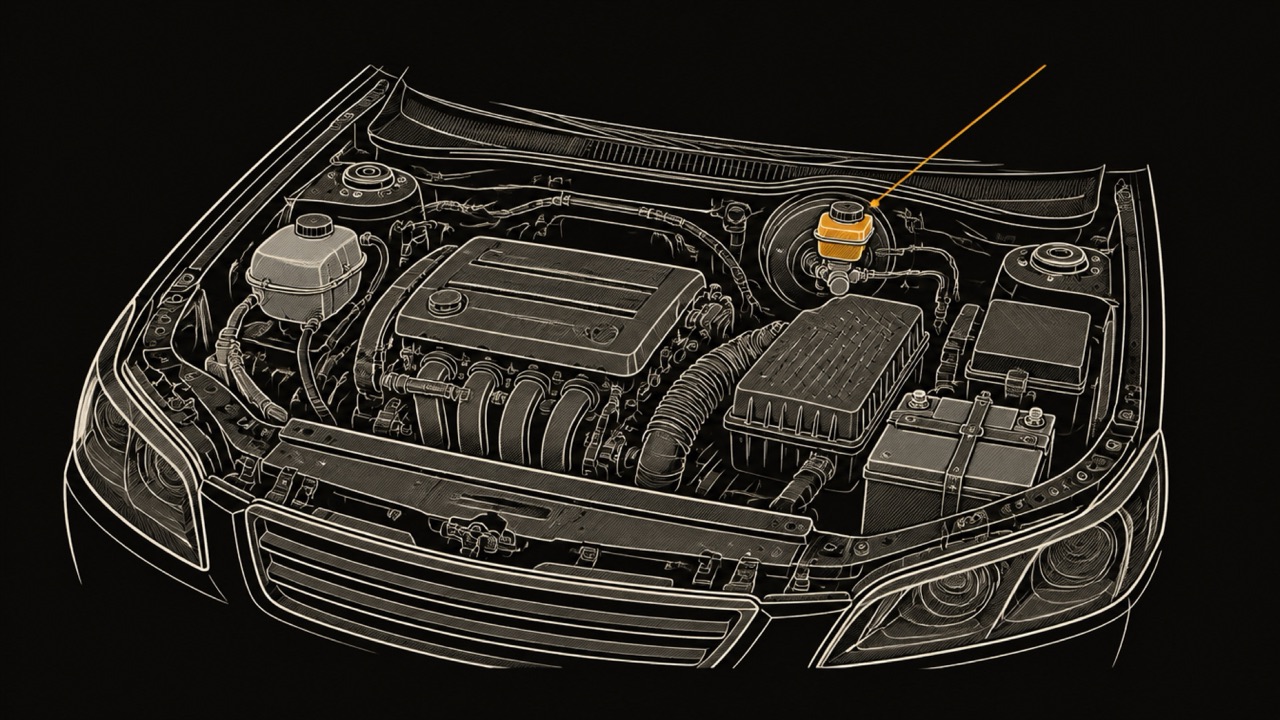
The fluid level is a separate question from its age. A level that drops slowly over months usually follows pad wear, as the caliper pistons extend, while a sudden drop points to a leak, which needs a repair before anything else. Some manufacturers do not want owners touching the reservoir at all: Tesla's manual says do not top up the brake fluid, and that only Tesla or a professional repair shop should check the level.
A brake fluid flush is a real maintenance item, not an upsell by nature, but its timing should come from the owner's manual and a test result, not from a mileage menu on the shop wall. Offered on a 3-year-old car whose schedule says every 3 years, it is due. Offered at 15,000 miles on a car with an inspection-only schedule and a passing test, it can wait.
Ask the shop two questions: which test they used, and what it read. A copper reading above 200 ppm, a boiling point or moisture reading out of range, or a fluid change that is past the manual's time limit is a fair recommendation even if the brakes feel fine. A recommendation with no reading and no schedule behind it deserves a second opinion. This article is written by the developer of a maintenance app, not a shop, and nothing here sells a flush.
The words shops use mean different jobs. Bleeding removes air from the lines and replaces only the fluid pushed out with it, after brake work or when the pedal feels spongy from air. A flush, or a brake fluid change, pushes new fluid through every line until all the old fluid is out, which is what a time-based schedule asks for.
A brake fluid flush costs $173 to $205 on average in the U.S., according to Kelley Blue Book (accessed October 2026), and whose tool prices it for a specific vehicle and area. Most of the cost is labor: the time goes into pushing new fluid through each wheel in the order the service manual gives.
Skipping it costs more. Jiffy Lube notes that corrosion from neglected fluid damages brake parts that can cost several hundred dollars to replace, and the two motorcycle recalls in the next section describe deposits that made an ABS valve stick on one brand and a rear brake drag on the other. Against a repair to an ABS unit or a master cylinder, a flush every few years is the cheap side of the trade.
Hybrids and EVs need brake fluid changes even though their pads last longer. Regenerative braking slows the car with the electric motor, so the friction brakes do less work, but the fluid still absorbs water with age. Tesla still schedules a brake fluid health check every 4 years, and the 2012 Nissan Leaf's schedule calls for a change every 2 years or 30,000 miles. The guide to hybrid car maintenance covers what regenerative braking changes and what it does not.
Motorcycles need brake fluid changes on a strict time schedule, usually with DOT 4 fluid in small reservoirs. Harley-Davidson's recall 0171 letter of June 2020 reminds owners of a flush every 2 years, regardless of how far or how often they ride, and explains that DOT 4 fluid absorbs moisture over time and can form deposits that make a valve in the ABS hydraulic unit stick (NHTSA). The recall covered ABS-equipped 2008 to 2011 Touring, CVO Touring and VRSC models.
Honda found a similar problem on the GL1800 Gold Wing. Its 2015 service bulletin states that fluid not replaced on the published schedule of every 12,000 miles or 2 years, whichever comes first, can form deposits that make the rear brake drag (NHTSA). Brake fluid also belongs on the list when winterizing a motorcycle, and the motorcycle maintenance app page shows how WrenchTime handles a motorcycle's schedule.
The whole article in six lines.
Brake fluid is due by date rather than by a warning light, which is exactly why it slips. Write the date and the odometer reading on the service record and keep the receipt; the guide to which car maintenance records to keep explains why a dated record also answers the upsell question the next time a shop recommends a flush.
WrenchTime, an iPhone app for maintenance, fuel, charging and mileage on cars and motorcycles, lists brake fluid among its 59 procedures for every engine type, EVs included, and a Brake Service kit bundles it with pads and discs. Schedule it by date, by distance or both, and WrenchTime treats whichever comes first as the one that matters. Set it to repeat every 2 years or 3 years, log the job with its date, odometer, cost and receipt, and the next occurrence is queued with its reminder, which fires by date or by odometer reading with a configurable number of days of warning.
The free version covers 1 vehicle with 2 maintenance entries and 3 fuel entries per month, with CSV and PDF export included, and WrenchTime Pro removes the limits. The guide to iPhone car maintenance apps covers what a maintenance log should do. Download WrenchTime on the App Store.
In a car, brake fluid is usually planned to last 2 to 3 years before replacement, because it keeps absorbing water from the air and its boiling point keeps falling. Honda's limit is 3 years, Harley-Davidson's is 2 years, and Tesla tests the fluid every 4 years and replaces it only if needed.
No, not when the owner's manual or a test says it is due. It is a waste only when it is sold well ahead of the schedule with no failed test behind it. Ask the shop which test it used and what it read: copper above 200 ppm or a passed time limit justifies the job.
Not automatically. A pad change alone does not open the hydraulic system, so the fluid stays on its own schedule. Replacing a caliper, hose, line or master cylinder does open it and requires bleeding, which makes it a sensible moment to replace all the fluid if it is close to due.
Use only the type printed on the reservoir cap or in the owner's manual. Silicone DOT 5 fluid, which federal rules require to be purple, should never be mixed with DOT 3, DOT 4 or DOT 5.1, according to brake fluid maker Liqui Moly. Glycol fluids are colorless to amber, so color alone does not identify the grade.
Many owners do with a bleeder kit and a helper, but brakes are safety critical and some cars with ABS or electronic brake systems call for a specific procedure from the service manual. Tesla says only Tesla or a professional shop should check its brake fluid. If you are unsure, have a professional do it.
Kelley Blue Book puts the average U.S. cost of a brake fluid flush at $173 to $205, mostly labor, with prices varying by vehicle and area. Neglecting it can cost more: Jiffy Lube notes that corrosion from old fluid damages brake parts that can cost several hundred dollars to replace.
More from the blog
Cooling system
Every 2 years or 30,000 miles for older green coolant, five to ten years or 100,000 miles and more for long-life types, whichever comes first, with the manufacturer numbers side by side.
Tires
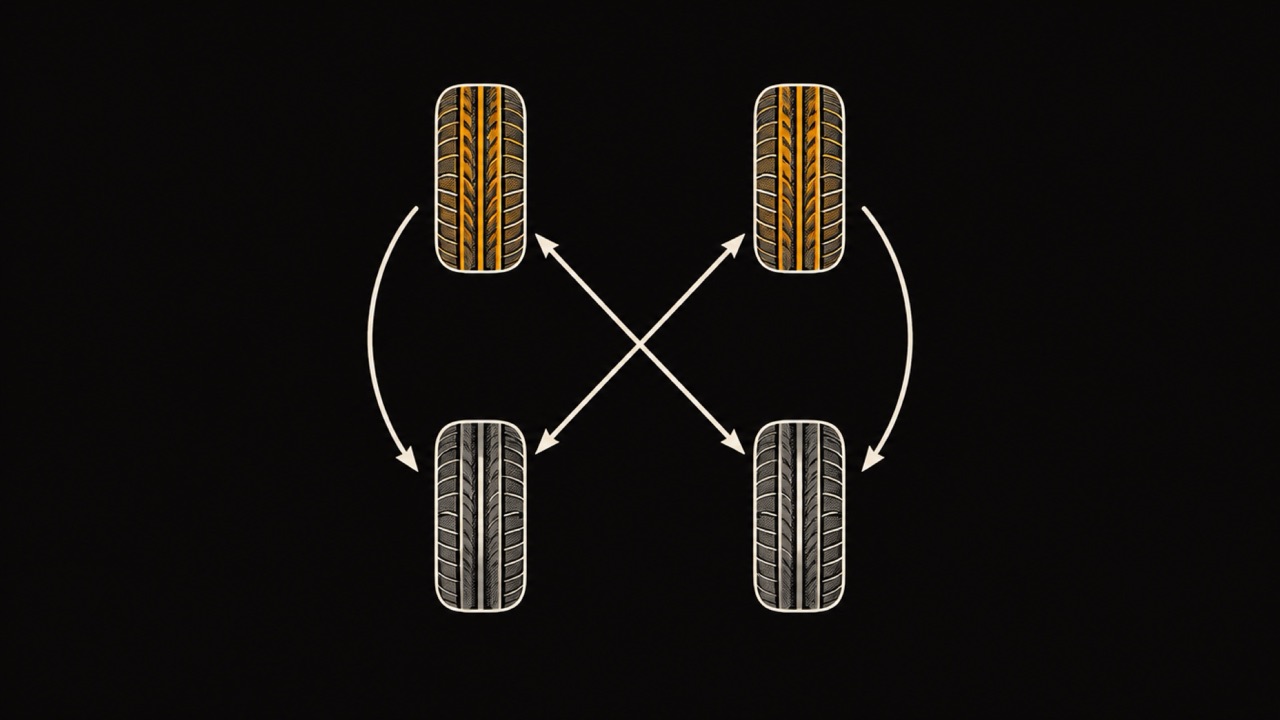
Rotate every 5,000 to 8,000 miles or at the interval in the manual; balance when a tire is mounted, a weight is lost or the car vibrates. Plus AWD, EV and Tesla rules.
Hybrids
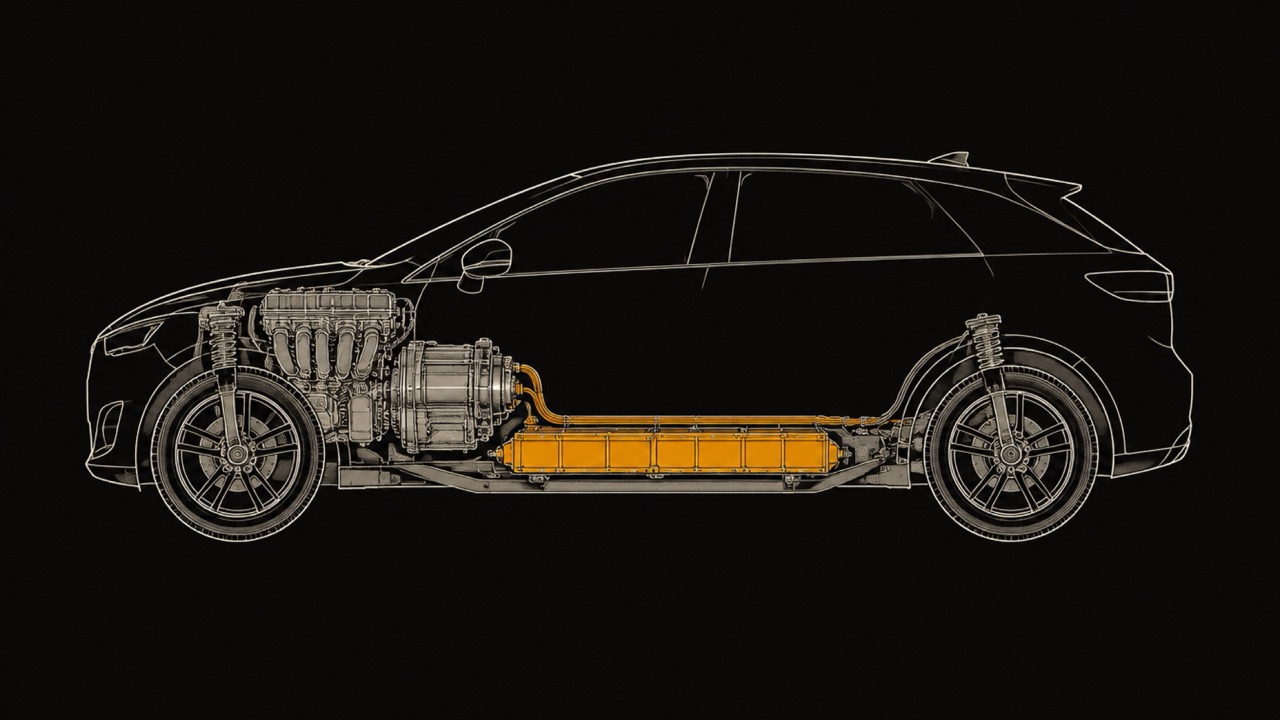
A hybrid needs the same servicing as a gas car plus a few hybrid-only checks, mainly the battery's cooling intake and the inverter coolant, and it usually costs no more to maintain.
Free to download. One vehicle, real features, no ads. Your garage will thank you.
Download WrenchTime on the App Store