Fuel economy
How to calculate gas mileage
Divide the miles between two full tanks by the gallons it took to refill, then average over at least three tanks by totals, never by per-tank figures.
Fuel economy
To calculate MPG, divide the miles you drove by the gallons it took to refill the tank. 300 miles on 10 gallons is 30 MPG with US gallons, which is 7.84 L/100 km, 12.75 km/L or 36.03 imperial MPG. Type your own miles and gallons into the MPG calculator below, or convert a figure you already have, in any of the four units.
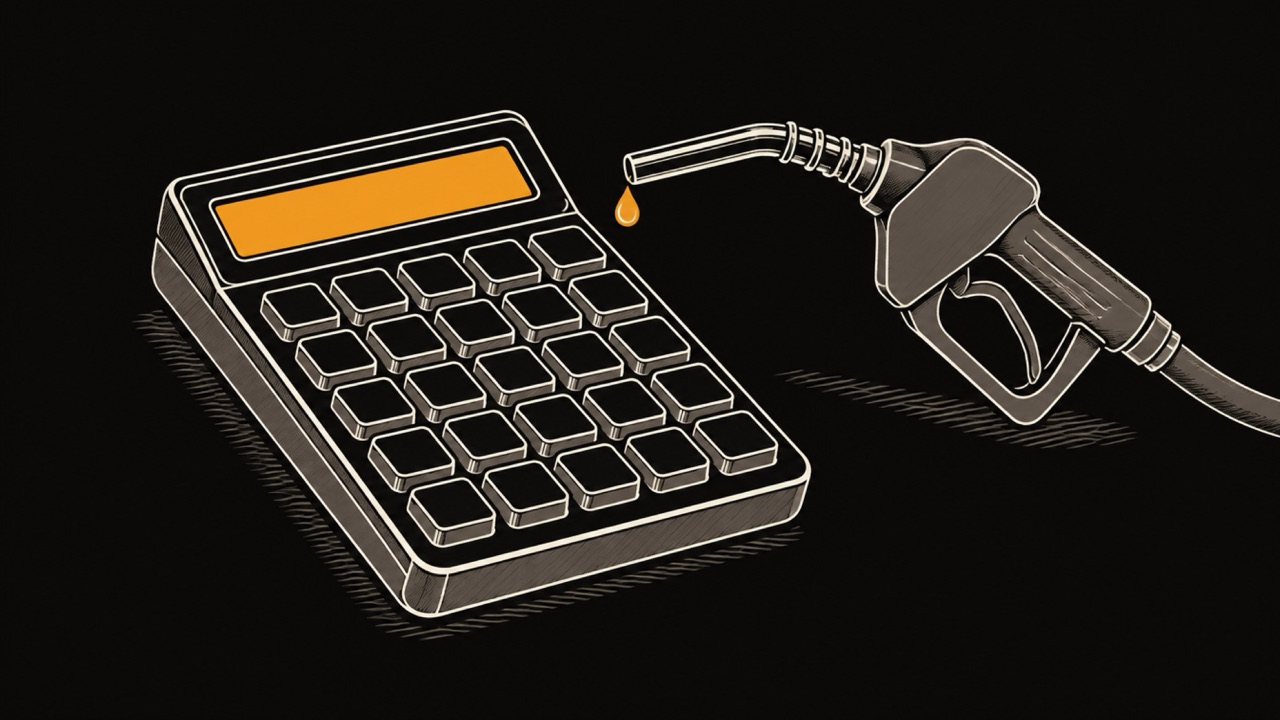
The MPG calculator has two modes. Distance and fuel takes the distance you drove and the fuel you used, in miles and US gallons, miles and imperial gallons, miles and liters, or kilometers and liters. Convert a figure takes a fuel economy you already have, such as a European review quoting L/100 km, and turns it into the other three units.
Both modes show the result four ways as you type: MPG with US gallons, MPG with imperial gallons, liters per 100 kilometers and kilometers per liter. For a real figure, enter the trip meter reading since your last full tank and the gallons the pump showed when you filled it up again. The arithmetic runs in your browser, and nothing you type is sent anywhere.
Enter the distance and the fuel used to see your fuel economy.
Calculated in your browser. Nothing is sent or stored.
MPG, miles per gallon, is the distance driven divided by the fuel used: miles ÷ gallons. fueleconomy.gov describes the same odometer method: the miles traveled since the last fill-up divided by the gallons it took to fill the tank. A higher MPG means a more economical car.
The metric world states fuel economy the other way round. L/100 km is liters × 100 ÷ kilometers, the fuel needed to cover 100 kilometers, so a lower number is better. km/L is kilometers ÷ liters, the metric twin of MPG, used in Japan, Korea and Brazil. The full method at the pump, with partial fills and trip cost, is in how to calculate gas mileage step by step.
| Unit | Formula | Better when | Common in |
|---|---|---|---|
| MPG (US) | miles ÷ US gallons | Higher | United States |
| MPG (imperial) | miles ÷ imperial gallons | Higher | United Kingdom |
| L/100 km | liters × 100 ÷ km | Lower | Most of Europe |
| km/L | km ÷ liters | Higher | Japan, Korea, Brazil |
To convert MPG to L/100 km, divide 235.215 by the US MPG figure. That is the factor NIST's Guide to the SI gives for fuel consumption: 235.215 ÷ 30 MPG gives 7.84 L/100 km. For km/L, multiply US MPG by 0.4251437, the NIST factor for miles per gallon to kilometers per liter, so 30 MPG is 12.75 km/L.
An imperial MPG figure needs its own constant, because the gallon is larger: divide 282.481 by imperial MPG to get L/100 km. That number is 100 × 4.54609 ÷ 1.609344, the liters in an imperial gallon over the kilometers in a mile. The table below runs the conversion for common US figures, including the 30 mpg to L/100 km case people search for most.
| MPG (US) | L/100 km | km/L | MPG (imperial) |
|---|---|---|---|
| 15 | 15.68 | 6.38 | 18.01 |
| 20 | 11.76 | 8.50 | 24.02 |
| 25 | 9.41 | 10.63 | 30.02 |
| 30 | 7.84 | 12.75 | 36.03 |
| 35 | 6.72 | 14.88 | 42.03 |
| 40 | 5.88 | 17.01 | 48.04 |
| 50 | 4.70 | 21.26 | 60.05 |
Computed with the NIST factors: 1 mile = 1.609344 km, 1 US gallon = 3.785411784 L, 1 imperial gallon = 4.54609 L (NIST SP 811, Appendix B.8).
To convert L/100 km to MPG, use the same number the other way: divide 235.215 by the L/100 km figure to get US MPG. A car rated at 6 L/100 km does 235.215 ÷ 6 = 39.20 US MPG. For imperial MPG, divide 282.481 by L/100 km instead, which gives 47.08 for the same car.
km/L converts to L/100 km by dividing 100 by it, so 20 km/L is 5 L/100 km. The table below covers the range most car reviews quote, from 4 L/100 km to 15 L/100 km.
| L/100 km | MPG (US) | MPG (imperial) | km/L |
|---|---|---|---|
| 4 | 58.80 | 70.62 | 25.00 |
| 5 | 47.04 | 56.50 | 20.00 |
| 6 | 39.20 | 47.08 | 16.67 |
| 7 | 33.60 | 40.35 | 14.29 |
| 8 | 29.40 | 35.31 | 12.50 |
| 10 | 23.52 | 28.25 | 10.00 |
| 12 | 19.60 | 23.54 | 8.33 |
| 15 | 15.68 | 18.83 | 6.67 |
Computed with the NIST factors in NIST SP 811, Appendix B, factors by kind of quantity.
US and imperial MPG use different gallons. NIST lists the US gallon at 3.785 412 liters and the imperial gallon, which it lists for the United Kingdom and Canada, at 4.546 09 liters. The imperial gallon is about 20% larger, so the same car covers about 20% more miles on it.
In numbers: imperial MPG is US MPG × 1.20095. A car doing 30 MPG with US gallons does 36.03 MPG with imperial gallons, and a British review quoting 50 MPG describes a car that does 41.63 US MPG. Two MPG figures from different countries are not comparable until both use the same gallon. The calculator uses 3.785411784 liters for the US gallon, which NIST rounds to 3.785 412, and the mile of exactly 1.609344 km.
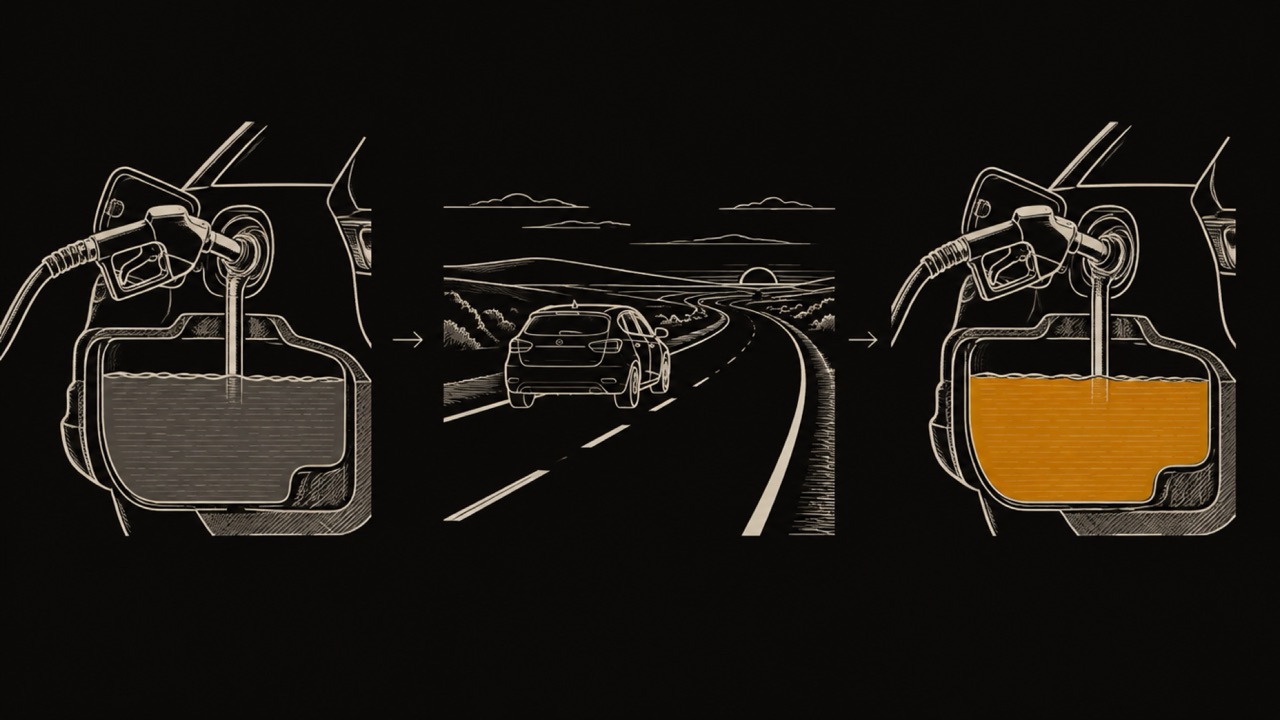
An accurate MPG comes from two full tanks, not from one. fueleconomy.gov's MPG tracker asks for at least two consecutive fill-ups where the tank is filled completely, and warns that a partial fill makes the estimate inaccurate. A fill-up you forgot to record makes the miles too high, because the distance of two tanks lands on the gallons of one.
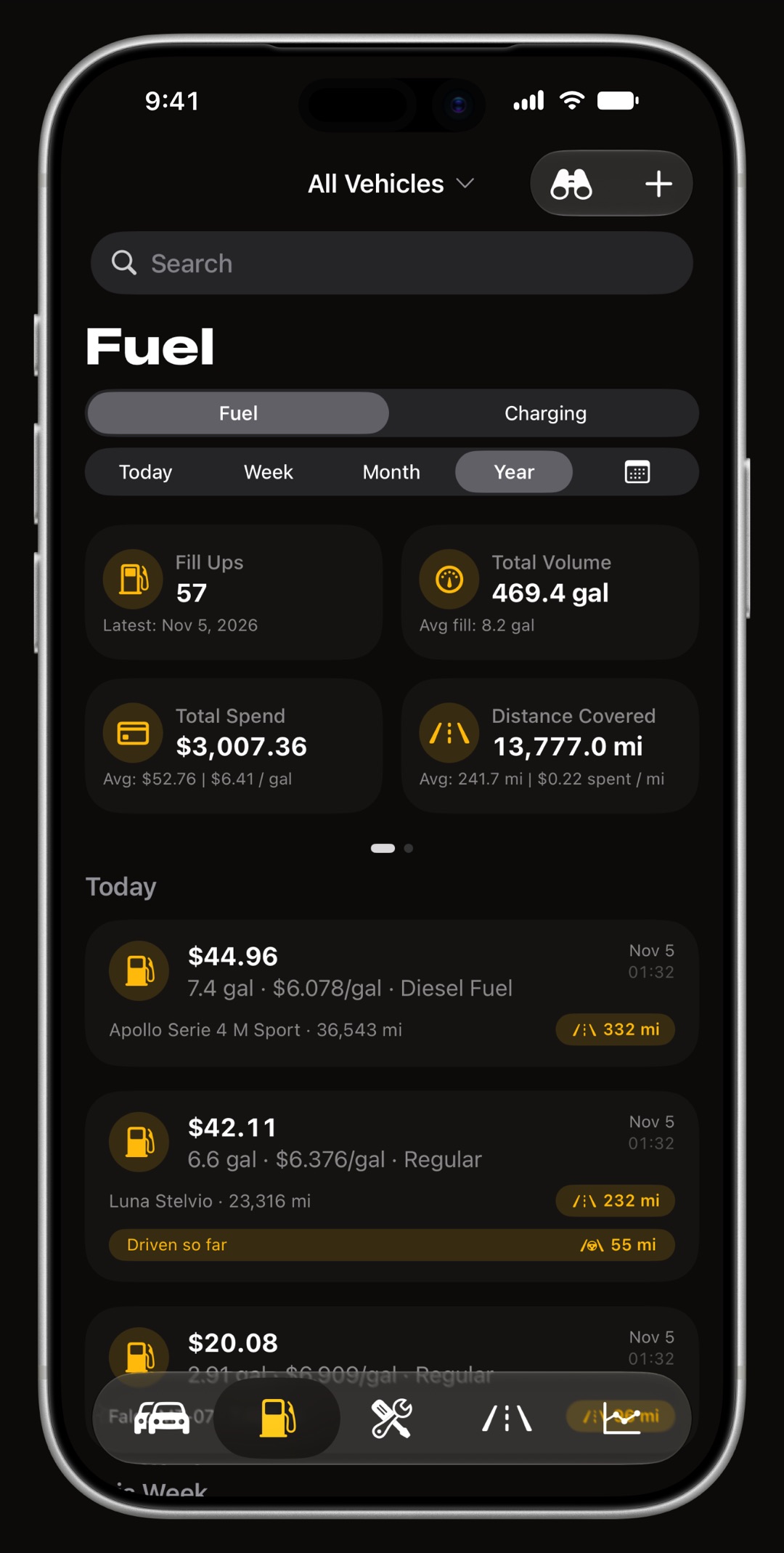
WrenchTime, a fuel log for iPhone, does the same tank-to-tank arithmetic from the fill-ups you log: a full-tank flag closes each interval, and a missed fill-up is flagged and left out instead of producing an impossible figure. By hand, the routine below gives a figure you can trust after a few tanks, and how to calculate gas mileage covers partial fills and averaging over several tanks.
A good MPG is one at or above the average for your type of vehicle. The EPA's latest Automotive Trends Report, updated on February 19, 2026, puts the average new vehicle of model year 2024 at a record 27.2 mpg in estimated real-world fuel economy, up 0.1 mpg on the year before. That is 8.65 L/100 km or 11.56 km/L.
Body style moves the yardstick. The same report puts truck SUVs at a new high of 25.7 mpg for model year 2024, up 1.0 mpg, while sedans, wagons and car SUVs fell. The best comparison for your own car is its own history: a figure that drops against the tanks before it says more than any national average.
The window sticker is built for comparing cars, not for predicting yours. fueleconomy.gov says the EPA ratings are a useful tool for comparing vehicles but may not predict the average MPG you will get. The estimates come from laboratory tests run by manufacturers under federal rules, and the EPA re-tests about 10% of models.
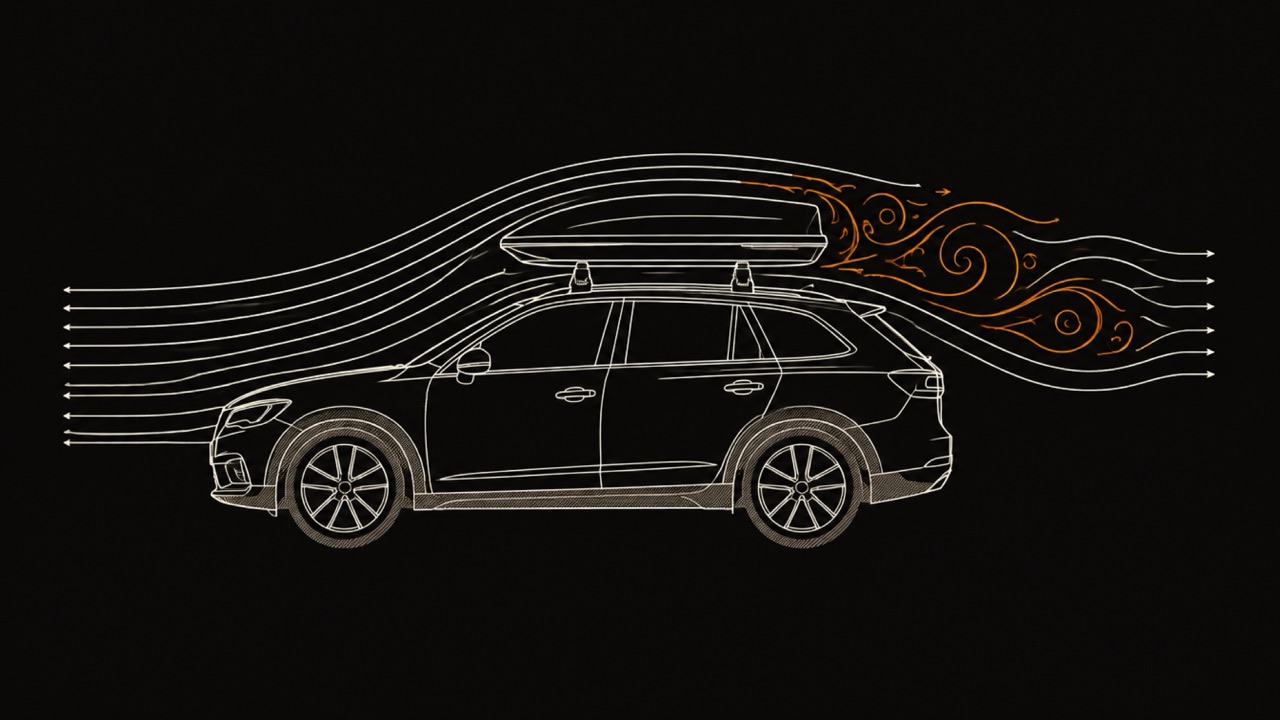
The test also assumes conditions most drivers never see: flat ground and about 300 pounds of passengers and cargo, according to fueleconomy.gov. Driving style, climate control, fuel blend and a new engine move the result, each by the amounts below. Which habits to change first is in how to improve gas mileage.
| Factor | Effect on MPG | Why it matters |
|---|---|---|
| Aggressive acceleration and braking | Roughly 15% to 30% lower at highway speeds, 10% to 40% in stop-and-go traffic | A habit the driver controls |
| Air conditioning on Max | Roughly 5% to 25% lower | Hot-weather tanks can read lower |
| Gasoline with 10% ethanol | 3% to 4% lower | The blend at the pump changes the figure, not the car |
| Engine break-in | Full economy may take 3,000 to 5,000 miles | A new car's first tanks understate it |
| Hills and loads | The test assumes flat ground and about 300 pounds aboard | Mountain roads and a full car sit outside the test |
The calculator answers one tank; a log answers every tank. WrenchTime computes tank-to-tank consumption from the fill-ups you record, in MPG (US), MPG (imperial), L/100 km or km/L, with US and imperial gallons kept as separate units. It warns you when your economy drops against your own history, with a sheet that explains what changed.
The free version covers 1 vehicle and 3 fuel entries per month, with no account and no ads. How the economy is computed, and what the missed fill-up flag does, is in the fuel economy tracker guide; other apps are side by side in gas mileage apps compared.
Divide the miles driven since the last full tank by the gallons it took to refill it: 300 miles on 10 gallons is 30 MPG. fueleconomy.gov asks for two consecutive full fill-ups, because a partial fill makes the figure inaccurate.
Divide 235.215 by the US MPG figure, the factor NIST publishes. 30 MPG is 7.84 L/100 km and 25 MPG is 9.41 L/100 km. The same division turns L/100 km back into US MPG.
A UK gallon is 4.546 liters and a US gallon is 3.785, so the same car covers about 20% more miles per imperial gallon. 30 MPG (US) is 36.03 MPG (imperial); convert before comparing figures from the two countries.
The EPA's latest trends report puts the average new vehicle of model year 2024 at a record 27.2 mpg in real-world terms, and truck SUVs at 25.7 mpg. A figure at or above the average for your type of vehicle is good.
30 MPG (US) is 12.75 km/L, because one US mile per gallon equals 0.4251437 km/L according to NIST. In L/100 km the same figure is 7.84, and in imperial MPG it is 36.03.
More from the blog
Fuel economy
Divide the miles between two full tanks by the gallons it took to refill, then average over at least three tanks by totals, never by per-tank figures.
Fuel economy
Driving habits beat every product: smooth driving and lower highway speeds save the most, tires, oil and roof racks come next, and gadgets do nothing.
Fuel economy
Six gas mileage apps for iPhone compared by free tier, platforms, account and how they handle partial and missed fill-ups, with which one to choose for which need and the official way MPG is calculated.

Free to download. One vehicle, real features, no ads. Your garage will thank you.
Download WrenchTime on the App Store