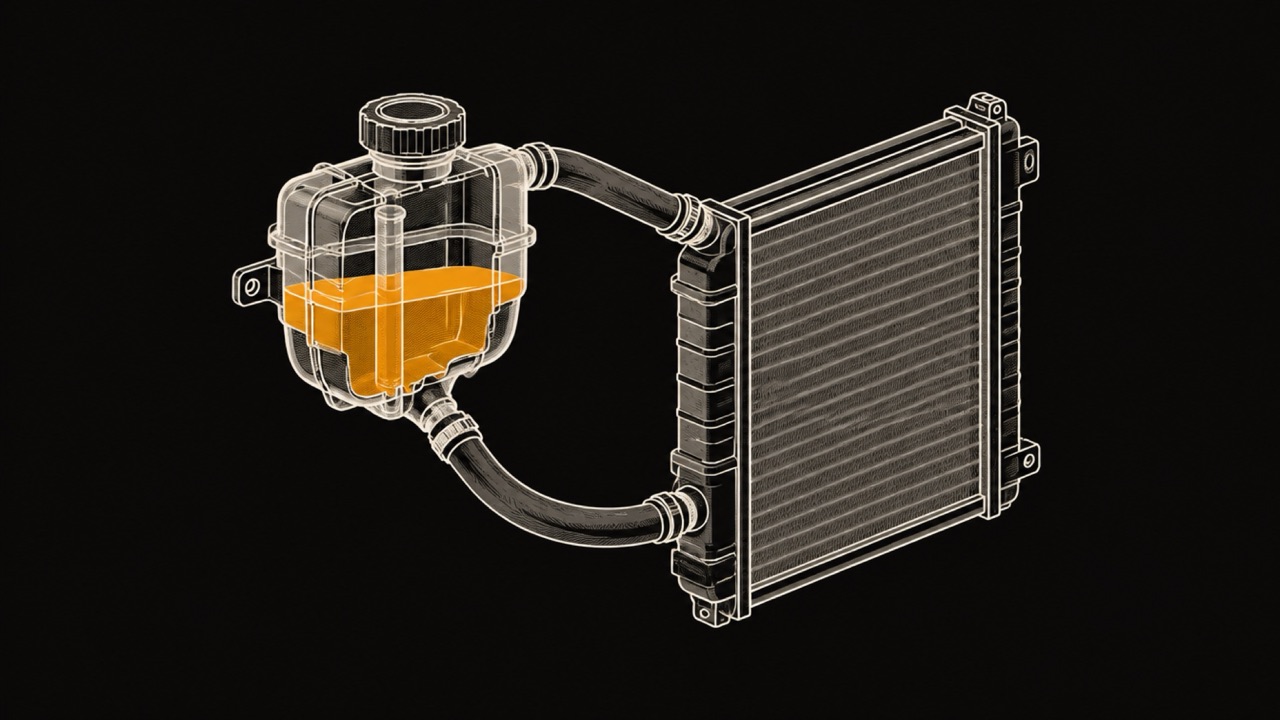
Cooling system
How often should you change coolant?
Every 2 years or 30,000 miles for older green coolant, five to ten years or 100,000 miles and more for long-life types, whichever comes first, with the manufacturer numbers side by side.
Transmission
How often to change transmission fluid depends on the vehicle: Consumer Reports puts the range at as little as 30,000 miles to more than 100,000 miles, and some owner's manuals list no scheduled change at all for normal driving. Severe use shortens it. Nissan's schedule for the 2019 Altima 2.5L says to inspect the CVT fluid every 10,000 miles under normal driving but to replace it every 60,000 miles under severe driving, and Honda's 2014 Civic Sedan manual calls for a change every 25,000 miles on CVT models that tow or climb mountains at low speed.
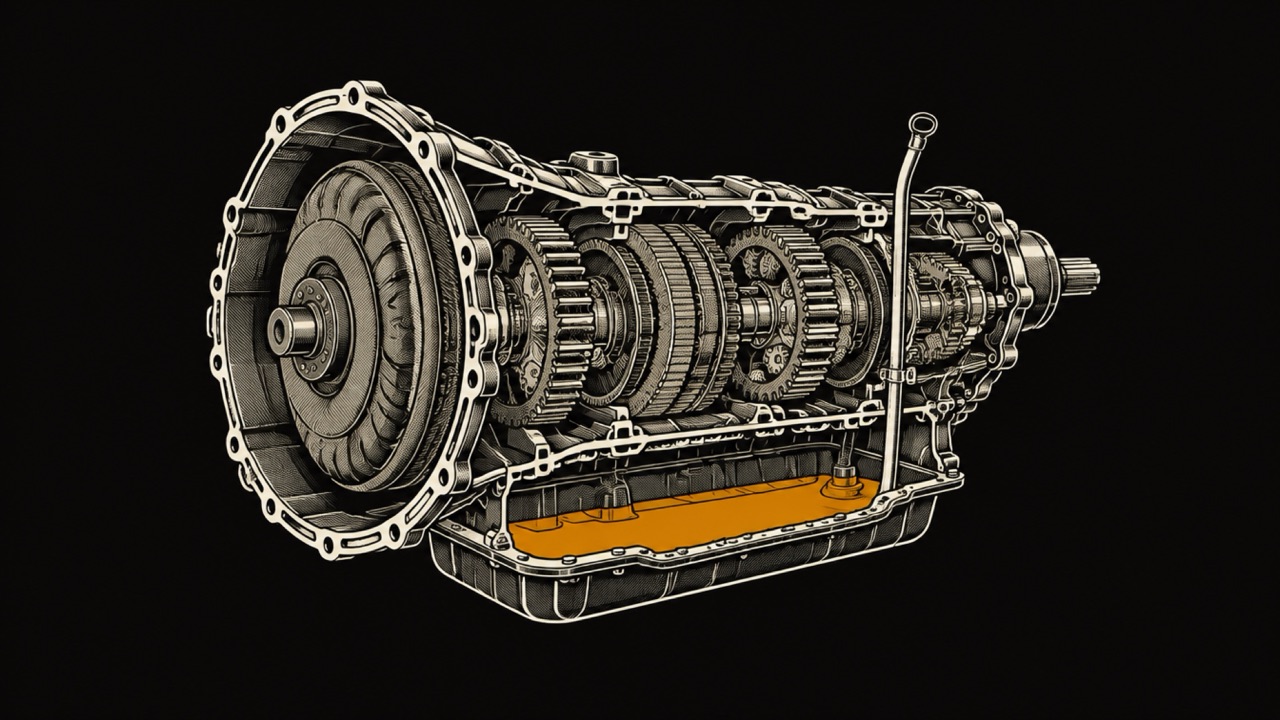
How often to change transmission fluid has no single answer, because every manufacturer writes its own schedule. Consumer Reports says intervals range from as little as 30,000 miles to more than 100,000 miles, and that service intervals on new vehicles can exceed 100,000 miles. Automatic transmission fluid (ATF) is the oil that lubricates, cools and operates an automatic gearbox, so its schedule sits in the same maintenance table as the engine oil.
Real schedules show how wide the spread is. Nissan's 2019 Altima schedule lists only inspections for normal driving and a replacement every 60,000 miles for severe driving, and the 2019 Pathfinder reads the same. The 2025 Mazda3 scheduled maintenance lists no transmission fluid replacement in either its normal or its severe table.
Honda takes a third approach. Its Maintenance Minder, the dashboard system that calculates service from how the car is actually driven, shows a code for transmission fluid replacement when it is due, and the 2014 Civic Sedan owner's manual adds a fixed interval of 25,000 miles (40,000 km) for CVT models that tow or climb mountains at very low speed.
| Vehicle | Transmission | Normal driving | Severe driving | Why it matters |
|---|---|---|---|---|
| 2019 Nissan Altima 2.5L | CVT | Inspect every 10,000 miles or 12 months | Replace every 60,000 miles; inspect every 10,000 miles or 12 months | The replacement only appears on the severe schedule |
| 2019 Nissan Pathfinder | CVT | Inspect every 10,000 miles or 12 months | Replace every 60,000 miles; inspect every 10,000 miles or 12 months | Same brand, same rule: inspect often, replace when driven hard |
| 2014 Honda Civic Sedan | CVT | When the Maintenance Minder shows it | Every 25,000 miles (40,000 km) when towing or climbing at low speed | The car calculates normal service, the manual sets the severe one |
| 2025 Mazda3 | Automatic | No replacement listed | No replacement listed | A schedule can leave the fluid out entirely |
Sources: Nissan USA, Nissan USA, 2014 Honda Civic Sedan owner's manual, Mazda USA owner's manual.
Severe driving is the set of conditions under which a manufacturer's shorter maintenance schedule applies. For a transmission it means heat: Honda's 2014 Civic Sedan manual explains that driving in mountainous areas at very low speeds or towing a trailer results in higher transmission temperatures, and that is why it asks for new CVT fluid every 25,000 miles in those conditions instead of waiting for the Maintenance Minder.
In Nissan's schedules, the replacement appears only in the severe column. Nissan's 2019 Altima and Pathfinder schedules list only inspections for normal driving and add a replacement every 60,000 miles for severe driving. If any condition below describes how the car is regularly used, read the severe column of your own schedule rather than the normal one.
A conventional automatic transmission shifts between fixed gears using planetary gear sets and a torque converter, and its fluid schedule ranges from about 30,000 miles to more than 100,000 according to Consumer Reports. Its fluid also works as the hydraulic medium that makes the shifts, which is why its condition shows up in shift quality.
A CVT, or continuously variable transmission, uses a belt or chain between two variable pulleys instead of fixed gears, and it needs its own specific fluid. Nissan lists inspections every 10,000 miles or 12 months on the 2019 Altima 2.5L and the 2019 Pathfinder, with replacement every 60,000 miles on the severe schedule.
A manual gearbox uses a different lubricant from an automatic, often a gear oil or a manual transmission fluid named in the manual. Whether it has a replacement interval at all varies by car, and when it does, it sits in the same maintenance schedule as everything else, so the owner's manual answers this one too.
"Lifetime" or "filled for life" fluid is fluid the maintenance schedule never asks you to replace under normal driving. NAPA Know How explains that it most often means the fluid should last either the manufacturer's expected life of the vehicle, which varies, or the life of the warranty, which is far less.
A no-change schedule is the manufacturer's call for normal use, and the 2025 Mazda3 tables show what one looks like: no transmission fluid replacement in either column. Severe use and high mileage are where owners and shops reconsider. Consumer Reports says the simple answer to whether the fluid needs changing is yes, and that service intervals on new vehicles can exceed 100,000 miles. Whatever you decide, keep car maintenance records of every check and change, because a buyer or a warranty claim will ask for them.
Some signs mean a check now, whatever the mileage. Consumer Reports names a puddle of red liquid under the car as the tell-tale sign of a transmission leak, and warns that a malfunctioning automatic can shift more abruptly and at awkward moments.
Fluid color is the quickest check where the transmission has a dipstick. According to Universal Technical Institute (updated November 2026), bright red fluid is new or like new, dark red reflects normal use, dark brown or nearly black fluid means contacting a technician as soon as possible, and a pink, milky look can mean coolant or water contamination. UTI also lists a burnt odor among the signs of low or compromised fluid, and NAPA suggests checking the fluid once a year.
| Color | What it usually means | Why it matters |
|---|---|---|
| Bright red | New or like-new fluid | A baseline to compare later checks against |
| Dark red | Normal use | Does not affect performance on its own |
| Dark brown or nearly black | Fluid no longer lubricating properly | Contact a technician as soon as possible |
| Pink and milky | Coolant or water contamination | Needs prompt attention, not just new fluid |
Source: Universal Technical Institute, updated November 2026.
A drain and fill removes the fluid that runs out of the pan or drain plug and replaces it with fresh fluid, while a flush uses a machine to push fluid through the whole system. Consumer Reports draws that distinction and notes that power-flushing can dislodge sludge and other particles in high-mileage cars.
The safe rule is to follow the procedure the manufacturer specifies for your transmission, and to ask the shop which one it performs before the work starts. On a high-mileage transmission with no service history, that question matters as much as the interval itself.
The cost of a transmission fluid change depends on the car more than on the job's name. The main factors are the fluid the manufacturer specifies and how much the transmission holds, whether a filter or pan gasket is replaced at the same time, whether the shop does a drain and fill or a machine exchange that uses more fluid, and the labor rate of a dealer versus an independent shop. Ask for a quote that lists the fluid, the quantity and any filter.
Take a 2019 Nissan Altima 2.5L driven 12,000 miles a year, which regularly tows a small trailer and so follows Nissan's severe schedule. The plan below comes from that schedule; the timing is an example calculation: at 12,000 miles a year, the 60,000-mile replacement comes after about five years.
WrenchTime, a car and motorcycle maintenance app for iPhone, has a transmission service procedure that can be scheduled by date, by odometer reading or both, with a reminder before it is due. The same plan works for the other fluids: see how often to change coolant and how often to change brake fluid.
Add a transmission service in the Care tab with the interval from your owner's manual, in miles, by date or both, and WrenchTime reminds you before it comes due. The completed job keeps its cost and odometer reading in the vehicle's history, and a recurring series queues the next one as soon as you mark it done. The free version covers 1 vehicle and 2 care entries a month. Here is how to schedule a maintenance reminder.
Yes, on most cars at some point, but when depends on the schedule. Consumer Reports puts intervals between 30,000 and more than 100,000 miles, and some manuals, such as the 2025 Mazda3's, list no replacement for normal driving. Nissan's schedules add a replacement only for severe driving.
Most schedules count miles, not years. Nissan's 2019 Altima 2.5L schedule pairs inspections with time, every 10,000 miles or 12 months, and lists replacement at 60,000 miles for severe driving. At 12,000 miles a year that is about five years.
The worry is old, neglected fluid in a high-mileage transmission. Consumer Reports notes that power-flushing can dislodge sludge in high-mileage cars, which is why the procedure matters as much as the timing. Follow what the manufacturer specifies for your transmission.
When the owner's manual calls for the fluid, since a serviceable filter or screen is normally replaced with it. Some automatics have a filter that is not meant to be serviced. Ask the shop whether its quote includes a filter and a pan gasket.
Check the CVT row of your schedule. Nissan lists inspections every 10,000 miles or 12 months on the 2019 Altima 2.5L and the 2019 Pathfinder, with replacement every 60,000 miles under severe driving. Other brands differ, so use your own manual.
More from the blog
Cooling system
Every 2 years or 30,000 miles for older green coolant, five to ten years or 100,000 miles and more for long-life types, whichever comes first, with the manufacturer numbers side by side.
Brakes
Every 2 to 3 years for most cars, whatever the mileage, with manufacturer intervals, the federal boiling points and a test-before-you-pay checklist side by side.
Service records
Keep every invoice and parts receipt with the date, mileage and work done, for as long as you own the car, because no outside report can rebuild that history.
Free to download. One vehicle, real features, no ads. Your garage will thank you.
Download WrenchTime on the App Store