OBD2
I/M readiness: the OBD2 monitors list
What I/M readiness means on a scanner, every OBD2 readiness monitor and what it checks, how many can be incomplete at an emissions test, and the drive cycles that set them.
MOT
A car's first MOT is due by the third anniversary of its registration, and after that by the anniversary of its last MOT, so the date comes round once a year. Taxis, ambulances and larger passenger vehicles need their first test at one year old. The maximum fee is £54.85 for a car, you can test up to a month (minus a day) early and keep your renewal date, and driving without a valid MOT can bring a fine of up to £1,000. Northern Ireland runs its own scheme, with the first test at four years old for a car.
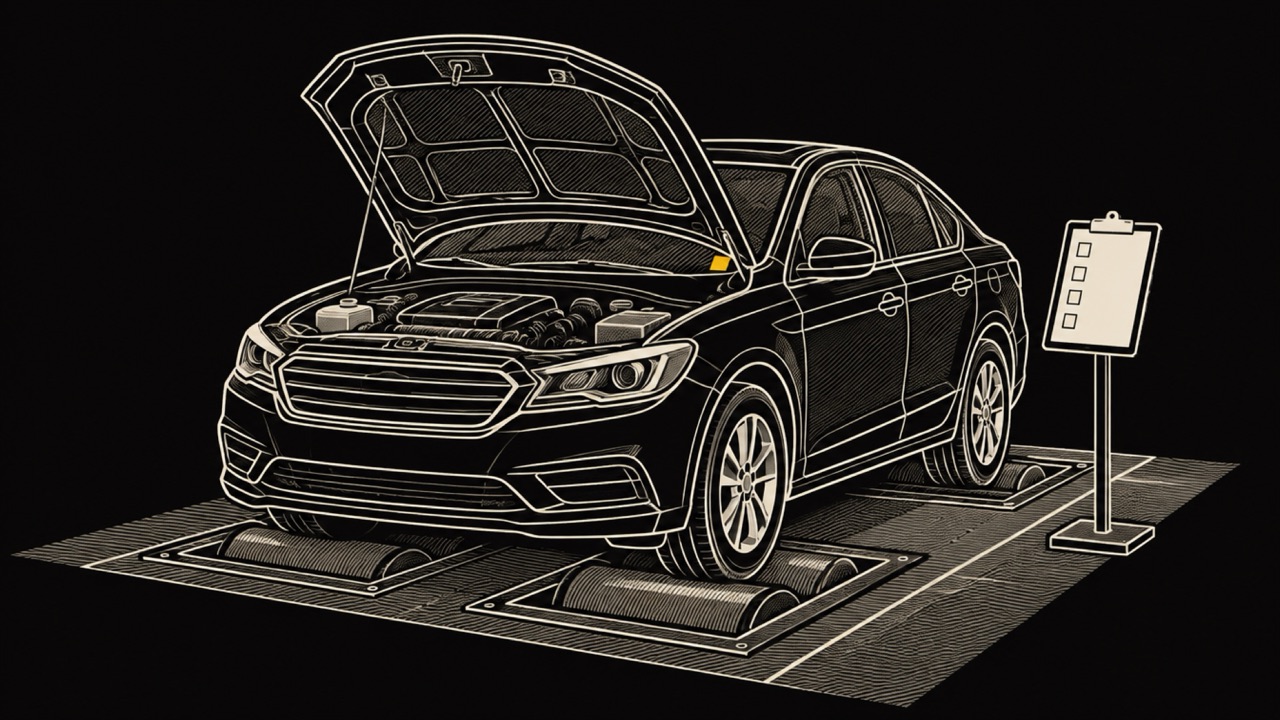
The MOT is the yearly roadworthiness test for vehicles in Great Britain. GOV.UK says a vehicle must have its first MOT by the third anniversary of its registration, and after that by the anniversary of its last MOT. An MOT lasts a year, so after the first test the due date comes round once a year.
Some vehicles are tested sooner. The GOV.UK MOT fees table sets a first MOT at one year old for taxis, ambulances and private passenger vehicles with nine or more seats. Lorries, buses and trailers do not take an MOT at all: they have an annual test instead, which GOV.UK sometimes calls the annual vehicle test.
Northern Ireland is separate. nidirect says cars and motorcycles are due a test from four years old and light goods vehicles from three, and GOV.UK says vehicles registered in Northern Ireland follow different MOT rules and processes. The table below is the Great Britain table, class by class.
| Vehicle | Class | First MOT at (years) | Maximum fee |
|---|---|---|---|
| Motorcycle, engine up to 200cc | 1 | 3 | £29.65 |
| Motorcycle with sidecar, engine up to 200cc | 1 | 3 | £37.80 |
| Motorcycle, engine over 200cc | 2 | 3 | £29.65 |
| Motorcycle with sidecar, engine over 200cc | 2 | 3 | £37.80 |
| 3-wheeled vehicle up to 450kg unladen weight | 3 | 3 | £37.80 |
| Car, private hire or public service vehicle (up to 8 passenger seats) | 4 | 3 | £54.85 |
| Motor caravan, dual purpose vehicle, quad, 3-wheeler over 450kg or goods vehicle up to 3,000kg design gross weight | 4 | 3 | £54.85 |
| Ambulance or taxi | 4 | 1 | £54.85 |
| Private passenger vehicle or ambulance (9 to 12 passenger seats) | 4 | 1 | £57.30 |
| Private passenger vehicle or ambulance (13 to 16 passenger seats) | 5 | 1 | £59.55 |
| Private passenger vehicle, ambulance or playbus (more than 16 passenger seats) | 5 | 1 | £80.65 |
| Goods vehicle over 3,000kg up to 3,500kg (petrol, diesel, hybrid), or zero emission goods vehicle 3,501kg to 4,250kg | 7 | 3 | £58.60 |
| Class 4 vehicle (9 to 12 passenger seats) with a seat belt installation check | 4A | n/a | £64 |
| Class 5 vehicle with a seatbelt installation check (13 to 16 seats, then more than 16 seats) | 5A | n/a | £80.50, then £124.50 |
Source: the GOV.UK MOT fees table. Rows with the same class, age and fee are grouped.
The MOT checks that a vehicle meets road safety and environmental standards. GOV.UK's list of car parts checked at an MOT runs from body structure and fuel system to lights, steering, brakes and the vehicle identification number. It is not a service: the test does not cover the condition of the engine, the clutch or the gearbox.
Exhaust emissions are tested according to the age and fuel type of the vehicle. On a diesel, the tester will refuse to test the car if they think the smoke test may damage the engine, and GOV.UK advises going to the MOT with a fully warmed up engine, because it produces less smoke and is safer to test.
Dashboard warning lights are part of the test: GOV.UK lists airbags, seatbelt pretensioners, ABS, electronic stability control and electronic power steering, and a tyre pressure monitoring light on vehicles first used on or after 1 January 2012. A lit light is the car's own self-test result, and OBD2 readiness monitors explains how those self-tests work.
Most failures are cheap to fix before the visit: a dead bulb, a worn wiper blade, a cracked number plate or a tyre below the legal tread. An MOT is a test of a car you already own, not a pre-purchase inspection; if you are buying a car, a used car inspection checklist goes much further.
| Part | What the tester checks |
|---|---|
| Body, vehicle structure and general items | No excessive corrosion or damage in specific areas and no sharp edges likely to cause injury |
| Towbars | Secure, in good condition, no inappropriate repairs or modification, and a working 13 pin electrical socket |
| Fuel system | No leaks, pipes and hoses secure and in good condition, and a fuel cap that fastens and seals |
| Exhaust emissions | Meets the rules for the vehicle's age and fuel type |
| Exhaust system | Secure and complete, catalyst present if fitted as standard, no serious leaks and not too noisy |
| Seatbelts | Mandatory belts in place, suitable, in good condition, working and attached securely, plus the warning lights for airbags, pretensioners and load limiters |
| Seats | The driver's seat adjusts, all seats are securely fitted and the seat backs can be fixed upright |
| Doors | Latch secure when closed, front doors open from inside and outside, rear doors open from outside, hinges and catches secure |
| Mirrors | The minimum number of mirrors, in good condition and secure, and any indirect vision devices |
| Bonnet and boot | The bonnet closes securely, and the boot or tailgate closes properly |
| Brakes | Condition, operation and performance, ABS and electronic stability control where fitted, and their warning lights |
| Tyres and wheels | Condition, security, size and type, tread depth and, from 2012, the tyre pressure monitoring light |
| Registration plates | Condition, secure attachment, colour, and characters correctly formed and spaced |
| Lights | Condition and operation, including HID and LED, headlamp cleaning and levelling, headlamp aim and the main beam warning light |
| Wipers and washers | They work properly so the driver has a clear view of the road |
| Windscreen | Condition and the driver's view of the road |
| Horn | It works properly and is suitable for the vehicle |
| Steering and suspension | Condition, steering oil level, correct operation, no inappropriate repairs, and a steering lock that works |
| Vehicle identification number (VIN) | A single VIN displayed on vehicles first used on or after 1 August 1980, except multistage build vehicles |
| Electrical | Visible electrical wiring and the battery |
Source: GOV.UK, car parts checked at an MOT. Bonnet and load security are shown together.
A vehicle does not need an MOT until it reaches the age in the fees table. GOV.UK also names goods vehicles powered by electricity and registered before 1 March 2015, tractors and some historic vehicles. The exempt types are listed on the MOT exemption form, V112, which you fill in if your vehicle is listed so that you can tax it.
The historic rule is the one most owners ask about. According to GOV.UK, you do not need an MOT if the vehicle was built or first registered more than 40 years ago and no substantial changes have been made, such as replacing the chassis, body, axles or engine to change the way the vehicle works. You must still keep it roadworthy: using a vehicle in a dangerous condition can bring a fine of up to £2,500 and 3 penalty points.
Vehicle tax is a separate rule. A vehicle built before 1 January 1986 can stop paying vehicle tax from 1 April 2026, but that is not the MOT exemption. In Northern Ireland, nidirect applies the same 40 year idea to cars, motorcycles and light goods vehicles up to 3,500kg that have not been changed in any major way in the last 30 years.
Yes, in one place that matters: Northern Ireland. The GOV.UK MOT guide covers England, Scotland and Wales, and says vehicles registered in Northern Ireland follow different rules and processes. The four points below are where the schemes touch.
A vehicle either passes or fails, and GOV.UK records the result in the MOT database. It fails if the result lists ‘dangerous’ or ‘major’ problems. Minor and advisory problems appear on passed and failed tests alike, as things to monitor or fix in future.
After a fail you can take the vehicle away only if your current MOT is still valid and no ‘dangerous’ problems were listed. Otherwise it must be repaired first. Either way it must meet the minimum standards of roadworthiness at all times, and driving a vehicle that failed on a dangerous problem can bring a fine of up to £2,500, a driving ban and 3 penalty points.
Retests follow the GOV.UK retest rules. Leave the vehicle at the test centre for repair and a partial retest within ten working days is free. Take it away and a partial retest within ten working days may carry a partial retest fee. Every other case is a full retest at the full fee.
| Result | What it means | What you do next |
|---|---|---|
| Pass | No ‘dangerous’ or ‘major’ problems listed, and the result is recorded in the MOT database | Check the result online in MOT history, or ask the test centre for a printed certificate |
| Pass with minor or advisory problems | Items to monitor or fix in the future | Plan the repairs, they do not stop you driving |
| Fail with a major problem | The result lists a ‘major’ problem | You might not be allowed to drive until it is fixed; you can take the vehicle away only if your MOT is still valid |
| Fail with a dangerous problem | The result lists a ‘dangerous’ problem | Get it repaired before you drive it; a fine of up to £2,500, a ban and 3 penalty points apply to driving it |
| Left at the test centre for repair | The centre repairs the failed items | A partial retest within ten working days is free |
| Taken back the next working day | Same test centre, before the end of the next working day, for items such as mirrors, horn, lamps, seatbelts, wheels and tyres | No second fee for a partial retest on the listed items |
| Taken away and retested within ten working days | Repairs done elsewhere | A partial retest, for which you can be charged a partial retest fee |
| Any other case | The retest does not meet the rules above | A full retest and the full MOT test fee again |
Sources: GOV.UK, MOT test result and GOV.UK, retest after a repair.
The fee is capped, not fixed. GOV.UK says there is a maximum amount MOT test stations can charge: £54.85 for a car and £29.65 for a standard motorcycle, and you do not pay VAT on the fee. A test station can charge up to that figure, so the price on the board is the number to compare.
The cap rises with the class. A motorcycle with a sidecar or a three-wheeler up to 450kg unladen is £37.80, a private passenger vehicle with nine to twelve seats is £57.30, thirteen to sixteen seats is £59.55 and more than sixteen seats is £80.65. A class 7 goods vehicle is £58.60, and a seat belt installation check costs £64, £80.50 or £124.50 depending on the class.
A failed test can cost a second fee or nothing, depending on how you handle the retest. Leaving the vehicle at the test centre for repair keeps the partial retest free for ten working days, and a return to the same centre by the end of the next working day is free for the listed items. In every other case you pay the full fee again.
Use GOV.UK MOT history with the vehicle's number plate. It shows the past results, the mileage recorded at each test and when the next MOT is due. You can also read the date printed on your current MOT certificate. For tests in England, Scotland and Wales you can also download the current and previous certificates.
GOV.UK also runs a free MOT reminder by text message or email, sent a month before a car, van or motorcycle MOT is due; you sign up with the number plate. Northern Ireland sends a reminder by post seven weeks before. An early test is allowed: an MOT that runs out on 20 May can be renewed from 21 April and keep the same renewal date next year.
Keep each pass certificate with your other car maintenance records: it is the record you will want when you sell the car. WrenchTime, a car and motorcycle maintenance log for iPhone, schedules a mandatory inspection by date, the way an MOT works, and sends a reminder a number of days before it is due that you choose.
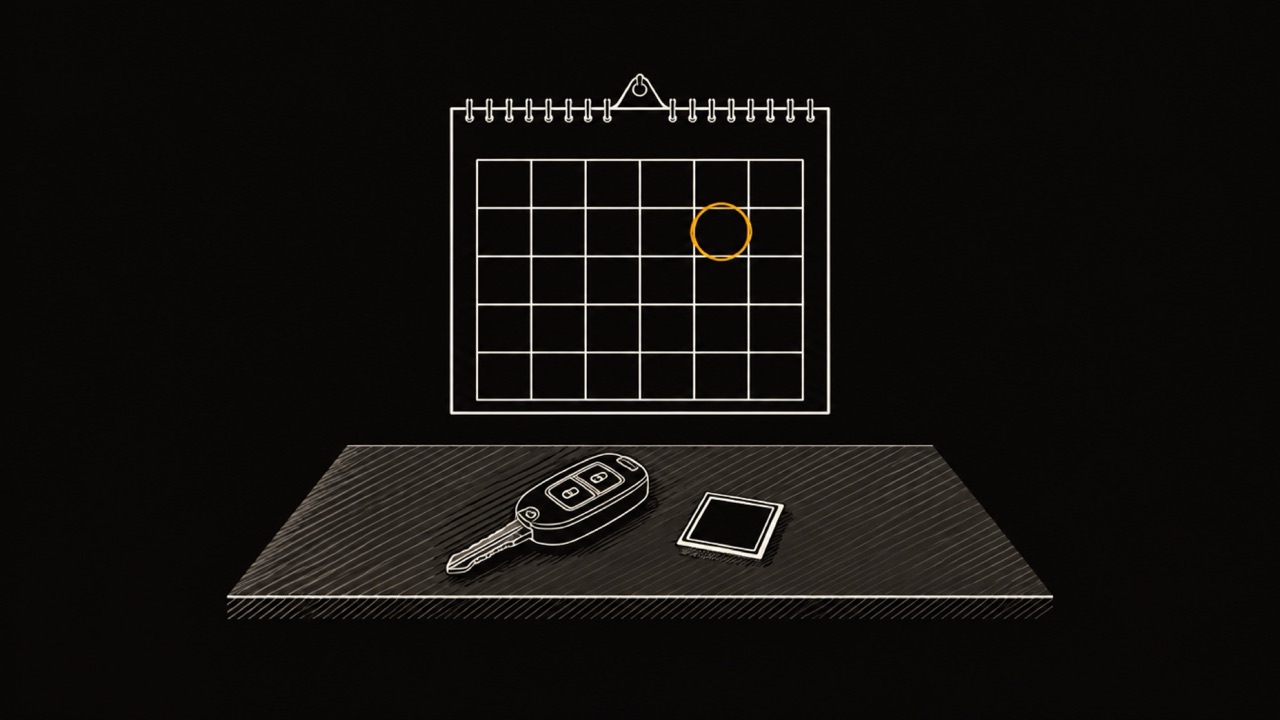
You cannot drive or park the vehicle on the road once the MOT has run out, and you can be prosecuted if caught. GOV.UK gives two exceptions: driving to or from somewhere to be repaired, and driving to a pre-arranged MOT test. The fine for driving a vehicle without a valid MOT can be up to £1,000.
An expired MOT blocks vehicle tax first. You cannot renew your vehicle tax while the MOT has expired, so if the tax is due to run out you register the vehicle as ‘off the road’, book the MOT, and tax it once it has passed. Plan the test before the tax date, not after it.
The rule is the same in principle in Northern Ireland, where nidirect says it is an offence to use a vehicle of MOT test age on a public road without a current test certificate. A failed test starts its own clock: see the retest rules above.
Take one car, first registered on 20 March 2024, and follow its first MOT. The rules come from the GOV.UK pages above; the car and the dates are an example.
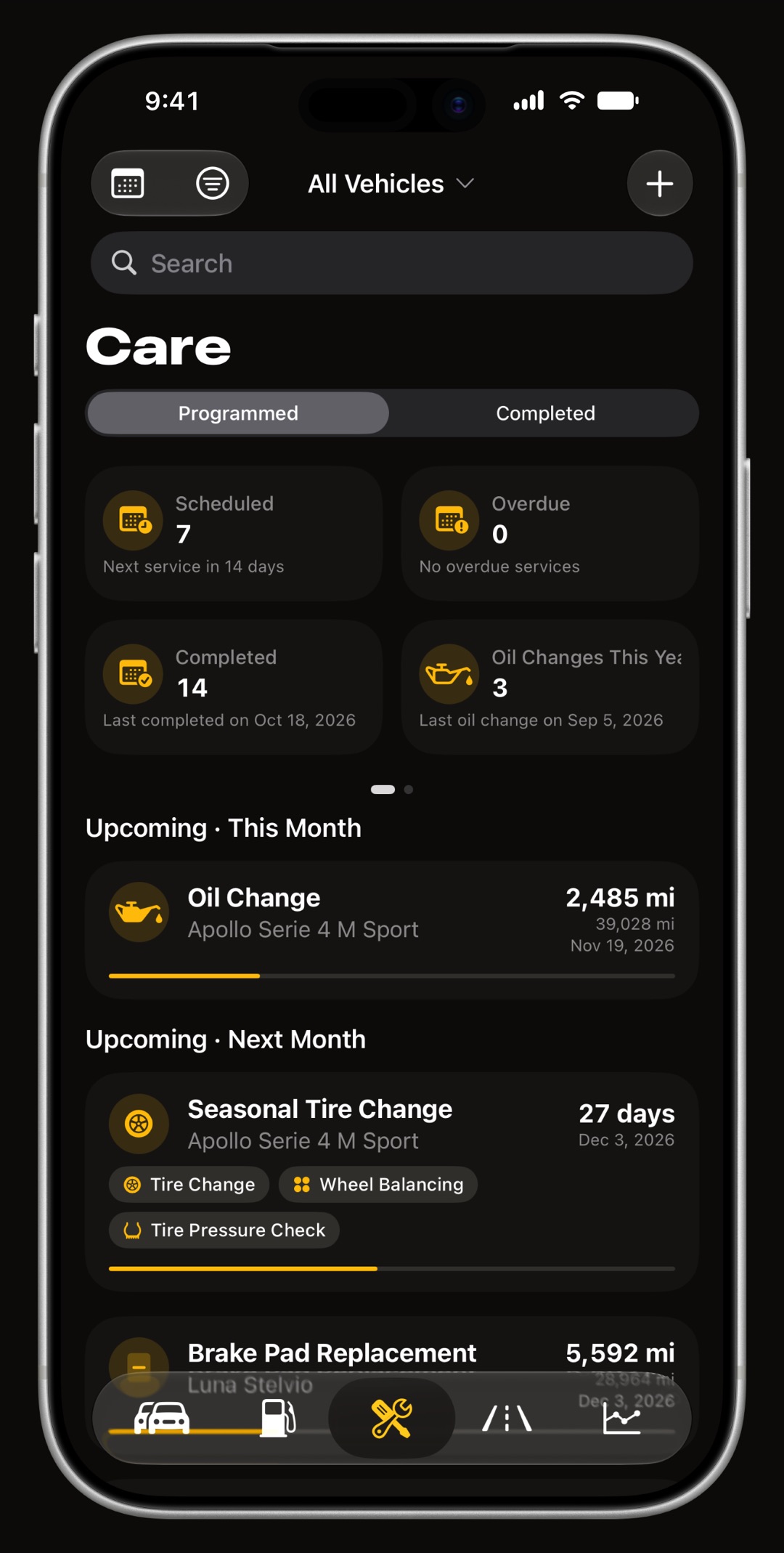
An MOT is due on a date, so it belongs on a calendar with a reminder rather than in your memory. In WrenchTime, add it to the Care tab as a mandatory inspection on a recurring series every year. Complete it, attach the pass certificate as a document, and the next one is already scheduled with its reminder.
If a warning light is on before the MOT, the WrenchTime Pro trouble code scan reads the stored codes and shows the readiness monitors, so you know before you go whether the car has finished its self-tests; the OBD-II code reader for iPhone guide covers it. The free version covers 1 vehicle and 2 maintenance entries a month, and the guide to schedule maintenance and reminders walks through the screens.
Enter the number plate in GOV.UK MOT history, which shows past results, the mileage at each test and when the next MOT is due, or read the date on your current MOT certificate. A free reminder by text or email can be set up with the number plate and arrives a month before the MOT is due.
By the third anniversary of its registration in Great Britain, and then by the anniversary of its last MOT. Taxis, ambulances and private passenger vehicles with nine or more seats need their first MOT at one year old. In Northern Ireland a car is due a test from four years old.
Test stations can charge up to £54.85 for a car and £29.65 for a standard motorcycle, according to GOV.UK, and there is no VAT on the fee. Other classes have their own maximum, from £37.80 for a sidecar combination to £80.65 for a large passenger vehicle.
Not on the road, except to or from a repair or to a pre-arranged MOT test. You can be fined up to £1,000 for driving without a valid MOT, and you cannot renew vehicle tax while the MOT has expired.
Up to a month minus a day before it runs out. An MOT that expires on 20 May can be renewed from 21 April and keep the same renewal date. Test earlier than that and the next expiry moves to one year minus a day after the day the vehicle passed.
More from the blog
OBD2
What I/M readiness means on a scanner, every OBD2 readiness monitor and what it checks, how many can be incomplete at an emissions test, and the drive cycles that set them.
Used cars
A used car inspection checklist in the order of the visit, from paperwork to an OBD2 scan, with what each finding means and when to walk away.
Diagnostics
Every way to turn the light off, what each one erases, and why a reset can still fail an emissions test.
Free to download. One vehicle, real features, no ads. Your garage will thank you.
Download WrenchTime on the App Store