Driving dynamics
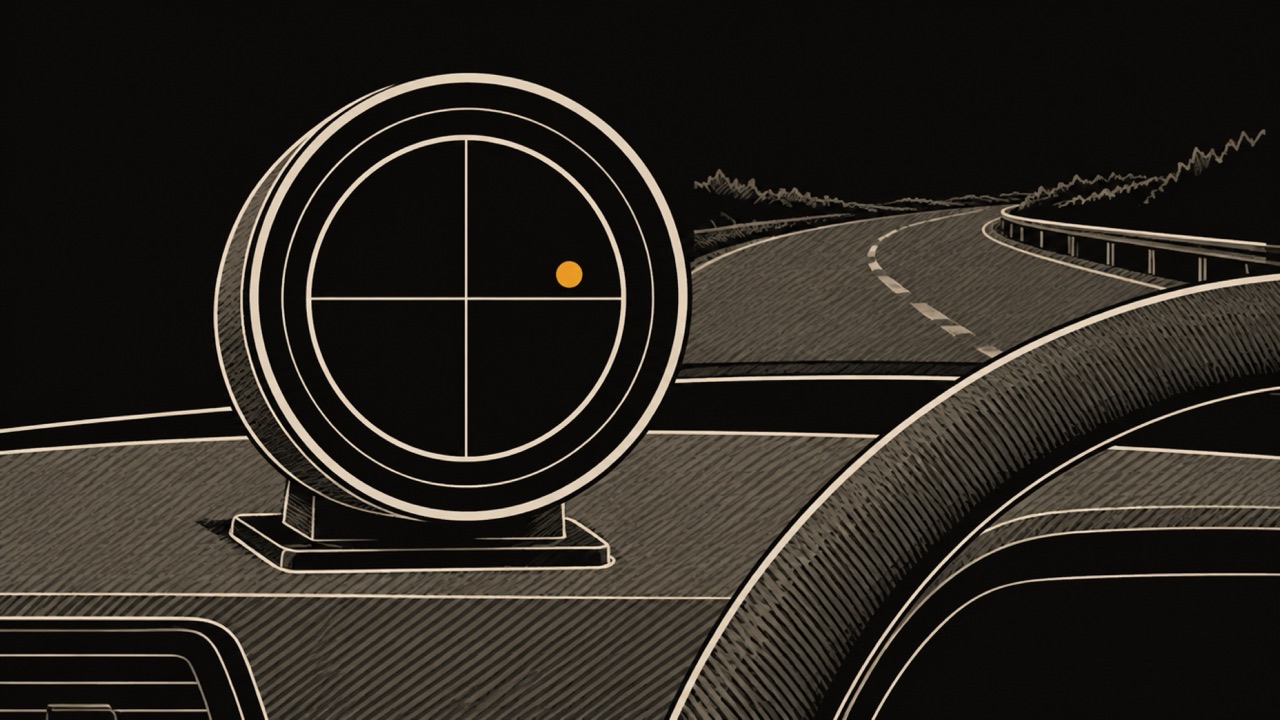
G force meter for cars: what it measures
What a g force meter for cars reads, how to calculate g yourself, and how many g normal driving, a sports car and Formula One really pull.
Performance
A good 0-60 time for an everyday car or SUV is about 7 to 9 seconds; under 7 seconds is quick, under 5 seconds is sports-car fast, and the quickest production cars run under 2 seconds. In tests, a 2026 Toyota RAV4 Hybrid reached 60 mph in 7.2 seconds (MotorWeek), Porsche rates the 2027 911 Carrera S at 3.3 seconds, and Rimac announced a 1.74-second run for its Nevera in May 2023.
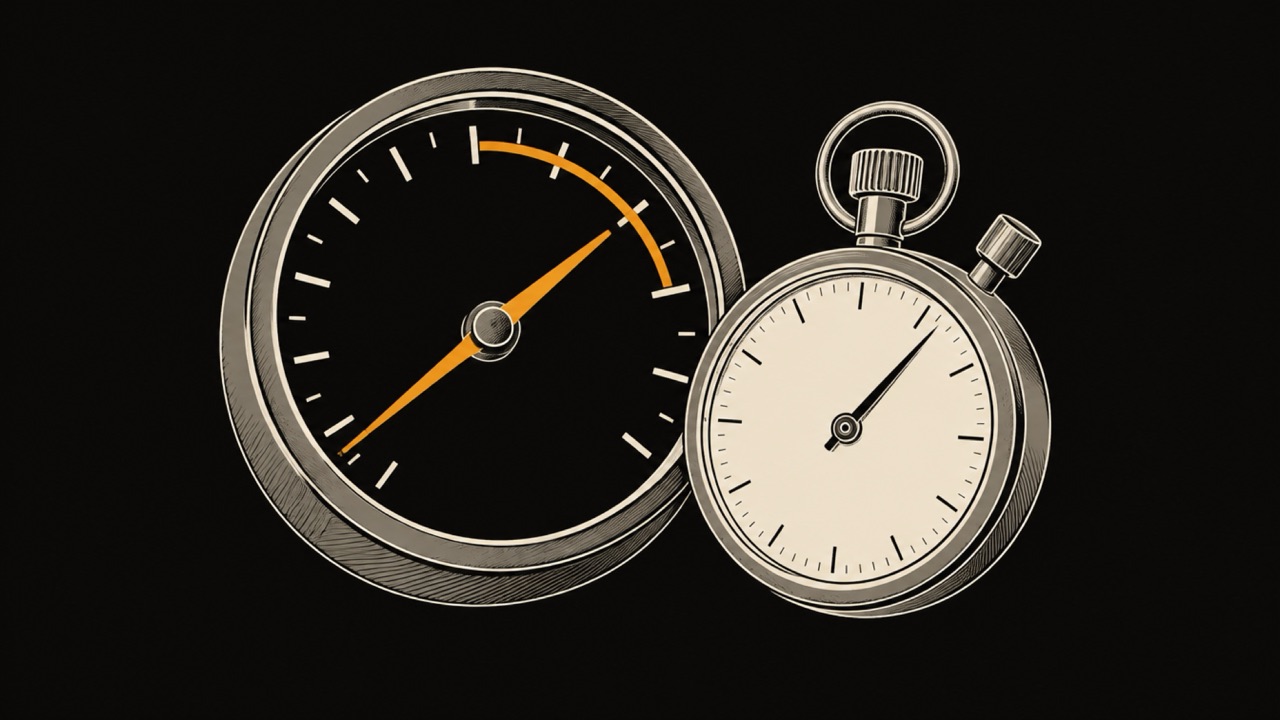
A 0-60 time is the number of seconds a vehicle takes to accelerate from a standstill to 60 mph, the benchmark US magazines and manufacturers quote. UK and European figures are more often given as 0-62 mph (100 km/h): according to Wikipedia's 0 to 60 mph entry, the rest of the world uses 0-100 km/h instead, which ends at 62.1 mph.
What counts as a good 0 to 60 time depends on the vehicle, so the bands below are a rule of thumb, not an official standard. Every band except the slowest is anchored on a tested or rated example, and Mazda puts a typical combustion-only compact SUV at 7 to 9 seconds, which is the normal band. A plug-in hybrid and an electric sedan sit in the quick band, a Porsche 911 in the fast band and a Rimac Nevera in the extreme one.
| Band | 0-60 mph | What it feels like | Example |
|---|---|---|---|
| Leisurely | 9 seconds or more | Needs planning to join traffic or overtake | No example tested here |
| Normal | 7 to under 9 seconds | Keeps up with traffic without effort | 2026 Toyota RAV4 Hybrid FWD, 7.2 s |
| Quick | 5 to under 7 seconds | Pulls clearly ahead of traffic | 2023 Toyota Prius Prime, 6.5 s; 2018 Tesla Model 3 Long Range RWD, about 5.0 s |
| Fast | 3 to under 5 seconds | Sports-car acceleration | 2027 Porsche 911 Carrera S, 3.3 s (manufacturer rating) |
| Extreme | Under 3 seconds | Hypercar and high-performance EV territory | Rimac Nevera, 1.74 s (announced May 2023) |
Sources: MotorWeek, 2026 RAV4, MotorWeek, 2023 Prius Prime, MotorWeek, 2018 Model 3, Porsche USA, Rimac, Mazda. Bands are this guide's classification.
There is no single official average 0 to 60 time, because the answer depends on which vehicles are averaged. Three mainstream hybrids that MotorWeek tested sit close together: a 2023 Toyota Prius Prime at 6.5 seconds, a 2026 RAV4 Hybrid at 7.2 seconds and a 2016 RAV4 Hybrid at 7.4 seconds. Mazda puts a typical combustion-only compact SUV at 7 to 9 seconds and its hybrid version at 7 to 8 seconds.
The table below mixes magazine tests and manufacturer ratings, which are not measured the same way. A manufacturer figure is a claim made under the maker's own conditions; a magazine figure is one instrumented test on one day. Compare cars with numbers from the same kind of source whenever you can.
| Vehicle | Type | 0-60 mph | Measured by | Note |
|---|---|---|---|---|
| 2016 Toyota RAV4 Hybrid | Hybrid SUV | 7.4 s | MotorWeek test | Older model year |
| 2026 Toyota RAV4 Hybrid FWD | Hybrid SUV | 7.2 s | MotorWeek test | 226 hp |
| 2023 Toyota Prius Prime | Plug-in hybrid | 6.5 s | MotorWeek test | 220 hp total |
| 2018 Tesla Model 3 Long Range RWD | Electric sedan | About 5.0 s | MotorWeek, typical run | Older model year |
| 2027 Porsche 911 Carrera S | Sports car | 3.3 s | Manufacturer rating | Rear-drive, PDK |
| Tesla Model S Plaid (2022 model) | Electric sedan | 1.98 s | Measured, June 2021 | With one-foot rollout (first foot not timed) |
| Rimac Nevera | Electric hypercar | 1.74 s | Racelogic and Dewesoft, announced May 2023 | With one-foot rollout; official figure 1.85 s |
Sources: MotorWeek, 2016 RAV4 Hybrid, MotorWeek, 2026 RAV4, MotorWeek, 2023 Prius Prime, MotorWeek, 2018 Model 3, Porsche USA, Wikipedia, 0 to 60 mph, Rimac newsroom.
Yes. A 5-second 0-60 mph is quick by everyday standards, at the top of the quick band and a fraction short of fast. MotorWeek reported a typical run of about 5.0 seconds for a 2018 Tesla Model 3 Long Range RWD, more than two seconds ahead of the 7.2-second 2026 RAV4 Hybrid it tested. It is not sports-car fast: Porsche rates the 2027 911 Carrera S at 3.3 seconds.
A 0-60 time also tells you how hard the car pushes you into the seat. Dividing 60 mph (26.82 m/s) by the time gives the average acceleration, and dividing that by standard gravity (9.80665 m/s²) gives it in g. These are example calculations from the times above, averaged over the whole run; the peak is higher. Here is what those g values mean in everyday driving.
| 0-60 mph time | Example vehicle | Average acceleration | In g |
|---|---|---|---|
| 7.2 s | 2026 Toyota RAV4 Hybrid | 3.73 m/s² | 0.38 g |
| 6.5 s | 2023 Toyota Prius Prime | 4.13 m/s² | 0.42 g |
| 5.0 s | 2018 Tesla Model 3 Long Range RWD | 5.36 m/s² | 0.55 g |
| 3.3 s | 2027 Porsche 911 Carrera S | 8.13 m/s² | 0.83 g |
| 1.74 s | Rimac Nevera | 15.41 m/s² | 1.57 g |
Computed from the 0-60 mph times in the table above: 26.82 m/s divided by the time, then by 9.80665 m/s².
A 6-second 0-100 km/h is quick: it falls in the quick band of this guide, ahead of most family cars and behind sports cars. Because 100 km/h is 62.1 mph, a 0-100 km/h time always runs a little longer than the same car's 0-60 mph time, so a 7-second 0-100 km/h car reaches 60 mph just under 7 seconds, at the border between normal and quick.
The gap is small but real. In the runs Rimac announced in May 2023, the Nevera did 0-60 mph in 1.74 seconds and 0-100 km/h in 1.82 seconds, according to Rimac's record announcement. For a slower car the extra 2.1 mph takes longer, so never compare a 0-100 km/h figure with a 0-60 mph figure as if they were the same benchmark.
Far less quick than any car in the tables above. The NCHRP Human Factors Guidelines for Road Systems (2025) report an observed 85th percentile maximum comfortable acceleration of 2.0 m/s² on US freeway entrance ramps, the equivalent of motorway slip roads: 85% of drivers accelerated no harder than that. That is a measure of what drivers choose, not a legal or design requirement.
As an example calculation, holding 2.0 m/s² from a standstill reaches 60 mph (26.82 m/s) in about 13.4 seconds, a gain of roughly 4.5 mph every second. A car with a 7- or 8-second 0-60 time has a wide margin over that. A safe join depends on matching the traffic's speed by the end of the slip road and choosing the gap, not on the 0-60 figure.
The main reason is rollout. Some US magazines and manufacturers start the clock only after the car has moved about one foot (11.5 in, 30 cm), a convention borrowed from drag-strip timing lights. Wikipedia's rollout entry, citing Racelogic and Car and Driver, puts the effect at up to 0.3 seconds. Some publications report with rollout and some without; Edmunds marks a separate with-rollout time.
Conditions matter too. According to Jalopnik (2026), magazines record the conditions at the track and use a formula to normalise the time, and altitude changes what a car can do. Wikipedia notes that runs are timed in two opposite directions and averaged, which cancels out wind and track direction. Tires and surface count as well: the Nevera's 1.74 seconds was set on road-legal tyres on non-prepped asphalt, per Rimac.
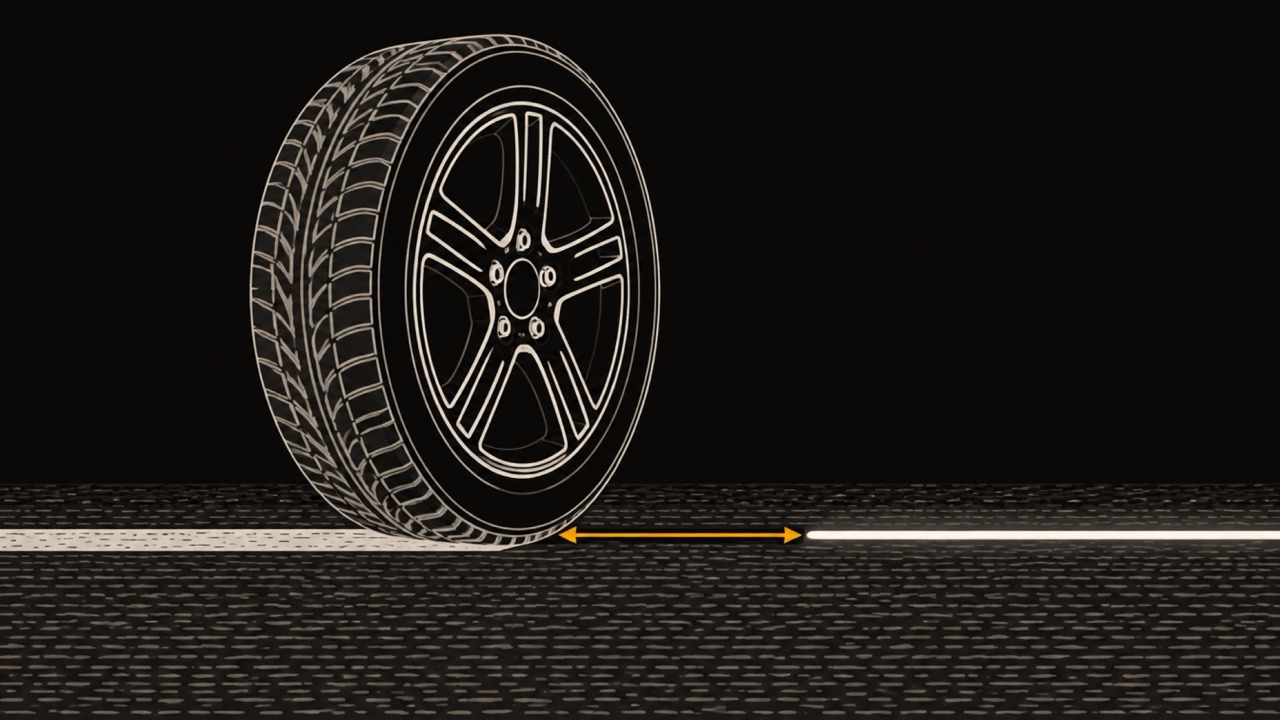
Electric cars are quick off the line because their motors deliver full torque from a standstill. The US Department of Energy's Alternative Fuels Data Center puts it plainly: "EVs provide instant torque, resulting in a fun, fast, and quiet driver experience!" A combustion engine has to rev up before it makes its peak torque; an electric motor does not, as Mazda explains.
That is why the quickest cars in the tables above are electric: the Tesla Model S Plaid at 1.98 seconds and the Rimac Nevera at 1.74 seconds. It also shows lower down the range, where MotorWeek reported a typical run of about 5.0 seconds for a 2018 Tesla Model 3 Long Range RWD, quicker than any of the hybrids it tested.
Sport motorcycles are among the quickest road vehicles from 0 to 60 mph. Wikipedia's list of magazine-tested production motorcycles, citing Cycle World and Motorcycle Consumer News, puts a 2006 Suzuki GSX-R1000 at 2.35 seconds, a 2002 Suzuki Hayabusa at 2.47 seconds and a 2010 Yamaha VMAX at 2.5 seconds.
Motorcycle times vary widely, because the rider's launch technique, the weather, the surface and the test equipment all change the result, even between identical motorcycles, as the same list notes. It also notes that European makers quote 0-100 km/h and US makers 0-60 mph. Compare two motorcycles only with figures from the same source and the same benchmark.
Measure a 0-60 time only on a closed road or a track, never on a public road. Magazines use roof-mounted GPS data loggers such as the Racelogic VBOX, and Jalopnik (2026) notes that a phone-based tracker is not likely to be as accurate. A phone still gives a useful figure for comparing your own runs on the same stretch.
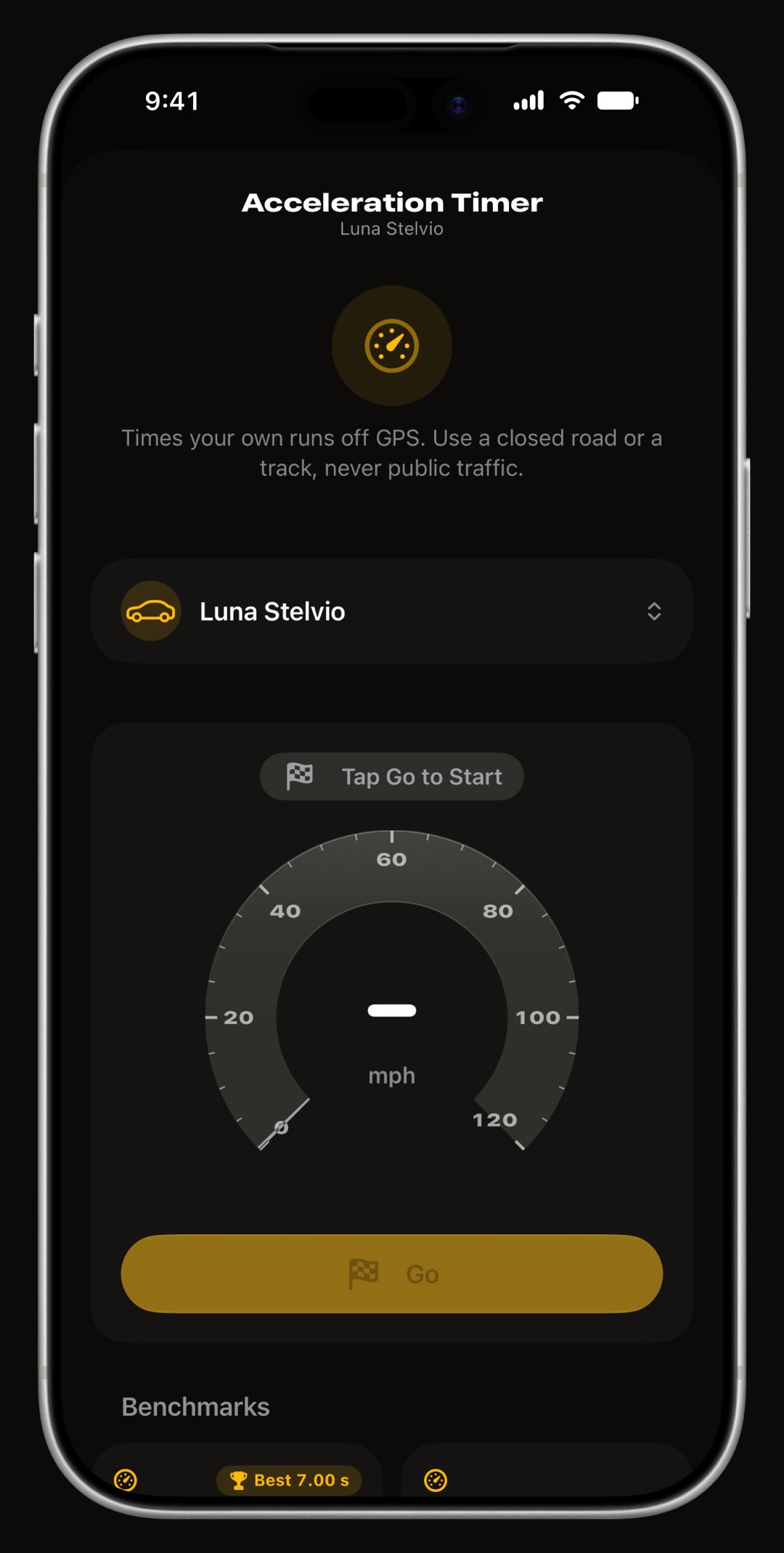
WrenchTime, a car and motorcycle app for iPhone, includes a free acceleration timer that uses the iPhone's GPS to time 0-60 mph with your iPhone's GPS, along with the quarter mile, 0-100 km/h and other benchmarks. It checks the road's slope and the GPS quality before a run counts, and keeps each vehicle's best and latest run. Its results are estimates within roughly two tenths of a second.
What a good 0-60 time is, and why figures differ, in one place.
Find out where your own car or motorcycle sits in the bands above. WrenchTime's acceleration timer is free, needs no adapter, and times 0-60 mph, 0-100 km/h and the quarter mile from the iPhone's GPS, saving each vehicle's best run. The free version covers 1 vehicle. Use it only on a closed road or a track.
Yes. A 5-second 0-60 mph is quick by everyday standards: MotorWeek reported about 5.0 seconds for a 2018 Tesla Model 3 Long Range RWD and timed a 2026 Toyota RAV4 Hybrid at 7.2 seconds. It is not sports-car fast, though: Porsche rates the 2027 911 Carrera S at 3.3 seconds.
A 7-second 0-100 km/h sits at the border between a normal and a quick car. Because 100 km/h is 62.1 mph, the same car's 0-60 mph time is a little shorter. For scale, Rimac announced a 1.74-second 0-60 mph and a 1.82-second 0-100 km/h for its Nevera in May 2023.
There is no single official average. Three mainstream hybrids tested by MotorWeek ran 6.5 to 7.4 seconds: a 2023 Prius Prime at 6.5, a 2026 RAV4 Hybrid at 7.2 and a 2016 RAV4 Hybrid at 7.4. Mazda puts a typical combustion-only compact SUV at 7 to 9 seconds.
Rollout starts the clock only after the car has moved about one foot (11.5 in, 30 cm), a convention from drag-strip timing lights. It can cut up to 0.3 seconds from a 0-60 time, and some publications use it while others do not.
Rimac announced in May 2023 that its Nevera ran 0-60 mph in 1.74 seconds, measured with a standard one-foot rollout on road-legal tyres and non-prepped asphalt, a production-car record at the time. That beat the car's official 1.85-second figure.
More from the blog
Driving dynamics
What a g force meter for cars reads, how to calculate g yourself, and how many g normal driving, a sports car and Formula One really pull.
Running costs
AAA's 2026 US average is about 86 cents a mile. What it includes, the formula with a UK example in pence, why the figure moves with mileage, vehicle type and powertrain, and HMRC's mileage rates.
Buying used
No free check shows outstanding finance, but GOV.UK's vehicle enquiry and MOT history services, the DVSA recall check and a free stolen or write-off check together cover most of a car's history.

Free to download. One vehicle, real features, no ads. Your garage will thank you.
Download WrenchTime on the App Store