Diagnostics
How to reset a check engine light
Every way to turn the light off, what each one erases, and why a reset can still fail an emissions test.
Trouble codes
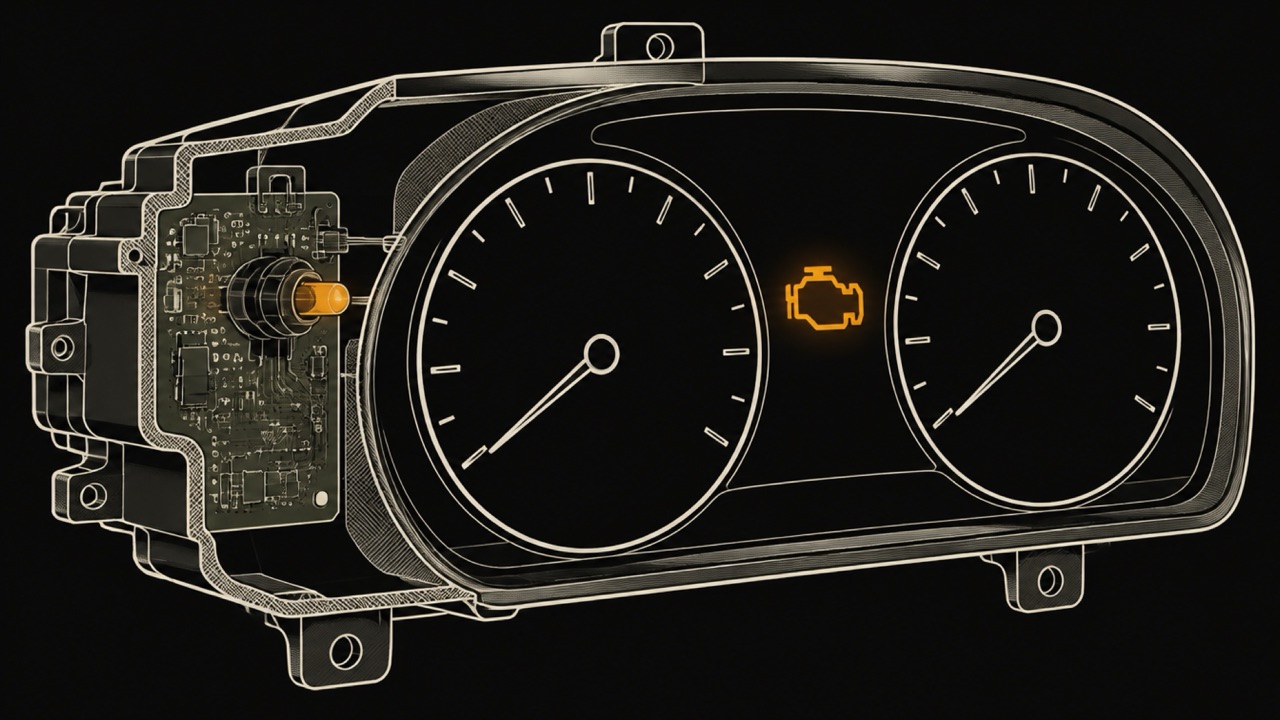
A check engine light flashing means the engine computer has detected an active misfire bad enough to damage the catalytic converter. California's OBD II regulation requires the light to blink once per second while that misfire is happening. Slow down, get off the road when it is safe and do not keep driving: the 2013 Ram 1500 owner's manual warns that "severe catalytic converter damage and power loss will soon occur".
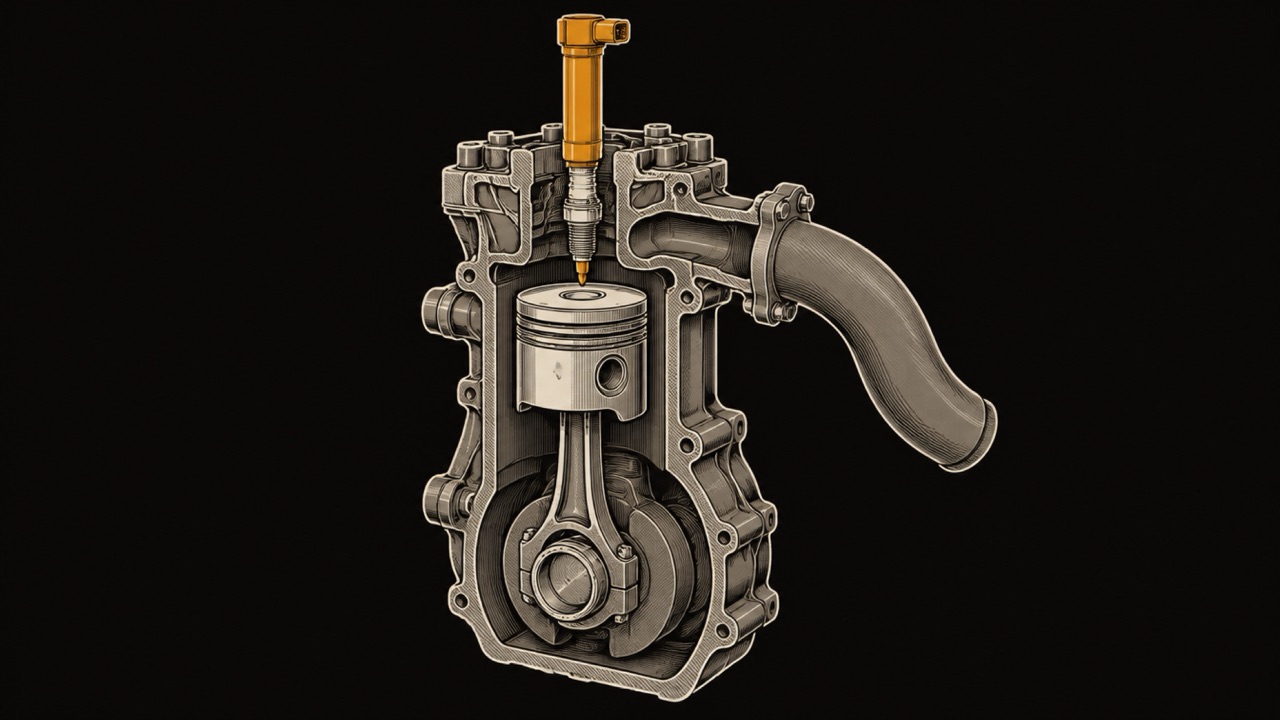
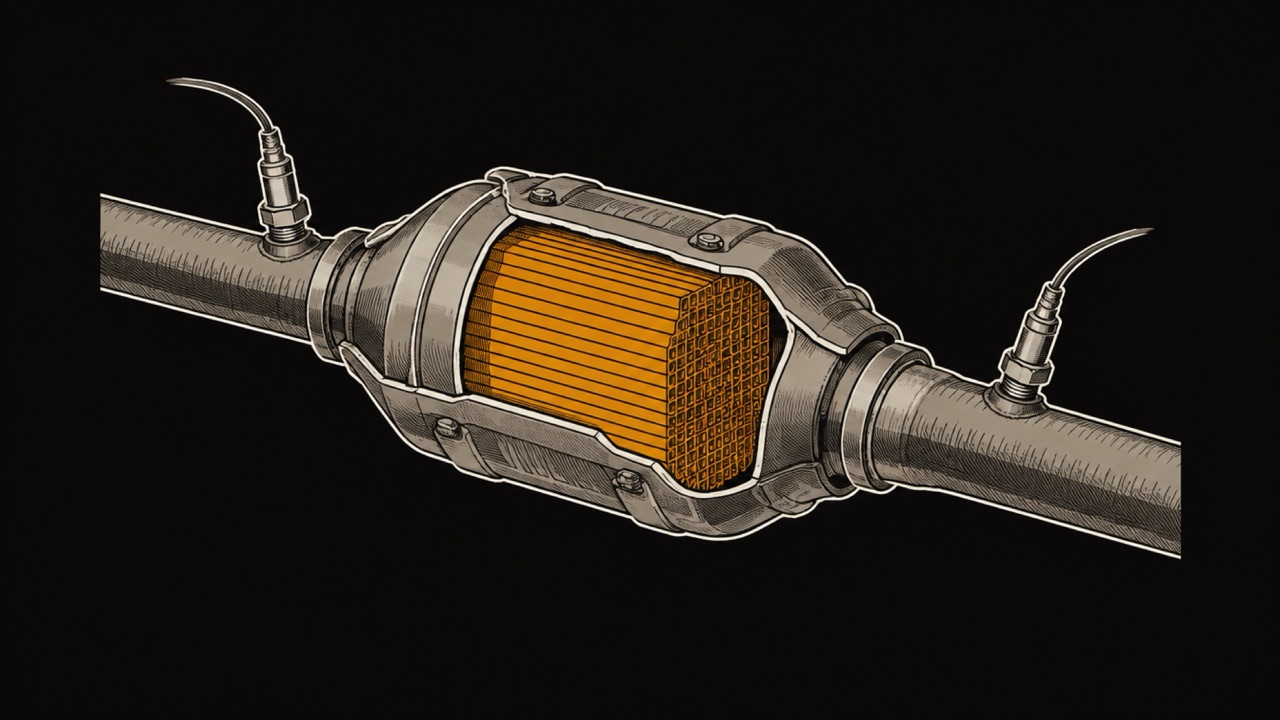
A flashing check engine light means a misfire is happening right now at a level that can damage the catalytic converter. A misfire is a cylinder that fails to burn its fuel charge. The unburned fuel goes into the exhaust, where the catalytic converter, the part that cleans the exhaust, burns it instead and overheats.
The blink is a legal requirement, not a design choice. California's OBD II regulation (13 CCR 1968.1) says "the MIL shall blink once per second during actual misfire conditions" at the misfire level "which would result in catalyst damage". MIL, malfunction indicator lamp, is the regulation's name for the check engine light.
The federal OBD rule for 2017 and later cars and light trucks, 40 CFR 86.1806-17, incorporates California's OBD II requirements in 13 CCR 1968.2, the successor of 1968.1, by reference. That is why a flashing check engine light carries the same meaning on most gasoline cars sold in the United States.
A solid check engine light means the engine computer has confirmed a fault and stored a code. A flashing check engine light means a misfire is damaging the catalytic converter while you drive. The steady light can usually wait for a scan within days; the flashing one cannot wait at all.
| Light | What the car detected | What to do | Why it matters |
|---|---|---|---|
| Off | No confirmed emissions fault | Nothing | The engine computer runs its self-tests while you drive and found nothing to report |
| Solid | A confirmed fault with a stored code | Have the code read soon | Less urgent than a flashing light, but the fault stays until it is repaired |
| Flashing | Misfire at a level that damages the catalytic converter | Ease off, park when safe, do not keep driving | Unburned fuel overheats the converter, the most expensive repair on CarMD's list of common check engine repairs |
| Flashing, then solid | The misfire stopped, but it was confirmed and a code was stored | Have the code read before the next long drive | The cause is still there and the misfire can return under the same conditions |
Source: California Code of Regulations, 13 CCR 1968.1; AAA (November 2024).
You should not keep driving with a flashing check engine light, beyond getting off the road safely. The 2013 Ram 1500 owner's manual says: "If the MIL is flashing, severe catalytic converter damage and power loss will soon occur. Immediate service is required." AAA (November 2024) puts it as "Take immediate action if your Check Engine Light flashes".
Owner's manuals give the same first steps. The 2013 Buick Encore manual says to ease off on speed and avoid sudden acceleration and steep hills. If the light keeps flashing, park somewhere safe, turn the engine off, wait at least 10 seconds and restart. If it still flashes, the car needs a dealer or shop as soon as possible.
AAA advises pulling off the road safely and calling roadside assistance to get the car to a repair shop. A shop can then read the code before a long drive with an active misfire ruins the catalytic converter.
Under OBD II rules, a flashing check engine light means a misfire. The causes of the misfire are what differ. The usual suspects are worn spark plugs, a failing ignition coil and a clogged or leaking fuel injector. A misfire on one cylinder sets a code from P0301 upward, the number at the end naming the cylinder; P0300 means a random or multiple misfire.
Fuel starvation causes it too. The Kia owner's manual warns that "running out of fuel could cause the engine to misfire, damaging the catalytic converter". The costs below are CarMD's US averages for parts and labor in 2025, from its 2026 Vehicle Health Index of more than 39 million vehicles.
| Cause | Typical codes | Average repair (CarMD, 2025) | Why it matters |
|---|---|---|---|
| Worn spark plugs | P0300 to P0308 | $299 | Spark plugs and ignition coils take three of the ten places on CarMD's list for 2025 |
| Failing ignition coil | P0301 to P0308 | $256 | On engines with one coil per cylinder, a dead coil leaves that cylinder without spark |
| Ignition coil and spark plugs together | P0300 to P0308 | $480 | Shops often replace both when the plugs are due anyway |
| Clogged or leaking fuel injector | P0300 to P0308 | $572 | A cylinder that gets too little or too much fuel misfires the same way |
| Running out of fuel | P0300 | No repair | Kia warns it can misfire the engine and damage the converter |
| Catalytic converter (the damage) | P0420 | $1,511 | The repair a misfire leads to when it is ignored, first on CarMD's list |
Source: CarMD 2026 Vehicle Health Index, April 22, 2026; Kia owner's manual.
A car shakes with the check engine light flashing because one or more cylinders are not firing. Each cylinder pushes the crankshaft in turn; when one skips its power stroke, the engine turns unevenly and the shudder reaches the steering wheel and the seat.
Shaking plus a flashing light is the classic picture of a dead ignition coil or a fouled spark plug on one cylinder. It is also the situation the blinking light exists for: the cylinder that is not firing is sending its fuel straight into the exhaust and the catalytic converter.
A check engine light that flashes only when accelerating points to a misfire that appears under load. The engine computer judges misfire against engine speed and load, and California's regulation sets the detection rule separately for different speed and load regions (13 CCR 1968.1). Under load each cylinder needs a stronger spark and more fuel, so a part that is only starting to fail can show up there first.
That is why manuals tell you to ease off. The 2013 Buick Encore manual says to reduce speed and avoid sudden acceleration and steep hills while the light flashes. If gentle driving stops the blinking, the misfire is still there; it has simply dropped below the damaging rate for now.
A check engine light that flashes then stops is following the OBD II rule exactly. The light blinks only while the misfire exceeds the catalyst-damage level, and within the same drive it may go dark again when the misfire stops, according to California's regulation (13 CCR 1968.1).
If the misfire returns on the next drive, the car stores a code and "the MIL shall remain continuously illuminated, even if the misfire ceases". A light that flashed and then turned solid is therefore a confirmed misfire, not a false alarm. The same regulation also lets vehicles that shut off fuel and switch to default fuel control during misfire use a steady light instead of a blinking one.
Ignoring a flashing check engine light turns a small repair into a large one. CarMD's 2026 Vehicle Health Index puts catalytic converter replacement first among check engine repairs at $1,511 on average in 2025, and notes that "unresolved misfires or faulty oxygen sensors can eventually damage the catalytic converter".
Example calculation from CarMD's 2025 averages: a converter at $1,511 costs about 5.9 times an ignition coil at $256, and about 3.1 times a coil and spark plugs together at $480. The average check engine repair of any kind reached a record $554 in 2025, up 33% on 2024. A failed converter can set the P0420 catalytic converter code once the misfire is fixed.
A sample response, for a car whose check engine light starts flashing on a highway with the engine shaking. The steps follow the 2013 Buick Encore owner's manual and AAA's advice, and they apply to most gasoline cars.
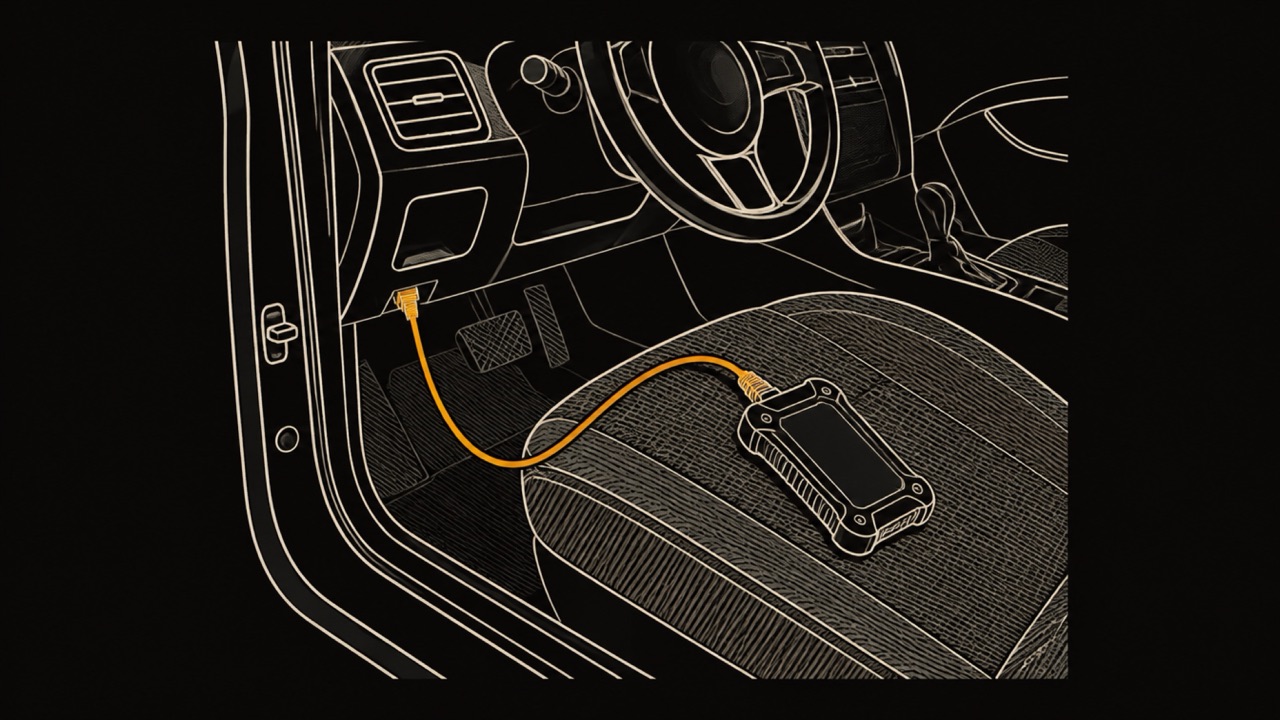
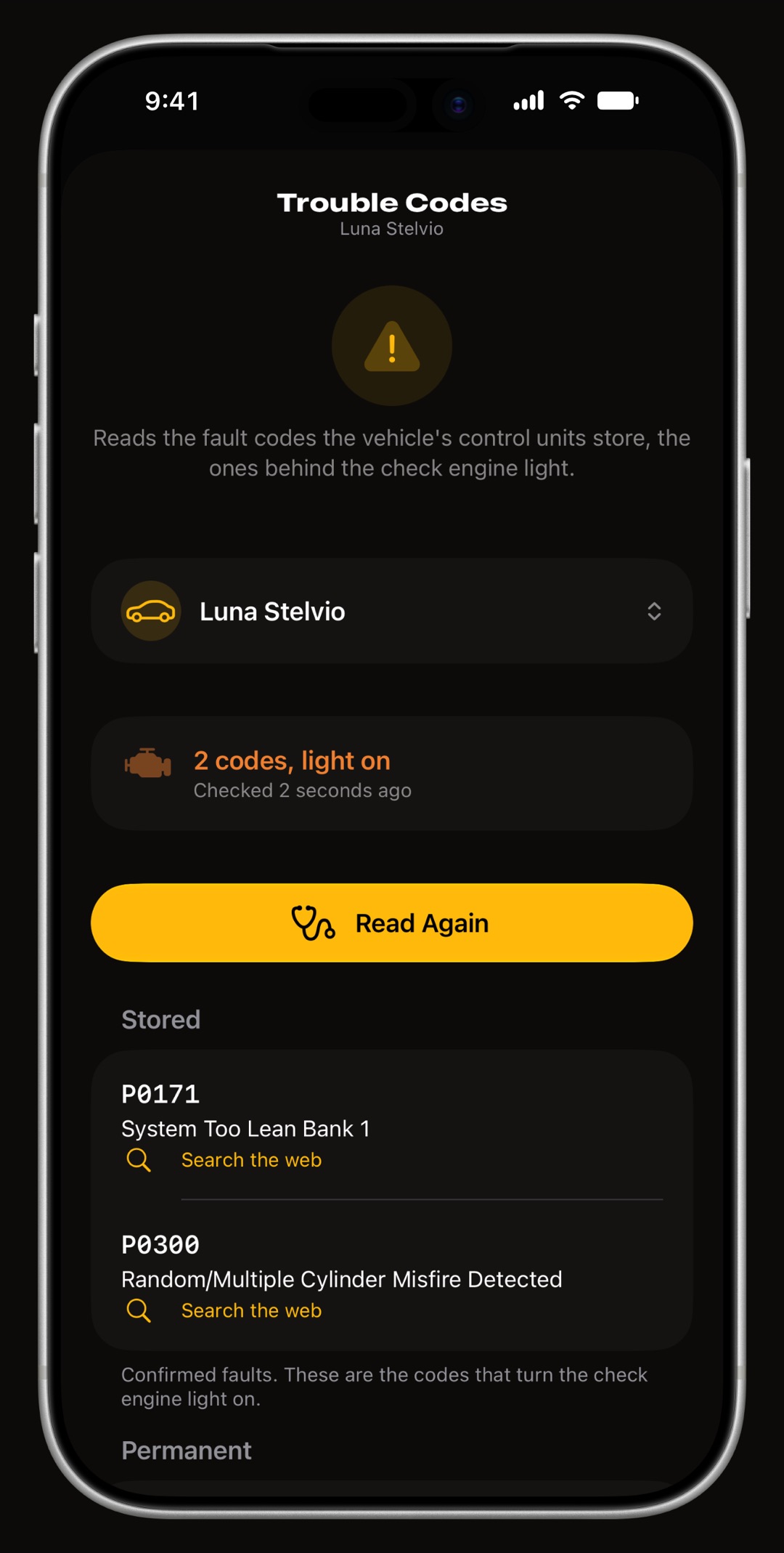
You read the code behind a flashing check engine light with an OBD2 scanner plugged into the port under the dashboard, with the ignition on. The guide on how to use an OBD2 scanner covers the port, the steps and how to read the result. A misfire shows up as P0300 or as a cylinder-specific code from P0301 upward.
Look at the freeze frame too: it records the engine speed, load and temperature at the moment the first fault was stored, which tells you whether the misfire happened cold, at idle or under load. Do not just clear the code and drive on: the misfire is still there.
WrenchTime, an iPhone app for car and motorcycle maintenance, reads stored, pending and permanent trouble codes through a Bluetooth OBD2 adapter with WrenchTime Pro, together with the freeze frame the car saved at the first fault and the readiness monitors. Generic codes such as P0300 come with a plain-language description.
With a Bluetooth OBD2 adapter, WrenchTime reads the misfire code, its freeze frame and the readiness monitors in one scan, from every module that answers the standard OBD-II request. Each scan is saved with its date and odometer reading, so you can see whether the code returns after the repair. Codes can be cleared only after a read, only with the engine off and after two confirmations.
Trouble Codes is part of WrenchTime Pro; the free version covers 1 vehicle. The OBD2 code reader for iPhone guide shows how it works.
Only far enough to get off the road safely. A flashing light means a misfire that can damage the catalytic converter: the 2013 Ram 1500 manual says severe damage "will soon occur", and AAA advises pulling over and calling roadside assistance. Ease off and avoid hard acceleration while you find a place to stop.
Not directly. A flashing check engine light is the misfire warning. Low oil pressure or overheating turns on a red engine warning, which AAA says means pulling off the road safely. An engine problem can still cause a misfire as well, so read the code either way.
With a steady light and a car that runs normally, many drivers reach a shop, though the code should be read soon. With a flashing light, no: the misfire is active, and the catalytic converter can be damaged within that drive.
It stops flashing when the misfire drops below the damaging level, but that is not a fix. Under OBD II rules, if the misfire returns on the next drive the car stores a code and keeps the light on steadily, even after the misfire stops.
It depends on the cause. CarMD's US averages for 2025 are $299 for spark plugs, $256 for an ignition coil, $480 for both and $572 for fuel injectors. Ignoring the misfire can add a catalytic converter, the top check engine repair at $1,511.
More from the blog
Diagnostics
Every way to turn the light off, what each one erases, and why a reset can still fail an emissions test.
Trouble codes
What the P0420 code means, what usually causes it, whether you can keep driving, what the repair costs and when the catalytic converter is under warranty.
Diagnostics
Plug in with the ignition off, switch to on without starting the engine, read and write down every code, and look each one up before clearing anything.
Free to download. One vehicle, real features, no ads. Your garage will thank you.
Download WrenchTime on the App Store