OBD2
What is an OBD2 data logger?
What an OBD2 data logger records, the kinds there are, how often to sample, which signals to keep on every trip and how to read the log afterwards.
Engine data
To convert lambda to AFR, multiply lambda by the stoichiometric air-fuel ratio of the fuel you are burning: AFR = lambda × stoich. Petrol's stoichiometric ratio is 14.7 parts air to one part fuel, according to Bosch, so lambda 1.00 is 14.7:1 and lambda 0.85 is 0.85 × 14.7 = 12.5:1. To go back, divide: lambda = AFR ÷ stoich, so 13.2:1 on petrol is lambda 0.90. Lambda 1.00 is the chemically correct mixture for every fuel; below it the mixture is rich, above it lean.
AFR, the air-fuel ratio, is the mass of air an engine burns for each unit of fuel mass. A petrol engine at the chemically correct, or stoichiometric, point burns 14.7 parts air to one part fuel. The trouble with AFR is that the correct number changes with the fuel: E85, ethanol, methanol and diesel each have their own.
Lambda removes the fuel from the number. HP Academy defines it as the ratio between the actual AFR and the stoichiometric AFR, so lambda is 1.0 at the stoichiometric point whatever the fuel. Values under 1.0 mean a rich mixture with extra fuel, and values over 1.0 mean a lean mixture with extra air.
Lambda and AFR therefore describe the same mixture on two scales. AFR is fuel-specific and easy to picture; lambda is fuel-independent and tells you at a glance how far the mixture sits from a complete burn.
Lambda to AFR is one multiplication: AFR = lambda × stoichiometric AFR. AFR to lambda is one division: lambda = actual AFR ÷ stoichiometric AFR, the form EngineLabs gives. The only input you need besides the reading is the stoichiometric ratio of the fuel in the tank.
Worked examples on petrol, with a stoichiometric ratio of 14.7:1: lambda 0.85 × 14.7 = 12.5:1, the example HP Academy's AFR cheat sheet uses. In the other direction, 13.2:1 ÷ 14.7 = lambda 0.90, and 11.5:1 ÷ 14.7 = lambda 0.78.
Some tuning software shows the equivalence ratio instead, written as phi or EQ ratio. It is simply the inverse of lambda: in its HP Tuners webinar, HP Academy notes that an equivalence ratio of 1.176 is the same as lambda 0.85. Divide 1.0 by the equivalence ratio to get lambda.
This lambda to AFR chart multiplies each lambda value by the stoichiometric ratios on HP Academy's cheat sheet: 14.7 for petrol, 9.8 for E85, 9.0 for pure ethanol, 6.4 for methanol and 14.5 for diesel. Every AFR in a row describes the same mixture strength; only the fuel changes. Values are rounded to one decimal.
Read across a row to translate between fuels. Lambda 0.85, for example, is 12.5:1 on petrol, 8.3:1 on E85 and 5.4:1 on methanol. The diesel column is a conversion only, not a target for a diesel engine.
| Lambda | Petrol AFR | E85 AFR | Ethanol AFR | Methanol AFR | Diesel AFR | Mixture |
|---|---|---|---|---|---|---|
| 0.70 | 10.3 | 6.9 | 6.3 | 4.5 | 10.2 | Very rich |
| 0.75 | 11.0 | 7.4 | 6.8 | 4.8 | 10.9 | Rich |
| 0.80 | 11.8 | 7.8 | 7.2 | 5.1 | 11.6 | Rich |
| 0.85 | 12.5 | 8.3 | 7.7 | 5.4 | 12.3 | Rich |
| 0.90 | 13.2 | 8.8 | 8.1 | 5.8 | 13.1 | Slightly rich |
| 0.95 | 14.0 | 9.3 | 8.6 | 6.1 | 13.8 | Slightly rich |
| 1.00 | 14.7 | 9.8 | 9.0 | 6.4 | 14.5 | Stoichiometric |
| 1.05 | 15.4 | 10.3 | 9.5 | 6.7 | 15.2 | Slightly lean |
| 1.10 | 16.2 | 10.8 | 9.9 | 7.0 | 16.0 | Lean |
| 1.20 | 17.6 | 11.8 | 10.8 | 7.7 | 17.4 | Lean |
Stoichiometric ratios: HP Academy, Understanding AFR cheat sheet. AFR values computed as lambda × stoichiometric ratio.
The stoichiometric AFR is the ratio at which there is exactly enough air to burn all the fuel. It is the bridge between lambda and AFR, so the conversion is only as good as the value you use. Published figures agree to within a few tenths, but not exactly, as the two sources below show.
HP Academy's cheat sheet and the AA1Car air-fuel ratio guide list E85 at 9.8 and 9.7, methanol at 6.4 and 6.5, and propane at 15.7 and 15.5. Petrol blended with ethanol sits lower: AA1Car gives petrol with 10% ethanol a stoichiometric ratio of 14.08, so 14.7 is a convenient reference rather than an exact figure for every tank. Lambda sidesteps the disagreement entirely.
| Fuel | HP Academy | AA1Car | Why it matters |
|---|---|---|---|
| Petrol | 14.7 | 14.7 | The reference most AFR gauges assume |
| E10 petrol | Not listed | 14.08 | Common US pump fuel, slightly lower than pure petrol |
| E85 | 9.8 | 9.7 | A petrol-scaled gauge misreads it badly |
| Ethanol (E100) | 9.0 | 9 | Needs far more fuel per unit of air |
| Methanol | 6.4 | 6.5 | Racing fuel, the lowest ratio here |
| Diesel | 14.5 | 14.6 | Close to petrol |
| Propane (LPG) | 15.7 | 15.5 | Higher than petrol |
| Natural gas (CNG) | 17.2 | 17.2 | The highest ratio here |
Sources: HP Academy cheat sheet, AA1Car, Air/Fuel Ratios.
Lambda 1.2 is lean. Any lambda above 1.0 means more air than the fuel needs to burn completely, and any value below 1.0 means more fuel than the air can burn. On petrol, lambda 1.2 equals 1.2 × 14.7 = 17.6:1, a mixture well leaner than a petrol engine targets under load.
The same rule reads every fuel. Lambda 0.78 is rich on petrol (about 11.5:1) and equally rich on E85 (about 7.6:1), because lambda measures the distance from a complete burn, not the ratio itself. That is why a lambda number needs no fuel label to be read as rich or lean.
There is no single right AFR: the target depends on load. HP Academy's AFR target map starts a naturally aspirated engine at full load at lambda 0.90. HP Academy's cheat sheet completes the picture: idle and light cruise close to lambda 1.0, full load richer, and boosted engines at full load richer still.
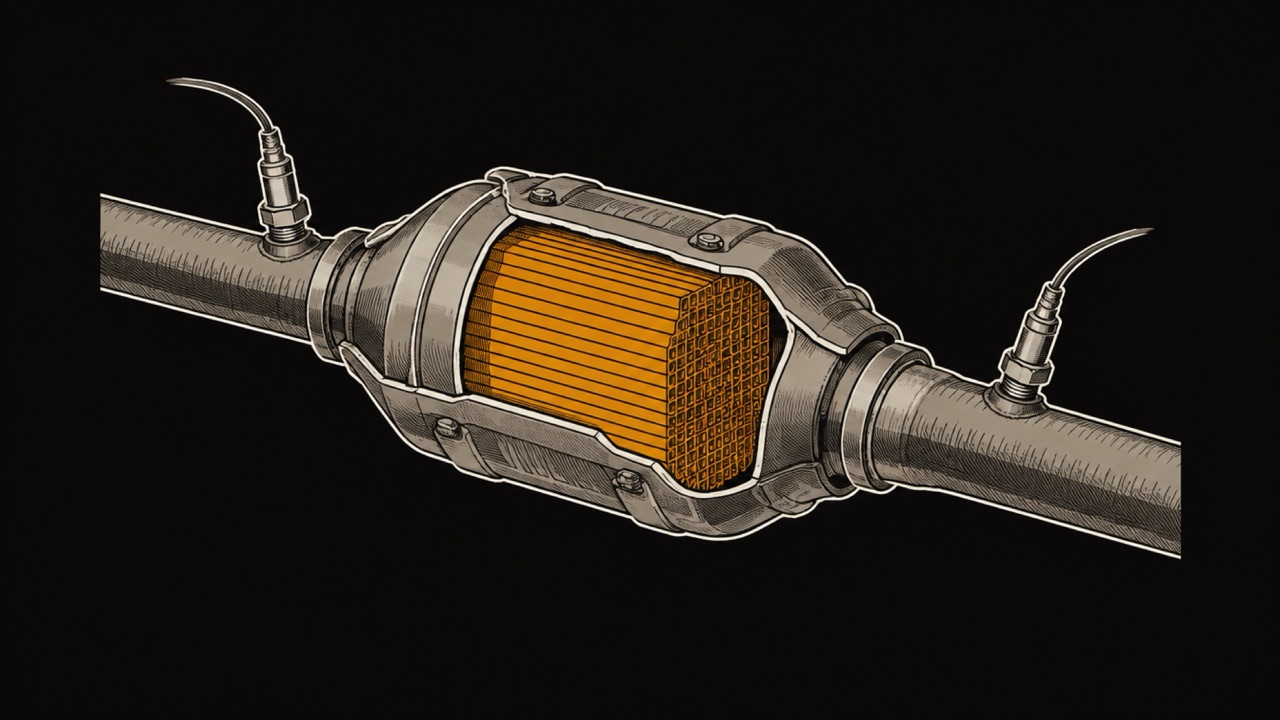
Staying near lambda 1.0 at light load is not only about economy. A three-way catalytic converter only works when the engine runs at a nearly stoichiometric ratio held within a narrow range, as DieselNet explains, and the converter's own health is what the P0420 catalyst code reports on. Exact targets for a modified engine come from its tuner, not from a chart.
| Condition | Lambda target | Petrol AFR | Why it matters |
|---|---|---|---|
| Idle | 0.95 to 1.05 | 14.0 to 15.4 | Near stoichiometric, where the catalytic converter works |
| Cruise | 0.90 to 1.03 | 13.2 to 15.1 | Economy and emissions at light load |
| Full load, naturally aspirated | 0.80 to 0.90 | 11.8 to 13.2 | Richer than at cruise as load rises |
| Full load, medium boost | 0.80 to 0.85 | 11.8 to 12.5 | Richer than the naturally aspirated target |
| Full load, high boost | 0.75 to 0.80 | 11.0 to 11.8 | The richest zone on the map |
Lambda ranges: HP Academy AFR target map. Petrol AFR computed as lambda × 14.7.
In the lambda vs AFR debate, HP Academy comes down on the side of lambda: because it reads 1.0 at stoichiometric for every fuel, rich and lean are obvious at a glance and it avoids confusion when tuning on ethanol blends. AFR only makes sense once you know which fuel's ratio it assumes.
An example conversion shows the risk. A gauge scaled for petrol that reads 12.5 on a car running E85 is reporting lambda 0.85 (12.5 ÷ 14.7), which on E85 is a real ratio of about 8.3:1, a rich mixture. Read 12.5 as an E85 ratio instead and you would conclude lambda 1.28 (12.5 ÷ 9.8), dangerously lean. One display, two opposite stories.
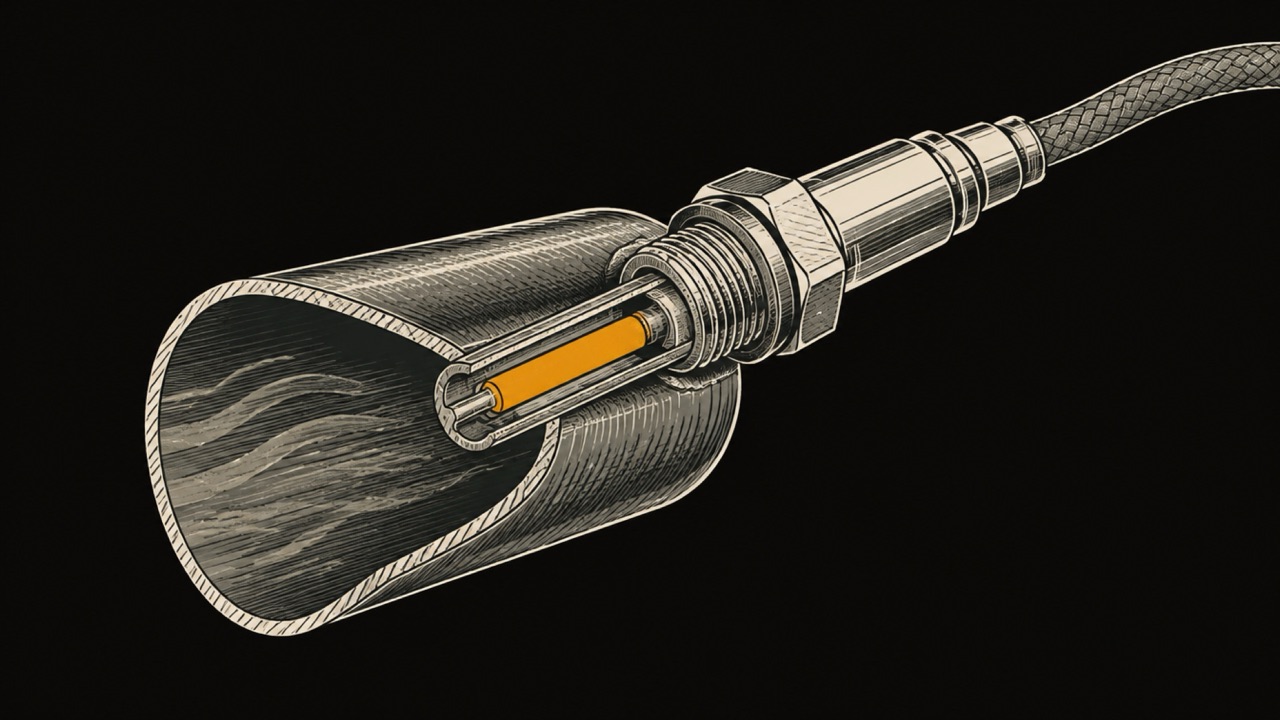
No. A wideband oxygen sensor, also called a lambda sensor, measures the oxygen left in the exhaust. Bosch describes its wideband sensor as determining the residual oxygen content over a wide range so the engine control unit can calculate the air-fuel ratio and adjust the mixture.
The number a sensor produces is therefore closest to lambda. An AFR on a gauge or in a tuning log is that lambda multiplied by whatever stoichiometric ratio the gauge or ECU has been told to assume. If the fuel setting is wrong, the AFR is wrong even though the sensor is working perfectly.
Yes, on cars that report it, and the standard OBD-II readings report lambda rather than AFR. According to the OBD-II PID table, PID 44 is the commanded air-fuel equivalence ratio, the lambda the engine computer is aiming for, decoded as (256A + B) ÷ 32768. PIDs 24 to 2B and 34 to 3B carry each wide-range oxygen sensor's measured lambda.
Comparing the two is the useful part: commanded lambda is the target, measured lambda is what the exhaust shows, and the gap between them is what the engine corrects with its fuel trims. An app that displays AFR from the port has multiplied one of these lambda values by an assumed stoichiometric ratio.
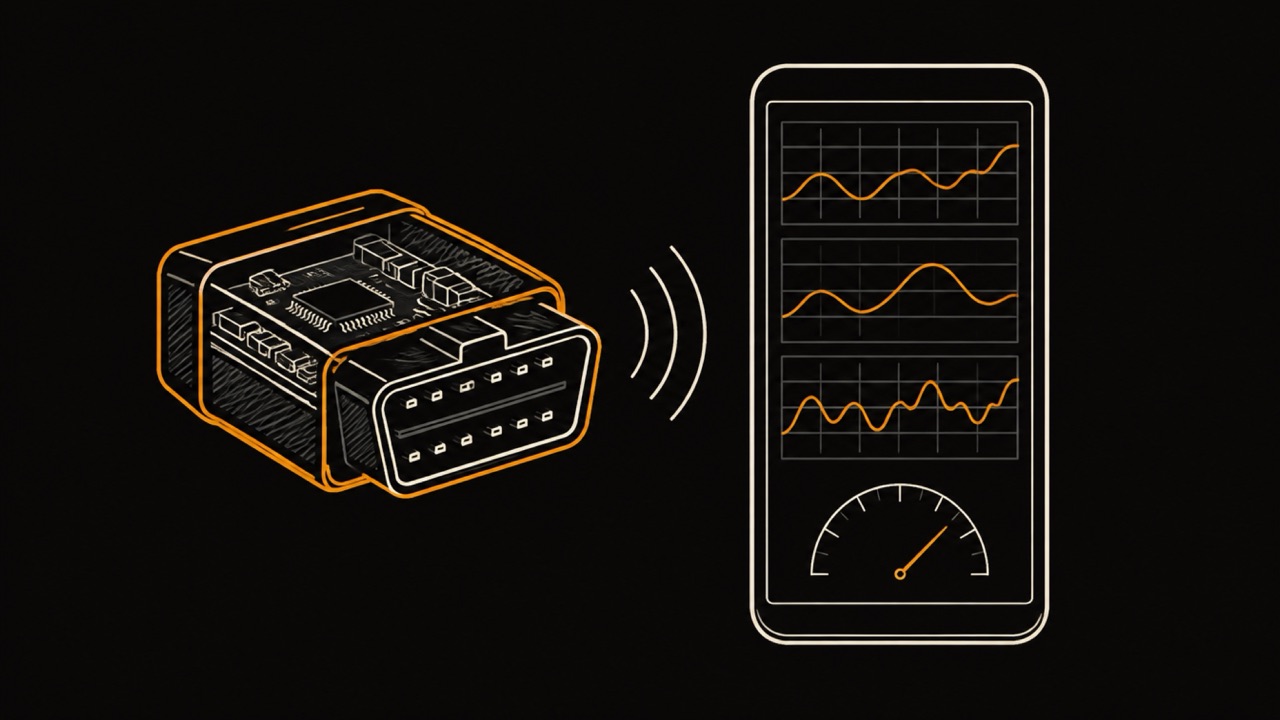
WrenchTime, an OBD-II app for iPhone that reads the car through a Bluetooth adapter, shows Commanded Lambda and Measured Lambda as two readings wherever the vehicle reports them: on the phone, on the WrenchTime Live dashboard and in CarPlay. A custom PID with its own formula and unit label can show the measured value multiplied by your fuel's ratio.
WrenchTime reads the lambda your car reports, next to RPM, load, fuel trims and dozens of other standard readings, through a Bluetooth OBD-II adapter. The free version covers 1 vehicle and 3 instruments on the first page of the Live dashboard, enough to put both lambda readings side by side while you drive. The OBD-II app guide lists the adapters it works with and every reading it can show.
On petrol, lambda 0.85 is 12.5:1, because 0.85 × 14.7 = 12.5. On E85 the same lambda is about 8.3:1 and on methanol about 5.4:1, using HP Academy's stoichiometric ratios. The mixture is equally rich in every case: about 18% more fuel than a complete burn needs, since 1.0 ÷ 0.85 = 1.18.
Lambda 1.2 is lean, because any value above 1.0 means more air than the fuel needs. On petrol it equals about 17.6:1. HP Academy's target map keeps a petrol engine between about 0.90 and 1.05 at idle and cruise, and richer than 1.0 under full load.
On petrol, 11.5:1 divided by 14.7 is lambda 0.78, a rich mixture in the range HP Academy's target map gives a highly boosted engine at full load. On another fuel, divide by that fuel's own stoichiometric ratio instead of 14.7.
At idle and light cruise a petrol engine sits close to 14.7:1, lambda 1.0, where the catalytic converter works best. Under full load it runs richer, around lambda 0.80 to 0.90 for a naturally aspirated engine on HP Academy's map. The exact targets come from the factory calibration or your tuner.
No. AFR is the mass ratio of air to fuel and its correct value depends on the fuel; lambda divides it by the fuel's stoichiometric ratio, so 1.0 always means a complete burn. Both describe the same mixture, and one converts to the other with a single multiplication.
No. Standard OBD-II readings report the equivalence ratio, which is lambda: PID 44 for the commanded value and the wide-range oxygen sensor PIDs for the measured one. A scanner or app that shows AFR has multiplied that lambda by an assumed stoichiometric ratio, usually 14.7 for petrol.
More from the blog
OBD2
What an OBD2 data logger records, the kinds there are, how often to sample, which signals to keep on every trip and how to read the log afterwards.
Trouble codes
What the P0420 fault code means, what usually causes it, whether you can keep driving, what the repair costs and when the catalytic converter is under warranty in the US.
Diagnostics
Plug in with the ignition off, switch to on without starting the engine, read and write down every code, and look each one up before clearing anything.
Free to download. One vehicle, real features, no ads. Your garage will thank you.
Download WrenchTime on the App Store