Diagnostics
How to use an OBD2 scanner
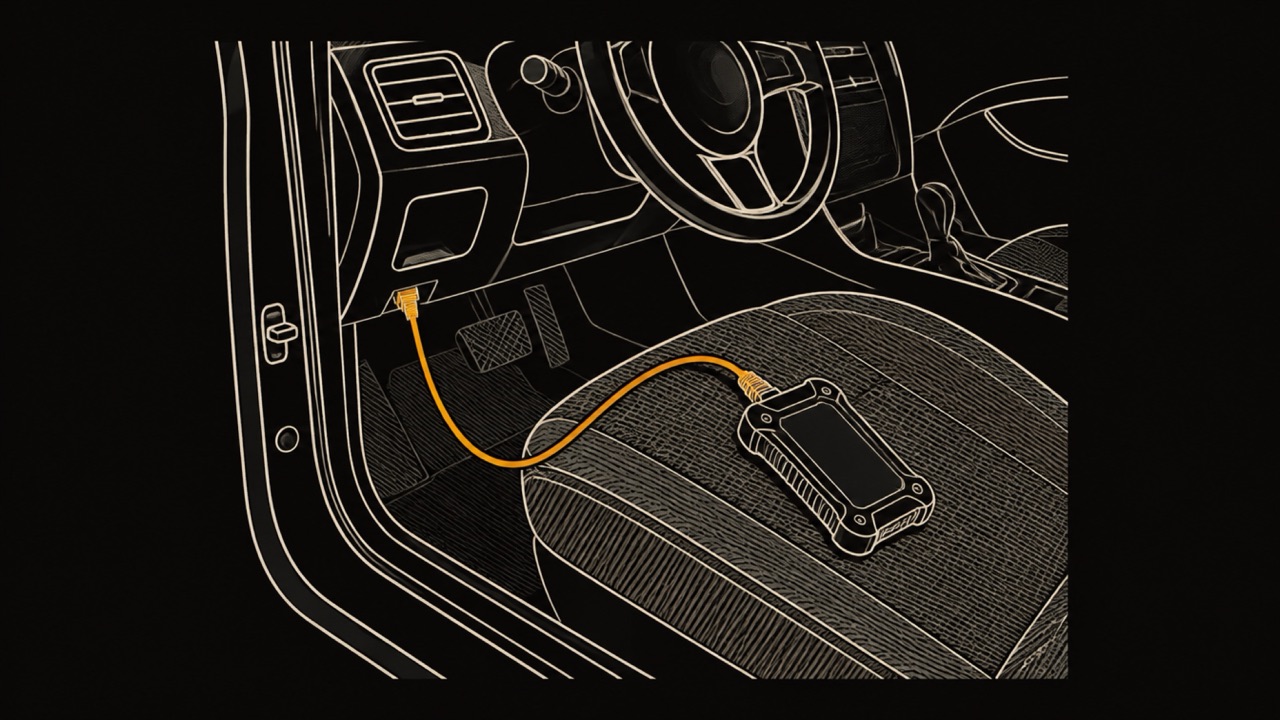
Plug in with the ignition off, switch to on without starting the engine, read and write down every code, and look each one up before clearing anything.
OBD-II
The OBD port is inside the cabin, in most cars under the dashboard on the driver's side, within reach of the steering column. It is a 16-pin socket, required in the European Union on most new petrol cars since January 2001 and on most new diesel ones since January 2004, and in the United States on petrol cars and trucks since model year 1996 and on diesel ones since model year 1997. If it is not under the steering column, look towards the driver's door, then towards the centre console, then behind small covers near the footrest or in the console itself: some models, such as the 2012 to 2019 Renault Clio, keep it in the centre console under a cover.
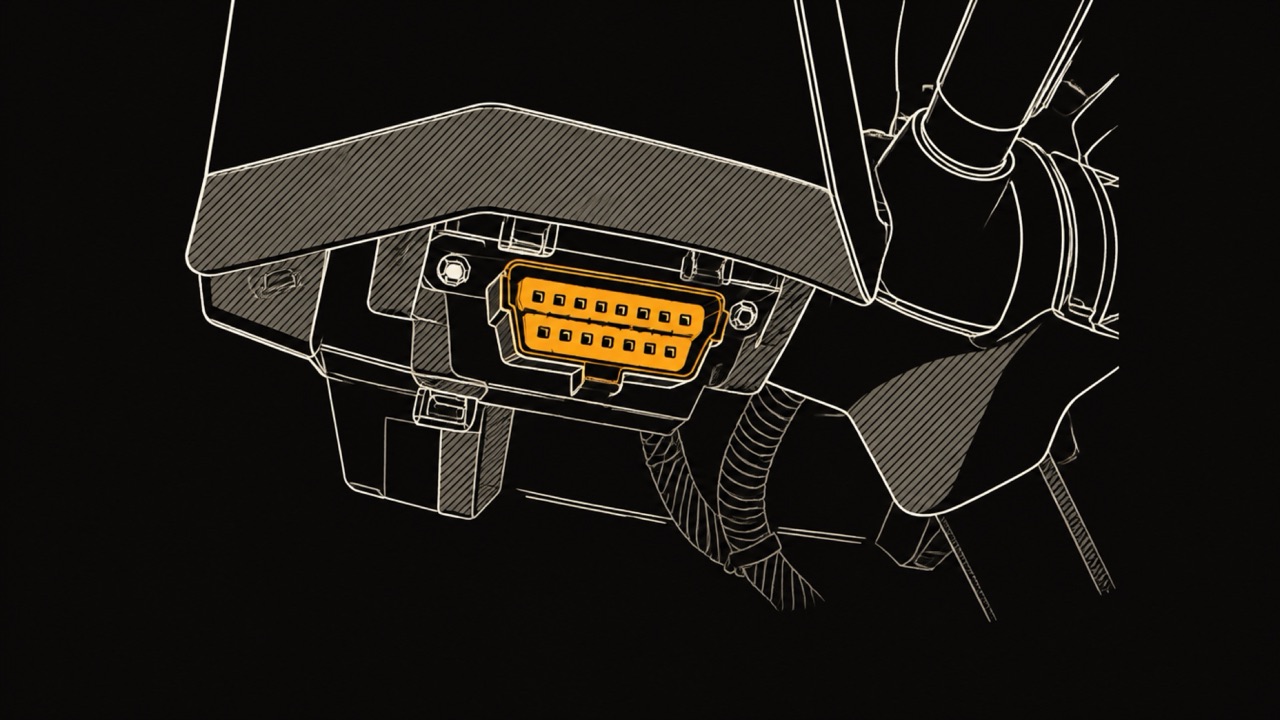
The OBD2 port sits under the dashboard on the driver's side in most cars. The EPA describes it as the interface "usually located under the dashboard on the driver's side" between a vehicle's OBD computer and the OBD scanner, in its June 2001 guidance on EPA onboard diagnostic checks in inspection programmes.
OBD2, or OBD II, is the standardised on-board diagnostics system that watches a vehicle's emission controls and stores a trouble code when one fails. Regulations and owner's manuals call its socket the data link connector, or DLC: the standard plug through which outside equipment talks to the car's computers.
California's OBD II regulation, section 1968.2, spells the location out. For vehicles outside its newer phase-in, it puts the connector "in the driver's side foot-well region of the vehicle interior", says it "may not be located on or in the center console", and places it "no higher than the bottom of the steering wheel when in the lowest adjustable position", according to the regulation's text on Cornell's Legal Information Institute.
The same California regulation limits covers over the port. "If the connector is covered, the cover must be removable by hand without the use of any tools." Newer cars go further: for 30 percent of 2019, 60 percent of 2020 and 100 percent of 2021 and later model year vehicles, the port sits where SAE J1962 places Type A connectors and "the connector may not be covered in any way".
Once the port is found, plugging in is the easy part. What to do next with the tool, from reading codes to checking live data, is covered in how to use an OBD2 scanner.
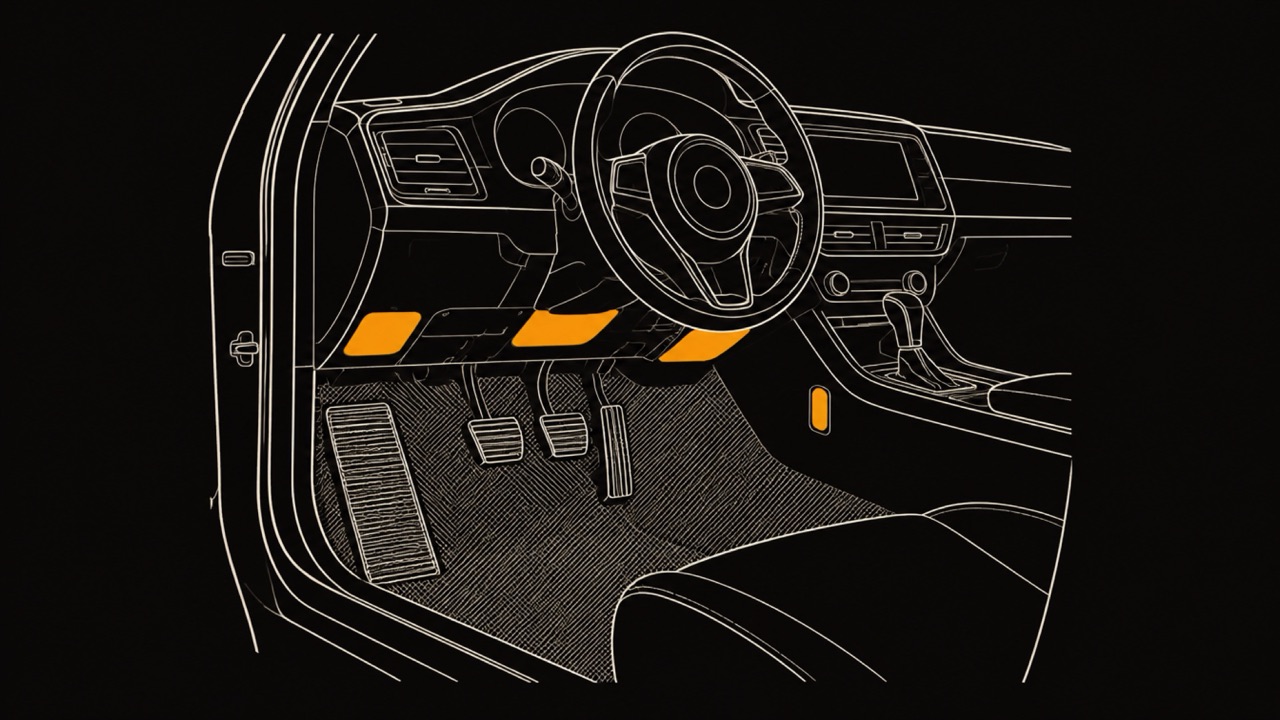
The EPA's inspection guidance divides the possible OBD2 port locations into nine numbered zones. The first three zones, all on the underside of the instrument panel around the steering column, are preferred; the next five are allowable; the last one covers any other area. The guide dates from June 2001 and is listed on the EPA's inspection and maintenance policy guidance page.
The EPA chart that maps those zones, hosted by the North Carolina Department of Environmental Quality, also lists models, but only for model years 1996 to 2000. The zones are the part that still helps today: they describe the places manufacturers used, from the preferred ones around the steering column to any other area.
Finding the port can take longer than reading it. The same EPA guide warns that "locating the DLC may well be the most time-consuming element of the inspection". It also requires manufacturers that put the connector in an allowable zone to label the vehicle in the preferred area, pointing to where the connector really is.
The inspection that guide describes reads the car's trouble codes and readiness monitors through this port. On the centre console, the port can be hidden: the EPA chart notes that connectors in the two console zones "may be covered by ashtrays, covers, cup holders, coin holders".
| Zone | Where the OBD2 port is | Status |
|---|---|---|
| 1 | Underside of the instrument panel, directly under the steering column or about 150 mm left or right of it | Preferred |
| 2 | Underside of the instrument panel, between the steering column and the driver's door | Preferred |
| 3 | Underside of the instrument panel, between the steering column and the centre console | Preferred |
| 4 | Upper part of the instrument panel, between the steering column and the centre console, not on the console | Allowable |
| 5 | Upper part of the instrument panel, between the steering column and the driver's door | Allowable |
| 6 | Vertical section of the centre console, left of the vehicle centreline | Allowable, may be under an ashtray, cover, cup holder or coin holder |
| 7 | 300 mm right of the vehicle centreline, on the vertical section of the centre console or on the passenger side | Allowable, may be under an ashtray, cover, cup holder or coin holder |
| 8 | Horizontal section of the centre console, left or right of the centreline | Allowable |
| 9 | Any other area, for example the rear passenger area on the driver side armrest | Any other location |
Sources: EPA, EPA420-R-01-015, Appendix B (June 2001); EPA location chart hosted by NC DEQ (September 2001).
Most cars sold in the UK are right-hand drive, and a right-hand-drive car can differ from the left-hand-drive version of the same model. Klavkarr, a database of OBD port locations built from user-contributed photos, keeps separate right-hand-drive pages. Its page for the right-hand-drive Fiat 500 from 2007 on puts the port on the right of the steering wheel, behind a plastic cover. On a right-hand-drive car, the driver's side is the right side, so the search starts there.
The OBD port on a specific model is easiest to confirm from a photo. Klavkarr has one page per model and generation. The model table here draws on those pages, with each row linked to its own source, so a reader can check the photo for their own car.
Two of these models keep the port in the centre console under a cover: the Renault Clio sold from 2012 to 2019 and the Peugeot 308 built from 2013. Generations of one model differ. The newer Clio and the 308 from 2021 moved the port to the bottom left of the steering wheel, and the Honda Civic went from inside the fuse box to above the pedals.
| Model | Years | Where the OBD2 port is | Source |
|---|---|---|---|
| Ford F-150 | 2015 to 2020 | Under the steering wheel, above the brake pedal | Klavkarr |
| Honda Civic | 2016 on | Above the pedals, top left | Klavkarr |
| Honda Civic | 2011 to 2017 | Inside the fuse box, below the steering wheel | Klavkarr |
| Toyota RAV4 | 2013 to 2018 | Above the pedals on the left, above the footrest | Klavkarr |
| Ford Focus | 2018 on | Left of the pedals, above the footrest | Klavkarr |
| Ford Focus | 2011 to 2018 | Under the steering wheel on the left, behind a cover marked OBD | Klavkarr |
| Volkswagen Golf VII | 2013 on | Left of the steering wheel, above the footrest | Klavkarr |
| Volkswagen Golf VIII | 2020 to 2024 | Driver's side, above the footrest, behind the plastic cover | Klavkarr |
| Mini Cooper S (F56) | 2014 on | Above the pedals on the left, above the footrest | Klavkarr |
| Fiat 500 | 2020 on | Above the pedals, above the footrest | Klavkarr |
| Renault Clio 4 | 2012 to 2019 | In the centre console, under a cover | Klavkarr |
| Renault Clio 5 | 2019 on | Bottom left of the steering wheel, above the footrest | Klavkarr |
| Peugeot 308 | 2013 on | In the centre console, behind two covers | Klavkarr |
| Peugeot 308 | 2021 on | Bottom left of the steering wheel, behind the cover above the footrest | Klavkarr |
Source: Klavkarr OBD plug location pages, one per model and generation, linked in each row; photos are contributed by users.
A hidden OBD2 port is easiest to find by working through the zones the EPA lists, starting with the preferred ones around the steering column, then looking for a cover, a label or the page in the owner's manual. A flashlight helps.
The OBD2 port is a standard socket with sixteen pins. "The 16-pin OBD2 connector ... is specified in the standard SAE J1962 / ISO 15031-3", according to CSS Electronics (updated January 2025).
The connector comes in two types. Type A, the 12 V version, is typically found in cars; Type B, the 24 V version, is common in medium and heavy duty vehicles. CSS Electronics notes that "the type B OBD2 connector has an interrupted groove in the middle".
Three of the sixteen pins are worth knowing. One supplies battery power, often while the ignition is off, and two are typically connected to the high and low lines of the CAN bus, CAN-H and CAN-L, according to CSS Electronics.
| Pin | What it carries |
|---|---|
| 6 | Typically CAN-H, the high line of the CAN bus |
| 14 | Typically CAN-L, the low line of the CAN bus |
| 16 | Battery power, often while the ignition is off |
Source: CSS Electronics, OBD2 Explained (updated January 2025).
In the European Union, Directive 98/69/EC made on-board diagnostics a requirement on petrol cars for new types from January 2000, and from January 2001 on most new petrol cars registered. Diesel cars followed, new types from January 2003 and all types from January 2004, with larger and heavier vehicles on later dates (Directive 98/69/EC, copy published by Transport for London).
The European rule fixes no exact spot for the port. Annex XI of the same directive only asks for a connector "readily accessible by service personnel but protected from tampering by non-qualified personnel". With no position set by law, the model page or the owner's manual is the surest guide for a European car.
In the United States, every petrol car and truck sold from model year 1996 has an OBD2 port. "All 1996 and newer model year gasoline and alternate fuel passenger cars and trucks are required to have OBD II systems", according to the California Air Resources Board OBD II fact sheet, with diesel vehicles required from model year 1997.
Cars built before 1996 may have some form of on-board diagnostics, and the standardised system arrived from model year 1994, though not on every vehicle. The EPA's June 2001 guide puts it this way: "some variety of OBD system has been an option on certain vehicle models since the early 1980's, standardized OBD systems (also known as OBD II) were not introduced until MY 1994", and full compliance was not required until model year 1996.
Electric cars do not always have an OBD2 port. Tesla's service manual for its 2017 to 2023 compact sedan says some of those cars, and some Model Y, "might not have an OBD connector installed", because the connector was "not mandatory for electric vehicles until 2024". Where Tesla fits one, it is on the underside of the dashboard in the driver's footwell.
California is making the port standard on electric cars. A CARB rule, section 1962.5, requires a standard connector on light-duty zero-emission vehicles, ZEVs, certified for sale in California, one that conforms to the Type A specification and sits in the location SAE J1962 gives for Type A connectors. It also says "The connector may not be covered in any way" (CARB Final Regulation Order, section 1962.5).
| Vehicle or rule | What it says | Source |
|---|---|---|
| Tesla Model 3, 2017 to 2023 | "If the vehicle is equipped with an OBD connector, it is located on the underside of the dashboard in the driver's footwell." "Some Model 3 and Model Y might not have an OBD connector installed", as it was "not mandatory for electric vehicles until 2024". | Tesla Service Manual |
| Tesla Model 3, 2024 on | "The diagnostic connector is located in the driver side footwell cover." | Tesla Service Manual |
| California light-duty ZEVs, 2026 model year and later | A standard Type A connector on "At least 40 percent of a manufacturer's 2026 model year ZEVs and 100 percent of a manufacturer's 2027 and subsequent model year ZEVs", not covered in any way. | CARB, section 1962.5 |
Motorcycles in the European Union carry on-board diagnostics too, under their own rule. Regulation (EU) No 168/2013 required OBD stage I on new types from January 2016 and on existing types from January 2017, with further stages after, under its Article 21 and Annex IV (Regulation 168/2013, Annex IV, on legislation.gov.uk).
The motorcycle connector follows its own standard, ISO 19689, published in October 2016. "Its aim is to promote the use of a common diagnostic connector throughout the motorcycle industry", according to AFNOR's listing of ISO 19689. It is a separate standard from SAE J1962, the one that defines the car socket, so the motorcycle's owner's manual is the place to check.
Leaving a device in the OBD2 port is a decision to make with the owner's manual open, because the port often has power with the car off. "Pin 16 supplies battery power (often while the ignition is off)", according to CSS Electronics, so a device left plugged in can stay powered while the car is parked.
Ford advises against it for wireless devices. The Ford F-150 owner's manual on ManualsLib (July 2016 edition) says: "Do not connect wireless plug-in devices to the data link connector." It warns that such devices "may cause interference with or even damage to vehicle systems", and that "The vehicle Warranty will not cover damage caused by an aftermarket plug-in device."
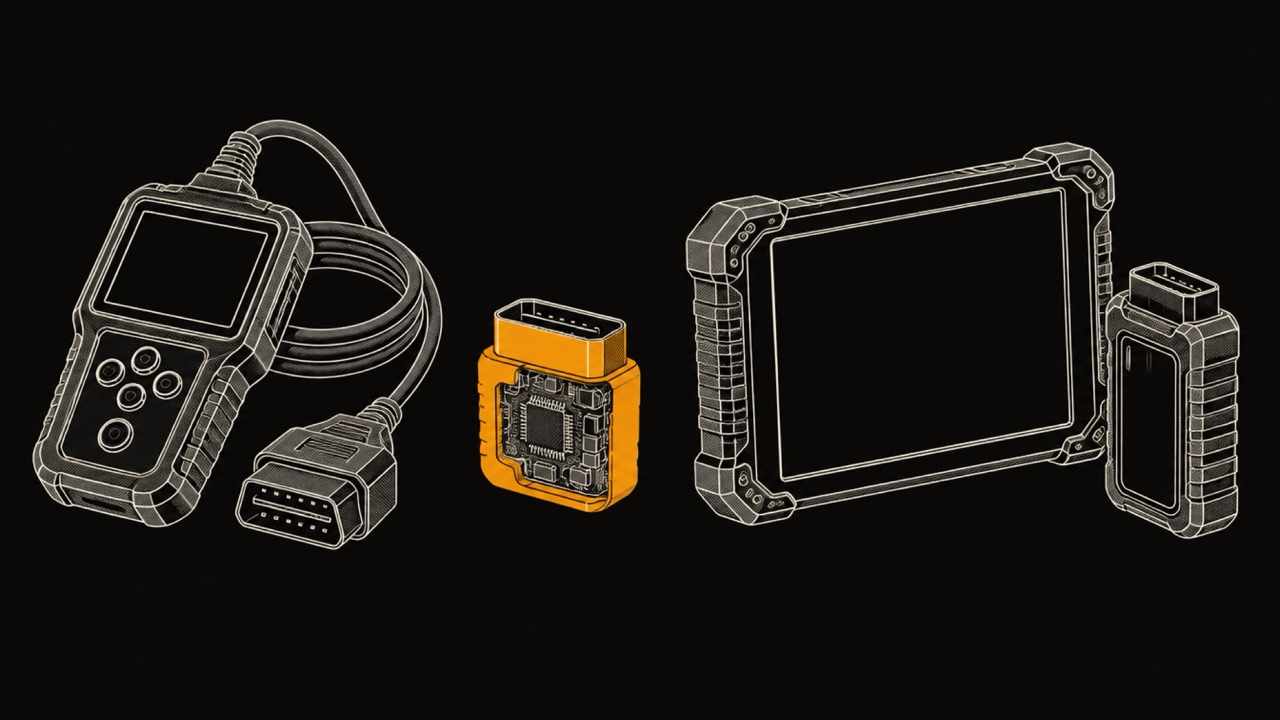
The practical rule follows from both. Read what your own manual says about the data link connector, unplug the adapter when the car will sit for a long time, and prefer an adapter that goes to sleep when the car is off. Which adapters suit a phone is covered in OBD-II adapters that work with an iPhone.
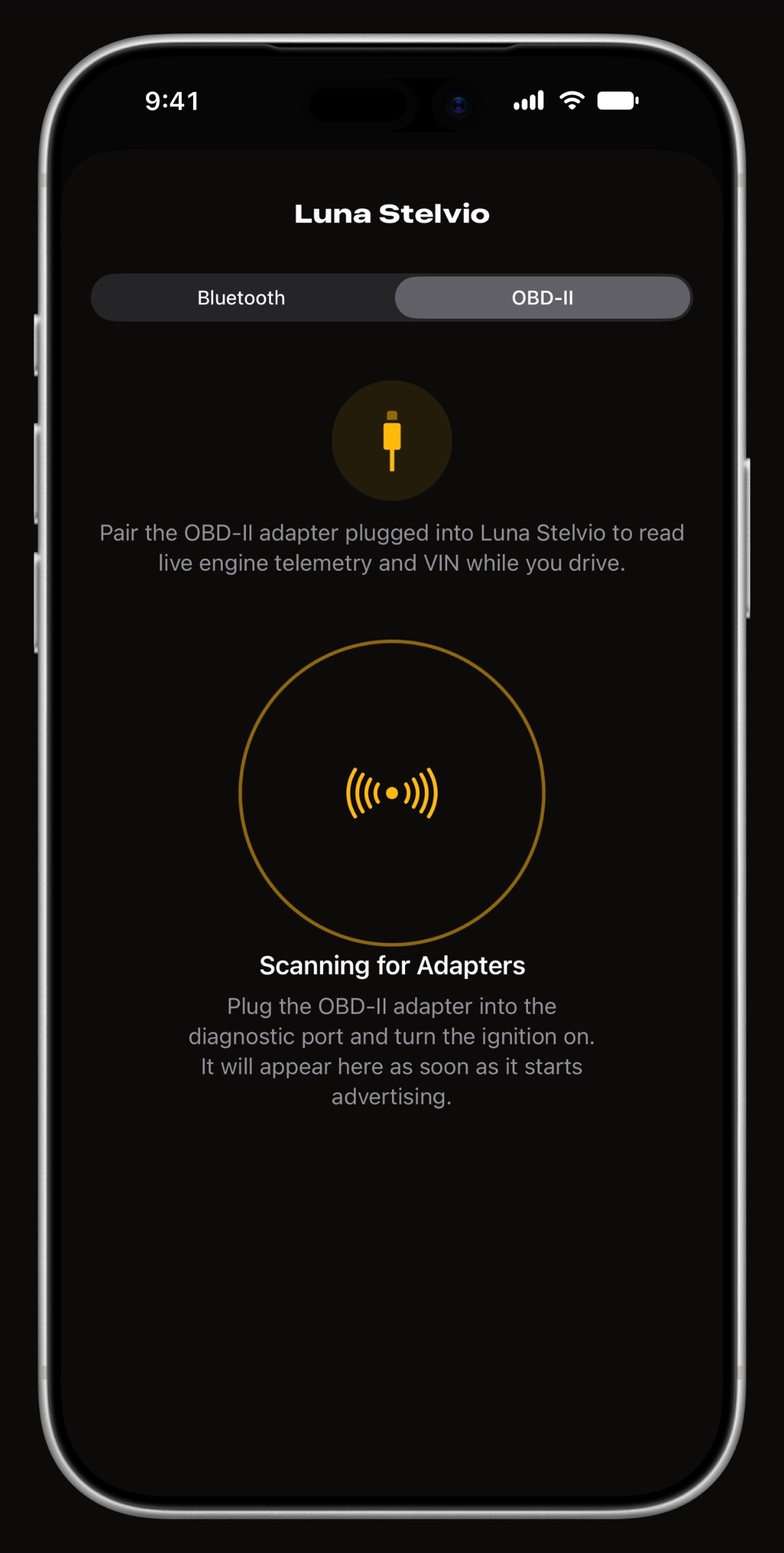
WrenchTime, an iPhone app that reads a car through a Bluetooth OBD-II adapter, has a per-vehicle switch for this: with it on, the app stops talking to the car the moment the engine is off and picks up again once you drive away. A second switch drops the Bluetooth link as well.
With a Bluetooth Low Energy OBD-II adapter in the port, WrenchTime shows live engine data on your iPhone and keeps the readings with the trip they came from. It reads over fifty standard parameters where the car reports them, from engine RPM, speed and coolant temperature to fuel trims, with ELM327-compatible BLE adapters or the OBDLink MX+. It reads no manufacturer-specific diagnostics, and Wi-Fi adapters are not supported.
OBD-II live data is free, and the free version covers 1 vehicle. Reading and clearing trouble codes needs WrenchTime Pro. The steps are in how to connect an OBD-II adapter to WrenchTime.
In most cars the OBD port is under the dashboard on the driver's side, near the steering column, the area the EPA calls preferred. If it is not there, check towards the driver's door, towards the centre console and behind small covers, or look up "data link connector" in the owner's manual.
OBD stands for on-board diagnostics, the system that watches a vehicle's emission controls and stores a trouble code when one fails. OBD2, or OBD II, is the standardised version, required on petrol passenger cars and trucks sold in the United States from model year 1996, according to the California Air Resources Board.
In the European Union the requirement reached most new petrol cars in January 2001 and most new diesel cars in January 2004. In the United States a petrol car or truck sold new from model year 1996 is required to have OBD2, and a diesel one from model year 1997. Systems before OBD2 were not standardised, according to the EPA.
No. The EPA's map of locations includes the centre console and the passenger side as allowable positions, and some European models keep the port in the centre console under a cover, such as the Renault Clio sold from 2012 to 2019 and the Peugeot 308 built from 2013.
Often, yes. One pin of the OBD2 port carries battery power, often while the ignition is off, according to CSS Electronics, which is why a device left plugged in can stay powered while the car is parked. Unplugging it before the car sits for a long time avoids any drain.
Not always. Tesla's service manual says some cars of two of its models might not have an OBD connector installed. California requires the standard connector, uncovered, on 100 percent of a manufacturer's light-duty zero-emission vehicles from model year 2027, and on at least 40 percent of them in model year 2026.
More from the blog
Diagnostics
Plug in with the ignition off, switch to on without starting the engine, read and write down every code, and look each one up before clearing anything.
OBD2 scanners
Which OBD2 scanner works with an iPhone, and which type to buy: a handheld code reader, a Bluetooth LE adapter and an app, an MFi adapter, or a scan tool.
OBD2
What I/M readiness means on a scanner, every OBD2 readiness monitor and what it checks, how many can be incomplete at an emissions test, and the drive cycles that set them.
Free to download. One vehicle, real features, no ads. Your garage will thank you.
Download WrenchTime on the App Store