Tyres
How often should you rotate and balance tyres?
Rotate every 5,000 to 8,000 miles or at the interval in the manual; balance when a tyre is mounted, a weight is lost or the car vibrates. Plus AWD, EV and Tesla rules.
Road trips
A road trip car checklist comes down to six checks: tyres, battery, brakes, fluids, lights and wipers, and the emergency kit. Start one to two weeks before you leave, so a shop has time to fix anything you find. Flat tyres, dead batteries and lockouts are the most common roadside calls during the U.S. Independence Day travel week, according to AAA (2025), and a short inspection catches the first two before the car leaves the driveway.
A road trip loads a car in ways a commute does not: hours at sustained motorway speed, more weight on board, long climbs and descents, and temperature swings from one state to the next. A worn part that survives a 10-mile commute can fail at mile 400, far from the shop that knows the car.
AAA's July 2025 release reported more than 700,000 stranded drivers rescued during the U.S. Independence Day holiday week, and named flat tyres, dead batteries and lockouts as the most common calls (AAA, 2025). The same release advises checking tyre inflation and tread depth, the spare included, before leaving. Most of the checks below take minutes in a driveway; a battery test and a brake inspection belong with a professional.
Start the road trip car check one to two weeks before departure. Checking the car the night before turns a worn part into a choice between a delay and a gamble, while two weeks leaves time to book an overdue oil change, a battery test or a set of tyres. The timeline below spreads the work out so nothing is left for the last evening.
| When | What to do |
|---|---|
| 2 weeks before | Read the maintenance schedule in the owner's manual and book any overdue service: oil change, brakes, battery test, tyres. |
| 1 week before | Do the driveway checks: tyre pressure and tread, fluids, lights, wipers. Go through the emergency kit. |
| 2 to 3 days before | Check tyre pressure again, cold. Gather the paperwork. Fill the tank, or charge to the level the route needs. |
| Day of departure | Walk around the car, watch for warning lights at startup, and load heavy items low and centred. |
Set tyre pressure to the number on the placard in the driver's door jamb or in the owner's manual, not the figure molded into the sidewall. The sidewall shows the tyre's maximum pressure, not the pressure the vehicle manufacturer recommends, and pressure should be set cold, before the car has been driven any meaningful distance (The Autopian, 2024). Some placards list a second pressure for a fully loaded car, which is the one a packed road trip needs.
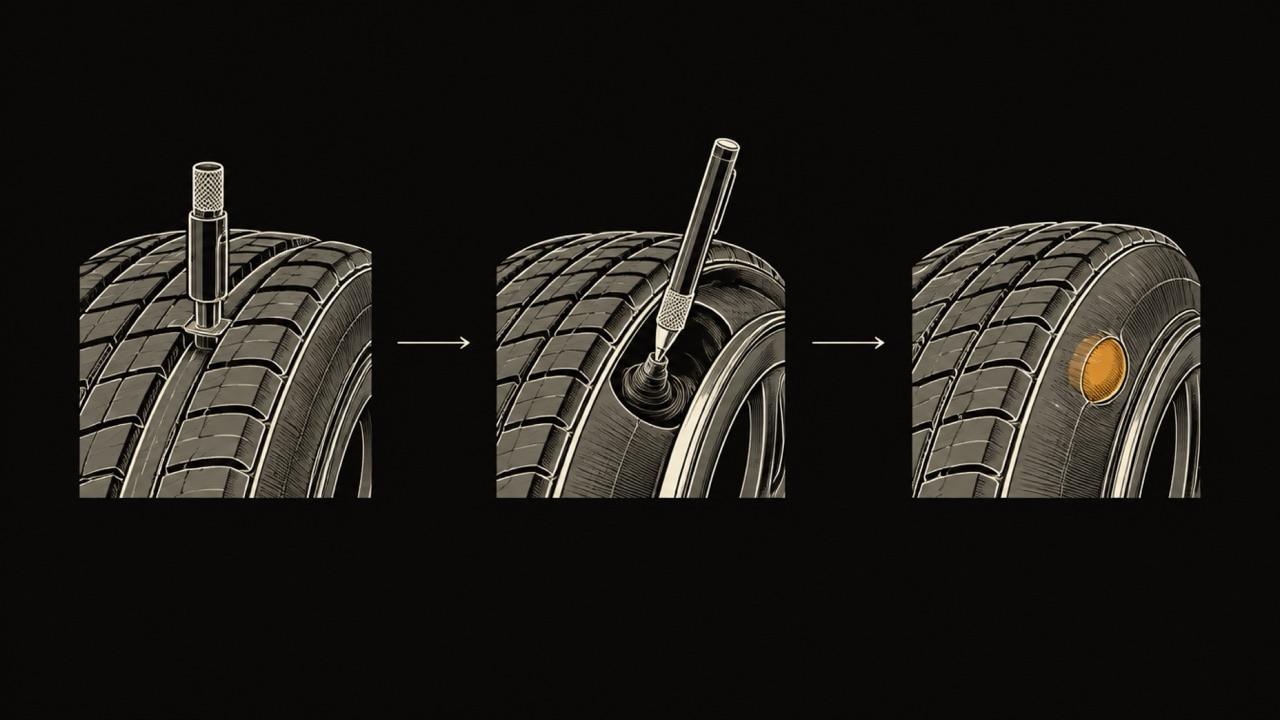
Check tread depth with a quarter, the U.S. 25-cent coin. AAA recommends replacing tyres at 3/32 in (2.4 mm) or less: turn a quarter upside down in the main tread groove, and if the top of Washington's head shows, consider new tyres (AAA Oregon/Idaho). Measure several grooves on each tyre, since wear is often uneven, and look at the sidewalls for cuts, gouges and bulges (AAA). Wear on one edge usually points to an alignment problem worth fixing before a long drive.
Find out whether the car carries a spare at all. Inflator kits have replaced the spare on tens of millions of vehicles, and AAA warns that they cannot fix every kind of tyre damage (AAA, 2016). With a spare, check its pressure and confirm the jack and lug wrench are on board. Without one, check that your roadside assistance covers towing before you head down a rural road.
Test the car battery before a road trip if it is three years old or older. AAA's advice is that a battery three years old or older should be tested every six months, because heat and freezing temperatures shorten its life (AAA Oregon/Idaho), and a service professional can check how much capacity it has left (AAA). A battery that starts the car every morning at home can still fail on a hot or frozen stop far from home.
Slow cranking and dim lights are the warning signs AAA names, and either one is a reason to book the test or replace the battery before you leave (AAA, 2025). At home, check the battery's age on its date label or in your service records, clean any white or blue crust off the terminals, and make sure the cables are tight and the battery is held down firmly.
Check the fluids with the engine off and the car on level ground. AAA lists engine oil, coolant, brake fluid, transmission fluid and power steering fluid as the levels to confirm before summer travel (AAA). A level that keeps dropping with no obvious cause is a leak, which a shop should find before the trip rather than a bottle of top-up during it.
Have the brakes inspected if you hear grinding or feel a vibration when braking (AAA), and treat pulling to one side or squealing the same way (AAA Oregon/Idaho). Heavy loads and mountain descents ask much more of brakes than flat commuting does.
Check every light with a helper standing behind the car: low and high beams, brake lights, turn signals, hazards, tail lights and the number plate light. Replace wiper blades that streak or fail to clear the windshield, since rubber blades deteriorate over time (AAA). Clean the inside of the windshield too, because haze builds up there and turns into glare when you drive into a low sun.
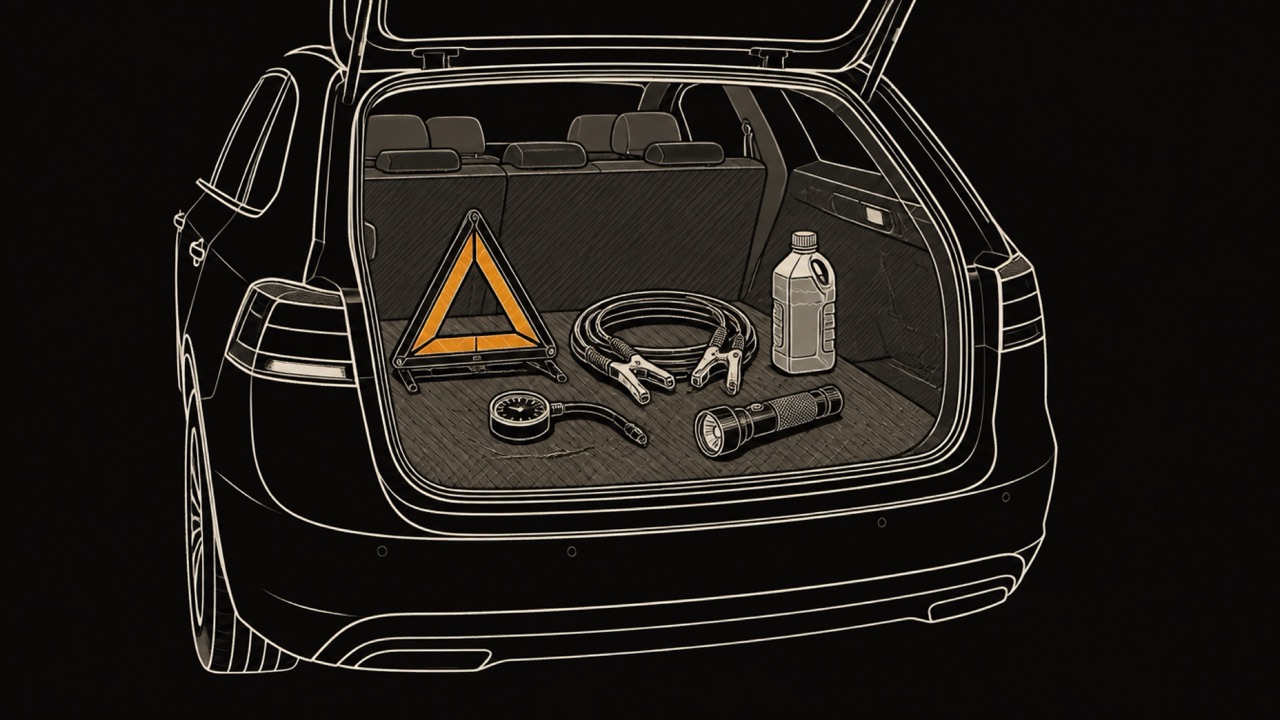
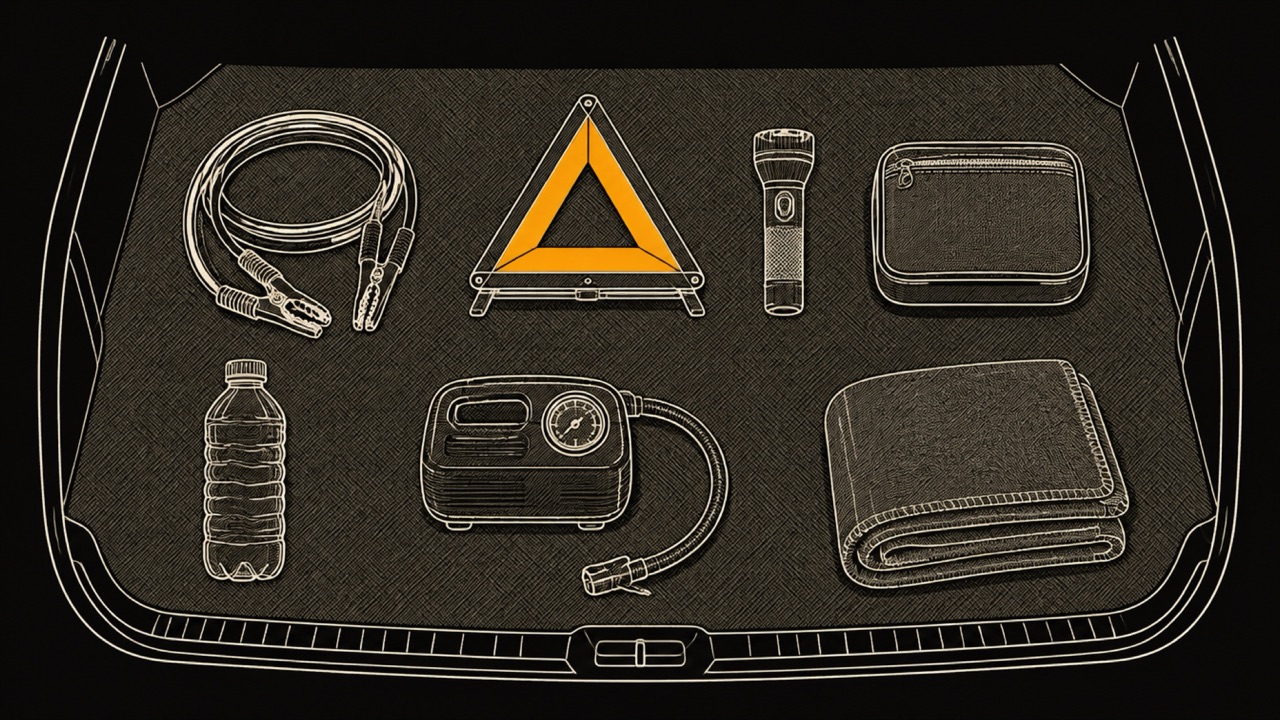
A road trip emergency kit needs to work, not just exist: flashlight batteries drain and first-aid supplies expire while the kit sits in the trunk. Go through it before every long trip and check the expiration dates on any medicine (AAA Oregon/Idaho). Keep it where you can reach it without unloading the luggage.
Carry your driver's license, registration and proof of insurance, with a digital copy on your phone. Save your roadside assistance number and policy details, download offline maps for stretches with weak cell coverage, and bring a phone mount and a car charger so navigation never drains the phone before you arrive.
An electric car gets the same tyre, brake, light and wiper checks as any other; what changes is the energy. The U.S. Department of Energy's Alternative Fuels Data Center says hilly terrain, heavy loads and a lot of heating or air conditioning reduce range, and advises leaving extra buffer in the maximum range for those conditions. Plan every charging stop before you leave, confirm each charger takes your car's connector, and charge the night before to the level the first leg needs.
Plan a backup charger for every stop. In a 2019 road trip test, the Alternative Fuels Data Center's drivers ran into occupied and inoperative stations, and one driver covered 710 miles in 13 hours of driving but spent about 8.5 hours waiting on charging (AFDC, 2019). The same team charged overnight from a campground's 50-amp RV circuit with their own portable Level 2 charging device, a slow fallback where public chargers are sparse.
The core road trip car checklist stays the same in every season: tyres, battery, brakes, fluids, lights and wipers, and the emergency kit. The season changes where the extra attention goes, as the table below shows. For the full list of cold-weather checks, from the battery to road salt, see car maintenance in winter.
| Season | Extra attention |
|---|---|
| Winter | Battery test, washer fluid rated for freezing, coolant level, winter tyres where the route needs them, warm clothing and blankets in the kit |
| Spring | Wiper blades and tyres worn by winter, pothole damage to tyres and alignment, a wash to remove road salt |
| Summer | Battery test before the heat, coolant level, AC performance, extra water in the kit |
| Fall | Lights and wipers for shorter days, tread depth before wet roads, a kit refresh before winter |
The road trip car check continues on the road. A few habits at fuel stops catch a slow leak or a soft tyre before it becomes a roadside call.
The whole checklist in six lines.
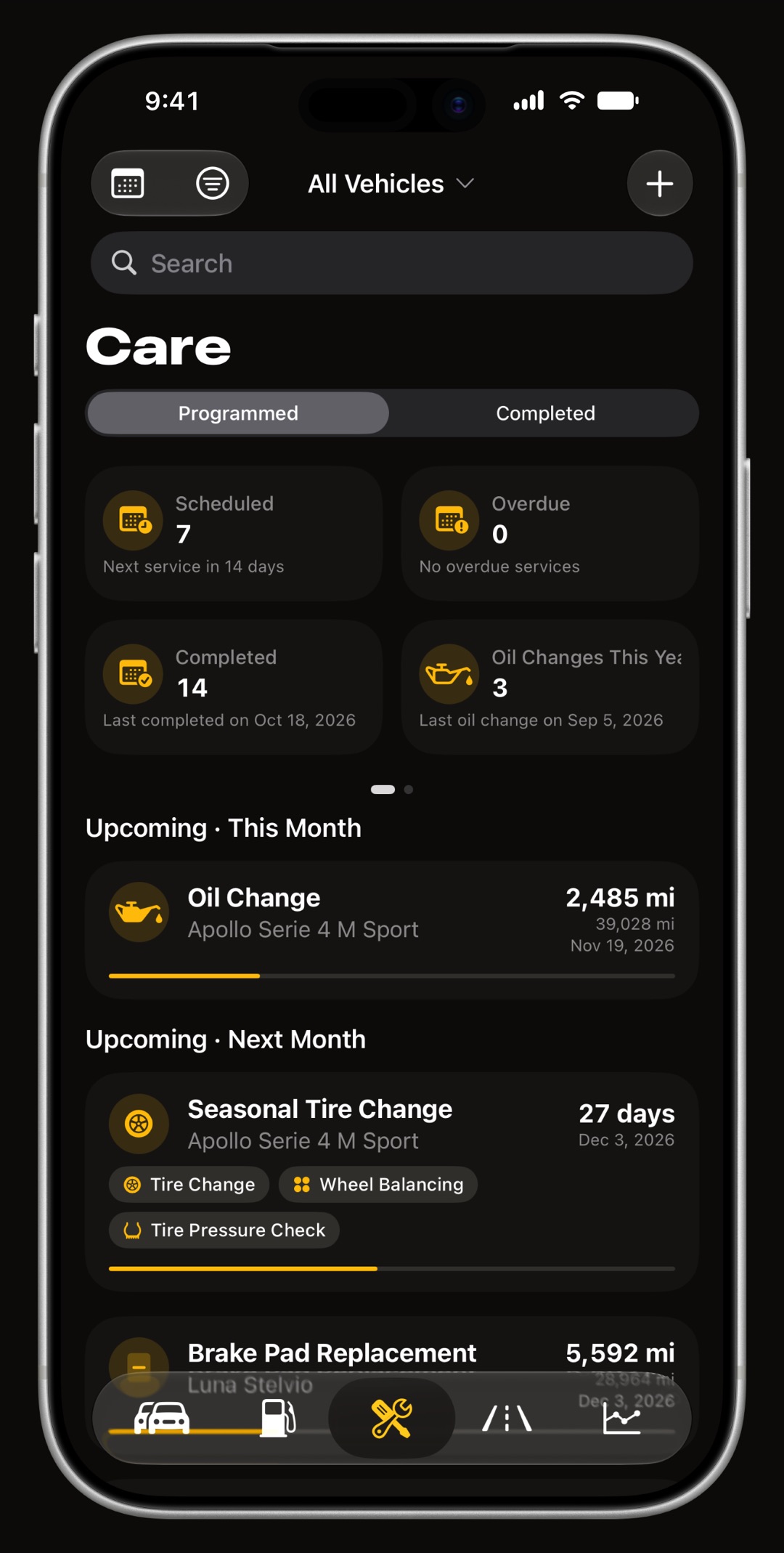
A checklist helps for one drive; a maintenance record helps for every drive. Most road trip trouble starts weeks earlier: the oil change nobody remembers, the battery of unknown age, the tyres last rotated at a mileage nobody wrote down. WrenchTime, an iPhone app for maintenance, fuel, charging and mileage on cars and motorcycles, logs every job among its 59 procedures with the date, the odometer and the cost, records tyre pressure on a diagram of the vehicle, and sends reminders by date or by odometer reading, so the next pre-trip check starts from facts. The car maintenance records article covers what a good record holds.
On the road, the fuel economy tracker shows tank-to-tank MPG, so a loaded roof box that costs economy shows up in the numbers, and with a Bluetooth ELM327 adapter the OBD-II features show live engine data such as coolant temperature, on the phone or on the CarPlay dashboard, on a long climb. The free version covers 1 vehicle with 2 maintenance entries and 3 fuel entries per month, and WrenchTime Pro removes the limits.
Start one to two weeks ahead. Check tyre pressure and tread, battery age, brakes, fluids, lights, wipers and the spare or inflator kit. Book any overdue service so a shop has time to do it, and go through the emergency kit before you pack the luggage.
Check the basics yourself: cold tyre pressure against the door placard, tread with a coin (AAA's method uses a U.S. quarter), fluid levels, lights and wipers. Ask a shop for what you cannot judge at home: a battery test if the battery is three years old or older, and a brake inspection if you hear grinding or feel vibration.
Use the pressure on the placard in the driver's door jamb or in the owner's manual, set with the tyres cold. The number on the sidewall is the tyre's maximum, not the recommended pressure. Some placards list a higher pressure for a fully loaded car, which suits a packed road trip.
No, the core checks stay the same: tyres, battery, brakes, fluids, lights and wipers, and the emergency kit. In winter, test the battery, use washer fluid rated for freezing, check the coolant, consider winter tyres for the route, and add warm clothing and blankets to the kit.
Only partly. AAA warns that inflator kits cannot fix every kind of tyre damage, and a torn sidewall is beyond them. Check what your car came with, and if it has no spare, confirm that your roadside assistance covers towing before a long trip.
More from the blog
Tyres
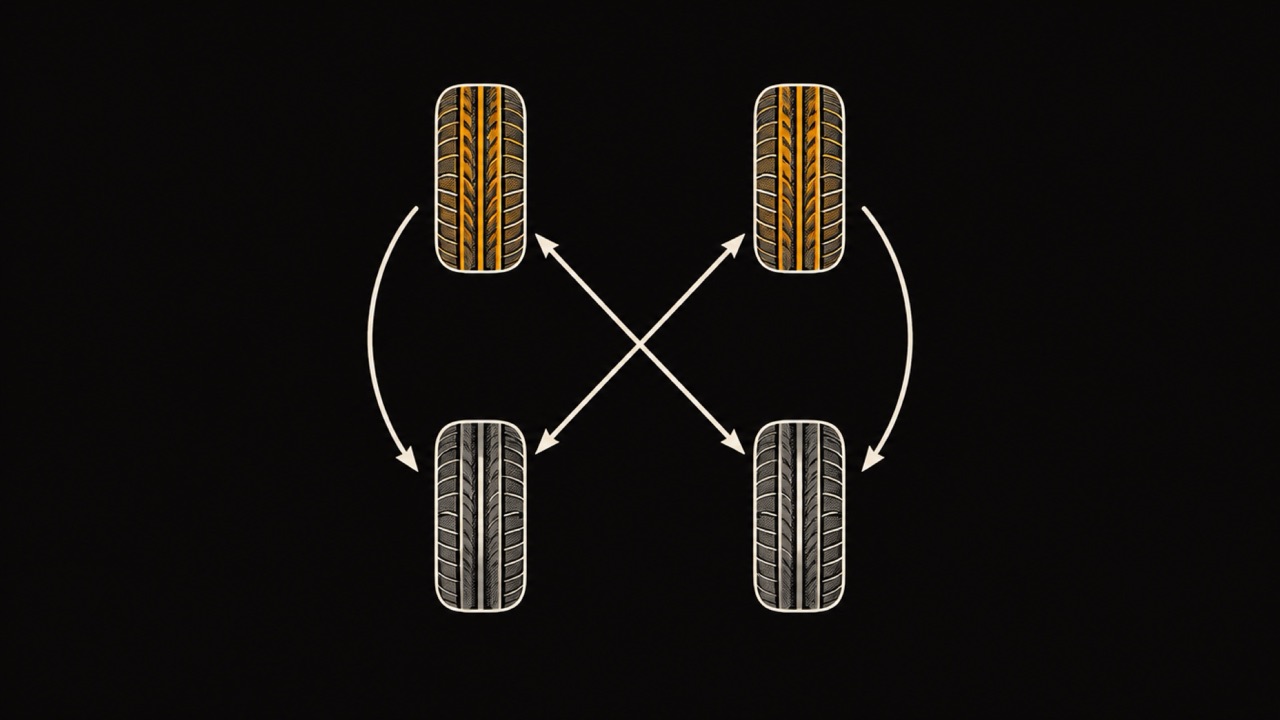
Rotate every 5,000 to 8,000 miles or at the interval in the manual; balance when a tyre is mounted, a weight is lost or the car vibrates. Plus AWD, EV and Tesla rules.
Brakes
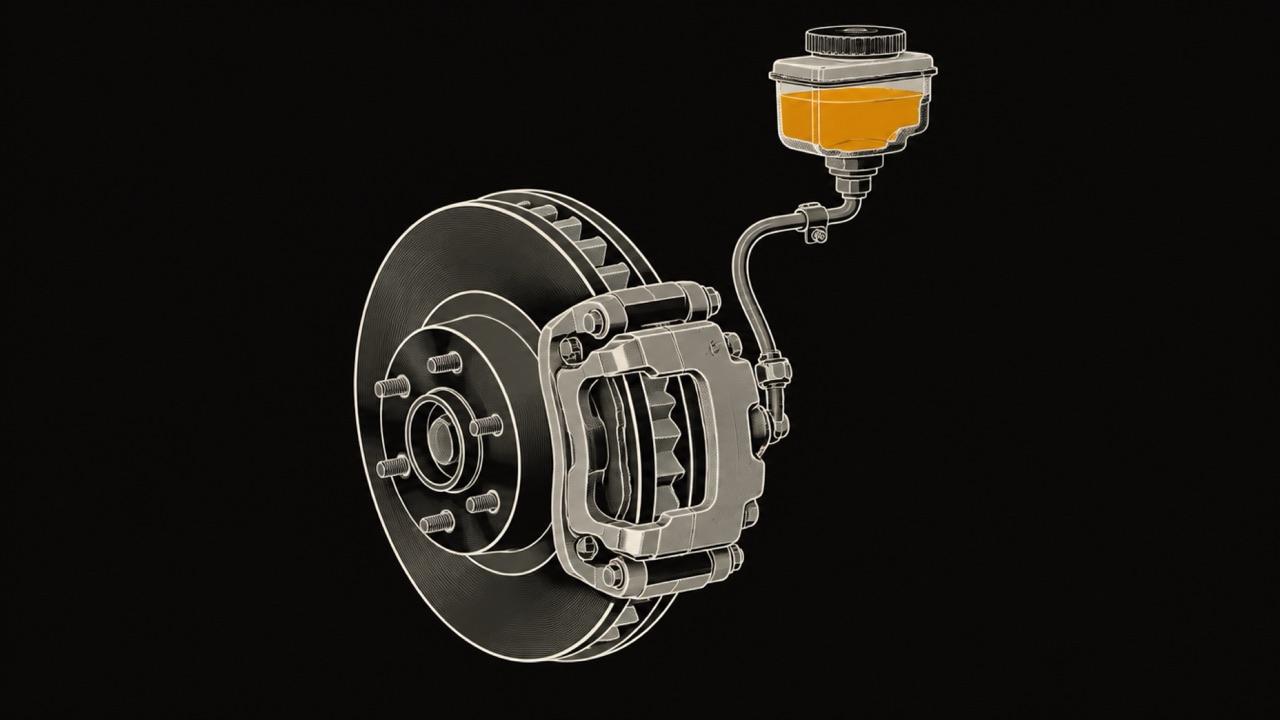
Every 2 to 3 years for most cars, whatever the mileage, with manufacturer intervals, the US federal boiling points and a test-before-you-pay checklist side by side.
EV charging
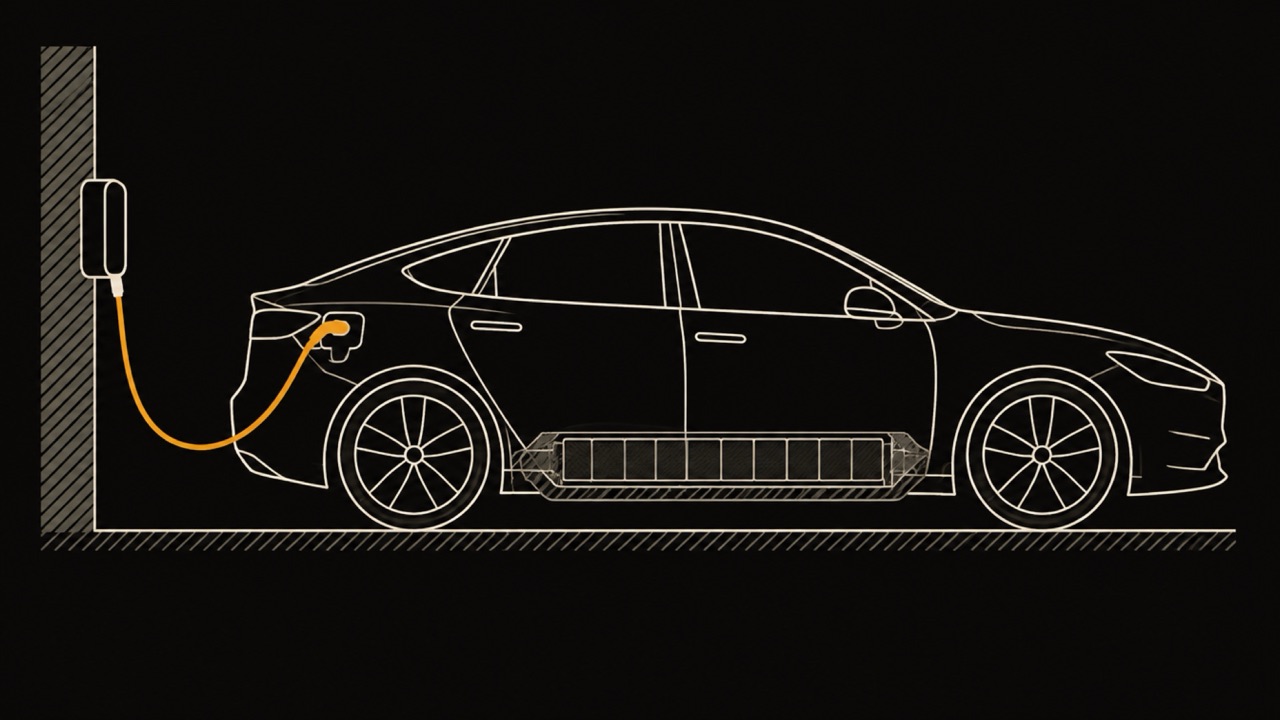
About £9 per 100 miles at home and £18 to £26 at public chargers in October 2026, with the formula for your own car and the charging losses most estimates skip.
Free to download. One vehicle, real features, no ads. Your garage will thank you.
Download WrenchTime on the App Store