Hybrids
What maintenance does a hybrid car need?
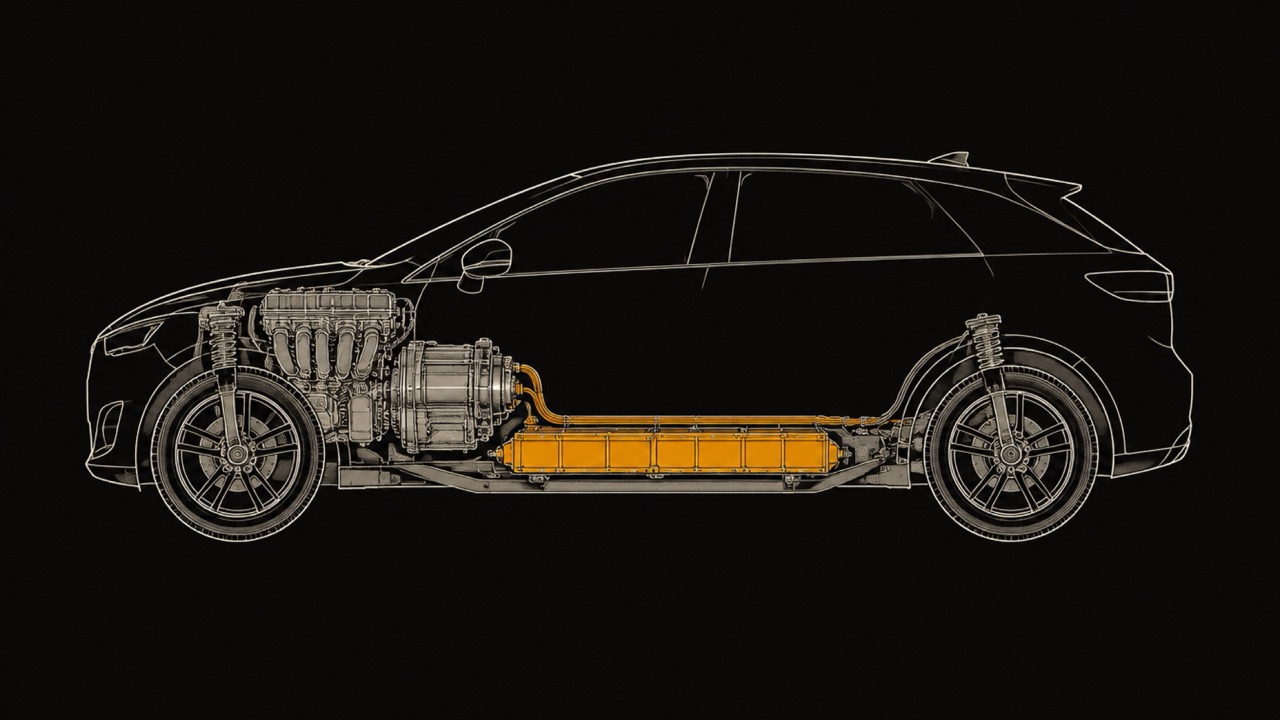
A hybrid needs the same servicing as a petrol car plus a few hybrid-only checks, mainly the battery's cooling intake and the inverter coolant, and it usually costs no more to maintain.
EV maintenance
An electric car has no oil, spark plugs or timing belt, but it still has a maintenance schedule: check tyre pressure monthly, rotate the tyres every 5,000 to 8,000 miles, replace the cabin air filter and the wiper blades every year or two, check the brake fluid every 2 to 4 years, and clean the brake calipers yearly where roads are salted. Tesla's Model 3 schedule, for example, is a tyre rotation every 6,250 miles, a cabin filter every 2 years and a brake fluid check every 4 years. The owner's manual always has the final word.
An electric car needs maintenance on everything that touches the road, the brakes and the cabin, and very little on the drivetrain. The Alternative Fuels Data Center of the US Department of Energy says all-electric vehicles require less maintenance because they have fewer moving parts and fluids to change, and that the battery, motor and associated electronics need little to no regular maintenance.
What stays on the list is the tyres and alignment, the brake fluid, pads, discs and calipers, the cabin air filter, the wiper blades and washer fluid, the coolant circuit that keeps the battery and the electronics at temperature, the 12-volt battery, suspension and steering, and software updates. A plug-in hybrid is different: the same Alternative Fuels Data Center page says plug-in hybrids and hybrids need the same general maintenance as a conventional car, because they still carry an engine.
The EV maintenance schedule below is a baseline built from Tesla's published Model 3 intervals and US tyre guidance. No national standard exists, and every manufacturer publishes its own schedule, so replace each line with the figure in your owner's manual. Where a job has both a mileage and a time limit, it is due at whichever comes first.
| Interval | Service | Why it matters |
|---|---|---|
| Every month | Check tyre pressure cold, look for cuts and uneven wear | A heavy EV wears its tyres faster when they are underinflated |
| Every 5,000 to 8,000 miles | Rotate the tyres (Tesla: 6,250 miles) | Weight and instant torque wear the driven axle faster |
| Every year | Replace the wiper blades | Worn blades streak, and nothing else on the car wears them out |
| Every year or 12,500 miles, salted roads only | Clean and lubricate the brake calipers | Regenerative braking leaves the calipers idle, and salt seizes them |
| Every 1 to 2 years | Replace the cabin air filter | It keeps the air in the cabin clean and the airflow up |
| Every 2 to 4 years | Check the brake fluid, replace it if needed | Brake fluid absorbs water over time, whatever the mileage |
| As the manual says | Inspect or replace the battery coolant | It protects the battery and the electronics from heat |
| Every service visit | Test the 12-volt battery, install updates, check recalls | A weak 12-volt battery can stop an EV from waking up |
Sources: Tesla Model 3 service intervals, NHTSA, Consumer Reports (updated September 2026).
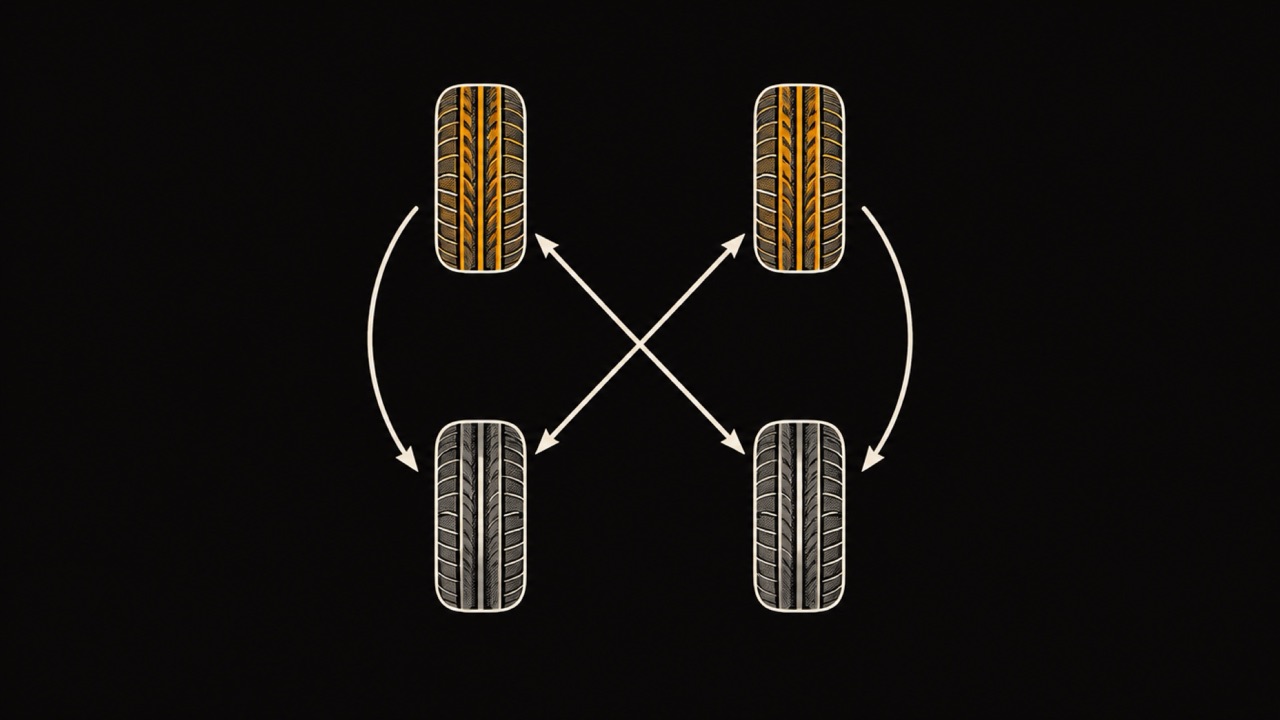
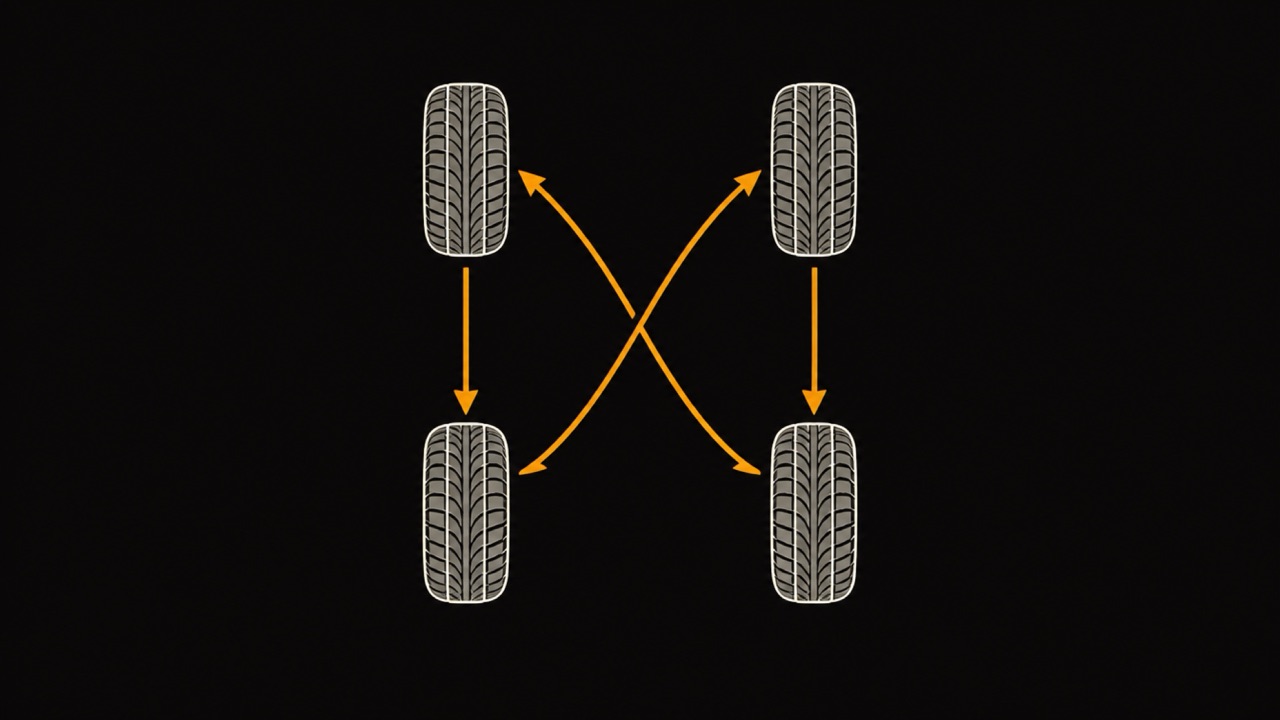
Rotate an EV's tyres every 5,000 to 8,000 miles, or at the interval in the manual if it differs. NHTSA gives the 5,000 to 8,000-mile range for cars in general, and Tesla's Model 3 schedule asks for a rotation every 6,250 miles (10,000 km), or sooner once the tread depth difference between tyres reaches 2/32 in (1.5 mm).
Tyres are the most frequent EV maintenance job. Consumer Reports says EVs tend to wear tyres more quickly because of their weight, and advises checking every month that they are properly inflated. When the tyres are replaced, the same article notes that most EVs come on XL (extra load) or HL (high load) rated tyres, so match the load index and size printed on the door jamb placard rather than buying a standard tyre of the same size.
The full rotation patterns, by drivetrain, are in how often to rotate and balance tyres.
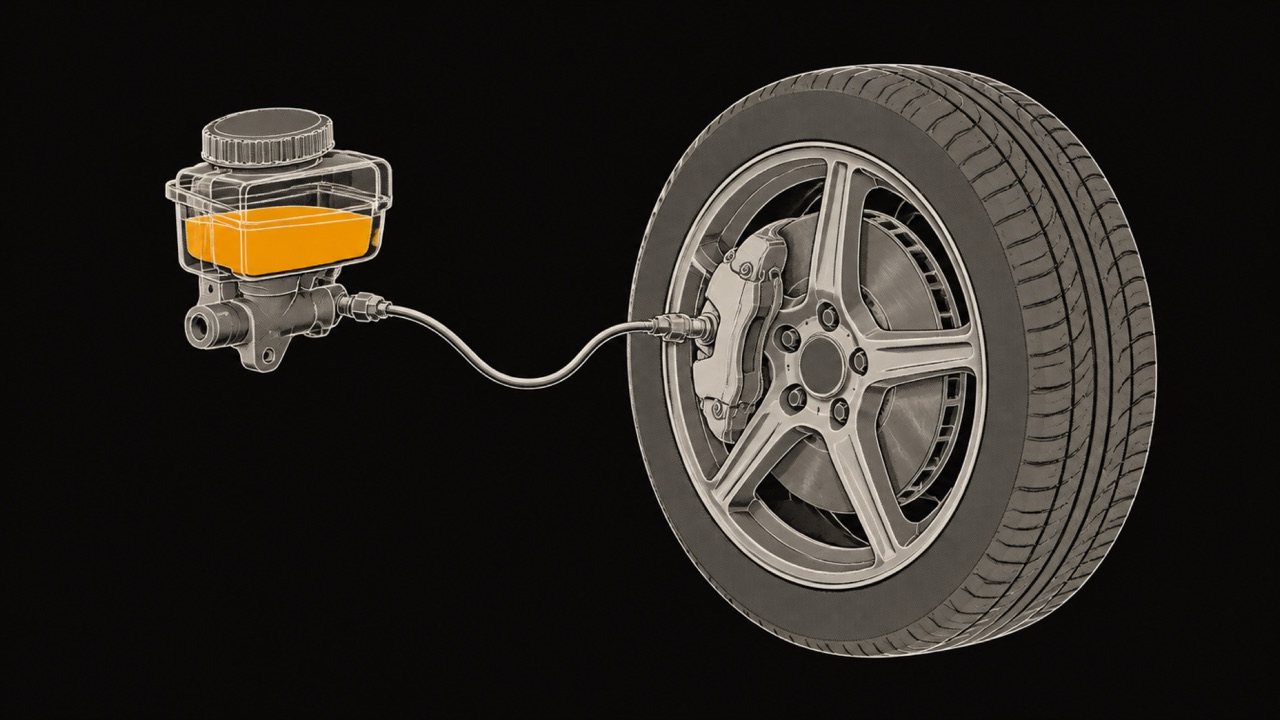
An electric car needs its brake fluid checked every 2 to 4 years and, on salted roads, its calipers cleaned once a year, while its pads and discs often last longer than on a petrol car. Regenerative braking slows the car with the motor, so the friction brakes do less work. The Alternative Fuels Data Center says brake wear is significantly reduced as a result.
Brake fluid ages with time, not use, because it absorbs water from the air. Tesla's Model 3 schedule lists a brake fluid health check every 4 years, with a replacement only if the check calls for it, and more frequent checks for towing, mountain descents or performance driving. Other makers ask for a change every 2 to 3 years, as how often to change brake fluid shows brand by brand.
The calipers are the job new EV owners miss. Because they move so little, road salt can make them seize. The same Tesla schedule asks to clean and lubricate the brake calipers every year or 12,500 miles (20,000 km) where roads are salted in winter, so book it in spring, after the last salt.
Replace an EV's cabin air filter every 1 to 2 years and its wiper blades every year. Tesla's Model 3 schedule lists the cabin air filter every 2 years and the wiper blades every year. Choose the shorter end of the filter range if you drive on dusty roads, through wildfire smoke or in heavy pollen, and change the blades sooner if they streak.
Older Model 3 cars built before about 2021 add one item of their own: the same schedule lists an A/C desiccant bag replacement every 6 years. It is a reminder that each model has a line or two nobody else has, which only the manual for that car shows.
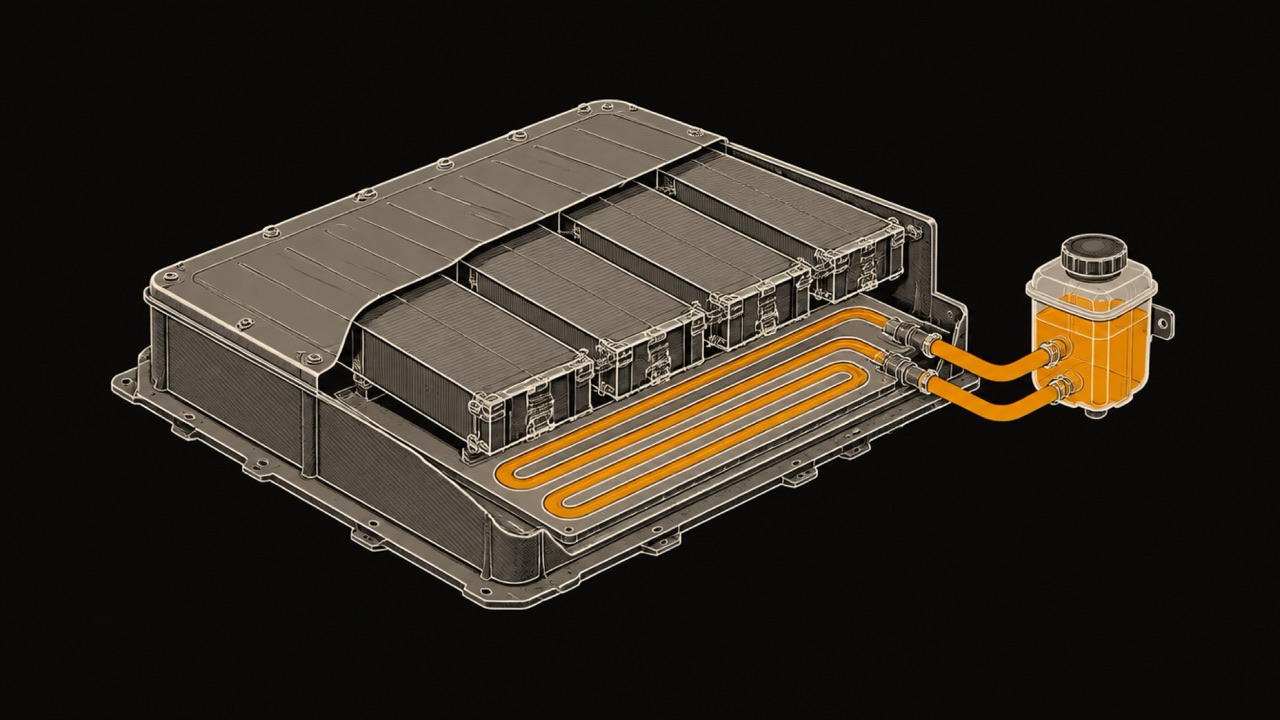
Yes, most electric cars have a liquid coolant circuit, and it needs inspection and, on many models, replacement at a long interval. The circuit keeps the battery and the power electronics in their working temperature range. The Alternative Fuels Data Center notes that these systems may require regular checks.
The interval varies more than any other item. Some manufacturers schedule a coolant replacement after several years, others treat the fill as long-life and only inspect it, so the owner's manual is the only reliable answer. Coolant work near the battery belongs to a shop with EV training, and the engine coolant guide, how often to change coolant, explains why intervals differ by coolant type.
An EV's small 12-volt battery powers its computers, door locks and the contactors that connect the main battery, so when it weakens, the car can refuse to wake up even with a full traction battery. It is a common cause of an EV that will not start.
Ask for a 12-volt battery test at every service visit from the third year on, and replace it at the first sign of weakness. The owner's manual says what type the car uses and whether the owner or a shop should replace it.
Here is the schedule for an EV driven about 12,000 miles a year in an area that salts its roads, using Tesla's Model 3 intervals where the manual gives one. Swap in your own manual's numbers and the plan holds the same shape.
Yes, on average an EV costs about half as much to maintain and repair as a petrol car. A Consumer Reports survey of its members (September 2020) found that EV and plug-in hybrid owners spend about 50% of what petrol-car owners spend on repair and maintenance, an average saving of $4,600 over the life of the vehicle.
The savings come from the jobs that disappear: no oil changes, spark plugs, belts or exhaust, and fewer brake pads. Tyres can cost more, because EVs wear them faster and often need load-rated replacements, so the real saving depends on the model and on how the car is driven. The big-ticket risk is the traction battery out of warranty, covered in how long EV batteries last.
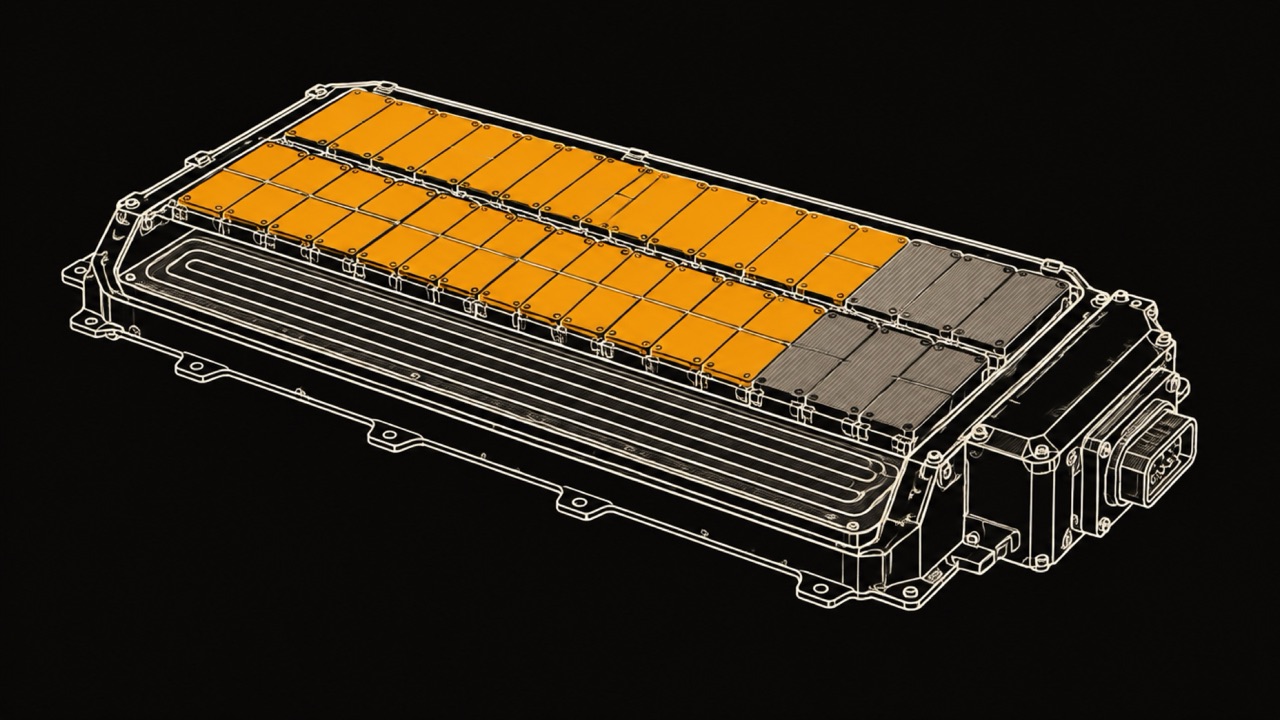
Look after an EV battery mostly through charging and parking habits, because the battery itself needs little to no scheduled service. The US Department of Energy's Consumer Guide to Electric Vehicles says battery warranties typically cover 8 years or 100,000 miles, and puts the average expected battery lifetime at between 12 years and 15 years in moderate climates.
Any competent tyre shop or independent mechanic can rotate tyres, fit wipers and change a cabin filter on an EV. High-voltage work is different: coolant service near the battery, battery diagnostics and anything behind an orange high-voltage cable need a technician trained and equipped for EVs, so ask before you book. Never open or work on high-voltage components yourself.
Keep the receipts either way. A dated record with the mileage of every service is the evidence behind a battery or drivetrain warranty claim, and which maintenance records to keep lists what each entry needs.
Track an EV maintenance schedule by both miles and dates, because its jobs use both: tyre rotations run on miles, the cabin filter and brake fluid on years, the caliper clean on the season. A log that only counts miles misses half of them, and an EV gives no oil-change sticker to nudge you.
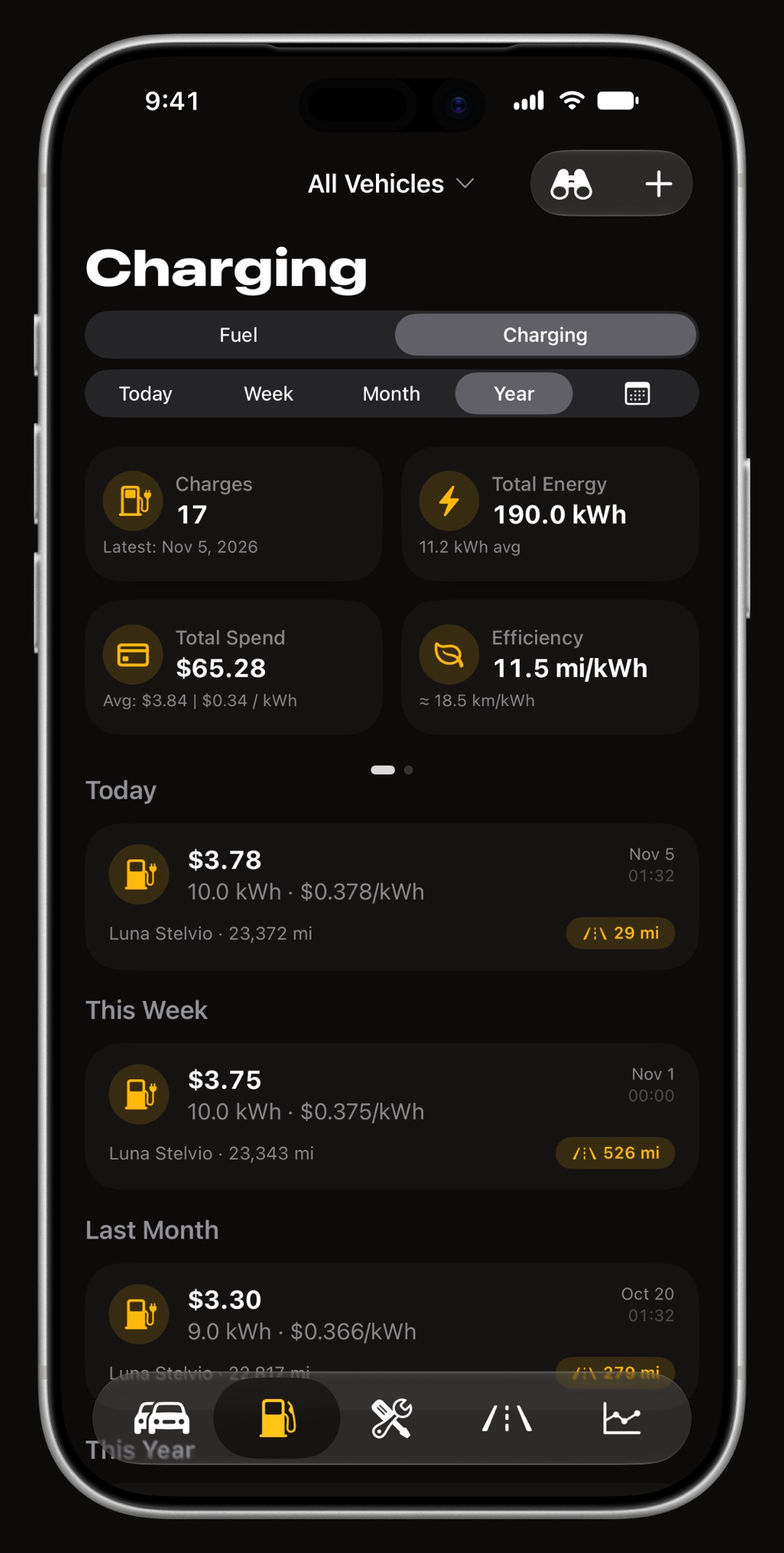
WrenchTime, an iPhone app for cars and motorcycles, treats electric among its 11 engine types and hides procedures an EV does not need, such as oil changes, while offering EV-only ones like a battery health check and a charging port inspection. Each job can be scheduled by date, by distance or both, whichever comes first counts as due, and automatic trip tracking keeps the odometer current so a mileage reminder fires at the real mileage.
If you want your EV's maintenance reminders, service history and charging sessions in one place, download WrenchTime on the App Store. The free version covers 1 vehicle with 2 maintenance entries and 3 charging entries per month, with CSV and PDF export included, and WrenchTime Pro removes the limits. Charging sessions, kWh and home charging share have their own EV charging log.
Monthly tyre pressure checks, a tyre rotation every 5,000 to 8,000 miles, a cabin air filter every 1 to 2 years, wiper blades yearly and a brake fluid check every 2 to 4 years. On salted roads add a yearly caliper clean, and follow the manual for the battery coolant and the 12-volt battery.
Tesla's Model 3 schedule lists a tyre rotation every 6,250 miles, a cabin air filter every 2 years, wiper blades every year, a brake fluid check every 4 years and, where roads are salted, a caliper clean every year or 12,500 miles. Cars built before about 2021 add an A/C desiccant bag every 6 years.
No. An all-electric car has no engine oil, oil filter, spark plugs or timing belt. Some EVs have a sealed gear reducer with its own lubricant, which the manual may ask to inspect or change at a long interval. A plug-in hybrid still has an engine and needs oil changes like any petrol car.
Often, yes. Consumer Reports says most EVs come on XL or HL load-rated tyres to carry the battery's weight, and that EVs wear tyres faster. When you replace them, match the load index and size on the door jamb placard rather than buying a standard tyre of the same size.
On average, yes. A Consumer Reports member survey (2020) found EV and plug-in hybrid owners spend about half what petrol-car owners spend on repair and maintenance, about $4,600 less over the vehicle's life. Tyres can cost more, so the actual saving depends on the model and on how you drive.
More from the blog
Hybrids
A hybrid needs the same servicing as a petrol car plus a few hybrid-only checks, mainly the battery's cooling intake and the inverter coolant, and it usually costs no more to maintain.
EV battery
Fleet data shows EV batteries lose about 2.3% of their capacity a year and rarely need replacing, so most outlast the 8-year, 100,000-mile warranty.
Tyres
Rotate every 5,000 to 8,000 miles or at the interval in the manual; balance when a tyre is mounted, a weight is lost or the car vibrates. Plus AWD, EV and Tesla rules.
Free to download. One vehicle, real features, no ads. Your garage will thank you.
Download WrenchTime on the App Store