Tyres
Does cold weather affect tyre pressure?
Cold air shrinks the air in a tyre by about 1.7 psi per 10°C, which is why the pressure light comes on in the first cold mornings and goes off after a few miles.
Tyres
No. A standard OBD2 scanner or app cannot read tyre pressure, because the public OBD2 parameter list defined by SAE J1979 contains no tyre pressure item. On cars with direct TPMS, each wheel's sensor sends its reading by radio, at 315 or 434 MHz, to the car's own TPMS module, outside that list. A dedicated TPMS tool reads the sensors at the wheel, and a scan tool with manufacturer coverage can sometimes read the module. Cars with indirect TPMS never measure tyre pressure at all.
Standard OBD2 cannot read tyre pressure. OBD2 (also written OBD-II) is the diagnostic port under the dashboard plus a public list of parameters any scanner can request. Each parameter is a PID, a parameter ID. CSS Electronics describes the standard behind that list as "SAE J1979, which specifies a range of standard (and public) OBD2 PIDs".
The standard current-data list, service 01, runs from PID 00 to PID C8 in the Wikipedia table of OBD-II PIDs, and none of its entries is a tyre pressure or a TPMS value. The CSS Electronics table, which covers PIDs 00 to C0, has none either. A scanner or app that reads only the standard list therefore has no tyre pressure to show, on any make.
The only way tyre pressure could come through the OBD2 port is manufacturer data. Wikipedia notes that "Manufacturers also define additional PIDs specific to their vehicles" and that "The majority of all OBD-II PIDs in use are non-standard". Those requests are not public, they differ by make, model and year, and a generic scanner does not send them.
The standard OBD2 list covers engine and emissions data that a scanner of any brand can read: engine speed, coolant temperature, fuel trims, oxygen sensors and the readiness monitors that emissions tests check. It is built around the powertrain, and tyre pressure is not a powertrain value.
The tyre pressure monitoring system (TPMS) is a separate safety system with its own module and its own federal rule, FMVSS No. 138. In the US that rule says what the TPMS must warn about and how fast, and it is a different rule from the one behind the OBD2 parameter list. So the tyre data stays inside the TPMS, and the standard list carries none of it.
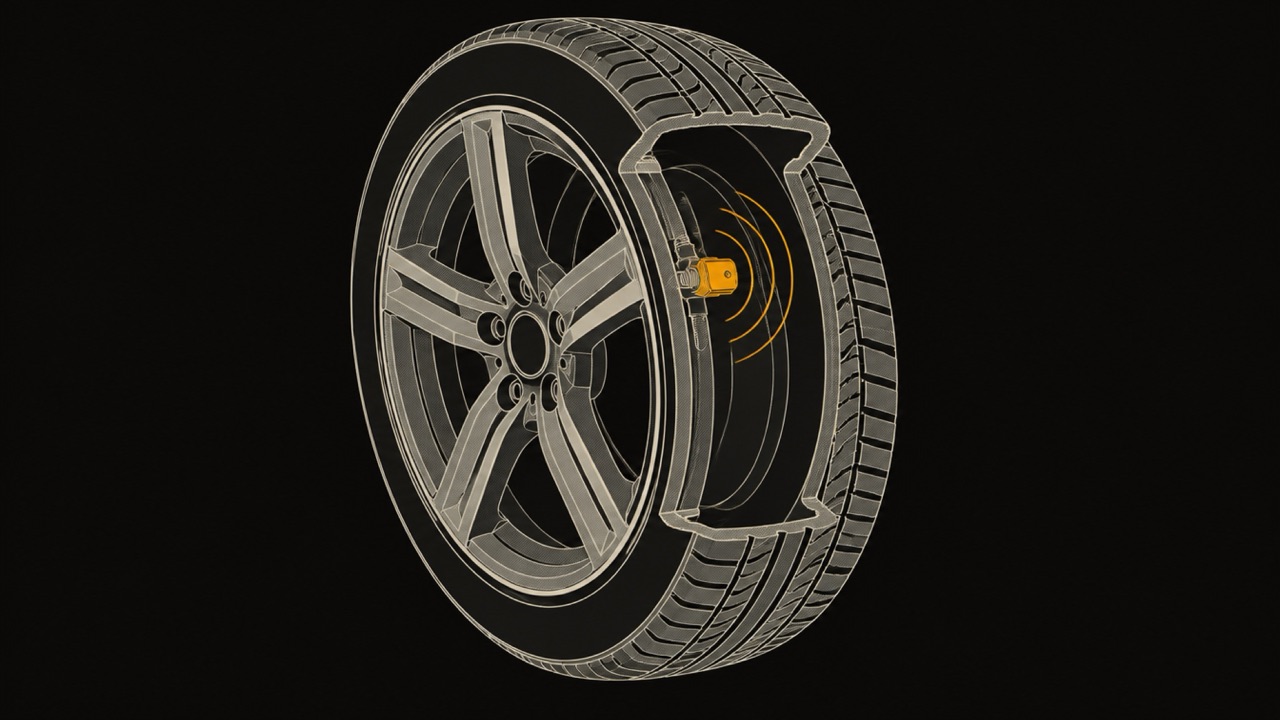
Direct TPMS puts a sensor in each tyre, usually built into the valve stem. According to Vehicle Service Pros (Tanner Brandt, March 2022), "The sensors send out either a 315 MHz or 434 MHz signal" to a TPMS module, which can be standalone or share a housing with another module. The sensors run on a battery: MOTOR magazine gives a projected battery life of six to ten years and says update intervals of about 3 to 10 minutes are common.
Indirect TPMS has no sensor in the tyre. Vehicle Service Pros explains that early systems compared wheel speeds from the ABS sensors: "As the tyre loses air the circumference becomes smaller resulting in the wheel speed increasing." Those early systems could flag one, two or three low tyres but could not tell if all four were low. Newer systems also analyse each tyre's resonance frequency from the same wheel speed data.
The difference decides what any tool can show. A direct system has a real pressure value for each tyre somewhere in the car. An indirect system never measures tyre pressure, so on an indirect car there is no pressure number to read with any scanner, app or TPMS tool.
| Feature | Direct TPMS | Indirect TPMS | Why it matters |
|---|---|---|---|
| How it senses | A sensor in each tyre, usually in the valve stem, sends a radio signal to a TPMS module | ABS wheel speed sensors; a low tyre turns faster, newer systems also read tyre resonance | Only direct TPMS produces a pressure value |
| Measures each tyre's pressure | Yes | No | An indirect car has no pressure number anywhere |
| Detects all four tyres low at once | Yes, each sensor reports its own tyre | Early systems could not | A slow, even loss can go unflagged on early indirect systems |
| Battery | Sealed in the sensor, projected life six to ten years (MOTOR) | None | A dead sensor battery usually means a new sensor |
| Can a tool read a pressure number | Yes, a TPMS tool at the wheel, or module data where the car exposes it | No | Check which system your car has before buying a tool |
Sources: Vehicle Service Pros (March 2022), MOTOR magazine.
In the US, the TPMS rule is Federal Motor Vehicle Safety Standard No. 138, 49 CFR 571.138. It applies to passenger cars, multipurpose passenger vehicles, trucks and buses with a gross vehicle weight rating of 10,000 lb (4,536 kg) or less, and every such vehicle manufactured on or after September 1, 2007 must comply, after a phase-in that began in October 2005. It is a US rule, cited here as a reference.
Under S4.2(a), the low tyre pressure telltale must light within 20 minutes once one or more tyres reach 25% below the vehicle maker's recommended cold inflation pressure, or the minimum activation pressure in the rule's Table 1, whichever is higher. For P-metric standard load tyres that minimum is 140 kPa (20 psi). A separate malfunction telltale must warn within 20 minutes of a fault in the system (S4.4).
The rule asks for warning lights, not a readout. It requires a low pressure telltale and a malfunction telltale, and no requirement to display pressure values appears in the text. That is why some cars show four pressures on the dash and others show only a light: the per-tyre display is the carmaker's choice.
Example calculation: a car whose door placard says 35 psi (2.4 bar) must warn by 26.25 psi (1.8 bar), because 25% below 35 psi is 26.25 psi, which is above the 20 psi (1.4 bar) floor. In kPa, a 240 kPa placard gives a threshold of 180 kPa. Why that threshold is often reached on the first cold morning is covered in why tyre pressure drops in cold weather.
On a car with direct TPMS, tyre pressure lives in the TPMS receiver module. The wheel sensors send their readings to that module by radio, the module decides when to light the warning, and on cars with a per-tyre display it passes the numbers to the instrument cluster. Some sensors also report their battery voltage or remaining battery life in that data, per MOTOR magazine.
Reaching those values through the diagnostic port means talking to the TPMS module itself. Foxwell, which sells TPMS tools, writes that "TPMS modules typically operate according to specific protocols that vary depending on each vehicle manufacturer", and that TPMS scanners "connect directly with a vehicle's TPMS module". That is manufacturer data, outside the public OBD2 list.
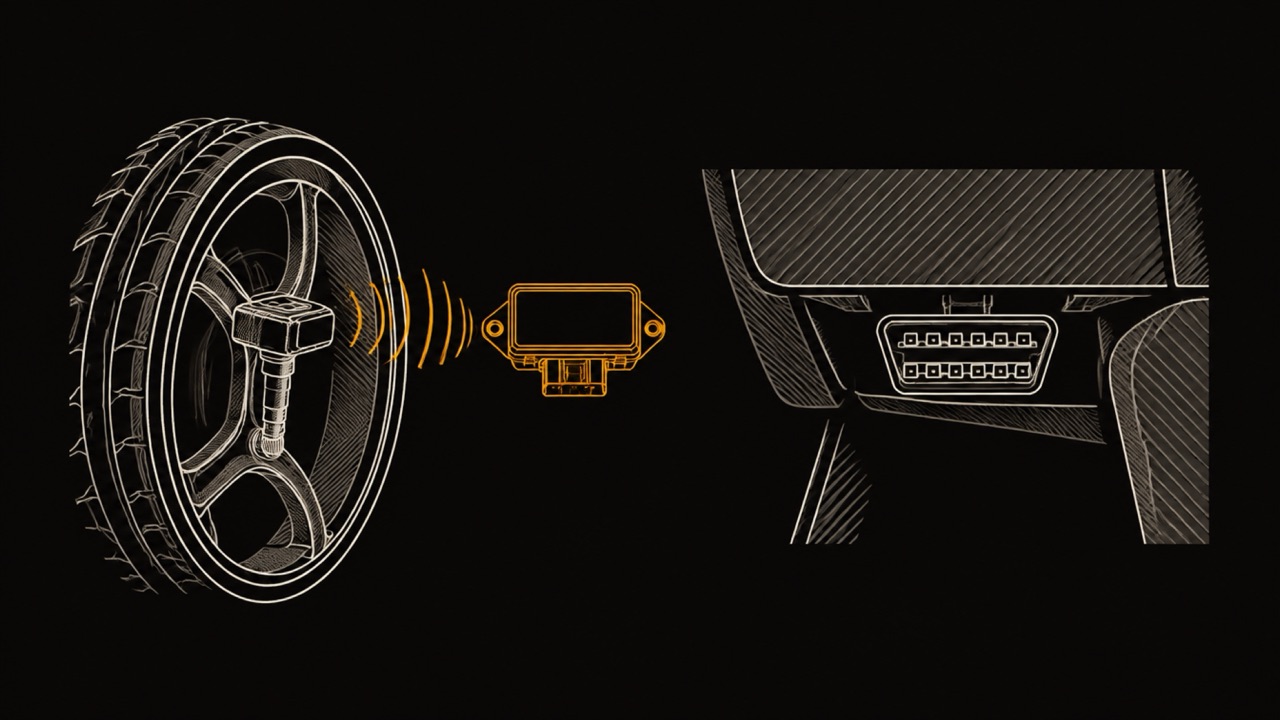
A dedicated TPMS tool reads tyre pressure sensors directly, one wheel at a time. The Autel MaxiTPMS TS508 product page, read in November 2026, lists "Display Sensor ID, Battery Condition (on select sensors) and Psi", an OBDII relearn, and reading and erasing TPMS trouble codes; the same page marks the tool as discontinued, so it serves here only as an example of the category.
The Continental Autodiagnos TPMS D Tool page says it "Triggers all OEM sensors, displays all sensor data" and that its "OBD-II mode relearns sensors in under 2 minutes". A relearn writes the new sensor IDs into the car through the OBD2 port after a sensor or tyre change; Continental says the OBD-II relearn can be performed on 60% of passenger vehicles in North America.
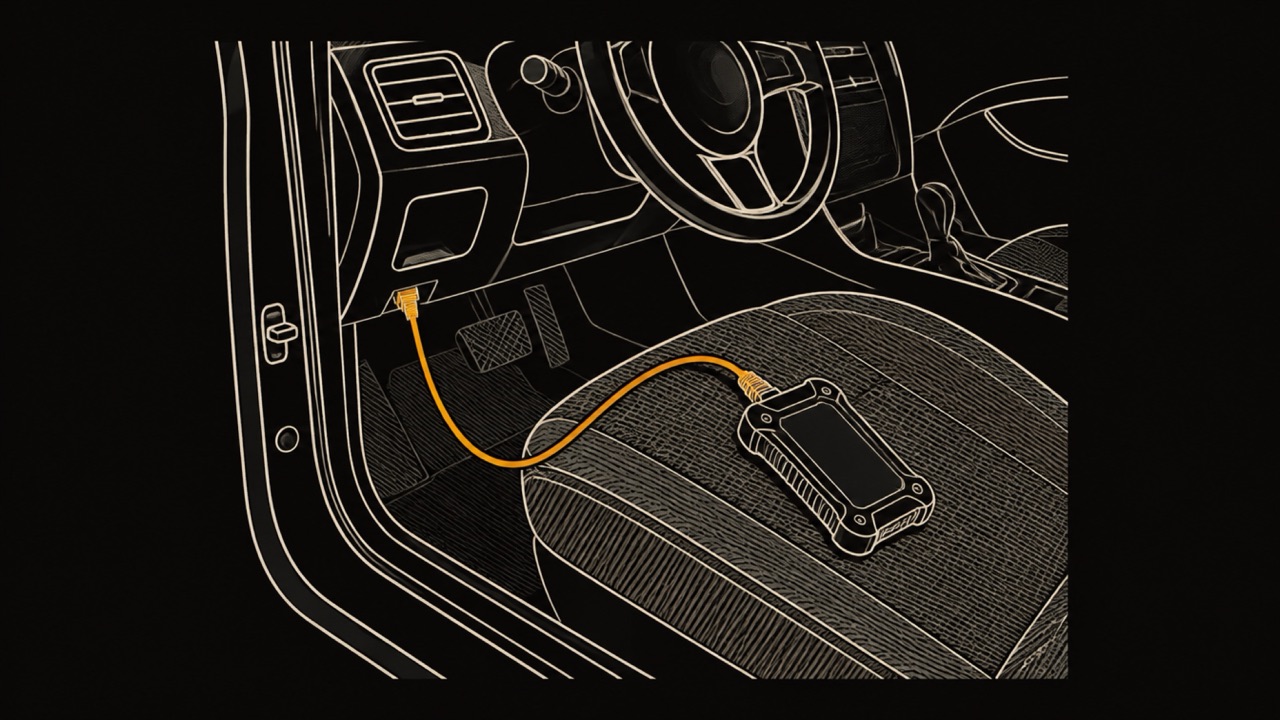
A generic OBD2 scanner or a basic app reads the standard parameter list, which has no tyre pressure item. What such a scanner does read, and how to plug one in, is in how to use an OBD2 scanner. A scan tool with manufacturer (enhanced) coverage of the TPMS module can sometimes show the pressures, where the car exposes them.
| Tool | Reads tyre pressures | Other TPMS jobs | Why it matters |
|---|---|---|---|
| Generic OBD2 scanner or app | No, the standard PID list has no tyre pressure item | Engine and emissions data | A blank result is normal, not a fault |
| Scan tool with manufacturer coverage | Sometimes, where the car exposes the TPMS module | Varies by make and tool | Coverage depends on the exact model and year |
| Dedicated TPMS tool | Yes, sensor by sensor at the wheel | Sensor ID, battery condition, OBD2 relearn | The tool a tyre fitter uses after a sensor change |
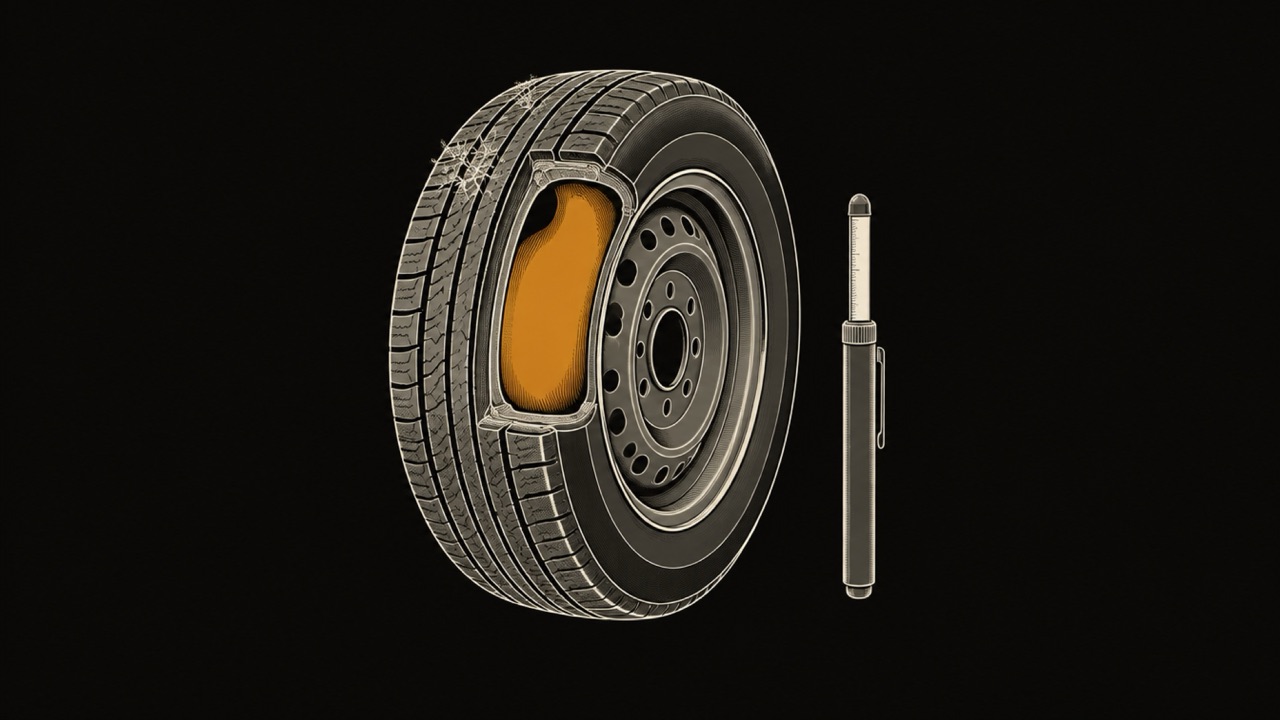
| Tyre pressure gauge | Yes, one tyre at a time | None | The reference the door placard is written for |
Sources: Wikipedia, Autel, Continental, Foxwell, read November 2026.
An OBD2 app can read tyre pressure only where the car publishes the values on a module the adapter can reach and the request for them is known. That is manufacturer data, not part of the SAE J1979 standard, and it varies by make, model and year. Many cars will not offer it to an ordinary adapter, and a car with indirect TPMS has no pressure value to offer at all.
WrenchTime, an iPhone app that reads live engine data through a Bluetooth OBD-II adapter, does not read tyre pressure sensors. It reads the standard parameters the car declares, and a custom PID can read a manufacturer value you know the request for, on the services and control units the app supports, which is the same limit every OBD2 app works within. How those readings are added is in the guide to custom OBD-II PIDs.
A TPMS light with a blank scanner is the normal case, because the scanner reads a list that has no tyre pressure on it. The fix starts with a gauge, not a tool. Here is a plan for a car whose tyre pressure light is on.
Since no standard OBD2 app can read your tyres for you, the reliable record is the one you take with a gauge. WrenchTime records tyre pressure on a diagram of the vehicle, front left, front right, rear left and rear right, in the pressure unit your placard uses, and shows the latest readings on the vehicle card.
A tyre pressure check is one of WrenchTime's 59 maintenance procedures, so it can be scheduled by date or distance with a reminder, and repeated as a recurring series. The free version covers 1 vehicle and 2 maintenance entries a month. What the app does read over OBD-II is in the guide to the OBD-II app for iPhone.
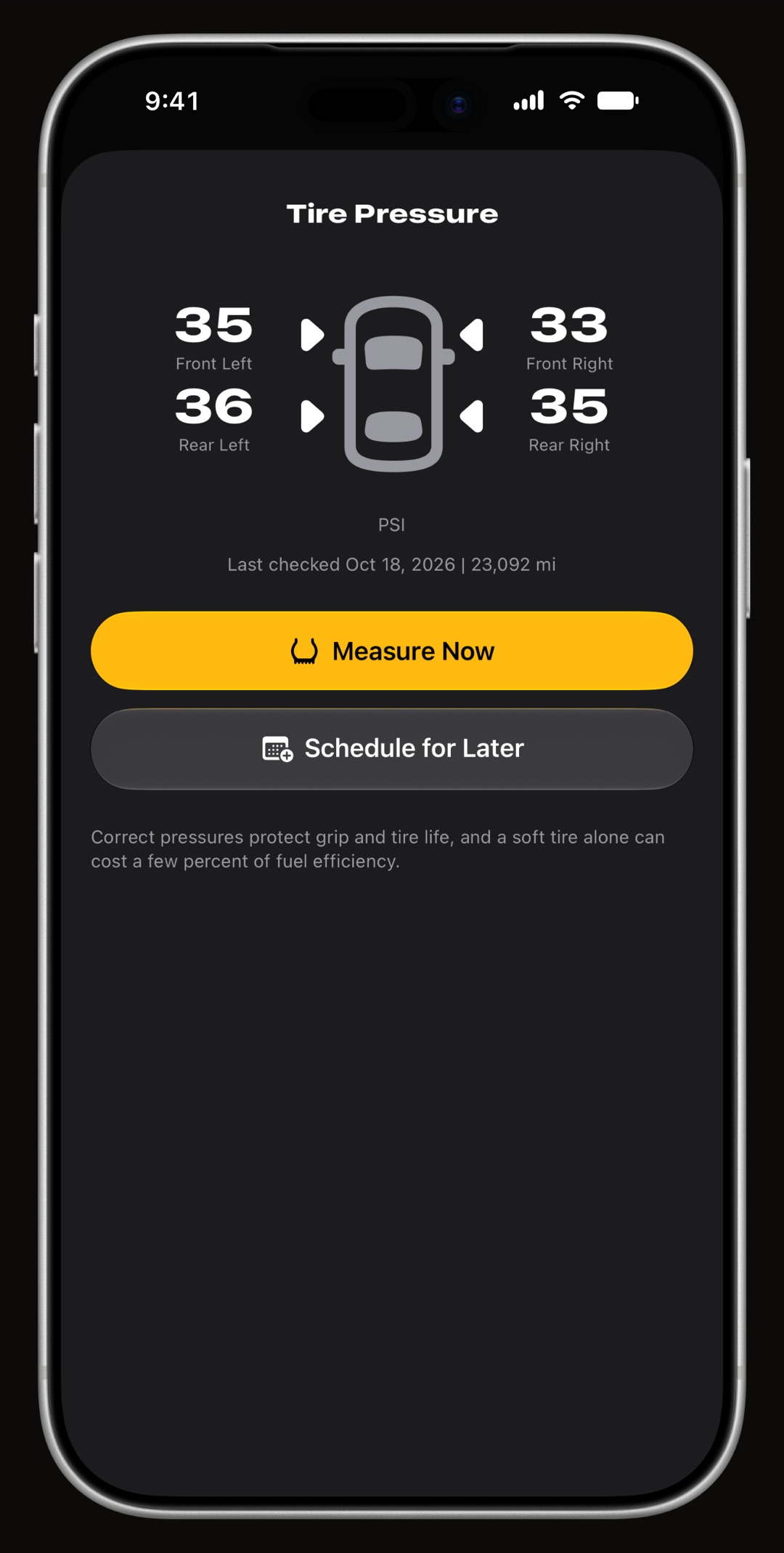
No, not through standard OBD2. The SAE J1979 list of public PIDs that every OBD2 scanner reads has no tyre pressure parameter. On cars with direct TPMS the pressures live in the TPMS module; a dedicated TPMS tool, or a scan tool with manufacturer coverage of that module, can read them.
In a direct system, a battery-powered sensor in each wheel, usually in the valve stem, measures pressure and sends it by radio at 315 or 434 MHz to a TPMS module every few minutes. An indirect system has no tyre sensor: it compares wheel speeds from the ABS sensors, because a low tyre spins faster.
Not through the standard OBD2 parameter list, which has no tyre pressure item on any make. On a Ford with direct TPMS, as on any brand, the readings sit in the car's own TPMS module and need a TPMS tool or a scan tool with manufacturer coverage for that model.
The dash gets the numbers from the TPMS module, which receives them by radio from the wheel sensors. A generic scanner reads only the standard OBD2 parameter list, which has no tyre pressure item. The per-tyre values are manufacturer data that a basic scanner does not request.
MOTOR magazine puts the projected battery life of a direct TPMS sensor at six to ten years. Most sensor batteries cannot be replaced on their own, so a sensor with a dead battery is usually replaced whole. Some sensors report their battery level, which a TPMS tool can read.
In the US, FMVSS No. 138 requires the warning within 20 minutes once one or more tyres drop 25% below the placard pressure, or to 20 psi (140 kPa) for a P-metric standard load tyre, whichever is higher. For a 35 psi (2.4 bar) placard that is about 26 psi (1.8 bar).
More from the blog
Tyres
Cold air shrinks the air in a tyre by about 1.7 psi per 10°C, which is why the pressure light comes on in the first cold mornings and goes off after a few miles.
Diagnostics
Plug in with the ignition off, switch to on without starting the engine, read and write down every code, and look each one up before clearing anything.
OBD2
What I/M readiness means on a scanner, every OBD2 readiness monitor and what it checks, how many can be incomplete at an emissions test, and the drive cycles that set them.
Free to download. One vehicle, real features, no ads. Your garage will thank you.
Download WrenchTime on the App Store